In the engineering fields of road infrastructure, municipal maintenance and rural road network upgrading, asphalt mixing station is the core key equipment for producing asphalt mixture, which directly determines the pavement quality, construction efficiency and comprehensive cost of the project. At present, the mainstream asphalt mixing equipment in the industry is mainly divided into two categories: hot mix asphalt mixing station (HMA) and cold mix asphalt mixing station (CMA). The two types of equipment rely on completely different production processes, temperature systems and material proportioning methods to produce asphalt mixtures with great differences in performance, application scenarios and service life.
Many engineering contractors, procurement personnel and construction technicians often fail to distinguish the core differences, adaptation scenarios and cost differences between the two types of mixing stations during equipment selection and project construction planning, resulting in equipment mismatch, cost overrun, substandard pavement quality and frequent maintenance in the later period. This paper will analyze the hot and cold asphalt mixing station from six dimensions: equipment definition, core difference, advantages and disadvantages, performance parameters, selection logic and cost.
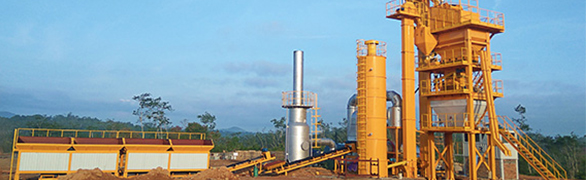
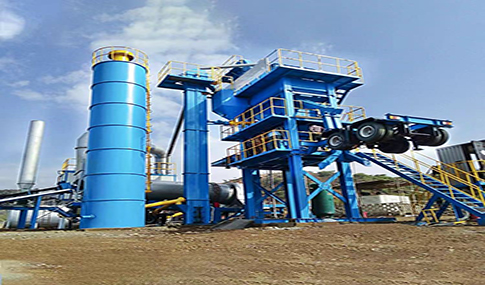
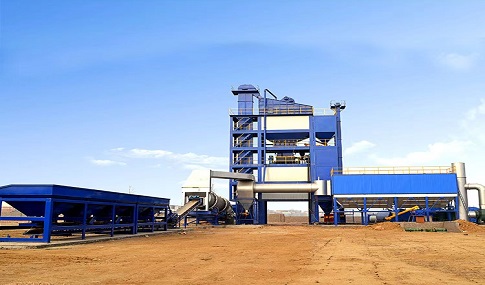
Hot-mix asphalt mixing station is the core equipment of road infrastructure to produce high-standard hot-mix asphalt mixture, which is widely used in high-grade permanent pavement engineering such as expressway, trunk road and airport runway. The equipment fuses aggregate and asphalt binder through high temperature process to produce high strength and high durability asphalt mixture, which can meet the traffic demand of heavy load and high frequency pavement.
The mixture ratio is stable, aggregates such as crushed stone and sand account for about 95%, asphalt binder accounts for about 5%, and auxiliary materials such as mineral powder, admixture and recycled asphalt can be added as required. The production temperature is stable at 140 - 180℃, and the construction temperature is 150 - 170℃. The high temperature process can not only dry the aggregate moisture thoroughly, avoid the problems of pavement cracking and water seepage, but also soften the asphalt, reduce the viscosity, and let the asphalt evenly wrap the aggregate to form a homogeneous and dense mixture structure.
The equipment is mainly divided into two types: intermittent type and continuous type. The intermittent type has accurate proportioning and is suitable for the production of multi-specification mixtures. The continuous type has high production capacity and low cost, and is suitable for standardized large-scale construction. Both types of models can be made into fixed types. Or mobile, supporting the utilization of recycled materials. The whole equipment is equipped with complete systems such as feeding, drying, weighing, mixing, dust removal and intelligent control, with high degree of automation. The finished mixture needs to be transported in heat preservation and paved and compacted at high temperature. After cooling, the performance will be greatly attenuated and the construction can not meet the standard.
Cold-mix asphalt mixing station is a special equipment for producing cold-mix asphalt mixture. Its core feature is mechanical mixing at normal temperature, without high temperature drying and heating procedures, relying on normal temperature bonding materials to fuse aggregates and cements. It is the main equipment for pavement maintenance, emergency repair and low-grade road construction, which is obviously different from the high temperature production mode of hot-mix mixing station.
The equipment abandons high temperature molten asphalt and adopts normal temperature binders such as asphalt emulsion and diluted asphalt. It can be directly mixed with undried normal temperature aggregate and mineral powder at 0 - 40℃, greatly simplifying production processes. The finished mixture supports stacking and storage without immediate paving, which is more practical. The equipment simplifies the core components of high temperature such as drying drum, burner, high temperature insulation, etc., and only retains the feeding, metering, stirring, simple dust removal and intelligent batching system. It has simple structure, low failure rate and convenient operation and maintenance.
Cold-mixed mixture is molded by emulsion breaking reaction of emulsified asphalt. After paving, it solidifies gradually with water evaporation, strength increases with curing time, and molding cycle is longer. Compared with hot-mix mixture, its strength, compactness and anti-aging performance are slightly weaker, and it is not suitable for high-grade heavy-duty pavement. The equipment is suitable for small-scale scattered projects such as pit repair, rural roads, emergency repair, etc. It can be constructed in low temperature and light rain weather. It is mostly modular mobile design, fast transition layout, and suitable for remote and multi-point construction scenarios.
.jpg)
Hot-mix asphalt mixing station and cold-mix asphalt mixing station belong to two completely different asphalt mixture production systems, which have significant differences in many dimensions such as production temperature, binder materials, equipment structure, energy consumption and emission, finished product performance, storage mode and application scenario. Clearly distinguishing the core differences between the two types of equipment is the core basis for project selection, construction planning and cost control. The following is an all-round refined comparative analysis.
Production temperature and process logic difference: hot asphalt mixing plant adopts high temperature production process, the whole production temperature is stable at 140 - 180℃, through high temperature drying aggregate, molten asphalt, achieve high strength bonding of aggregate and asphalt, production process includes drying, heating, mixing, insulation complete set of procedures; Cold asphalt mixing station is normal temperature production, operating temperature 0 - 40℃, no need for any hot processing procedures, only through mechanical mixing of normal temperature aggregate and emulsified asphalt, relying on late demulsification curing molding, the process is extremely simple, no high temperature operation link.
Differences between binder materials and aggregate treatment: hot mixing equipment adopts solid asphalt cement (matrix asphalt and modified asphalt) as binder, which must be heated and melted at high temperature before use. Aggregate shall be thoroughly dried to remove water and heated to prevent moisture from affecting bonding effect; cold mixing equipment adopts normal temperature binder such as emulsified asphalt, diluted asphalt and foamed asphalt, which does not need heating, aggregate does not need drying treatment, and is directly mixed at normal temperature. Raw material pretreatment process is greatly simplified.
Difference in equipment structure and complexity: the hot asphalt mixing plant has complex structure and high integration degree, and its core includes drying drum, multi-fuel burner, bag dust removal system, hot material screening device, multi-stage weighing system, high temperature insulation storage bin and other precision components. The equipment is large in size and high in infrastructure requirements. The cold-mixed asphalt mixing plant has a very simple structure, no drying, combustion, high temperature dust removal and other complex systems, only the batching, mixing, pumping and simple dust removal modules are reserved, and the equipment is small in size and highly modular.
Difference between energy consumption and environmental emission: hot mixing equipment needs to continuously burn fuel to heat aggregates and asphalt, fuel oil and electricity consumption is extremely high, flue gas, dust and volatile organic compounds will be generated during the production process, and a complete environmental protection treatment system is required; cold mixing equipment has no heating energy consumption, energy consumption is only consumed by equipment mechanical operation, and the overall energy consumption is less than one third of hot mixing equipment.
Difference between storage and construction aging of mixture: hot mix asphalt mixture is extremely sensitive to temperature, so it must be quickly paved and compacted under high temperature after production, and it cannot be stored for a long time. After the temperature drops, segregation and bonding failure will occur; cold mix asphalt mixture has good stability, can be stacked in the open air for several days or even weeks, can be mass produced in advance, can be used according to demand, and the construction time is flexible. There is no need to strictly link the production and paving procedures.
The difference between finished product performance and service life: the compactness of hot mix mixture can reach 95%-98%, the bonding strength is high, the rutting resistance, the cracking resistance, the water penetration resistance and the weather resistance are excellent, and the service life of the pavement can reach 15 - 25 years; the compactness of cold mix mixture is only 85%-90%, the initial strength is low, the molding is slow, the heavy load resistance and the aging resistance are weak, the service life of the conventional pavement is only 2 - 8 years, and the service life of the repaired pavement is shorter.
Differences between construction adaptation environment and mobility: hot mixing equipment is mostly fixed or semi-mobile, covering a large area and complicated infrastructure, which is only suitable for long-term construction at fixed sites, and high temperature construction has high weather requirements, and low temperature and rainy weather easily affect construction quality; cold mixing equipment is mostly modular and mobile design, convenient transition and rapid layout, which can adapt to remote and scattered construction sites, and can operate in low temperature and light rain environment, with stronger weather adaptability.
Difference between operation and maintenance and operation threshold: hot mixing equipment system is complex, with many precision parts, requiring professional technicians to operate, complicated daily inspection, maintenance and repair processes, and high operation and maintenance costs; cold mixing equipment has simple structure, few fault points, simple operation interface, simple training for ordinary construction personnel, small operation and maintenance workload, and lower labor cost.
As the core equipment of high-grade pavement engineering, hot-mix asphalt mixing station has occupied the mainstream selection position of large-scale infrastructure engineering for a long time by virtue of mature high-temperature mixing technology, stable finished product quality and excellent pavement performance. It is the preferred equipment for permanent and heavy-duty pavement pavement. Its core advantages focus on performance, quality, productivity, adaptability, full life cycle cost and other dimensions.
High pavement strength, excellent durability, long service life: high temperature mixing process makes asphalt fully softened, evenly wrapped aggregates, forming a dense and stable mixture structure, after paving compaction, the pavement density is extremely high, with extremely strong load resistance, rutting resistance, cracking resistance and water seepage resistance. At the same time, the pavement has outstanding performance of high and low temperature aging resistance, rain and snow erosion resistance and freeze-thaw cycle resistance. The service life of hot-mix asphalt pavement under standardized construction can reach 15 - 25 years, which is far superior to cold-mix asphalt pavement. It is perfectly suitable for heavy-duty high-frequency traffic scenarios such as expressways, airports and urban trunk roads.
Uniform and stable mixture quality, low construction fault tolerance: hot mix asphalt mixing station is equipped with high-precision weighing system, automatic temperature control system and intelligent proportioning system, which can accurately control aggregate grading, asphalt dosage, mixing temperature and mixing time, effectively avoiding quality problems such as mixture segregation, asphalt aggregate ratio deviation and coating unevenness. Especially intermittent mixing station, can quickly switch mixture formula, adapt to special modified asphalt, SMA asphalt, recycled asphalt and other types of mixture production, finished product consistency, stability industry leading, fully meet the acceptance standards of high-grade projects.
Large capacity scale, suitable for large-scale continuous construction: Modern hot mix asphalt mixing plant has a wide range of production capacity, with a production capacity of 80 - 160TPH for small and medium-sized models and 200 - 400TPH for large and super-large drum models, which can achieve 24-hour continuous production, and can continuously supply sufficient materials for large-volume projects such as long-distance high-speed reconstruction and expansion, large-scale municipal area paving, airport site construction, etc., completely avoiding the problem of delay caused by insufficient material supply and ensuring construction continuity.
Strong formula adaptability and high engineering compatibility: the equipment can produce all kinds of asphalt mixtures, covering special mixtures for pavement base course, adhesive layer and surface course, and can adapt to special mixtures such as polymer modified asphalt, high viscosity asphalt and color asphalt, and can be compatible with high proportion recycled asphalt (RAP). On the premise of ensuring the quality of finished products, the recycling of waste pavement materials can be realized, taking into account the requirements of engineering quality and green construction, and can adapt to various high standards and customized construction requirements.
Excellent pavement comprehensive performance, better traffic experience: hot mix asphalt mixture compacted with high flatness, stable friction coefficient, strong impermeability, no obvious potholes and loose problems on the formed pavement, low driving noise and high traffic comfort. At the same time, the pavement structure has strong stability, deformation, settlement, spalling and other diseases are not easy to occur in the later stage, and the maintenance frequency of the pavement in the later stage is greatly reduced, which is suitable for the traffic hub road with long-term normal traffic.
The project has high construction efficiency and strong controllability of construction period: after the hot mix asphalt mixture is paved and compacted, it can be quickly molded and put into use after cooling, without long maintenance waiting, with short construction period and fast construction period. At the same time, the equipment production capacity is stable and the material supply is sufficient, which can match the construction rhythm of large-scale projects. With the cooperation of automatic paving and compaction equipment, the overall construction efficiency is greatly improved to ensure the timely delivery of the project.
Lower life-cycle costs and significant long-term economic benefits: although the early procurement and operation energy consumption costs of the hot mixing plant are relatively high, the cost of pavement renovation, disease repair and repaving is greatly reduced due to the long service life of the pavement and extremely low maintenance frequency. From the whole life cycle of the road, the comprehensive cost of hot-mix asphalt pavement is much lower than that of cold-mix pavement, which is the most cost-effective selection scheme for large-scale permanent infrastructure projects.
.jpg)
The cold-mixed asphalt mixing station abandons the traditional high-temperature mixing mode, takes the minimalist process, low energy consumption, high flexibility and low cost as the core features, accurately adapts to the subdivision scenarios such as pavement maintenance, emergency repair, remote small engineering, etc., and has the advantages that the hot-mixed equipment cannot replace in terms of lightweight, flexibility, environmental protection and economy. It is the core equipment of municipal maintenance, rural infrastructure and emergency engineering.
Zero high temperature energy consumption, outstanding energy saving and environmental protection advantages: cold mixing plant operates at normal temperature throughout the process, without burning fuel to heat aggregates and asphalt, completely eliminating the large energy consumption of high temperature drying and mixing, and the overall energy consumption is only 20%-30% of hot mixing equipment. At the same time, the production process has no asphalt flue gas, no high temperature waste gas, extremely low dust emission, greatly reduced emission of carbon dioxide, VOCs and other pollutants, which conforms to the industry trend of green construction and low-carbon infrastructure, and can be safely constructed in residential areas, scenic spots and environmental protection control areas without environmental protection rectification risks.
The equipment cost is low and the investment threshold is extremely low: the cold asphalt mixing station has a simplified structure, no drying drum, combustion system, complex dust removal, high temperature insulation and other high-priced core components, and the equipment manufacturing cost is greatly reduced. Under the same production capacity, the purchase price of cold mixing equipment is only 30%-60% of that of hot mixing equipment, and the initial capital investment and site modification cost are much lower than those of hot mixing equipment. At the same time, the number of wearing parts of the equipment is small, the wear and tear is low, and the daily maintenance and maintenance cost is extremely low, which perfectly meets the budget requirements of small and medium-sized construction units and local maintenance departments.
Strong mobility and high transfer construction efficiency: the mainstream cold mixing stations in the industry adopt modular and trailer integrated design, with compact whole machine, light weight, convenient disassembly and assembly, and no need for complex infrastructure fixation. The equipment can be quickly transferred and put into operation immediately after landing, without long-term commissioning and installation, can adapt to the construction scenarios of multi-point, decentralized and remote areas, effectively solve the equipment layout problems of rural roads, mountain construction sites and scattered repair projects, and the transfer construction efficiency far exceeds that of fixed hot-mixing equipment.
Mixture can be stored, construction flexibility full: cold-mixed asphalt mixture has excellent storage performance, after production can be stacked for several days or even weeks, performance without obvious attenuation, can realize batch production in advance, on-demand use. It completely solves the restriction that hot-mixed mixture must be produced and paved immediately, the construction time is not restricted by the production rhythm of equipment, and it can flexibly adapt to emergency repair, intermittent construction, small-scale repair and other scenarios, greatly improving the freedom of construction planning.
Weather adaptability is wide, construction window is longer: cold mixing station is not limited by high temperature construction, and can be constructed normally in low temperature environment above 0℃ and light rain weather, without relying on sunny and high temperature weather conditions. In the autumn and winter low temperature season, rainy weather, hot mixing equipment can not be normal construction scene, cold mixing equipment can still carry out pavement repair, base pavement operations, greatly extend the annual construction window, especially suitable for the northern low temperature areas, rainy areas of the normal maintenance construction.
Simple operation and maintenance, lower labor cost: the automatic control system of the equipment is simple and intuitive, focusing on the core processes of batching, mixing and metering, without complex temperature control, thermal circulation and dust removal operation and maintenance system. Operators can be skilled after simple training, without professional high-end technical personnel. At the same time, the equipment has few fault points, stable operation, simple daily cleaning, inspection and maintenance process, greatly reducing the manual operation and maintenance cost and equipment management difficulty.
Suitable for recycling construction, high resource utilization rate: cold mixing plant can efficiently adapt to the cold recycling process of waste asphalt pavement, can directly mill and recycle the old pavement asphalt material, mix the recycled mixture at normal temperature after screening treatment, without high temperature heating, greatly improve the utilization rate of waste building materials, reduce raw material waste, meet the green cycle development requirements of infrastructure industry, widely used in old road renovation and pavement widening reconstruction projects.
The asphalt mixture produced by two kinds of mixing stations has significant differences in core performance indexes such as compactness, strength, bearing capacity, disease resistance, service life and molding speed, which directly determines the traffic capacity and application scene of pavement. Accurately mastering the difference of various performance parameters is the key to matching engineering requirements, avoiding quality risks and optimizing construction schemes. The following is the refined performance comparison and in-depth analysis.
Compacted density and structural compactness: Hot mix asphalt mixture is mixed at high temperature and fully coated. After paving and compaction, the density can reach 95%-98%. The structure is dense and the void ratio is extremely low. It can effectively block the infiltration of moisture and air., to avoid problems such as road surface water seepage, freeze-thaw, and base damage from the source; The compaction density of cold-mixed asphalt mixture is only 85%-90%, the void ratio of the mixture is too large, the structural compactness is insufficient, moisture is easy to penetrate into the interior of the pavement, and it is easy to loose, sand, spalling and other diseases after long-term use.
Structural strength and bearing capacity: Marshall stability of hot mix mixture can reach 8 - 12kN, high structural strength, strong adhesive force, long-term ability to withstand heavy vehicles, high-frequency traffic load, not easy to appear deformation, settlement, rutting and other problems, suitable for heavy traffic scenarios; The Marshall stability of conventional cold mix is only 3.5 - 4.5kN. Although the strength of cold mix with modern improved formula and additives can be slightly improved, the overall bearing capacity is still far lower than that of hot mix, which can only meet the traffic demand of light and medium vehicles.
Disease resistance and weather resistance: hot mix asphalt pavement has excellent rutting resistance, cracking resistance, aging resistance and freeze-thaw resistance. Under severe weather conditions such as high temperature exposure, low temperature and severe cold, rainstorm erosion, etc., the structural stability is extremely strong, and there is no obvious disease for long-term traffic; cold mix asphalt pavement has weak weather resistance, softening and loosening easily occurs at high temperature for a long time, shrinkage and cracking are easy to occur at low temperature, and structural damage is easy to accelerate after rainwater infiltration. The disease incidence rate is much higher than that of hot mix pavement, and the maintenance frequency in later period is higher.
Forming speed and opening time: after paving and compaction of hot mix mixture, natural cooling can quickly solidify and form, which can reach the design strength in a short time, quickly open traffic, short construction period and high efficiency; cold mix mixture relies on emulsified asphalt emulsion breaking and moisture evaporation solidification, and the strength increases gradually. It takes several days or even months to maintain the cycle to achieve the best performance. The initial strength is low, and it cannot quickly carry heavy traffic. The opening time is slow.
Pavement flatness and traffic experience: the hot mix mixture is evenly mixed and graded, the pavement flatness after paving is high, the surface is dense and smooth, the driving noise is low, and the comfort is high; the uniformity of the cold mix mixture is slightly poor, the pavement roughness after paving is higher, the flatness is general, and local potholes and looseness are easy to occur after long-term use, and the traffic experience is not as good as that of the hot mix pavement.
Overall service life: standard construction of hot-mix asphalt pavement, under conventional maintenance conditions, the service life of expressways and trunk roads can reach 15 - 25 years; the service life of cold-mix asphalt pavement is very different, the service life of permanent pavement is only 2 - 8 years, and the service life of temporary repair pavement and light-load pavement is only 6 - 18 months, requiring frequent renovation and repair.
.jpg)
There is no absolute difference between hot and cold asphalt mixing stations, only different adaptation scenarios. Project selection shall be comprehensively considered in combination with project type, traffic load, construction scale, budget cost, site conditions, climate environment, operation and maintenance requirements, etc., and accurately match equipment and construction requirements, so as to realize the optimal balance of quality, efficiency and cost.
According to the project type and traffic load selection: if undertaking permanent, heavy load and high frequency traffic projects such as expressways, national and provincial trunk roads, airport runways, large municipal trunk roads, logistics parks, large parking lots, etc., hot mix asphalt mixing stations must be selected to ensure long-term stable traffic of pavement by virtue of their high strength and high durability of finished products; For lightweight, temporary and low-load projects such as pavement pit repair, local disease repair, rural low-grade roads, community branch roads, temporary construction pavements, emergency repair, etc., cold asphalt mixing station shall be preferred.
Selection according to construction scale and production capacity requirements: large-scale, long-distance and continuous paving projects, with large daily mixture demand and tight construction period, need to select hot-mix asphalt mixing station, relying on its high-yield and stable continuous production capacity to ensure continuous supply of materials; small-scale, scattered and intermittent construction projects, with small mixture demand and scattered construction sites, do not need large-scale high-yield equipment, and choose cold-mix mixing station to effectively avoid equipment capacity waste and reduce construction costs.
Selection according to project budget and full-cycle cost: long-term operation, permanent key projects, can accept higher initial equipment procurement and operation costs, give priority to hot-mix equipment, rely on long pavement service life, extremely low maintenance frequency, reduce the whole life cycle cost; budget limited, short-term maintenance, temporary construction projects, pursue low investment, fast landing, give priority to cold-mix equipment, greatly reduce the initial equipment, infrastructure, energy consumption costs, meet the basic construction needs.
Selection according to site conditions and transfer requirements: For projects with fixed construction site, sufficient site space and long-term fixed-point construction, it is suitable for fixed hot-mix asphalt mixing station with large production capacity, strong stability and controllable quality; for projects with narrow construction site, remote mountainous area, multi-point rotation construction and frequent transfer, mobile cold-mix mixing station shall be preferred, with convenient layout, efficient transfer and no need for complex infrastructure.
According to climate and construction window selection: warm and dry, stable weather conventional construction season, two types of equipment can work normally; autumn and winter low temperature, rainy, complex weather construction period, or the need for all-weather emergency construction scene, give priority to the cold mixing station, avoid the hot mixing equipment low temperature construction quality, unable to work problems, extend the construction window.
Selection according to environmental protection control requirements: cold mixing station shall be preferred in core areas, residential areas, ecological protection areas and other environmentally controlled areas in Urban area, with low emission, low noise and no smoke pollution, so as to easily meet environmental protection standards; hot mixing station supporting environmental protection system can be selected in remote suburbs, industrial areas and large-scale infrastructure sites with loose environmental protection control, so as to give consideration to production capacity and environmental protection requirements.
Type selection according to material storage and construction rhythm: cold mixing station shall be preferred for projects with variable construction rhythm, need to be prepared in advance and intermittent construction, and flexible adaptation of construction rhythm shall be made based on the storable characteristics of mixture; hot mixing station shall be selected for standardized large-scale projects with continuous and uninterrupted paving and synchronous production and paving to ensure construction continuity.
Mainstream Hybrid combination selection scheme: Most large-scale engineering enterprises and municipal maintenance units will adopt the "hot mix + cold mix" dual-equipment combination mode. Hot mix equipment is responsible for large-scale pavement construction of trunk roads and new permanent pavements, and cold mix mobile equipment is responsible for daily pavement maintenance, emergency repair, rural road network reconstruction, two-way complementarity, comprehensively covering various construction scenarios, maximizing construction efficiency and optimizing cost control.
Equipment cost is the core consideration factor of project selection, mainly including preliminary procurement cost, daily operation cost, production cost per ton of materials, etc.
Initial equipment procurement (infrastructure) cost: In terms of initial procurement infrastructure cost, the hot mix asphalt mixing station has precise and complex structure, multiple production specifications and high procurement cost. The purchase price of small, medium and large models is US $200,000 - 600,000, US $500,000 - 2 million and US $1,500,000 - 10 million respectively, and infrastructure projects such as hardened sites and environmental protection facilities are required. The cold mixing equipment structure is simplified, the purchase price of the same capacity is only 30%-60% of the hot mixing equipment, no complex infrastructure and high temperature supporting system are required, the landing cost is low, and the investment threshold is small.
Daily operation energy consumption and operation and maintenance cost: hot mixing equipment needs to consume diesel, natural gas and other fuels to heat materials, the energy consumption per ton of mixture is extremely high, and the core high temperature parts wear quickly, the maintenance and repair costs are high, and professional personnel are required to operate, and the labor cost is high. Cold mixing equipment has no fuel consumption, only a small amount of electromechanical energy consumption, low equipment failure rate, small loss, simple operation and maintenance, and the total labor and operation cost is much lower than that of hot mixing equipment.
Production cost per ton of mixture: market price of hot mix 80 - 160 USD/ton, own production cost 45 - 80 USD/ton, mainly from fuel and equipment depreciation. Cold mix market price of 60 - 130 US dollars/ton, own production cost is lower, although the unit price of emulsified asphalt binder is slightly higher, will offset the cost advantage, but the overall production cost per ton is still significantly lower than hot mix.
Hot-mix asphalt mixing station and cold-mix asphalt mixing station are two complementary asphalt production systems, there is no absolute advantage or disadvantage, only the adaptation scenario and core value are different. Hot mixing equipment focuses on high-performance, high-durability, large-scale mass production, focusing on high-grade, permanent and heavy-duty pavement engineering, which is the core standard configuration of large-scale infrastructure projects; cold mixing equipment focuses on low-cost, high-flexibility, energy-saving and environmental protection, all-weather construction, focusing on pavement maintenance, emergency repair, low-grade roads and temporary works.
In the process of project selection, it is necessary to abandon the "price-only theory" and "performance-only theory", comprehensively judge the core factors such as project construction standard, traffic load, construction scale, budget cycle, site environment, etc., select and match according to needs, and adopt dual-equipment combination mode when necessary, so as to maximize the optimization of construction efficiency, control comprehensive cost and maximize project benefit on the premise of ensuring project quality.