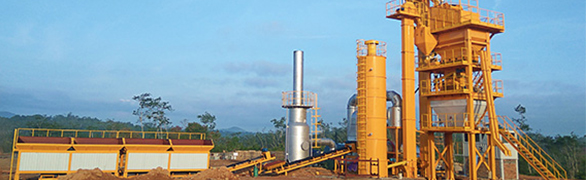
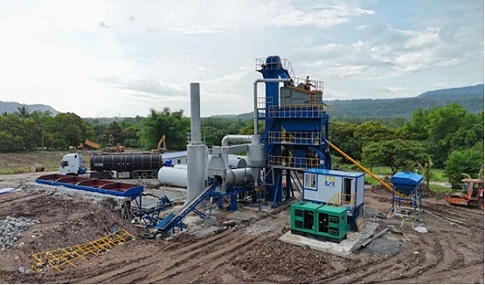
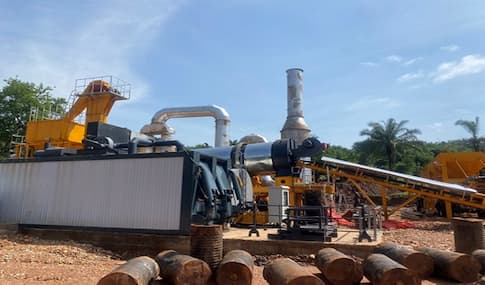
Asphalt batch mixing equipment plays an important role in modern road construction, it can produce high-quality hot mix asphalt mixture with accurate material ratio and consistent performance. Unlike continuous drum mixing plants, batch mixing plants produce asphalt mixtures in individual batches, allowing for better control of aggregate grading, asphalt content and mix quality. This makes them widely used in highways, airports, urban roads and large infrastructure projects that require strict quality standards.
Batch asphalt mixing plant, also known as batch, tower or discontinuous asphalt mixing equipment, is the core special equipment for producing high standard hot mix asphalt mixture (HMA) in road engineering. It is widely used in key infrastructure projects with high load and high durability requirements such as expressways, airport runways, large bridges and urban trunk roads.Different from the uninterrupted production line of continuous drum mixing station, this equipment adopts batch and discrete precise production mode. Each pot of mixture independently completes the full-closed-loop process of batching, weighing, drying, screening, mixing and discharging. It is the mainstream asphalt production equipment with the highest proportion accuracy and the strongest formula flexibility in the current industry.
The core advantages of the equipment are accurate proportion and adjustable formula. It can quickly switch parameters according to pavement level, construction conditions and material requirements to adapt to the production of special mixtures such as modified asphalt, SMA asphalt and recycled asphalt (RAP).Its production core does not aim at ultimate production capacity, gives priority to ensuring mixture proportion accuracy, temperature stability and finished product uniformity, adapts to multi-specification, high-standard and customized construction scenarios, and is the designated supporting equipment for high-end road infrastructure.The equipment relies on the automatic computer system to realize the automatic operation of cold material conveying, high temperature drying, hot material screening, accurate weighing, forced mixing to finished product discharge. The single batch production cycle is 40 - 60 seconds, and can be flexibly adjusted as needed.At the same time, it is equipped with a perfect environmental protection dust removal system to effectively control dust and exhaust gas emissions, taking into account construction quality and green construction standards.In engineering application, it complements the continuous mixing station with large capacity and standardization, accurately filling the production requirements of complex working conditions, high standard acceptance and multi-category mixtures.
.jpg)
The production process of batch asphalt mixing station is closed-loop orderly and highly coordinated. The eight core processes are controlled layer by layer. The whole process is accurately regulated by intelligent system to eliminate manual error and directly determine the quality of finished mixture. The specific processes are as follows:
Cold aggregate batching and conveying process: 3 - 6 groups of independent cold bins are configured for storing aggregates of different particle sizes in different areas to avoid mixing of materials.Each bin is equipped with independent variable frequency speed feeding mechanism and sealed conveyor belt, intelligent system preset flow parameters, accurate control of discharge speed and ratio, metering accuracy up to ± 1%-2%.The mixed aggregates are stably conveyed to the drying system through a sealed belt to ensure that the materials are uniform without spilling and mixing, laying a foundation for subsequent processes.
Aggregate high temperature drying heating process: normal temperature aggregate enters inclined rotary drying drum, relying on high-power intelligent burner, adapting diesel oil, natural gas and other fuels, through high temperature countercurrent heat exchange principle to complete drying temperature rise.The roller adopts a precise inclination angle of 3.5 ° with built-in lifting blades to continuously lift the aggregate to make it fully contact with the high temperature air flow, strictly control the moisture content of the aggregate to below 0.5%, and uniformly heat it to the standard mixing temperature of 150 - 180 ℃, completely eliminating the quality hazards such as asphalt bonding failure and pavement damage caused by moisture.
Hot aggregate lifting, screening and storage process: the dried high temperature aggregate is conveyed to the vibration screening system at the top of the mixing tower by a bucket elevator, and the multi-layer screen refines and classifies the aggregate to remove impurities and oversized particles.Graded coarse and fine aggregates are stored in constant temperature hot bins respectively. The bins have heat preservation, buffering and pressure stabilization functions, which can stabilize aggregate temperature, store multi-specification materials, and support rapid switching of production formulas, which is the key for equipment to adapt to multi-category production.
Multi-material precise weighing and proportioning process: this process is the core of quality control, using independent partition precise weighing mode.Hot aggregates, mineral powder, and asphalt binders of different specifications are measured separately, with an aggregate measurement error of ≤ 0.5%. Mineral powder is accurately transported and measured, and preheated liquid asphalt is measured through a constant temperature pumping system, with an error of strictly less than 0.25%. Ensure that each batch of mixture formula is in compliance and the ratio is accurate.
Forced homogeneous mixing process: materials are put into double-shaft forced mixing tank strictly according to the standard sequence of "aggregate → mineral powder → asphalt", and the two-way reversible wear-resistant blades break the agglomeration state of materials through strong shearing and three-dimensional tumbling technology.The standard mixing time is 30 - 45 seconds, and the mixing temperature is stabilized at 140 - 180 ℃ to ensure that the asphalt evenly coats each aggregate, resulting in a homogeneous, dense, segregation-free, oil-free mixture.
Discharging, storage and transportation of finished products: the mixture after mixing up to standard is quickly discharged through the electrically-controlled discharge door at the bottom of the cylinder, directly loaded into the insulated transportation vehicle, or temporarily stored in a constant-temperature sealed storage bin, effectively delaying temperature decay.Due to the strong temperature sensitivity of hot mix mixture, the equipment can flexibly adjust the discharge batch and speed according to the construction rhythm, match the site paving progress, and ensure the continuity of construction.
Dust collection and environmental protection purification process: adopt "vortex primary dust removal + bag deep dust removal" two-stage environmental protection system, drying, screening, mixing produced by the vortex dust collector preliminary collection, fine particles filtered by bag dust collector, filtration efficiency of more than 99%.The purified gas can be discharged up to standard, and the recovered dust can be used as filler for secondary utilization, which not only reduces material loss, but also eliminates dust pollution, which meets green construction standards.
Intelligent monitoring process of the whole process: intelligent system collects data such as equipment working conditions, material temperature, proportioning parameters and production capacity in real time, automatically corrects temperature, flow rate and proportioning deviation, and realizes traceability of production data.When the parameters of the equipment exceed the standard and the hidden trouble occurs, the system automatically alarms and starts the protection mechanism to ensure the stable production and the constant quality of the finished product.
.jpg)
The equipment has high precision and stable production, relying on the five core components of cold aggregate batching system, drying and heating system, hot material screening and weighing system, forced mixing system, asphalt supply and intelligent control system to cooperate with each other. Each component performs its own duties and accurately links to complete standardized production operations together.
Cold aggregate batching system (core of material supply source): as the production starting unit, it consists of 3 - 6 component cooling bin, variable frequency feeding mechanism, sealed conveyor belt and metering detection device. The storage capacity of single group of materials is 50 - 100 tons, which can meet the storage requirements of multi-particle aggregates.The core advantage of the system is independent variable frequency control, which can adjust the discharge flow of each bin separately. The conveying flow is stable at 60 - 120 tons/hour, and the metering accuracy is ± 1%-2%.The equipment comes with anti-blocking and anti-spilling design, which can avoid problems such as aggregate agglomeration, mixing and transportation jamming. It provides raw materials with accurate ratio and uniform specifications for subsequent processes, which is the basis of accurate production.
Drying heating system (core unit of material modification): with wear-resistant heat preservation drying drum and intelligent burner as the core, it undertakes the functions of aggregate dehydration, temperature rise and modification, and carries more than 97% of the heating energy consumption of the equipment.The roller is made of thickened wear-resistant steel plate, and the outer wall is provided with insulation layer. It is equipped with 3.5 ° inclination angle and regularly arranged lifting blades to ensure stable aggregate transportation and sufficient heat exchange.During operation, the burner can automatically adjust the ratio of fire and fuel according to the material humidity, feeding speed and ambient temperature, accurately reduce the moisture content of aggregate to below 0.5% and increase the temperature to 150 - 180 ℃, eliminate the problems of insufficient aggregate temperature rise, incomplete dehydration, overheating damage, etc., and avoid road seepage, cracking, bonding failure and other diseases from the root, directly determining the durability of the mixture.
Hot material screening, material storage and weighing system (precision control core): this system is the symbolic structure of intermittent equipment different from continuous equipment, integrating three functions of high temperature screening, constant temperature storage and accurate weighing.High temperature aggregate is fine graded by vibrating screen and stored in dedicated constant temperature hot bin to realize material buffering, stable pressure and constant temperature, and support rapid formula switching.It is equipped with high-precision weighing sensor and electric discharge gate, and adopts independent partition metering mode. The aggregate metering error is ≤ 0.5%, and the asphalt and mineral powder metering error is ≤ 0.25%. It effectively eliminates batch ratio deviation, ensures consistent performance of each pot mixture, and meets the requirements of high standard engineering acceptance.
Two-axis forced mixing system (finished product molding core): as the core of mixing station "heart", composed of two-axis blade mixing cylinder, synchronous gear transmission system, wear-resistant reversible blade, using strong shear, omni-directional mixing process, abandon simple mixing mode.The mixing tank adopts sandwich insulation design to maintain constant temperature operation. The standard mixing cycle is 40 - 45 seconds.Strictly follow the standard feeding sequence to ensure that the asphalt evenly wraps the aggregate, no leakage, no accumulation, no segregation, the finished mixture density can reach 95%-98%, fully adapted to the heavy load pavement construction standard, directly determines the finished mixture density, bond strength and pavement durability.
Asphalt supply and intelligent control system : integrate asphalt constant temperature storage, precise pumping, full automatic intelligent control function, and coordinate the coordinated operation of the whole process.The asphalt supply unit continuously maintains the asphalt constant temperature liquid state through the thermal insulation storage tank, heating device and variable frequency pumping system to avoid solidification, aging and abnormal viscosity and ensure accurate measurement.The intelligent control system takes PLC programmable controller as the core, and is equipped with HMI man-machine interactive interface and SCADA data monitoring system. It can fully automatically control the whole production process, collect and correct operating parameters in real time, support multi-group formula one-key switching, and has data traceability, fault alarm, remote monitoring and intelligent early warning functions. It greatly reduces manual errors and ensures long-term high-precision and stable operation of equipment.
The production quality and efficiency of intermittent mixing station rely on the closed-loop linkage and seamless connection of the five core components. Any abnormal working condition of any component will affect the quality of finished products. The overall collaborative logic forms a complete production closed-loop.
The cold aggregate batching system is linked with the drying system. The intelligent system dynamically adjusts the conveying speed of cold materials according to the drying conditions, realizing accurate matching of feeding flow and drying efficiency, avoiding the problems of too fast feeding and incomplete drying, too slow feeding and energy consumption waste, and ensuring that the moisture content and temperature of aggregates are uniform and up to standard.After drying, qualified high-temperature aggregates are stably transported to the screening system. Dry aggregates without caking can be efficiently classified and screened, and stored in a constant temperature hot storage bin to provide material support for rapid formula change and continuous batch production.
The screening and storage system is accurately linked with the weighing system. The hot bin is accurately discharged as required. The weighing system coordinates the synchronous measurement of aggregate, mineral powder and asphalt to control the overall ratio error within ± 0.2%. The weighing data is uploaded and traceable in real time to build a solid foundation for quality control.The accurately proportioned materials are put into the mixing tank according to the time sequence. The mixing system automatically adapts the rotation speed and mixing time. At the same time, the asphalt supply system accurately matches the pumping rhythm to ensure the full fusion of materials and uniform coating of asphalt, so as to realize the homogeneous molding of finished products.
The entire linkage system is coordinated by an intelligent control system, which synchronizes the operating status of each component in real time, dynamically adjusts working condition parameters, and automatically avoids and corrects abnormal problems, forming a "feed pretreatment → high temperature modification → graded storage → precise proportioning → homogeneous molding → A complete closed loop of intelligent management and control" gives full play to the production advantages of high precision, high flexibility and high quality of the equipment.
Intelligent control system is the core competitiveness of modern batch mixing station, coordinating the operation of all mechanical, electrical and thermal units of equipment, realizing the upgrade from manual operation to full-automatic precise operation, and is the core to ensure production accuracy, stability and safety.
System core components: One is PLC programmable controller, as the core operation center, receiving sensor signals, executing control logic, real-time adjustment of working conditions, and realizing automatic operation of equipment; the other is HMI human-computer interactive interface, which is a visual operation terminal, which can view operating parameters, production data and fault information in real time, and support manual fine adjustment of working conditions and formulas; the third is SCADA data acquisition and monitoring system, which is suitable for large-scale stations and realizes remote monitoring, data storage, report generation and multi-equipment overall management.
Core intelligent control function: intelligent temperature control can monitor the material temperature in real time, automatically adjust the burner fire, fan speed, stabilize the production temperature range, optimize energy consumption, eliminate temperature defects.Material ratio control can store multiple groups of construction formulas, switch working conditions with one button, automatically correct weighing errors, and ensure batch quality uniformity.Environmental protection dust removal intelligent control real-time monitoring equipment pressure difference and emission status, automatic adjustment of ash cleaning cycle and fan speed, to ensure dust removal standards.The system records production data in the whole process, supports traceability query and report export, meets the requirements of engineering acceptance audit, and is equipped with a full-dimensional fault monitoring module to warn equipment hidden dangers in advance, start protection mechanisms, and reduce downtime failure rates.
The core value of intelligent system: completely solve the pain points such as large error of traditional manual operation, lag of parameter adjustment, unstable quality, complicated operation and maintenance, etc.Through closed-loop intelligent control, the production accuracy of mixture and the stability of finished products are greatly improved, and labor, energy consumption and material loss are reduced.Relying on AI working condition prediction, Internet of Things remote operation and maintenance, intelligent fault diagnosis and other functions, predictive maintenance is realized, equipment downtime is minimized, and construction production efficiency is significantly improved.
.jpg)
The equipment is under high temperature, high dust and continuous operation conditions for a long time, and it is easy to have problems such as component wear, parameter deviation, abnormal working conditions, etc. Combined with high frequency faults in the industry, the targeted causes and troubleshooting schemes are sorted out as follows:
Mixture ratio deviation, batch quality uneven: mostly caused by load cell offset, bin gate jam, belt speed instability, control system parameters disorder, aggregate dry and wet uneven.Regularly calibrate all kinds of weighing sensors, clean up impurities on the surface; inspect the cylinder and seal of the gate, remove the stuck impurities; calibrate the belt speed to stabilize the conveying flow; reset the system formula parameters, unify the aggregate stacking environment, and reduce the difference between dry and wet materials.
Aggregate drying is not thorough, moisture content exceeds the standard: causes include insufficient burner firepower, poor fuel atomization, material lifting blade wear, feeding speed is too fast, drum sealing is poor, heat loss.It is necessary to clean the carbon deposit on the burner nozzle and adjust the air-fuel ratio to improve combustion efficiency; replace the worn and deformed lifting blades; appropriately reduce the feeding speed and extend the drying time; repair the drum sealing parts to reduce heat leakage.
Mixture segregation and uneven asphalt coating: mainly caused by abrasion of mixing blades, insufficient mixing time, abnormal asphalt temperature, disordered feeding sequence and excessive temperature difference of aggregate batches.It is necessary to replace worn blades regularly and prolong mixing time as needed; calibrate asphalt heating temperature to avoid high temperature aging and low temperature viscosity problems; strictly standardize standard charging sequence; strengthen thermal insulation of hot silos and reduce aggregate temperature difference.
Dust exceeding the standard and environmental emission not meeting the standard: mostly caused by damaged and blocked dust filter bag, dust accumulation and hardening, insufficient power of dust removal fan, pipeline air leakage and primary vortex dust removal failure.It is necessary to regularly clean and replace filter bags; repair air leakage points of dust removal pipelines to improve negative pressure adsorption effect; adjust fan parameters to ensure exhaust power; repair primary dust removal devices to restore graded filtration performance to ensure emission standards.
Abnormal temperature fluctuation, temperature control failure: caused by temperature sensor failure, poor line contact, burner control module failure, drum insulation layer damage.It is necessary to calibrate or replace the faulty sensor, check and repair the hidden danger of the circuit; repair the intelligent control module of the burner, restore the automatic temperature control function; repair and replace the damaged insulation layer to reduce heat loss.
Abnormal noise and excessive vibration of equipment: oil shortage and wear of transmission parts, loose fixing bolts of equipment, installation deviation of screen and blade, aging of shock absorbing parts of base are the main causes.It is necessary to fill high temperature resistant lubricating oil for bearings, gears and other parts, replace worn parts; tighten equipment bolts comprehensively; calibrate the installation position of screens and blades; replace aging shock absorbing parts to reduce vibration and noise during operation.
Scientific graded normal operation and maintenance is the key to prolong the service life of equipment, stabilize production accuracy, and reduce failure and operation costs.Following the principle of "prevention first, regular maintenance, graded control", the implementation of graded maintenance mechanism can extend the service life of equipment to 10 - 15 years, ensuring long-term efficient and stable operation of equipment.
Daily start-up inspection and maintenance: before start-up, comprehensively clean up impurities and asphalt caking on equipment surface, screen and bin; check pressure difference data of dust removal system to confirm that filter bag working condition is normal; check operation status of burner, oil circuit, circuit and belt to eliminate oil leakage, deviation and abnormal sound; drain condensed water of air compressor, check lubricating oil and hydraulic oil level; put into production officially after no-load test run is correct, and avoid daily faults from the source.
Weekly deep cleaning and maintenance: deep cleaning of dust and asphalt residues in drying drum, dust removal pipeline and fan to ensure smooth heat exchange and ventilation; filling high temperature resistant special lubricating oil for bearings, motors, gears, chains and other transmission parts to prevent dry grinding wear; checking the wear of stirring blades and screens, cleaning blocked screen holes; calibrating belt tension and verticality to prevent deviation and slipping faults.
Monthly system calibration and maintenance: finely calibrate weighing, temperature and flow sensors to ensure measurement and temperature control accuracy; comprehensively clean carbon deposits and deposits in asphalt storage tanks, pipelines and heating coils to ensure stable asphalt transportation; tighten electronic control circuit terminals to check potential aging hazards of the circuit; repair the sealing and insulation structure of the hot storage bin, repair damaged parts; detect the lubricating oil state of the reducer, and replace the oil as required.
Seasonal and annual in-depth maintenance: annual in-depth maintenance shall be carried out during shutdown, wear thickness of drying drum, lifting blade, stirring blade and other vulnerable parts shall be detected, and timely repair and replacement shall be carried out; professional adjustment of burner, thorough cleaning of oil circuit system, improvement of combustion efficiency and reduction of energy consumption; batch replacement of aging filter bag and sealing parts of dust removal system; comprehensive inspection of steel structure, welding seam and support of equipment, reinforcement of loose parts; calibration of measurement and temperature control system of complete machine, and restoration of ex-factory accuracy of equipment.
Special maintenance points for core components: the drying system regularly cleans the carbon deposit of the burner, professionally adjusts once a year, replaces the aging insulation and sealing parts, monitors the wear state of the cylinder body; the mixing system regularly checks the wear of the blades and lining plates, alternately uses reversible blades, and timely cleans the asphalt caking in the cylinder; the asphalt supply system regularly washes the pipeline and storage tank, checks the working conditions of the heating system, and does a good job of pipeline insulation to prevent asphalt aging and solidification; The dust removal system shall monitor the pressure difference normally, remove ash regularly and replace filter bags, repair the tightness of pipelines, clean dust deposits in fans, and ensure dust removal up to standard.
Core recommendations for O & M management: Establish a complete operation and maintenance account, record inspection, maintenance, repair and replacement information in detail, sort out fault rules, and carry out targeted preventive maintenance; prepare bearings, filter bags, blades, seals, belts and other wearing parts to shorten equipment downtime; strictly abide by the original operation and maintenance specifications, use appropriate consumables and accessories; regularly carry out professional training for operators and operation and maintenance personnel, and standardize operation procedures; Carry out vibration analysis, oil detection, thickness monitoring and other condition monitoring technologies to achieve predictive maintenance and maximize the stability of equipment operation.
.jpg)
Intermittent asphalt mixing station has become the core standard equipment of high-grade roads and key infrastructure projects by virtue of its precise proportioning, flexible formulation, high-quality finished product performance and stable and controllable production advantages.The production efficiency, finished product quality and service life of the equipment completely depend on the coordinated operation of the five core components, the precise control of the intelligent system, and the scientific and standardized normal operation and maintenance.Mastering the working principle of equipment, component functions, troubleshooting and maintenance skills can help construction units continuously optimize production processes, strictly control construction quality, reduce operation costs, reduce equipment failures, and provide solid equipment support and technical guarantee for high-quality asphalt pavement construction.