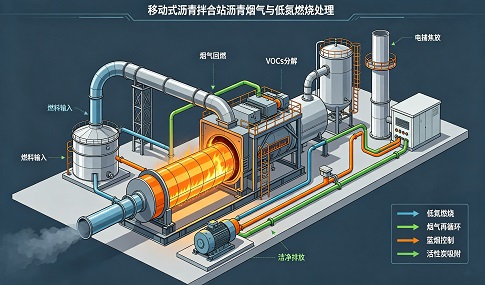
In infrastructure projects such as the construction of new roads, municipal maintenance, the development of rural roads and the upgrading and extension of motorways, asphalt mixing plants are the core equipment for producing hot-mix asphalt (HMA). The two main types available on the market are mobile and fixed asphalt mixing plants. There are significant differences between the two in terms of structural design, production capacity, mobility, cost, suitability for specific projects and long-term operational returns.
Construction firms and project procurement officers often find it difficult to distinguish between the two when selecting equipment. This article provides a comprehensive analysis of the key differences between mobile and fixed asphalt mixing plants, drawing on industry technical specifications, market quotations, and practical project case studies. It includes cost comparisons, pros and cons, selection criteria, and ROI calculations, providing road and bridge construction contractors and equipment procurement managers with a comprehensive and professional reference.
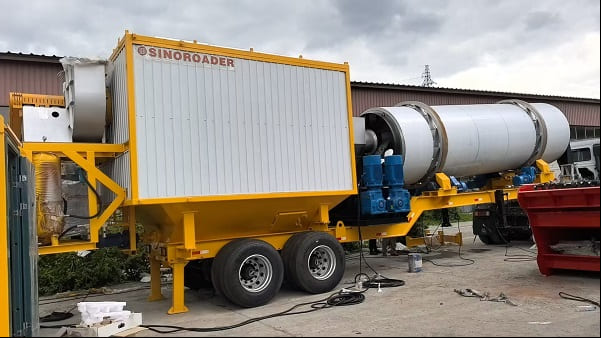
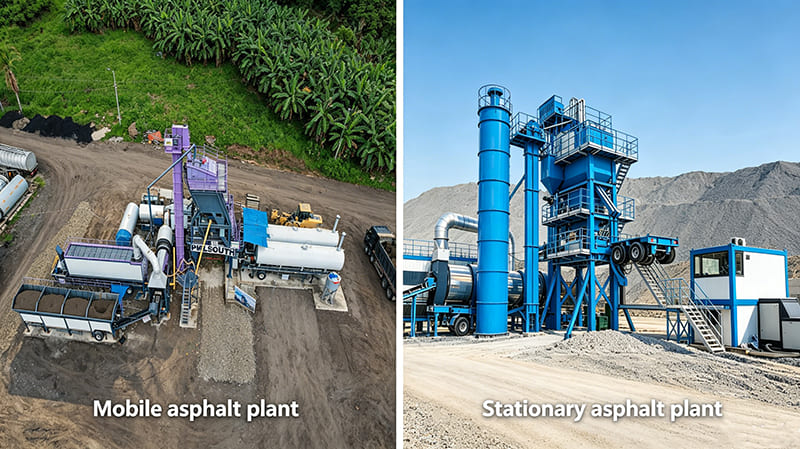
A mobile asphalt mixing plant is an integrated, modular, portable piece of equipment used to produce asphalt mix. Fitted with a trailer chassis and a travelling mechanism, it can be relocated flexibly to different construction sites. It is primarily used to address the issues of high costs and significant wastage associated with transporting hot asphalt long distances to remote construction sites. The equipment incorporates a full range of systems, including batching, drying, mixing, bitumen supply, dust extraction and electrical control. No large concrete foundations are required; a level, hardened open area is sufficient for operation. Commissioning can be completed within 1–3 days of arrival on site. This easy-to-dismantle, reassemble and transport unit has a small footprint and offers production capacities ranging from 30 to 240 tonnes per hour, making it suitable for most small- to medium-sized road construction projects. Furthermore, as it is fitted with environmentally friendly dust extraction equipment, the process of obtaining environmental impact assessment approval is significantly simplified.
The equipment falls into two main categories: continuous drum-type and batch-type. The continuous drum-type model is popular for small and medium-sized projects, with a production capacity of 30–120 tonnes per hour. Drying and mixing are carried out simultaneously. It has a simple structure, low energy consumption and the ability to incorporate recycled asphalt from old pavements. This makes it suitable for small-scale maintenance projects such as rural roads and emergency road repairs.
The batch-type plants are equipped with independent screening and precise weighing systems. This ensures high dosing accuracy and the ability to switch between multiple formulations. They are ideal for high-quality construction work, such as modified and coloured asphalt, with a production capacity of 80–240 tonnes per hour. Their production standards are comparable to those of fixed plants and they are widely used for mountainous road upgrades, urban and rural road maintenance, section-by-section motorway repairs and temporary roadworks at remote construction sites.
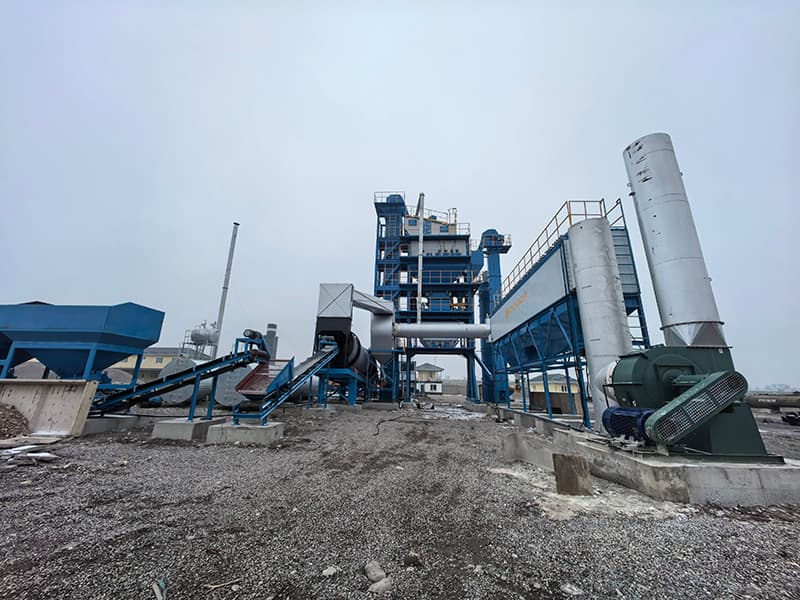
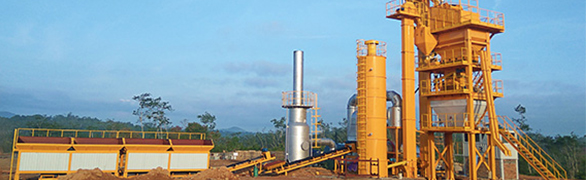
A stationary asphalt mixing plant, also known as a permanent asphalt mixing plant, is a large-scale, heavy-duty production facility that requires the casting of a permanent reinforced concrete foundation. Once installed, it operates from a fixed site, offering high production. capacity, High precision and stable, large-volume output. The equipment features a modular, independent layout, with each core component mounted separately. Its robust structure enables continuous production throughout the year. Standard production capacities range from 160 to 400 tonnes per hour, while customised models can reach up to 500 tonnes per hour. Commissioning the equipment involves processes such as foundation casting, crane installation and commissioning, which takes 2–6 weeks. A large, dedicated site is required and the equipment can be equipped with optional systems such as hot recycling, intelligent control and flue gas monitoring. There are two main process types. The intermittent batch-type offers extremely high metering accuracy and allows switching between multiple mix designs. It is suitable for high-grade road construction and has strong capabilities for incorporating recycled materials. The continuous drum-type offers high output, low failure rates, and simple operation and maintenance. This makes it suitable for the long-term mass production of standard asphalt mixtures.
Thanks to their stable, high-volume production capacity and precise output, fixed asphalt mixing plants are used primarily for large-scale, long-term, centralised road surfacing projects. Key application scenarios include the construction of new motorway mainlines and airport runways, long-term municipal mixing supply centres, and road network development in large industrial parks. They are also used for multi-year municipal maintenance turnkey contracts and large-scale, contiguous road construction projects.
Comparison of Key Differences Between Mobile and Fixed Asphalt Mixing Plants
Although both types can produce hot-mix asphalt, there are fundamental differences in terms of mobility, production capacity, suitability for construction, cost, and control capabilities. These differences are clearly shown in the detailed table below:
Total Cost Structure of Fixed Asphalt Plants
From a life-cycle total cost of ownership (TCO) perspective, the costs of a mobile asphalt plant fall into two main categories: one-off capital expenditure and long-term operating costs. Each category offers distinct cost advantages suited to specific scenarios. Regarding one-off capital expenditure, although the purchase price of the equipment is relatively high, the setup costs are extremely low.
|
Compare Dimensions
|
mobile asphalt mixing station
|
stationary asphalt mixing plant
|
|
mobility performance
|
Very mobile, trailer chassis overall transfer, can be replaced several times a month site
|
Completely fixed, relocation needs to be dismantled as a whole, re-poured foundation, relocation cost is extremely high
|
|
Installation cycle
|
1 - 3 days to complete installation and commissioning, free of heavy concrete foundation
|
2 - 6 weeks construction with large reinforced concrete permanent foundation
|
|
productivity interval
|
30 - 240 tons/hour, mainly medium and small capacity
|
160 - 400 tons/hour, super capacity continuous output fuselage structure
|
|
fuselage structure
|
Compact modularity, lightweight components, no overrun problems for road transport
|
Split heavy structure, independent large bin, screening, storage unit, large volume
|
|
Initial civil construction investment
|
Very low, only simple hardening of the ground, no foundation pouring costs
|
High cost of civil engineering, large investment in foundation, enclosure, material yard and environmental protection
|
|
mixture transportation cost
|
On-site production, short-distance transfer of hot mixed materials, greatly reducing transportation losses
|
Centralized factory production, finished materials need long-distance truck delivery to each construction point
|
|
Mixture quality control
|
Medium and high-end batch models can meet the requirements of conventional high-standard roads, and the matching accuracy of small roller stations is limited.
|
Metering, screening, temperature control system comprehensive upgrade, mixture uniformity, matching accuracy industry top
|
|
RAP adaptation
|
Small and medium-sized mobile station mixing ratio is limited, high-end models can be mixed stably
|
Support large-scale old asphalt recycling, complete hot recycling production line, large-scale cost reduction
|
|
Adapt project cycle
|
Short-term, temporary and scattered works within 6 months
|
Long-term, perennial and multi-year stable large-scale construction projects
|
Key advantages:
- Flexible relocation: suitable for dispersed, remote and short-term projects. In scenarios such as rural roads, emergency repairs in the field and phased construction, a single mobile plant can serve multiple dispersed sites throughout the year, eliminating the need for repeated investment in multiple sets of equipment.
- Rapid installation: minimal initial civil engineering investment required. No need to pour heavy foundations; the plant can be set up on levelled ground, saving tens of thousands of yuan in foundation construction costs. Production can commence within three days of arrival, thereby shortening the project preparation cycle.
- Significantly reduced hot asphalt transport costs. Mixing takes place on site, with the transport distance for hot mix limited to 3 kilometres. This prevents asphalt cooling and mix segregation caused by long-distance transport and reduces fuel consumption and vehicle hire costs.
- Lower capital investment threshold: Suitable for small and medium-sized construction enterprises. The purchase cost of a small mobile drum plant is far lower than that of a complete fixed plant. making it suitable for small and medium-sized road and bridge companies with Limited working capital and scattered projects.
Minimal site constraints. It can be used on temporarily requisitioned land or in confined working areas. Environmental approval procedures are simplified and small-scale equipment produces lower total dust emissions.
Significant shortcomings:
- Low production capacity ceiling: unable to undertake ultra-large-scale continuous projects. 240 TPH is the production capacity ceiling for mobile plants. For expressway mainline projects with an average daily volume of 10,000 tonnes, the output rate cannot keep pace with the project schedule.
- Significant wear and tear from frequent relocation requiring more frequent maintenance. Each trailer transport causes vibration and wear to core components, such as the screening, weighing and mixing systems. Frequent long-term relocation increases the costs of spare parts and labour for maintenance.
- Limited capacity for high-end mix production. Small mobile drum plants lack sufficient weighing accuracy. This makes it difficult to consistently produce modified bitumen with a high admixture content or specialised permeable asphalt. Large-scale hot recycling systems are difficult to integrate.
- Higher overall costs for long-term, large-scale operations. If production is carried out continuously at a single site throughout the year, the Depreciation and maintenance costs resulting from frequent site relocations will increase the overall production cost per tonne of asphalt year on year.
Key advantages:
- Stable output with ultra-high production capacity and significant economies of scale. - A single fixed plant can achieve a daily production capacity of several thousand tonnes, meeting the demands of large-scale, continuous construction projects, such as motorways and airports. The equipment can also operate stably and continuously throughout the year.
- Comprehensive quality control of the mix is suitable for high-standard projects. Multi-stage screening, independent and precise weighing, and large, insulated storage silos ensure controllable mix proportions and temperature uniformity. This enables compliance with stringent testing standards for motorways and airports.
- Large-scale utilisation of recycled asphalt pavement (RAP) can significantly reduce raw material costs. It can be integrated with complete sets of large-scale, RAP hot recycling equipment. This allows for a higher proportion of recycled pavement waste in the mix. This reduces raw material costs by 20–50%.
- Lower production costs per tonne can be achieved in the long term. This is due to significant potential economies of scale. The equipment features a robust structure and long maintenance intervals. Unit costs for fuel, labour, etc. depreciation continue to decrease as annual output increases.
- Comprehensive support systems and enhanced environmental and intelligent capabilities. Can be equipped with large baghouse dust collectors, flue gas purification systems, fully automated intelligent control systems, and finished product storage silos of various capacities. This meets stringent urban environmental policies and ensures a stable material supply during night-time operations.
Significant weaknesses
- The plant is completely immobile and tied to a single project. If there are no stable roadworks in the vicinity, the equipment will remain idle for long periods, resulting in significant capital tie-up.
- There is a huge one-off upfront investment in equipment procurement, reinforced concrete foundations, hardening of the aggregate yard, environmental protection and noise reduction measures, powder silos and civil engineering works for asphalt storage tanks. The total initial investment is several times that of a mobile plant.
- There are high transport costs for finished asphalt. Lorries must transport hot mix from the plant to all construction sites. For long-distance projects, fuel consumption, vehicle hire and material cooling losses will significantly increase construction costs.
- There is a long set-up period, making it uneconomical for short-term projects. From site planning and foundation works to equipment commissioning, a minimum of half a month is required. For small-scale projects with a duration of less than six months, the costs of establishing the plant cannot be amortised and recouped.
The total purchase price of an asphalt mixing plant is significantly influenced by production capacity, the mixing process, environmental protection specifications, the level of automation, and the brand. The following outlines the price ranges in US dollars for brand-new equipment in the industry, converted to reflect domestic procurement cost logic. It distinguishes between one-off procurement, civil engineering works, and the total cost of ownership (TCO) for long-term operation.
Mobile asphalt mixing plants
Continuous drum-type mobile plants (30–100 TPH): Prices range from US$80,000–250,000. Small domestic models cost several hundred thousand RMB.
Batch-type mobile plants (80–240 TPH): US$200,000–600,000 or more. Prices for medium- to large-capacity, high-precision models are significantly higher.
Fixed asphalt mixing plants:
Continuous drum-type fixed plants (160–300 TPH): US$80,000–200,000
Batch-type fixed plants (160–400 TPH, high capacity): US$130,000–1,000,000 or more. The cost of large 4000-type fixed plants purchased domestically can reach tens of millions of RMB.
For the same production capacity specifications, the purchase price of mobile equipment (excluding accessories) is 20–40% higher than that of fixed plants. This premium is allocated entirely to the trailer chassis, modular vibration damping, lightweight special-purpose steel structures and design adaptations for oversized road transport. The manufacturing costs of the mechanical structure for mobile plants are higher to achieve site-to-site mobility.
Cost Structure of Fixed Asphalt Plants
The overall cost of mobile asphalt plants comprises one-off capital expenditure and long-term operating costs with distinct characteristics tailored to specific construction scenarios. Regarding one-off costs, while the purchase price of the equipment itself is relatively high, there is no need for large-scale civil engineering works. Only minimal costs for simple site hardening are required, resulting in a significant advantage in terms of initial infrastructure investment.
In terms of long-term operating costs, the flexibility to relocate the equipment brings with it additional ongoing expenditure, including towing costs and labour costs for dismantling and reassembling the equipment resulting from frequent relocations. Furthermore, repeated transportation and vibrations accelerate wear and tear, leading to substantial maintenance and repair costs. Overall, mobile asphalt plants are better suited to short-term construction projects and remote sites. By producing asphalt on site, substantial savings can be made on material transport costs, effectively offsetting the additional costs incurred by plant operation and ultimately resulting in a lower overall project cost.
Total Cost Structure of Fixed Asphalt Plants
From a full life-cycle TCO perspective, the costs of a mobile asphalt plant fall into two main categories: one-off capital expenditure and long-term operating costs. Each category offers distinct cost advantages suited to specific scenarios. In terms of one-off capital expenditure, while the purchase price of the equipment itself is relatively high, the costs associated with setting up the plant are extremely low. Only simple site hardening is required, eliminating the need for costly civil engineering works such as foundation pouring or large-scale plant facilities. This results in a low initial investment threshold and rapid deployment.
However, costs during the long-term operational phase are relatively high due to the frequent dismantling, reassembly and relocation of the equipment between regions required by the mobile nature of construction sites. This results in ongoing transport and labour costs for these operations, and simultaneously, the vibrations incurred during transit accelerate component wear and tear. This significantly increases the frequency and cost of maintenance, leading to higher cumulative operational and maintenance costs over the long term.
For short-term, sporadic or remote projects, opt for a mobile plant. The savings on civil engineering and material transport far outweigh the cost of the equipment itself.
For long-term urban mixing plants or continuous large-scale infrastructure projects, opt for a fixed plant. Long-term, large-scale production spreads the high upfront civil engineering costs, resulting in higher profits per tonne of mix.
We provide clear selection guidelines for different scenarios by combining the five core dimensions — project duration, annual output, construction location, quality standards, and budget — whilst distinguishing between the appropriate applications for drum-type and batch-type processes.
The payback period for asphalt batching plants generally ranges from 12 to 36 months. This is determined by four key factors: annual output, net profit per tonne of mix, total equipment investment and idle rate. Below, we present realistic industry calculation models for both types of equipment.
The market price range for hot-mix asphalt is US$80–120 per tonne. After deducting core production costs such as raw materials, fuel, and labour, the net gross profit per tonne of product can reach US$10–20. Due to seasonal stoppages in road construction, however, the annual effective utilisation rate of relevant production equipment remains at only 60–80 per cent, with overall operations being subject to significant seasonal constraints. The level of return on investment in this industry is influenced by four main factors: annual output; relocation freight costs; depreciation of civil engineering works; and wear and tear during production and maintenance.
The overall investment threshold for this project is moderate. The one-off total investment covers all initial fixed costs, including the procurement of production equipment and construction of basic site facilities. The total investment ranges from US$150,000 to US$300,000. No significant additional capital is required, which effectively lowers the barriers to project implementation and reduces investment risk.
Once production and operations have stabilised, the project's annual output capacity can be consistently maintained at between 50,000 and 100,000 metric tonnes. With ample flexibility in production capacity, the scale of production can be adjusted in line with market demand to ensure continuity and stability of production and operations. Relying on a mature production model and stable output, the project delivers impressive profitability, with annual net profits consistently reaching between US$500,000 and US$1.5 million. This range of returns accommodates different operational capacity levels, demonstrating the project's strong overall profitability resilience.
At the same time, the project offers an excellent return on investment, with a payback period of just 12–24 months. The short payback cycle is a core advantage, enabling the rapid recovery of initial capital and significantly reducing long-term investment risks. It possesses the desirable The investment has the following characteristics: low costs, stable production capacity, high profitability and a short payback period. This results in high overall commercial value and feasibility.
ROI characteristics: It offers rapid initial payback and is suitable for small and medium-sized construction firms taking on flexible contracts. However, after 3–5 years of continuous use, maintenance costs associated with frequent site relocations continue to rise, leading to a slight year-on-year decline in profits.
The one-off investment cost for this project covers equipment procurement, foundation works, and a full suite of supporting on-site facilities. Total investment ranges from US$500,000 to US$1.5 million or more. Once operational, the plant has stable production capacity, with an annual output of 150,000–300,000 metric tonnes, enabling large-scale, routine production.
In terms of economic benefits, the project demonstrates impressive profitability, with annual net profit consistently maintained within the range of US$1.5 million to US$4 million. The return on investment is favourable, with an overall payback period of 18–36 months. This enables capital to be recouped within a relatively short timeframe, offering excellent investment value and stability of profitability.
ROI characteristics: Although the initial capital requirements are high and the payback period is relatively long, production costs per metric tonne will continue to decline after 2–3 years of stable operation, leading to stable, high profits over the long term (5–10 years) and significant economies of scale.
The enterprise’s fixed operating costs can be effectively reduced by broadening business channels and enhancing equipment utilisation efficiency. The overall annual utilisation rate of equipment should be continuously improved, downtime and periods of idleness should be minimised as much as possible, and orders for various projects in the surrounding area should be actively secured. Adopting a model of concurrent multi-project operations enables fixed expenses such as equipment depreciation, site costs and operation and maintenance to be spread across multiple projects, optimising equipment resources and enhancing operational efficiency.
Upgrading equipment with intelligent and integrated systems reduces core production costs, including those for raw materials, labour and logistics. Equipping plants with RAP recycling systems significantly increases the utilisation rate of recycled asphalt waste, reducing raw material costs by 20–50% and saving on procurement expenditure. Fully automated intelligent control systems simplify on-site processes, reducing the need for frontline operators and steadily lowering labour costs in the long term. Combining the operational model of mobile plants producing close to construction sites with fixed plants for centralised aggregate stockpiling reduces the material transport radius, significantly cutting logistics costs.
A standardised system for operating and maintaining equipment has been established to ensure stable and orderly production whilst mitigating additional losses caused by breakdowns. A comprehensive, routine equipment maintenance programme has been formulated to standardise daily inspection and maintenance procedures, enabling potential equipment faults to be identified in good time. This effectively minimises losses resulting from project delays.
Production stoppages caused by equipment breakdowns are prevented, ensuring the continuous and stable operation of the production line. This provides a solid foundation for the efficient fulfilment of project commitments, as well as the sustained reduction of costs and improvement of efficiency.
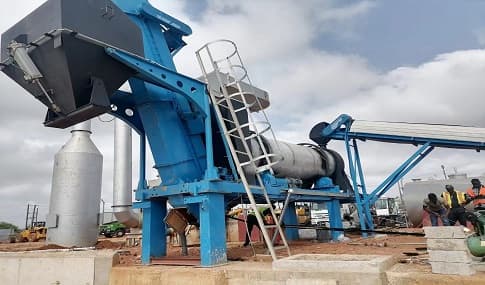
Mobile asphalt mixing plants offer key advantages in terms of mobility, rapid commissioning, and low civil engineering investment costs. They address the challenges of transporting materials for remote, short-term and dispersed projects. With low procurement barriers and a quick return on investment, they are ideal for road maintenance, rural roads and small-to-medium-sized, scattered construction projects. However, their production capacity is limited, and they are relatively expensive to relocate and maintain over the long term, making them unsuitable for projects requiring ultra-high precision or extremely high output.
Fixed asphalt mixing plants achieve long-term cost advantages through high production capacity, precise mix production and large-scale utilisation of recycled materials. They are suited to long-term, high-volume projects, such as motorways and airports, and to permanent urban asphalt mixing plants. Over the long term, they yield higher profits per tonne of mix. However, they require substantial initial investment in civil engineering and equipment, cannot be relocated and rely heavily on stable orders.
There is no inherent superiority or inferiority between mobile and fixed asphalt mixing plants. The key principle is to choose mobile plants for short-term flexibility and fixed plants for long-term mass production.
.jpg)