In the industrial production of asphalt mixture, drying, heating, screening and transportation processes will continuously produce a large number of high temperature dusty exhaust gases, including PM2.5, PM10 inhalable particles and mineral ultrafine powder. As the core environmental protection treatment and resource recovery equipment, the dust collector of asphalt mixing station can efficiently purify high temperature flue gas, intercept fine dust, and recover mineral fillers that can be reused. It is the core supporting equipment for standard emission, safe production, cost reduction and efficiency improvement of mixing station. According to the general technical standards of the industry, this paper comprehensively dismantled the definition value, core structure, operation principle, equipment classification, model details, station process differences, fault diagnosis and environmental protection compliance standards of the dust collector of asphalt mixing station, providing systematic technical reference for equipment selection, operation and maintenance management and environmental protection rectification of construction enterprises.
Dust collector for asphalt mixing station (Industry commonly known as bag dust removal equipment, bag filter), is specially adapted to asphalt mixing station high temperature, high dust, variable load conditions of environmental treatment and resource recovery integration equipment, mainly used to collect aggregate drying, heating process of high temperature dust exhaust gas, through multi-stage physical filtration technology separation of mineral dust and suspended particles in the flue gas, purified clean air standard discharge, interception of collected ultrafine powder can be used as mineral filler for asphalt mixture production.
The equipment is widely suitable for batch mixing station, continuous drum mixing station and mobile asphalt mixing equipment. It can handle high temperature dust-containing flue gas of 120℃~200℃. It is different from ordinary industrial dust remover. It has the exclusive characteristics of high temperature resistance, anti-viscosity, wear resistance and continuous uninterrupted operation. It can solve the complex pollution problem of aggregate dust, combustion fly ash and asphalt soot in asphalt production process.
.jpg)
Modern asphalt mixing production must be equipped with standardized dust removal system, which is the rigid requirement of environmental protection compliance, safe production, quality control and cost control, and also the basic guarantee of large-scale and green construction. Its core value runs through the whole production process and cannot be replaced.
Dust-containing waste gas generated by asphalt drying process is the main air pollution source of road construction industry. Uncontrolled emission will lead to excessive concentration of particulate matter in plant area and surrounding areas, resulting in air quality degradation, dust deposition pollution of soil and vegetation, etc. At present, strict emission standards for asphalt mixing stations have been issued in various provinces, cities and international markets, clearly limiting the emission concentration of particulate matter, flue gas turbidity and non-organized dust. After supporting professional dust removal system, the comprehensive dust removal efficiency of the equipment can reach more than 99%, the exhaust emission concentration can be stably controlled at 10~30mg/m³, which fully meets the strict control requirements of national standards and places, and eliminates compliance risks such as environmental protection fines, shutdown rectification and qualification limitation.
Mineral dust produced by mixing station contains crystalline silicon dioxide, which can cause pneumoconiosis, respiratory tract inflammation and other occupational diseases if inhaled for a long time; at the same time, when suspended fine dust reaches critical concentration, there is potential safety hazard of dust explosion. In addition, dust accumulates on the surfaces of electrical equipment, lines, and mechanical components, which can easily cause faults such as short circuits, fires, and equipment jams. The perfect dust removal system can reduce the dust concentration in the operation area from the source, purify the production environment, and comprehensively avoid the health risks of personnel and the safety hazards of the factory area.
Ultrafine dust dispersed disorderly in the production process will destroy the aggregate gradation balance, reduce the bond strength between asphalt and aggregate, lead to excessive void ratio of mixture, decrease water stability, and finally cause quality diseases such as pavement cracking, seepage, pit and groove. The powder accurately recovered by the dust removal system has uniform particle size and stable purity, and is quantitatively re-mixed into the mixture, which can accurately optimize the mixture gradation, improve the asphalt bonding performance and finished product stability, and ensure the road construction quality to meet the standard.
On the one hand, the recycled ultrafine powder can completely replace the purchased mineral powder, greatly reduce the purchase expenditure of raw materials and realize the resource utilization of waste materials; on the other hand, the dust removal system can intercept hard wear dust, protect core components such as induced draft fan, air duct and screening equipment, reduce equipment wear, blockage and corrosion failure, reduce maintenance, replacement and shutdown losses, and significantly reduce the comprehensive operation and maintenance cost of the station for long-term operation.
The dust removal system of the standardized asphalt mixing station is a multi-level integrated equipment, not a single filter bag equipment. It consists of six modules: pretreatment unit, filtration unit, ash cleaning unit, ash conveying unit, power unit, and control and monitoring unit. All components operate in coordination, forming a complete closed-loop system of dust collection, filtration, ash cleaning, recycling, and emission, suitable for high-temperature continuous production conditions.
It mainly includes cyclone dust collector, multi-cyclone separator, inertia settling box (dust box) and knockout dust collection box, which is installed between the outlet of drying drum and main dust collector and is the first protective barrier of the system. The core function is to use centrifugal force, gravity and airflow inertia to preferentially intercept large particles of coarse dust of 20~75μm, remove 50%~90% of coarse dust at a time, greatly reduce the dust load of the rear bag filter unit, reduce the scouring wear of high temperature hard dust on the filter bag, effectively prolong the service life of the filter material, and recover coarse aggregate fine materials to achieve preliminary resource utilization.
It is composed of wear-resistant steel air duct, air inlet guide plate and air flow distribution cavity. The elbow and reducing position of air duct are made of wear-resistant thickened steel, which adapts to the standard air flow velocity of 12~18m/s. It can avoid local wear and pressure loss caused by turbulent air flow while ensuring dust suspension transportation. The flow guide plate can evenly distribute the dusty airflow entering the dust removal box, eliminate the problems of local airflow concentration and local overload wear of the filter bag, and ensure the stable airflow of the entire system.
As the core filter carrier of dust removal system, it adopts thickened sealed steel box structure, external insulation and anti-corrosion treatment, which can withstand long-term high temperature operation above 190℃ and avoid flue gas condensation and box corrosion. The box body is divided into dirty air chamber and clean air chamber by pattern plate. Some models adopt sub-bin structure, which can realize independent ash cleaning and non-shutdown operation in single bin to ensure production continuity. The cabinet is equipped with sealed access door, observation port and temperature measurement and pressure measurement points, which is convenient for daily inspection and maintenance.
Filter bag is the core material of dust removal accuracy. The filter bag for asphalt mixing station adopts special materials such as aramid (Nomex), high temperature resistant glass fiber, polyester needle felt, PTFE film, etc., which can withstand high temperature of 190~250℃ for a long time. It has anti-oil smoke adhesion, anti-corrosion and anti-aging characteristics, and can accurately capture PM2.5 ultrafine particles. Supporting cage with galvanized anticorrosive steel wire can effectively prevent filter bag collapse and deformation under negative pressure operation, and ensure air permeability and filtration uniformity.
The main stream is pulse jet ash cleaning system, including pulse solenoid valve, injection pipe, air storage tank, timing controller and pressure difference sensing device. Some old models are equipped with reverse blowing ash cleaning and mechanical vibration ash cleaning structure. The core function is to regularly and quantitatively remove the dust layer attached to the filter bag surface area, restore the filter bag permeability, stabilize the system pressure difference and air volume, and ensure the long-term efficient operation of the equipment.
The bottom of the box is equipped with a large inclination conical ash hopper, the inclination is greater than 60°, which can effectively avoid dust bridging and accumulation hardening. Equipped with rotary discharge valve, screw conveyor and pneumatic conveying device, it can continuously and quantitatively convey the ultra-fine powder falling from the cleaned ash to the mixing system to realize resource recycling. The excess dust can be stored in a closed manner to prevent secondary dust pollution.
It is composed of frequency conversion centrifugal induced draft fan, exhaust chimney and detection port. The induced draft fan provides negative pressure power of the system. It adapts to the air volume demand of different production loads through frequency conversion speed regulation to ensure stable transportation and filtration of dust-containing smoke. Environmental protection detection ports are reserved for exhaust stack, which can monitor exhaust particulate matter concentration and flue gas turbidity in real time to ensure standard emission.
It is equipped with PLC intelligent control system, pressure difference sensor, temperature sensor and time sequence controller, which can monitor the core parameters such as pressure difference of box body, flue gas temperature and system air volume in real time, automatically adjust ash cleaning cycle, injection pressure, fan speed, automatic alarm of over-temperature, overpressure and fault state, and realize linkage start-stop and full-automatic unattended operation of dust removal system and mixing main machine.
.jpg)
The dust removal system of asphalt mixing station adopts the principle of negative pressure multi-stage physical separation and filtration, and the whole process is closed-loop continuous operation of dust capture → coarse dust pretreatment → fine dust precise filtration → filter bag regeneration and ash removal → dust recovery and reuse → clean gas emission.
In the drying drum of the mixing station, the normal temperature aggregate is stripped and enshrouded by the high temperature hot air flow under the tumbling and scouring action of the high temperature hot air flow, forming high concentration high temperature dust gas, and at the same time, the burner fuel combustion produces a small amount of fly ash and carbon smoke particles. Frequency conversion induced draft fan continuously generates stable negative pressure, uniformly extracts dusty waste gas from drying drum, hot aggregate elevator, vibrating screen, mixing tank and other points, and transports it to dust removal system through wear-resistant air duct to complete dust capture in the whole area.
Dust-containing flue gas first enters cyclone dust collector or inertia settling box, high-speed rotating airflow generates centrifugal force, combined with gravity settling and airflow inertia principle, large particles of coarse dust above 20μm are thrown to the equipment cylinder wall, and fall into the bottom ash hopper along the wall surface to complete collection. This stage can remove most of the abrasive coarse particle dust, greatly reduce the filter load and scouring loss of the rear filter bag, and fine dust continues to enter the main filter box with the airflow.
The fine dust containing smoke after pretreatment enters the dirty air chamber of the bag box evenly and penetrates the filter material inward from the outside of the filter bag. PM2.5 and PM10 are trapped firmly on the outer surface of filter bag under the synergistic effect of inertial collision, fiber interception, Brownian diffusion and electrostatic adsorption. As the filtration continues, a uniform porous dust filter cake will be formed on the filter bag surface, which can further improve the fine dust filtration accuracy, so that the overall dust removal efficiency can reach 99.9%, completely eliminating the escape of ultrafine dust. Clean air penetrates the filter bag into the clean air room and is finally discharged through the chimney.
With the continuous thickening of dust filter cake, the operating pressure difference of the system will gradually increase, and the air volume and filtration efficiency will decrease. When the pressure difference reaches the preset threshold or reaches the scheduled ash cleaning cycle, the PLC control system automatically starts the pulse ash cleaning program, and the high-pressure compressed air of 60~70psi in the air storage tank is instantly sprayed into the filter bag through the electromagnetic valve, so that the filter bag expands and vibrates rapidly, and the dust filter cake on the surface layer falls off as a whole and falls into the bottom ash hopper. Dust cleaning adopts intermittent blowing mode in different bins, local dust cleaning and no shutdown in the whole area to ensure production continuity.
Ultrafine mineral powder collected in ash hopper is quantitatively transported to mixing system through rotary discharge valve and screw conveyor, and mixed into asphalt mixture as mineral filler to accurately replace purchased mineral powder and optimize mixture grading performance. Only a small amount of excess dust is stored in closed storage, and there is no dust overflow and waste in the whole process, realizing resource closed-loop utilization.
According to the filtration principle, structure form and applicable conditions, the dust collectors commonly used in asphalt mixing stations are divided into five categories. The dust removal accuracy, operation cost and adaptation scenarios of different equipment are significantly different. At present, the two-stage dry system of "cyclone pretreatment + bag dust removal" is the optimal mainstream configuration in the industry.
Bag dust collector is standard high-precision dust removal equipment of modern green asphalt mixing station. It adopts physical filtration principle of high temperature resistant fiber filter material, which can capture ultrafine particles above 0.1μm. The comprehensive dust removal efficiency can reach 99%~99.9% and the exhaust emission concentration can stably meet ultra-low emission standards. According to the ash cleaning methods, it can be divided into pulse jet type, reverse blowing type and mechanical rapping type. Among them, pulse jet type can clean ash without stopping, operate stably and adapt to variable load conditions, and its application ratio exceeds 80%.
Core advantages: dry filtration without secondary pollution, dust can be 100% recycled, high temperature resistance, wear resistance, stable operation, suitable for fuel oil, gas, high RAP renewable material production conditions; short board for the need to replace the filter bag regularly, there is a small amount of consumables cost, high requirements for operating temperature control.
It relies on centrifugal force and gravity principle to separate dust, only as primary pretreatment equipment, mainly intercepts coarse particle dust of 20~75μm, the removal rate of coarse dust can reach 50%~90%, and the filtration effect of PM2.5 ultrafine dust is very poor, which cannot meet the environmental protection emission requirements alone.
Core advantages: simple structure, no consumables, high temperature resistance, wear resistance, extremely low operation and maintenance cost, can effectively protect the back-end precision dust removal equipment; short board for fine dust processing capacity is weak, must be used with high-precision end dust removal equipment.
Through high-pressure water mist spraying and droplet collision, dust can be adsorbed, and at the same time, some asphalt smoke odors and harmful gases can be removed. In the early years, it was mostly used in old mixing stations. The dust removal efficiency is 85%~95%, and it is impossible to efficiently capture ultrafine PM2.5 particles.
Core short board: After dust removal, mud cannot be recycled, so it needs supporting sewage treatment equipment, and the operation and maintenance cost is high; it is easy to freeze in winter, and there is secondary hidden danger of water pollution. At present, only a small number of old stations are used, which is gradually eliminated by dry bag dust removal system.
The gravity sedimentation of large particle dust is realized by air flow deceleration and direction mutation. The structure is extremely simple and the cost is low. It is only suitable for primary dust removal of small mobile simple mixing station. It can only intercept coarse dust above 50μm. The dust removal accuracy is extremely low. It cannot meet the requirements of modern environmental protection control. It is only used as auxiliary pretreatment equipment.
High voltage electric field adsorption of charged dust, suitable for large continuous mixing station large flow flue gas treatment, fine dust removal efficiency can reach more than 95%. However, the equipment cost is high, the structure is complex, the operation and maintenance is difficult, and the requirements for working condition stability are extremely high. The asphalt mixing industry is rarely used, and it is only used for special large-scale stations.
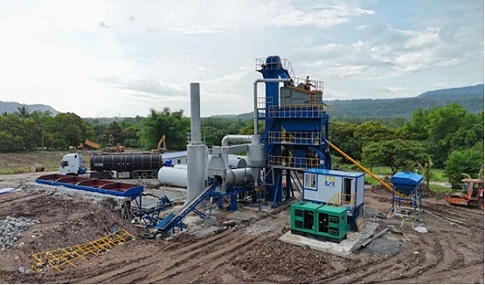
As the core dust removal equipment, the operation logic, adaptation conditions and performance characteristics of different dust cleaning models are obviously different. Accurate differentiation of model principles is the key to equipment operation and maintenance, troubleshooting and working condition adaptation.
This model is the most widely used dust removal equipment in asphalt mixing station at present, and adopts online uninterrupted dust removal mode. The equipment is equipped with high-pressure pulse blowing system, with differential pressure sensing or timing program as control logic, and can complete the dust cleaning operation without shutdown. High pressure air instant blowing makes the filter bag vibrate rapidly and expand, effectively stripping dust filter cake, thoroughly cleaning dust, low energy consumption, stable air volume, can adapt to high frequency variable load, high dust, high temperature continuous production conditions, air ratio can be controlled in the industry optimal range of 3.5~5:1, and the overall performance is optimal.
Using reverse airflow dust cleaning principle, through reverse low pressure airflow to make filter bag slightly shrink, deformation, so that the surface dust naturally fall off. The dust cleaning process is mild, the wear of filter bags is very small, and the service life of filter materials can be effectively prolonged. It is suitable for low load and stable production conditions. No need for high-pressure air supply system, simple equipment structure, but low ash removal efficiency, can not adapt to high concentration dust conditions, mostly used in old small and medium-sized mixing stations.
Relying on mechanical vibration device to drive filter bag shaking ash removal, must stop offline operation, can not meet the asphalt mixing station 24 hours of continuous production needs, uneven ash removal, filter bag loss, high failure rate, has been basically eliminated by the industry, only a few old simple equipment retained for use.
The ultra-high dust removal efficiency of the bag filter relies on the dual filtration mechanism: the filter fiber intercepts the dust in the initial stage. After a period of operation, the uniform dust cake formed on the filter bag surface will become the secondary filter medium. Through screening, diffusion and adsorption, the ultra-fine particle capture capacity is greatly improved. This is also the core reason why the fine dust treatment effect of the bag filter far exceeds that of other equipment. During operation and maintenance, excessive ash cleaning shall be avoided, moderate filter cake shall be retained, and stable filtration accuracy shall be ensured.
Asphalt mixing station is divided into two main types: intermittent (batch type) and continuous (drum type). The two types have different production processes, significant differences in dust generation point, dust concentration, dust removal system configuration and recycling mode, and different dust removal operation and control priorities.
Intermittent mixing station adopts intermittent production mode of drying, screening, weighing and batch mixing, with many dust generation points and scattered sources. In addition to the core dust source of the drying drum, the post-processing procedures such as hot aggregate elevator, vibration screening equipment, hot bin, weighing hopper and mixing tank will continuously generate a large amount of secondary dust, and the overall dust load is higher.
The dust removal system shall be equipped with a more perfect air duct scavenger dust collection system to collect and treat dust at multiple dust collection points uniformly. The powder recovered from dust removal is mainly transported to the weighing hopper, and is accurately measured and mixed into each batch of mixture, so that the grading control precision is higher. The dust removal system structure of this model is more complex, and the air duct pipeline is longer. It is necessary to check the negative pressure tightness of the rear dust collection points in daily life to prevent the overflow of unorganized dust.
Continuous mixing station realizes drying and mixing integrated drum operation, without screening, hot material storage and batch weighing procedures, greatly reducing dust emission points, dust sources are mainly concentrated at the drum exhaust port, dust source is single, and overall load is lower. The partial downstream drum type can adsorb part of fine powder in the internal mixing stage, further reducing the dust concentration of exhaust gas.
The dust removal system has simple pipeline and simple structure, and does not need complex multi-point dust collection system. The recovered superfine powder is directly transported to the mixing area of the roller and continuously mixed back into the mixture, so that the production continuity is stronger. However, this model is more likely to produce asphalt organic flue gas, so it is necessary to control the flue gas temperature to avoid sticky oil smoke adhering to the filter bag and causing paste bag blockage.
Intermittent stations focus on controlling multi-point negative pressure sealing, batch dust remixing accuracy, avoiding secondary dust and grading fluctuation; continuous stations focus on controlling flue gas temperature and oil fume adhesion problems, ensuring stable ventilation and long-term efficient operation of filter materials.
.jpg)
Affected by high temperature, high dust, viscous oil fume and fluctuation of working conditions, the dust removal system is prone to abnormal pressure difference, exhaust ash emission, premature aging of filter bag, failure of dust cleaning and uneven dust remixing, which directly leads to excessive emission, increased energy consumption and limited production. Combined with high-frequency fault cases in the industry, standardized troubleshooting and solutions are sorted out.
Fault symptoms: equipment operating pressure difference is higher than 1500Pa for a long time, ventilation volume decreases, dust in the plant increases, production load is limited. The core causes include bag hardening, flue gas condensation, pulse ash cleaning system failure, ash hopper dust bridging, air duct blockage, compressed air moisture and oil, etc. RAP recycled material production in asphalt mixing station and insufficient preheating at low temperature are the main causes.
Troubleshooting and solution: preheat the box 20 minutes in advance to ensure that the flue gas temperature is 10~30℃ higher than the dew point temperature and prevent dew condensation and hardening; repair the pulse solenoid valve and injection pipe circuit, calibrate the injection pressure and ash cleaning cycle, and replace the failed parts; clean the air duct blockage and repair the frequency conversion induced draft fan; install a vibration device in the ash hopper to prevent dust bridging accumulation; configure a drying and purification device to ensure that the compressed air is dry and clean.
Fault symptoms: dust overflow can be seen in the exhaust pipe, and the concentration of particulate matter in environmental protection detection exceeds the standard. Core causes: filter bag damage, aging, cracking, filter bag installation is not tight, flower plate air leakage; excessive ash cleaning, damage protective dust filter cake; new filter bag is not pre-coated, initial filtration accuracy is insufficient; box access door, air duct flange seal leakage.
Troubleshooting and solution: stop the machine to check the filter bag status one by one, replace the damaged and aged filter bag, re-tighten the sealing accessories; optimize the ash cleaning procedure, reduce the ash cleaning frequency, and retain the appropriate filter cake; complete the pre-ash treatment before the new filter bag is put into production; comprehensively investigate all sealing points, and repair the potential air leakage.
Failure symptoms: filter bag burning, corrosion, wear, cracking in a short period of time, high replacement frequency, rapid increase in operation and maintenance costs. Core causes: flue gas overheating causes thermal aging of filter media; low temperature condensation produces acidic water vapor corrosion filter bag; high inlet airflow velocity erodes filter bag; excessive blowing pressure causes mechanical damage; filter media selection does not match oil smoke and high temperature conditions.
Troubleshooting and solution: real-time monitoring of flue gas temperature, installation of over-temperature alarm and bypass cooling device; optimization of air intake guide structure, reduce local airflow scouring intensity; adjustment of appropriate blowing pressure, avoid excessive ash removal; high oil smoke, high RAP conditions use PTFE film, anti-adhesion and high temperature special filter bag.
Failure symptoms: intermittent large amounts of dust fall, large fluctuations in the amount of re-admixed powder, resulting in unstable fine material content of the mixture and fluctuations in the quality of the finished product. Core causes: concentrated pulse blowing without buffer, ash conveying metering system failure, large load fluctuation under working conditions.
Troubleshooting and solution: install dust buffer bin and variable frequency metering ash conveying equipment to realize continuous quantitative material return; optimize the off-peak ash cleaning logic of bin separation to avoid centralized ash falling; adjust ash cleaning parameters during production start-up and shutdown, stabilize dust recovery, and regularly calibrate the accuracy of metering equipment.
Fault symptoms: obvious dust emission at yard and transfer point in plant area, excessive particulate matter at plant boundary. Core causes: air leakage, insufficient fan output, material sealing is not in place, spray dust suppression failure. The inspection focuses on the negative pressure tightness of the system, the operation status of the fan, and the closed dust suppression facilities on site. The problem of non-organized dust emission can be completely solved through leakage prevention, maintenance of the fan and improvement of the closed spraying system.
Dust collector of asphalt mixing station is a core system integrating environmental protection and emission reduction, equipment protection, resource recovery and quality control. Its working principle of multi-stage filtration, negative pressure operation, automatic ash cleaning and closed-loop reuse determines the core capability of green production of mixing station. The dust removal process of different types of dust removal equipment and different mixing models is obviously different. Only by accurately mastering the equipment structure, operation principle, fault law and compliance standard, combining with scientific selection of station working conditions and fine operation and maintenance, can the dust removal system operate efficiently, stably and at low cost, taking into account the three core objectives of environmental protection standard, production quality improvement and cost reduction and efficiency increase, and assisting the standardization, greening and intelligent upgrading of asphalt mixing industry.
.jpg)