Asphalt is an indispensable core bonding material in highway infrastructure, municipal maintenance, building waterproofing, bridge tunnel and other engineering fields. However, asphalt is solid or highly viscous semisolid at normal temperature, so it cannot be directly paved, mixed and constructed. It must rely on professionalasphalt processing equipment to complete a complete set of procedures such as melting, heating, storage, modification, emulsification, transportation and mixing. In recent years, domestic infrastructure has been continuously upgraded, double-carbon environmental protection policy has been implemented, road maintenance market has been expanded, and procurement personnel of a large number of engineering units, asphalt processing plants and mixing stations frequently search asphalt melting equipment, modified asphalt equipment, emulsified asphalt production line, asphalt mixing station and other related products. Meanwhile, there are widespread pain points such as unclear equipment classification, unclear process principle, frequent failure and high operation and maintenance cost.
Asphalt processing equipment is a special set of equipment suitable for road construction, building waterproofing, industrial corrosion prevention and other scenarios, mainly used for temperature control treatment, morphological transformation and performance modification of petroleum base asphalt. Asphalt temperature sensitivity is very strong, normal temperature is solid difficult to construct, high temperature easy aging deterioration, ordinary equipment can not meet the processing needs. Professional asphalt processing equipment relies on core technologies such as constant temperature heating of heat transfer oil, high-shear grinding, automatic temperature control, and closed transportation to melt solid asphalt in barrels and bags into liquid state, and can also deeply process to produce emulsified asphalt and SBS modified asphalt. Special products such as asphalt accurately match various engineering construction process standards.
The equipment runs through the whole industry chain of asphalt production, processing and construction. The upstream auxiliary refinery completes asphalt pretreatment, the middle reaches provide core support for the production of finished cement by asphalt processing plant and mixing station, and the downstream auxiliary equipment completes pavement paving and maintenance operations. Compared with ordinary heating equipment, it has strict temperature control, sealing, anti-corrosion and wear resistance and safety standards, which can avoid asphalt aging, pipeline blockage, high temperature leakage and other problems. With environmental protection devices such as dust removal and exhaust gas collection, it can meet the environmental protection construction requirements of various places and directly determine the quality of asphalt finished products, road service life and project energy consumption level. It is the core supporting equipment for bidding and acceptance of infrastructure projects.
.jpg)
The complete asphalt processing system covers five parts: raw material treatment, storage and heating, modified emulsification, transportation and mixing, and on-site construction. Different equipment functions are independent and can be combined and linked. According to raw material form, finished product demand and project scale, it is divided into eight core categories, which can distinguish the applicable scenarios of various equipment and avoid production waste caused by procurement mismatch from the source:
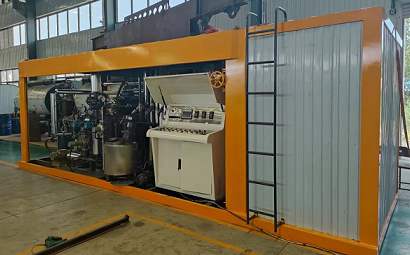
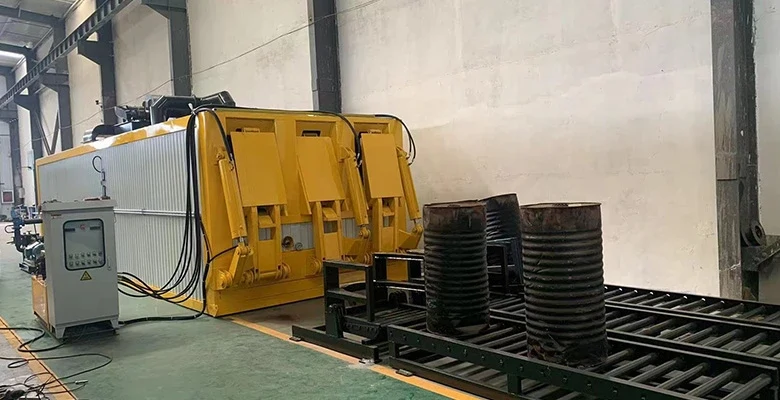
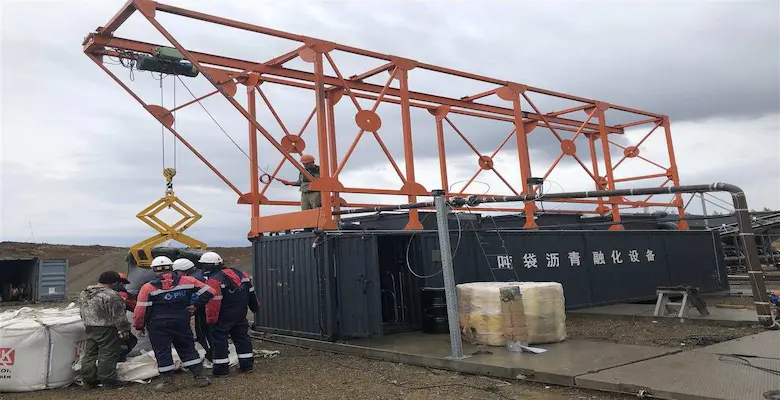
This equipment is specially designed for solid packaging asphalt, and it is also just needed for remote areas and small and medium-sized maintenance stations. Asphalt on the market is often transported in the form of 200-liter iron drums, ton bags, and asphalt blocks, which cannot be directly put into storage tanks. The melting and de-barreling equipment sends the entire barrel of asphalt into a closed heating warehouse through a hydraulic loading mechanism, and relies on a heat-conducting oil coil to indirectly maintain constant temperature. Heating to 150-180 ° C, the asphalt completely melts and flows into the storage tank below by its own weight. After filtering impurities through a filter screen, it is transported to the storage tank by a high-temperature asphalt pump.
The automatic model can realize automatic unloading of empty barrels and continuous feeding, with an hourly output ranging from 3 tons to 20 tons; the small mobile barrel extractor is suitable for sporadic repair of township roads, and the large fixed unit is equipped with a large asphalt mixing station for centralized supply. In the county construction site and mountain road project without bulk asphalt transportation condition, the melting barrel extractor is the necessary unit of the whole asphalt processing system, and the lack of this equipment will directly lead to the raw material cannot be processed and utilized.
The asphalt tank is the basic supporting equipment of all processing systems. It is divided into three major structures: horizontal, vertical and double-layer heating type. The tank is internally paved with heat transfer oil heating coil, and the outer layer is thickened with rock wool insulation layer. PT100 temperature sensor and circulating stirring motor are matched to maintain the asphalt in the tank at a constant temperature of 140-170℃ all day long to prevent cooling and solidification. At the same time, it avoids aging and deterioration of asphalt caused by local overheating.
Small mobile storage tank capacity of 5-30 tons, suitable for small maintenance projects; large plant vertical storage tank capacity of more than 500 tons, used for asphalt transfer storage. Storage tanks with stirring function are mostly used to store modified asphalt and emulsified asphalt raw materials to prevent stratification and precipitation of polymer materials; double-layer heating storage tanks are suitable for severe cold areas in the north, and the asphalt in the pipeline and tank can be continuously flowed in the sub-zero low temperature environment to solve the problem of winter shutdown. The tank system must be matched with a heat transfer oil boiler to provide heat. The tank alone cannot complete the constant temperature operation.
Heat transfer oil heating system is the "heat source heart" of the whole set of asphalt processing equipment, which replaces the traditional direct fire heating mode and is divided into two categories: oil-fired heat transfer oil boiler and electric heating heat transfer oil heater. The equipment transports high-temperature heat transfer oil to the melting bin, storage tank, colloid mill, and transportation pipeline interlayer through a circulating pump to achieve uniform indirect heating in the entire area. The temperature control accuracy can reach within ±3 ° C, and there will be no problem of local high-temperature cracking of asphalt.
Compared with diesel direct combustion heating, the heat transfer oil system has significant energy-saving advantages, reducing fuel consumption by 15%-25% per ton of asphalt processing, and there is no open fire contact with asphalt, greatly reducing fire safety hazards on the construction site. Mobile small electric heat transfer oil unit is suitable for urban indoor waterproof construction and narrow site maintenance; large oil heat transfer oil furnace is equipped with ten thousand tons asphalt processing plant, which continuously supplies heat to multiple production lines simultaneously, and is also a key recommended heating scheme for environmental protection inspection.
Emulsified asphalt production line is a special equipment for road micro-surfacing, slurry sealing layer, cold mix mixture and viscous layer penetration layer construction. The core component is high shear colloid mill. The whole unit is divided into four modules: matrix asphalt heating unit, soap mixing unit, precision metering system, grinding homogenization unit and finished product storage tank.
In the production process, the base asphalt is heated to 140-160 DEG C, emulsifier, acid-base stabilizer and warm water are mixed into soap solution in an independent stirring tank, PLC control system accurately matches the two raw materials, and the two raw materials are simultaneously fed into a colloid mill, and asphalt is torn into 1-10 micron fine droplets by virtue of rotor stator high-speed shearing, and the emulsion is wrapped by emulsifier to form a normal temperature flowable stable emulsion. The finished product can be sprayed without high temperature heating, greatly reducing fuel consumption and asphalt smoke emission.
Emulsified asphalt equipment is divided into intermittent and continuous, small 5 tons/hour mobile unit for road sporadic repair, 50 tons/hour large production line for municipal centralized maintenance base, can produce cation, anion, slow crack, fast crack multi-specification emulsified asphalt, adapt to different pavement maintenance technology.
Highway, heavy duty national highway, bridge pavement, airport runway and other high-grade pavement, asphalt high and low temperature stability, anti-rutting, anti-cracking performance requirements are extremely high, must use SBS, SBR, rubber powder modified asphalt, modified asphalt complete equipment is batch preparation of high-performance binder special equipment.
The whole set of equipment includes feeding metering system, swelling stirring tank, multistage high shear colloid mill and aging storage tank. After the matrix asphalt is heated to 170-190 DEG C, high molecular polymer is accurately added, fully stirred and wetted in a swelling tank, then polymer particles are ground and dispersed by high shear for many times, and finally sent to a curing tank for constant temperature stirring, so that the polymer and asphalt are fully fused without layering. Modern modified unit supports continuous production, PLC automatic measurement in the whole process, polymer blending error control within ±0.3%, finished modified asphalt storage for 72 hours without stratification.
In addition to SBS modification, the equipment is compatible with waste tire rubber powder modification, compound polymer modification, and is suitable for the production of hot recycled asphalt mixture. It is the standard equipment for infrastructure quality upgrading projects.
It is mainly used for construction of waterproof base layer and pipeline anticorrosive coating. The matrix asphalt is evenly mixed with kerosene, naphtha and other solvents through special metering system to reduce asphalt viscosity. The whole set of equipment has simple structure. It consists of mixing tank, metering pump and closed conveying pipeline. The whole process is closed to prevent solvent volatilization from polluting the air. It is mainly used for waterproof building materials processing plants.
Including high temperature asphalt gear pump, heat tracing and insulation pipeline, vehicle asphalt spreader, hand joint filling machine and other supporting equipment. High temperature pump adopts asphalt high temperature sealing material, matched with heat conduction oil and heat pipe, avoiding asphalt solidification in the whole pipeline; asphalt spreader is divided into vehicle-mounted, trailer and small hand-pushed type, which can spray emulsion and hot asphalt accurately and quantitatively, and is used for road adhesion layer and sealing layer construction; small joint filling machine is specially used for repairing road cracks, belonging to small processing equipment of road maintenance terminal.
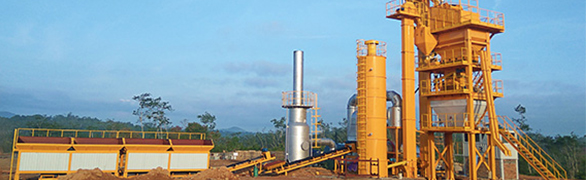
The asphalt mixing station is often included in the asphalt processing equipment category in the industry. The equipment will forcibly mix the sand aggregate, mineral powder and hot asphalt after heating, drying and screening according to the proportion to produce hot asphalt mixture, which is directly used for road paving construction. It is divided into intermittent mixing station and continuous drum mixing station, which can be made into fixed and mobile container styles, with an annual output of 20-400 tons. At the same time, it is equipped with recycled material addition system, which can be mixed with more than 50% of waste recycled asphalt pavement RAP material, which is in line with green cycle construction policy. The mixing plant is equipped with a complete set of asphalt heating, metering and transportation subsystems, which is the most complete integrated asphalt processing equipment for road new construction projects.
The process logic of different types of asphalt processing equipment is quite different. Fully understand the operation principle of the equipment, and avoid the core problems such as capacity mismatch, temperature control failure, and unqualified finished products during procurement. The complete process flow of mainstream equipment is disassembled as follows:
After removing the barrel cover, the hydraulic pushing mechanism pushes the whole barrel upside down into the closed heating bin, the heat conducting oil coil pipe continuously supplies heat to maintain the constant temperature of 160 DEG C in the bin, the asphalt in the barrel gradually softens and melts, and flows into the oil collection tank through the bottom filter grid; the oil collection tank is equipped with an auxiliary heating coil pipe and a stirring device, the melted asphalt is allowed to stand and remove water, and after impurities are filtered, the high-temperature asphalt pump continuously transports the asphalt to the asphalt storage tank; Empty tin bucket is pushed to the outside of the equipment by its own weight, and the whole process is sealed without asphalt smoke overflow. Automatic models do not need manual frequent loading and unloading. Single equipment can continuously melt for 24 hours.
The first step is raw material pretreatment: heat asphalt to 140-160 DEG C in a matrix asphalt storage tank, stirring and heat water, emulsifier and pH regulator to 50 DEG C in a soap solution tank; accurately metering in that second step: PLC linkage with two variable frequency metering pumps to synchronously convey the two raw material according to a preset oil-water ratio; Step 4 Finished Product Cache: After grinding, the emulsified asphalt is cooled to below 90℃ and sent to the finished product insulation storage tank for low-speed stirring to prevent emulsion breaking and layering. After production, it can be directly pumped into the spreader or stored for standby. The whole process is automatically adjusted, and different formula emulsified asphalt can be switched by one key.
The matrix asphalt is heated to 180 ° C by heat transfer oil and sent to the premix tank. SBS particles are accurately added by a screw metering conveyor and stirred at low speed for 30-60 minutes to complete polymer swelling and infiltration. The premixed mixture is transported by a high-pressure pump to a multi-stage high-shear colloid mill., multi-stage grinding breaks down polymer agglomerated particles and allows polymers to be uniformly dispersed in the asphalt medium; After grinding, the modified asphalt enters the curing storage tank, and is continuously stirred at a constant temperature of 170 DEG C for more than 2 hours to complete the crosslinking reaction and improve the elasticity and weather resistance of the asphalt; the finished modified asphalt tank is stirred in the whole process, so that polymer precipitation and stratification will not occur after long-term storage; the whole system supports circular grinding and meets the production standard of high-content modified asphalt.
The aggregate of different specifications is conveyed to the drying drum through the frequency conversion ratio of the cold bin, the oil burner is heated to remove the moisture of the aggregate, and the aggregate is heated to 160-180℃; the hot aggregate elevator is sent to the vibrating screen for classification, and stored in the hot aggregate bin for temporary storage; the system automatically weighs the aggregate, mineral powder and heat modified/ordinary asphalt according to the construction ratio, and simultaneously puts the double-horizontal shaft forced mixing cylinder into stirring for 30-45 seconds, and the asphalt binder is evenly coated on the surface of each aggregate; The mixed hot mix asphalt mixture is directly discharged to the transport truck and sent to the paving site. The whole set of equipment monitors the aggregate temperature, asphalt consumption and mixing time in real time. The mixture ratio error is less than 0.5%, so as to ensure the uniform pavement paving quality.
A set of standardized asphalt processing production line that can be put into production is a multi-module equipment linkage integration system, which is indispensable. The whole system is divided into seven core units, with clear division of labor and data exchange:
The core equipment is asphalt debarrel melter and bulk asphalt unloading pipeline filter, which is responsible for the feed pretreatment of two kinds of asphalt in barrel and bulk tank, removing stones, iron filings and other impurities, completing the transformation of solid asphalt into liquid, serving as the raw material inlet of the whole production line, and supporting primary filtration devices to avoid hard particles from wearing the precision parts of subsequent colloid mill and asphalt pump.
Including multi-specification asphalt insulation tank, heat transfer oil boiler, circulating heating pipeline, temperature sensing control system. Heat transfer oil furnace provides heat source for storage tank, melting bin, colloid mill and conveying pipeline uniformly. Storage tank stores matrix asphalt, modified asphalt and emulsified asphalt products in different areas. Each tank has independent temperature control and independent stirring to prevent asphalt mixture of different specifications from deteriorating.
It consists of high temperature asphalt gear pump, heat transfer oil tracing and insulation pipeline, electromagnetic flow meter and variable frequency regulating valve. Heat tracing in the whole process prevents solidification, flow meter collects asphalt transportation flow in real time, data is uploaded to PLC control cabinet synchronously, and asphalt dosage in modification, emulsification and mixing processes is accurately controlled to realize digital control of formula.
According to the production requirements, the emulsion production is equipped with soap solution preparation tank and high shear colloid mill; the modified production is equipped with polymer feeding system, multi-stage grinding machine group and curing stirring tank, which are the core process units for changing asphalt performance and directly determine the pavement performance of finished asphalt.
It includes aggregate drying and screening, mineral powder storage and metering, forced mixing cylinder, and recycled material adding system. It is suitable for new highway projects that require on-site hot mix. It can be used independently or in conjunction with a modified emulsification production line.
The central control core of the whole system is equipped with industrial touch screen, built-in multiple sets of asphalt production formula, which can be switched by one key; Real-time collection of temperature, pressure, flow and motor current data of the whole line, automatic sound and light alarm and chain shutdown for over-temperature, material shortage, pump idling and pipeline blockage; Support remote Internet of Things monitoring, mobile phone and computer cloud to view equipment operation capacity and energy consumption data, and export production reports for project account settlement. At the same time, it is equipped with multiple safety interlocking devices such as over-temperature cut-off, pressure relief and fire sprinkler to avoid the risk of fire caused by leakage of high temperature asphalt.
comprises a flue gas collecting and purifying device, a cloth bag dust removing device, a waste liquid collecting pool and a noise insulation module. The asphalt flue gas generated by melting and mixing process is collected and purified in a centralized manner, and the dust filtration efficiency is more than 99%, which meets the environmental protection control requirements of various construction sites and is also an essential supporting module for project EIA acceptance.
The operation link of the whole system is clear: solid/bulk asphalt enters the melting unit → liquid asphalt is pumped into the constant temperature storage tank for storage → transported to the emulsification/modification unit for deep processing as required → finished asphalt is metered and transported to the mixing station or spreading equipment for construction. The whole process is temperature controlled in closed loop and automatic metering without a large number of manual duties. The small-scale simple system can only retain the melting tank, heat transfer oil furnace and transfer pump to meet the storage and transportation requirements of basic liquid asphalt; the large-scale plant is equipped with all seven units to realize the integrated production of asphalt raw materials to finished mixture.
With the iterative upgrading of intelligent manufacturing and double-carbon environmental protection technology, the new generation of intelligent asphalt processing equipment completely replaces the old manual and direct-fire heating equipment, with outstanding advantages in energy consumption, quality, manpower, environmental protection, safety, flexibility and long-term cost. It is also the core driving force for engineering units to update equipment:
Modern equipment fully adopts thickened composite insulation layer, waste heat recovery heat transfer oil system and variable frequency motor drive, reducing fuel consumption per ton of asphalt processing by 10%-25%; warm mixing process of mixing station can reduce mixing temperature by 20-40℃, and carbon dioxide and asphalt flue gas emissions can be reduced by more than 50%; Fans and pumps are equipped with variable frequency drive, automatic power reduction during no-load period, and electricity expenses are reduced by more than 30%. Large-scale production lines can usually recover the price difference of equipment upgrade by saving energy consumption within 18-24 months.
PLC full-process intelligent control system with high-precision sensors, asphalt, polymer, emulsifier measurement error control within ±0.5%; full-line multi-point real-time temperature control, temperature fluctuation does not exceed ±3℃, avoid aging of old equipment over-temperature asphalt, temperature insufficient emulsification failure, modified dispersion and other common quality problems; The system stores dozens of mature production formulas, switching products without manual repeated debugging, each batch of asphalt performance indicators are highly unified, pavement paving has no peeling, loose, rutting defects, greatly reducing the later repair cost.
The old asphalt production line needs 4-6 operators on duty 24 hours a day for feeding, temperature adjustment and metering; modern automatic equipment only needs 1 operator to remotely monitor, automatically complete the whole process of feeding, melting, grinding and unloading, and the manpower dependence is reduced by 40%-60%; the equipment has self-diagnosis function, and the fault point screen directly prompts, without the need for professional technicians to investigate one by one, alleviating the shortage of technicians in the engineering industry.
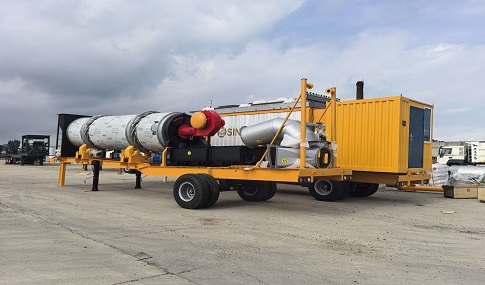
Mainstream equipment supports container and trailer modular integration. Small units can be put into operation without concrete fixed foundation and simple wiring commissioning after hoisting. Melting, emulsification and modification units can be separated and combined as required. The same production line can be switched to produce three types of products: matrix asphalt, emulsified asphalt and modified asphalt. After project completion, it can be quickly transferred to the next construction site to adapt to short-term scattered maintenance projects. Compared with fixed equipment, it has a wider use scenario.
A complete set of integrated asphalt flue gas purification, bag dust removal, sound insulation and noise reduction devices, dust collection rate of more than 99%, asphalt oil smoke after purification standard discharge; warm mixing, cold mixing emulsification process from the source to reduce the generation of high temperature smoke, no direct fire burning, no pungent blue smoke; equipment closed pipeline design, prevent asphalt leakage pollution soil, meet the urban, scenic spots, residential areas construction site environmental protection control requirements, avoid shutdown rectification fines.
Abandoning the traditional diesel direct heating mode, indirect heating of heat transfer oil in the whole process, eliminating the risk of asphalt fire; the equipment is equipped with automatic shutdown over temperature, pressure relief, pump dry rotation protection and fire sprinkler interlock; automatic closed feeding reduces manual close contact with 180℃ high temperature asphalt, greatly reducing the incidence of scald and smoke poisoning accidents; the tank and pipeline are made of high temperature and corrosion resistant special steel, which is resistant to thermal expansion leakage and suitable for long-term continuous operation.
Although the initial purchase price of intelligent equipment is higher than that of old-fashioned simple models, the total long-term operation cost is significantly lower by virtue of multiple advantages of energy saving, labor saving, material waste reduction, pavement repair reduction and low equipment failure rate; standardized wear-resistant accessories extend the service life of equipment, predictive maintenance function reduces sudden shutdown loss; compatibility with high-proportion recycled materials and warm mixing process, raw material procurement cost continues to decrease, and the overall profit margin of infrastructure projects is improved.
Many engineering units only compare unit prices when purchasing equipment, ignoring core elements such as capacity matching, raw material form, finished product demand, site conditions, etc., resulting in problems such as excess or insufficient equipment capacity, inability to produce target asphalt, difficulty in transition, etc. According to the following five steps, systematic selection can accurately match project demand and realize optimal quality-price ratio:
First, calculate the daily asphalt consumption, distinguish the hourly peak production capacity from the daily average production capacity, increase the rated capacity of the equipment by 10%-20% safety margin, and cope with the sudden conditions such as the increase of aggregate moisture content in rainy season and construction rush; select mobile small units for short-term temporary maintenance projects, and select large-scale fixed complete sets of equipment for long-term fixed mixing stations and asphalt processing plants. For example, the average daily consumption of emulsified asphalt for road maintenance in villages and towns is 5 tons, and the emulsion production line of 6-8 tons/hour is preferred when selecting the model; the highway mixing station produces 160 tons of mixture at a time, and the modified asphalt supply unit of 20 tons/hour is matched.
If the asphalt on site is packed in 200L iron drum and ton bag solid state, it must be equipped with corresponding tonnage asphalt de-barrel melting machine; the project can directly purchase bulk liquid asphalt tanker for unloading, and melting equipment can be omitted. Only insulation storage tank and heating system can be configured; for some projects, solid and bulk asphalt raw materials enter the site simultaneously, and it is recommended to select switchable double feeding system to improve the flexibility of raw material adaptation.
Storage and transportation of ordinary liquid asphalt only: purchase melting machine + storage tank + heat conduction oil furnace foundation package; road maintenance needs cold construction emulsion: increase emulsion asphalt production unit; high-speed, bridge high-grade pavement: install SBS modified asphalt equipment; synchronous construction of mixing station to produce hot mix mixture: complete batch/drum asphalt mixing station; waterproof plant If anti-corrosion blending coating is needed: increase diluted asphalt mixing system. Do not install core deep processing units in the later stage, and the transformation cost is much higher than that of the integrated supporting equipment in the early stage.
Small site space, frequent project transfer: priority container modularization, trailer mobile equipment; sufficient plant space, long-term fixed production: select vertical large storage tanks, fixed production lines; energy supply distinction between natural gas, diesel, industrial electricity, natural gas sufficient areas select gas heat conduction oil furnace, remote unstable power supply site select fuel heating system; northern cold areas thicken tank, pipeline insulation layer, increase tracing power; A complete set of environmental protection devices with flue gas purification shall be strictly selected for urban construction sites, and the environmental assessment qualification and test report of the equipment shall be checked to meet the local pollutant emission standards.
Do not compare the ex-factory quotation of equipment, focus on the core component configuration: colloid mill rotor material, thermal efficiency of heat transfer oil furnace, PLC control system brand, asphalt pump seal wear resistance; give priority to manufacturers with many years of road equipment manufacturing experience and local after-sales outlets to ensure rapid supply of vulnerable parts, on-site installation and commissioning, and operator training; Calculate equipment energy consumption, wearing parts replacement cycle, annual maintenance cost, comprehensive comparison of the whole life cycle use cost, low-cost low-configuration equipment often later operation and maintenance, energy consumption expenditure doubled, comprehensive cost performance is lower.
.png)
Asphalt high temperature and high viscosity medium characteristics, coupled with complex temperature control, grinding, pumping structure, equipment long-term operation is prone to abnormal temperature, pipeline blockage, emulsion layering, pump body abnormal noise and other failures, the following summary of the most common problems in the industry, clear fault causes and quick treatment programs, reduce downtime losses:
Fault performance: storage tank, melting bin asphalt long-term can not reach the set temperature, temperature fluctuation more than 10℃, equipment operation produces a lot of blue asphalt smoke.
Core causes: heat transfer oil burner nozzle blockage, heat transfer oil carbonization heat exchange efficiency decline, tank pipe insulation layer damage off, temperature sensor PT100 probe calibration failure, heating coil coking.
Check and handle: clean the fuel nozzle filter, detect the viscosity of heat transfer oil, replace all heat transfer oil in case of serious carbonization; repair damaged insulation rock wool, re-wrap the heat tracing pipe; calibrate the temperature sensor regularly, replace it directly if it fails; stop production and vent the tank, clean the asphalt carbon on the surface of the coil, and restore the heat exchange efficiency.
Fault performance: asphalt pump does not discharge after startup, conveying flow continues to decrease, metal friction abnormal sound occurs during operation, pipeline pressure gauge continues to rise.
Core causes: The pump body and pipelines are not fully preheated before starting up, and the low-temperature asphalt solidifies and blocks the filter screen and pipelines; the pump body motor rotates reversely; the filter is blocked by accumulated impurities; the pump seal and impeller are worn out for a long time and the gap is too large.
Check and handle: preheat the pump body of the pipeline 2 hours in advance before starting the equipment; replace the two-phase circuit of the motor to correct the rotation direction; regularly disassemble and clean the filter at the front end of the pipeline; replace the pump impeller and seal with serious wear directly; exhaust the residual asphalt in the pipeline for a long time to avoid cooling caking and blocking the pipe.
Fault performance: oil and water separation occurs when the emulsified asphalt is allowed to stand for 1 hour, instantaneous rupture occurs on the spraying road, and the colloid mill discharges rough and excessive foam.
Core causes: asphalt, soap processing temperature deviation from the standard range, emulsifier blending ratio, PH value adjustment error; colloid mill rotor stator gap is too large, internal stuck hard impurities; raw asphalt moisture content exceeds the standard, feed into the air.
Investigation and treatment: strictly control the processing temperature of asphalt 140-160℃ and soap solution 40-70℃, accurately add emulsifier and acid-base modifier according to the formula; shut down and disassemble colloid mill, clean internal impurities, recalibrate grinding head gap; heat raw asphalt to remove water in advance, eliminate air leakage point of pipeline, and reduce stirring air bubble.
Fault performance: white SBS particles precipitate at the bottom of modified asphalt after standing, particles appear in pavement paving, and high and low temperature performance is not up to standard.
Core causes: insufficient grinding times, insufficient shearing power of colloid mill; long stirring time and temperature of swelling tank are not up to standard; large metering error of polymer; aging storage tank stops stirring and stands still.
Investigation and treatment: increase the number of asphalt circular grinding, replace the high shear strength colloid mill; strictly control the swelling temperature of 170-190℃, and the stirring time shall not be less than 40 minutes; calibrate the screw feeding scale to ensure accurate polymer blending; the finished product modified storage tank shall be stirred at low speed for 24 hours without interruption to prevent long-term static stratification.
Failure performance: no asphalt coating or excessive asphalt agglomeration on the aggregate surface, large fluctuation of asphalt aggregate ratio of each batch of mixture, separation of coarse and fine aggregate of paving pavement.
Core causes: the moisture content of aggregate drying fluctuates greatly, the asphalt flowmeter and aggregate weighing sensor are not calibrated regularly; the mixing blade is seriously worn, and the mixing is not sufficient; the frequency conversion feeding of cold storage bin is unstable.
Inspection and treatment: real-time monitoring of aggregate moisture content, dynamic adjustment of drying drum combustion power; monthly calibration of all weighing and flow metering equipment; replacement of worn mixing blades, adjustment of mixing time; maintenance of cold material conveying frequency conversion system, stabilization of aggregate feeding speed.
Fault performance: violent vibration of operating motor, frequent alarm of control cabinet, interlocking shutdown of equipment.
Core causes: bearing lack of lubrication, coupling dislocation; dust covered sensors, poor heat dissipation of electrical control cabinet; safety interlock protection trigger (over-temperature, low pressure, lack of material).
Troubleshooting: fill grease according to maintenance cycle, correct motor coupling; regularly clean dust on sensors and control cabinets to ensure ventilation and heat dissipation; check alarm codes of control cabinets, and deal with root causes of overtemperature, material shortage and abnormal pressure.
Asphalt processing equipment is an indispensable core set of equipment in road traffic and building waterproofing industries, covering the whole chain of melting, storage and heating, emulsion modification and mixing construction. The temperature control accuracy, automation level and environmental protection performance of the whole set of equipment directly determine the quality of asphalt finished products, project construction efficiency and long-term operation cost. When selecting models, engineering procurement personnel need to make comprehensive judgments based on production capacity, raw material form, finished product demand, and site energy conditions. They cannot simply compare the unit price of equipment; daily operations implement standardized preventive maintenance in cycles, which can effectively avoid high-frequency failures and extend the service life of equipment..
With the continuous high-quality development of domestic infrastructure and the implementation of double-carbon environmental protection policy, asphalt processing equipment is continuously upgrading towards intelligent unmanned, low-carbon energy-saving, high regeneration compatibility and modular movement. Master the equipment process principle, selection logic and operation and maintenance specification, which can help engineering units and asphalt processing plants reduce costs and increase efficiency, avoid quality and safety risks, and adapt to the diversified road construction and maintenance construction needs in the future. If there are personalized requirements such as project capacity accounting, equipment supporting scheme, troubleshooting, manufacturer selection comparison, etc., one-to-one complete asphalt processing equipment solution can be obtained in combination with project working conditions.