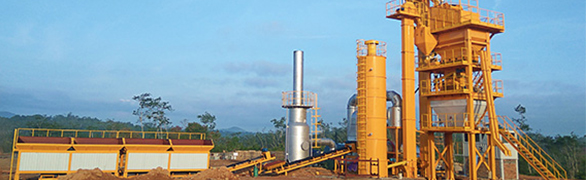
In various infrastructure projects, liquid asphalt is the core raw material for asphalt mixing plants to produce asphalt mixtures. However, in remote construction sites and situations with tight supply, the supply of bulk liquid asphalt is limited. 200kg steel drums and 1-ton flexible ton bags of solid asphalt have become the mainstream alternatives, requiring corresponding drum unloading equipment and ton bag melting equipment. Many engineers only compare purchase prices when selecting equipment, neglecting key factors such as supply chain compatibility, production capacity, material loss, and operation and maintenance costs, which can easily lead to various production problems. This article compares the principles, performance, advantages and disadvantages, and key points of operation and maintenance of two types of equipment from multiple dimensions, providing a scientific selection solution and offering professional reference for equipment procurement and site operation in infrastructure projects.
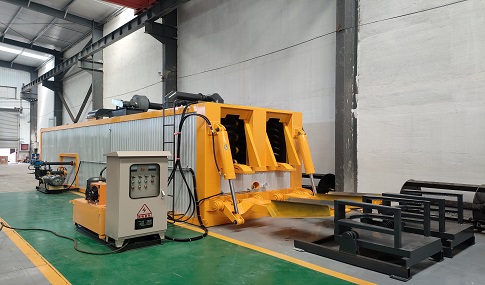
Asphalt drum unloading equipment, also known in the industry as asphalt drum unloading machine or drummed asphalt melting equipment, is a specialized industrial piece of equipment developed specifically for standard 200 kg steel asphalt drums. The core objective of this equipment is to safely and efficiently melt the solid or semi-solid asphalt inside the steel drum into a liquid asphalt with flowable and pumpable properties, supplying it to asphalt mixing plants, road maintenance equipment, and other asphalt deep-processing production lines. This equipment is widely used in construction sites that heavily rely on steel drum-packaged asphalt, and is particularly suitable for field infrastructure sites where the supply of bulk liquid asphalt is unstable.
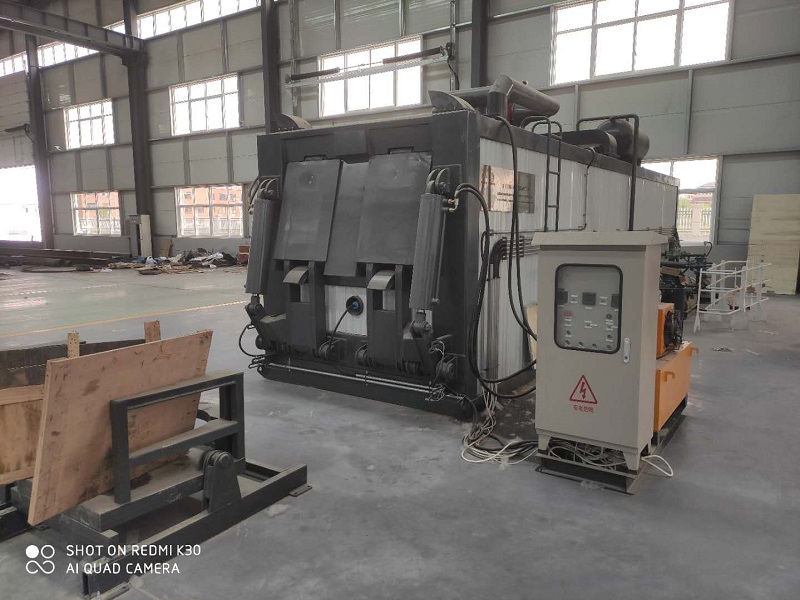
The asphalt drum unloading equipment adopts a safe and controllable indirect circulating heating process with heat transfer oil, eliminating the need for open flame baking. This effectively avoids fire risks, prevents localized high-temperature aging and deterioration of the asphalt, and preserves the original properties of the asphalt to the greatest extent. The equipment has a simple and efficient operation process. The pre-treated open steel drum is inverted and fed into a sealed, insulated cavity via hydraulic equipment. It supports simultaneous processing of multiple drums, enabling intermittent or semi-continuous production. The asphalt, after being melted at high temperature, is filtered through a grid to remove impurities and then flows into the lower storage chamber. The equipment maintains a constant temperature and is stirred as needed to adjust the viscosity to a suitable pumping viscosity, with the temperature stabilized at 100-180℃. Finally, a high-temperature asphalt pump, in conjunction with a sensor system, automatically completes the material conveying. Empty drums are automatically discharged as new material is pushed in, achieving continuous and stable operation.
A complete asphalt drum unloading system consists of multiple functional modules. The sealed, insulated melting chamber forms the main outer shell of the equipment, with a high-density insulation layer reducing heat loss and energy consumption. The hydraulic loading and pushing system is responsible for feeding, inverting, and ejecting empty drums, and is a key unit for automated operation. A heat transfer oil heating unit and circulating coils provide a stable heat source, with the coils arranged around the drums to ensure uniform heat transfer. The lower melting storage tank temporarily stores the melted liquid asphalt, and an optional stirring device optimizes material uniformity. A high-temperature asphalt delivery pump and multi-stage filtration components complete asphalt delivery and impurity interception. A temperature sensor, level float switch, and a complete electrical PLC control system enable temperature monitoring, level interlocking, and automatic start/stop. In addition, some customized models are available on the market, which can be connected to external asphalt storage tanks or designed as skid-mounted mobile structures to meet the needs of frequent site relocation.
Compared to the traditional, crude method of open-flame baking, asphalt drum unloading equipment significantly improves safety, recovery rate, and automation. Modern models can achieve a material recovery rate of up to 99%, and a precise temperature control system ensures asphalt quality. Continuous operation effectively reduces labor and energy costs. This equipment is suitable for road maintenance, airport construction, small and medium-sized mixing plants, and remote construction sites with unstable bulk asphalt supply. It is a mature piece of equipment for drummed asphalt projects. Affected by environmental factors and asphalt viscosity, its capacity remains stable at 1–10 tons/hour, and customized models can further increase processing capacity.
.jpg)
Asphalt ton bag melting equipment, also known as large bag asphalt melting machine or FIBC asphalt melting equipment, is an industrial equipment specifically designed for solid asphalt in 1-ton flexible ton bags. With the continuous iteration of global infrastructure logistics systems, the market share of ton bag-packaged asphalt is increasing year by year. Compared to traditional steel drums, ton bags are lighter, take up less space when stacked, and can significantly reduce transportation costs. At the same time, they do not generate a large number of waste steel drums, reducing the pressure on solid waste disposal. Ton bag melting equipment is the core pre-processing equipment adapted to this new supply chain.
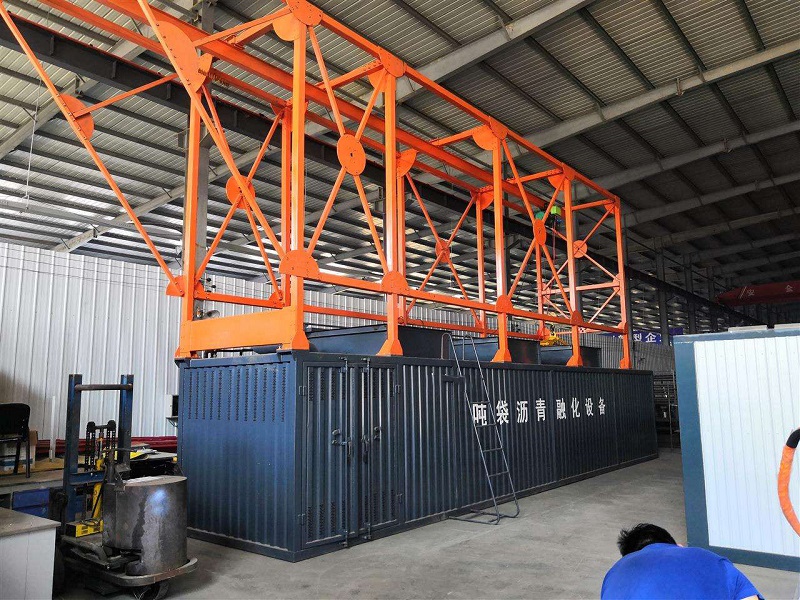
The asphalt ton bag melting equipment uses indirect heating with heat transfer oil combined with fire tube enhanced heating technology, which can efficiently melt a one-ton solid block of asphalt, effectively avoiding high-temperature aging of asphalt. During operation, the ton bag of asphalt is hoisted to the top feeding port by a crane and electric hoist. The bag is cut open to allow the asphalt block to fall onto the heating grid to melt. The plastic packaging bag is collected separately to prevent impurities from entering. The molten asphalt flows into the bottom storage chamber, and after secondary heating and stirring to achieve uniform conditioning, it is transported by a high-temperature pump to an insulated storage tank or directly supplied to the asphalt mixing plant.
The hardware structure of the asphalt ton bag melting equipment differs from that of the barrel-type equipment. It requires external lifting equipment to complete the feeding. The equipment is equipped with a top feeding guide structure, heat transfer oil heating coil, load-bearing grid and optional fire tube enhanced heating device, and is equipped with a large-capacity insulated storage tank, mixing system, high-temperature delivery pump, multi-stage filtration and a complete temperature control PLC control system. Most models adopt ISO container modular design, which does not require complicated civil construction. On-site connection of pipelines and circuits can quickly put it into production. It is easy to disassemble and relocate, and is highly adaptable to temporary engineering projects with high mobility.
The greatest value of ton bag melting equipment lies in leveraging the logistical cost advantages of ton bag packaged asphalt, making it suitable for continuous production operations in large-scale road infrastructure projects. Provided the supply chain can stably provide ton bag asphalt, it can achieve high hourly output while virtually eliminating material residue losses due to packaging.
Mainstream commercial models typically maintain a production capacity of 5-15 tons per hour, with most standard models capable of stable output exceeding 8 tons per hour. The equipment is ideal for large-scale high-speed projects, centralized asphalt mixing plants, and projects seeking to reduce the burden of packaging waste disposal. However, the equipment itself does not come with a lifting mechanism; corresponding lifting tools are required on-site, a fundamental condition that must be considered during the early project planning phase.
Both devices ultimately aim to process solid asphalt into qualified liquid asphalt usable by mixing plants. However, they were designed from the outset to be designed for two completely different material packaging systems. Therefore, there are very obvious differences in feeding logic, hardware structure, heating mode, material loss, production capacity characteristics, and adaptable working conditions. They cannot be simply judged as superior or inferior.
The drum unloading equipment serves 200 kg steel drums used for packaging asphalt, a traditional packaging solution that has been in use for many years. Steel drums have high mechanical strength and can adapt to complex transfer scenarios, but their weight is relatively large, taking up significant space during storage and transportation. After the project is completed, a large number of empty steel drums are generated, requiring investment of manpower and capital for recycling or disposal.
The ton bag melting equipment is designed for 1-ton flexible modular bulk bags (MMBs), a type of packaging that has rapidly gained popularity in recent years. The lightweight material of the MMBs allows for multi-layer stacking of goods, effectively reducing storage and transportation space. Industry data shows that logistics costs can be reduced by up to 30%. The amount of solid waste generated after project completion is minimal, significantly reducing the workload of solid waste treatment and better aligning with current engineering requirements for cost reduction, efficiency improvement, and environmental control.
The loading action of the drum unloading equipment is highly integrated inside the main body of the machine. It relies on a set of hydraulic arms and a pushing mechanism to complete the feeding and inversion of steel drums. The feeding of new steel drums and the ejection of empty steel drums can be carried out simultaneously, realizing semi-continuous operation. The entire loading process does not require large external lifting equipment. Once the equipment is on-site and debugged, steel drum processing can begin. Only manual pre-treatment of opening the steel drum lids is required.
The ton bag melting equipment does not have a built-in lifting mechanism. The handling and lifting of the ton bags rely entirely on external cranes, electric hoists, or forklifts. The material is fed into the equipment from the top feeding port. After the packaging bag is cut open, the asphalt blocks fall directly onto the internal heating grid. The entire feeding operation depends on on-site hoisting equipment. If there is no existing hoisting equipment on site, additional supporting equipment needs to be purchased, increasing the initial investment in the project.
The drum-type unloading equipment relies on heat-conducting oil coils surrounding the outer wall of the steel drum to output heat. The heat penetrates the metal drum wall and heats the internal asphalt, which then flows downwards from the cavity due to gravity. The equipment's melting efficiency depends on the number of steel drums fed at one time, the temperature of the heat-conducting oil, and the ambient temperature. Mainstream equipment has a capacity of 4-10 tons per hour, making it more suitable for medium-sized continuous supply needs.
For ton-bag melting equipment, the melting speed is limited by ordinary coil heating when handling single one-ton solid asphalt blocks. Therefore, most models add fire-tube enhanced heating systems to improve the heat exchange efficiency of large materials. Under the same floor space conditions, ton-bag melting equipment can more easily achieve higher hourly production capacity, with the mainstream range being 5-15 tons per hour, making it more suitable for high-load, high-volume continuous production in mixing plants. Of course, there is some overlap in the production capacity range between the two, and the specific performance still depends on the actual configuration of the equipment.
High-end drum-type unloading equipment, relying on a dual heating system and a fully inverted process, can achieve a material recovery rate of nearly 99%. However, in low-temperature environments or when processing high-viscosity modified asphalt, some asphalt will still adhere to the inner wall of the steel drum and cannot flow completely, with a loss range of approximately 0.3%-5%. The larger the project, the more significant the economic loss caused by this loss.
The ton bag melting equipment can melt almost all of the asphalt blocks into a liquid state, eliminating the problem of material adhering to the inner wall of the steel drum, and achieving a material utilization rate of nearly 100%. However, the focus of operation and maintenance shifts to the management of plastic residue from the ton bags. It is necessary to properly isolate and collect the packaging bags to prevent plastic fragments from entering the asphalt pipelines and mixing unit, causing equipment failure and defects in the quality of the asphalt mixture.
The drum-type drum unloading equipment integrates a hydraulic power system, minimizing reliance on external tooling. Once the equipment is placed in position and connected to a heat source and electrical circuit, it is ready for use. A small number of hybrid models on the market can handle both drums and ton bags; however, pure drum-type equipment cannot directly process ton bags of asphalt.
Ton bag melting equipment has strict requirements for on-site lifting conditions. Many products adopt a modular container design, which is convenient for relocation and disassembly, making them more suitable for temporary field construction sites. There are also dual-purpose models available. If a pure ton bag model is purchased, it cannot directly process asphalt packaged in steel drums.
Many purchasing personnel directly refer to the hourly processing capacity listed on the manufacturer's nameplate when selecting equipment. However, the parameters on the nameplate are mostly obtained under ideal environmental conditions and ordinary base asphalt conditions. To evaluate the actual operating level of the equipment, it is necessary to comprehensively assess it from multiple dimensions, including melting capacity, material loss, labor consumption, energy consumption, continuous operation capability, and supporting logistics costs.
In terms of theoretical production capacity, for the same floor space, the ton bag melting equipment is more likely to achieve higher output due to its enhanced heating design. However, the actual production capacity of the equipment is limited by the external ambient temperature. Low temperatures in winter and high-viscosity modified asphalt will reduce the actual melting speed of both types of equipment.
Drum-type drum unloading equipment relies on the parallel melting of multiple small steel drums to achieve continuous material discharge. The equipment can output stably under full load, but the melting time for a single drum is fixed, and the maximum capacity is limited by the number of drums processed per batch. During the selection process, regardless of the type of equipment chosen, sufficient capacity margin must be reserved based on the peak asphalt consumption of the mixing plant to avoid insufficient material supply caused by capacity reduction in cold weather.
Material loss is a hidden cost that is easily overlooked. Taking an engineering project with a total usage of 5,000 tons of asphalt as an example, if the drum unloading equipment has a 2% residual loss, it means a direct loss of 100 tons of asphalt, which will directly erode the project's profits.
High-performance drum-type unloading equipment, combined with dual heating and a fully inverted process, can reduce residue to below 0.3%. However, in ordinary equipment configurations or cold construction sites, 2-5% asphalt residue on the inner wall of the steel drum is a common phenomenon in the industry. Ton bag melting equipment eliminates the problem of drum wall adhesion, allowing for almost complete material utilization. The larger the project scale, the more significant the cost advantage this provides.
The drum unloading equipment features a highly automated hydraulic drum-pushing system, reducing a significant amount of heavy manual labor. However, operators are still required to continuously open the drums and process the continuously discharged empty drums through stacking, transfer, and recycling. The entire process demands continuous human input, and the workload of personnel is directly linked to the volume of drums processed.
Once equipped with lifting tools such as electric hoists, the ton bag melting equipment typically requires only one person to complete the feeding operation. Statistics from multiple industry project cases show that, while achieving the same asphalt output, the ton bag melting solution can significantly reduce labor costs, with the main workload concentrated on lifting the ton bags and collecting waste packaging bags.
Both types of equipment primarily use indirect heating with heat transfer oil, and the quality of the overall insulation layer directly determines the energy consumption level. Ton bag melting equipment generally employs a high-density insulation structure, and some models are equipped with waste heat recovery devices. In the centralized melting mode for large materials, it has a certain advantage in fuel consumption per ton of finished asphalt. Barrel-type unloading equipment also performs well in energy consumption during continuous, uninterrupted production at full load. However, if the equipment is frequently started and stopped, heat is repeatedly lost, and the unit energy consumption will increase.
In addition to the energy consumption of the equipment itself, the costs of front-end packaging and logistics must also be considered. Steel drum packaging has higher transportation and warehousing costs, and also incurs disposal fees for empty drums; ton bag packaging can save considerable logistics expenses and has a very low workload for solid waste treatment. These comprehensive benefits need to be included in the overall project calculation.
Continuous feeding capacity directly determines whether equipment can support long-term production at an asphalt mixing plant. Drum-type unloading equipment, relying on a push-drum feeding and discharging structure, can achieve uninterrupted melting and discharging; ton bag melting equipment, as long as the ton bags are continuously hoisted and fed, can also maintain a stable output of liquid asphalt. Both can meet the continuous production needs of a mixing plant; the core difference lies in whether the upstream material packaging supply chain can provide a stable supply.
Based on extensive engineering experience, asphalt drum unloading equipment and ton bag melting equipment have clearly defined applicability boundaries; each has its advantages and disadvantages, and neither is absolutely better or worse. To facilitate a clear comparison and avoid common pitfalls in equipment selection, the core advantages and disadvantages of these two types of equipment are summarized in the following table:
|
Equipment type |
Core advantages |
Main shortcomings |
|
Asphalt drum unloading equipment |
The technology is mature and highly automated, enabling continuous automated operation; it has a high asphalt recovery rate and can perfectly preserve the properties of asphalt; its production capacity is suitable for small and medium-sized mixing plants, and it is easy to operate and maintain. Some models support dual-use. |
Steel drums have high logistics and recycling costs; there is a small amount of residual asphalt loss under low-temperature conditions; there are many manual auxiliary processes and high labor costs; they are only suitable for drummed asphalt, and the cost of upgrading production capacity is high. |
|
Asphalt ton bag melting equipment |
Higher production capacity, faster melting efficiency, and near-zero material loss; low logistics costs and good environmental performance of ton bags; low labor input, convenient modular design for easy relocation, and excellent energy consumption at full load. |
It requires external lifting equipment, resulting in high initial investment; it is only compatible with ton bag asphalt, and has poor material versatility; it requires strict control of plastic residue pollution and has high requirements for temperature control and operating procedures. |
There is no single, universally applicable, optimal piece of equipment in the industry. The selection process should begin with the packaging and delivery method of the asphalt supplied to the project. Then, the project scale, the operating conditions of the mixing plant, and the site conditions should be considered to calculate the comprehensive cost over the entire lifecycle and select the appropriate equipment through a multi-stage screening process.
.jpg)
Supply chain is a core prerequisite for equipment selection. If the project's asphalt supply consists entirely of 200 kg steel drums, high-performance drum unloading equipment should be prioritized. When selecting equipment, focus on the inverted drum structure and dual heating configuration to minimize asphalt residue inside the drums. If the project can reliably procure one-ton asphalt bags, prioritize ton-bag melting equipment. If the project's packaging is uncertain, and both steel drums and ton bags may arrive later, directly select a dual-purpose drum/bag melting equipment.
When a project can simultaneously procure bulk liquid asphalt, the melting equipment is repositioned as a backup backup device to cope with interruptions in the supply of bulk materials, and there is no need to configure ultra-large capacity according to the peak full-load capacity of the mixing plant.
When calculating the hourly asphalt consumption at peak production levels at an asphalt mixing plant, the rated melting capacity of the equipment must exceed the peak consumption, while also allowing for a safety margin. The capacity reduction caused by low temperatures and high-viscosity modified asphalt in winter must be taken into account; the manufacturer's ideal operating condition nameplate parameters cannot be relied upon solely. Continuous production processes should be prioritized; intermittent batch equipment is unsuitable for long-term uninterrupted production at a mixing plant.
The heating system should prioritize indirect heating with heat transfer oil to protect asphalt quality and eliminate the risk of direct flame burning. When selecting a ton-bag type, pay close attention to features such as fire-tube auxiliary heating and waste heat recovery. Overall insulation performance and temperature control accuracy are crucial; insufficient insulation will increase energy consumption, and temperature fluctuations will cause asphalt aging. Simultaneously, ensure the equipment's output temperature range meets the pumping and metering process requirements of the mixing plant.
When selecting a ton-bag melting equipment, it is necessary to confirm the on-site lifting equipment conditions; drum-type unloading equipment relies on its own hydraulic mechanism and has very low dependence on external lifting equipment. On-site assessment of site size, power supply, and fuel supply is required. If a thermal oil boiler is already installed on site, models that support external thermal oil connection can be prioritized, saving the investment in a built-in heating unit.
For temporary field projects, modular skid-mounted containerized cranes are preferred to reduce civil engineering work and facilitate equipment relocation. In cold regions, it is essential to verify the actual operating parameters of the equipment under low-temperature conditions with the manufacturer; do not rely solely on ambient temperature test data. For automation configuration, PLC programmable control systems are the preferred choice, equipped with safety features such as liquid level interlock protection and over-temperature alarms to improve equipment operational safety and reduce the burden of manual monitoring.
Equipment selection should not be based solely on comparison of purchase prices; a full-cycle cost accounting must be conducted. The accounting scope includes asphalt packaging and logistics costs, asphalt residual loss costs, on-site labor costs, fuel and energy consumption, spare parts maintenance costs, waste disposal expenses, procurement of auxiliary tooling, and equipment installation and commissioning costs.
While the purchase price of some ton-bag melting equipment may not be lower, in large-scale projects, the long-term overall cost advantage lies in logistics savings, zero material residue, and reduced labor costs. It's also important to verify the manufacturer's after-sales service and spare parts supply capabilities, request project case studies under similar climatic conditions, and compare the overall operating costs per ton of liquid asphalt from different manufacturers.
Asphalt drum unloading equipment and ton bag melting equipment play a crucial role in the solid asphalt pretreatment process within the entire mixing production chain. When the supply of bulk liquid asphalt is insufficient or interrupted, the equipment outputs qualified liquid asphalt, ensuring the continuous operation of the hot-mix asphalt production line and preventing the mixing plant from shutting down due to material shortages.
After the melting equipment completes the solid asphalt melting process, the liquid asphalt is temporarily stored inside the equipment's built-in insulated chamber. The equipment's built-in storage capacity ranges from several tons to twenty or thirty tons, which can serve as a material buffer tank. When the asphalt temperature and viscosity reach the pumping standard, the high-temperature asphalt pump automatically starts upon receiving the liquid level signal, and the liquid asphalt is transported outward through insulated pipelines. Important pipelines will have added heating systems to reduce heat loss during transportation.
There are two main connection modes on site. The first is the most common solution in the industry: the asphalt output from the melting equipment is transported to the existing asphalt insulated storage tank of the mixing plant through an insulated pipeline. The asphalt maintains its process temperature in the storage tank of the mixing plant and is then fed into the mixing host through a metering system to complete the mixing of the asphalt mixture. The second mode is suitable for scenarios where the on-site storage tank capacity is insufficient. Under the premise of ensuring that filtration and temperature control meet the standards, asphalt is directly supplied to the asphalt circuit of the mixing plant. Most complete sets of equipment do not require large-scale modification of the mixing plant itself and can be put into use after completing pipeline connection and commissioning.
The PLC control system of the melting equipment can interface with the central control system of the mixing plant, allowing for the exchange of liquid level data, temperature data, and fault alarm signals to achieve safety linkage protection. The melting equipment's built-in storage chamber has buffering capacity, enabling melting to continue even during short-term shutdowns of the mixing plant; when the mixing plant is operating at full capacity, the buffer tank ensures a stable supply of raw materials. In addition to supplying the mixing host, the liquid asphalt output by the equipment can also be connected to asphalt spreading equipment, emulsified asphalt production lines, and modified asphalt processing equipment, expanding the equipment's application range.
The melting capacity of the equipment must exceed the peak asphalt consumption of the mixing plant to avoid raw material supply becoming a production bottleneck. The conveying pipeline should be as short as possible, with specifications matching the asphalt flow rate to reduce heat and pressure loss. Strict control of the discharge asphalt temperature is crucial to ensure accurate measurement of asphalt usage by the mixing plant's metering system. A filter must be installed at the pump's upstream end to intercept impurities and protect the mixing plant's precision valves and asphalt pumps. Emergency stop, over-temperature, and high/low liquid level alarm signals should be connected to the mixing plant's central control system for unified safety management. A mobile modular mixing plant combined with containerized melting equipment is a mature and complete solution for field projects.
Whether it's drum-type unloading equipment or ton bag melting equipment, the vast majority of malfunctions stem from inadequate temperature control, lack of routine maintenance, and non-standard operating procedures. Establishing a standardized operation and maintenance system can significantly reduce the probability of equipment downtime and ensure stable project production.
Excessive asphalt residue on the inner wall of the steel drum is the most representative malfunction of drum-type equipment. Low temperature environment, insufficient heating time, and incomplete inversion of the steel drum can all exacerbate the residue. During the equipment selection phase, priority should be given to models with dual heating and complete inversion. On-site operations should ensure sufficient melting time, and regular sampling inspections should be conducted on the residue on the inner wall of empty steel drums to adjust equipment operating parameters in a timely manner.
Hydraulic system malfunctions are also frequent, manifesting as insufficient thrust of the push cylinder and failure of limit switches. Routine maintenance requires regular checks of hydraulic oil levels, timely replacement of filter elements, monitoring of hydraulic oil operating temperature, and periodic calibration of limit sensors and wiring status.
Common faults in the two asphalt melting equipment include asphalt pump freezing in cold conditions, clogged pipeline filters, coking of heat transfer oil, insufficient actual production capacity, and electrical abnormalities. For daily startup, the pump body and pipelines must be fully preheated, and the pump can only be started after the temperature reaches the target level. For long-term shutdowns, materials must be emptied or the system must be kept circulating and insulated. During production, strictly control the process temperature, ensure proper pipeline insulation, and regularly clean the filters to prevent asphalt solidification and blockage in the pipelines. Regularly test the quality of the heat transfer oil and strictly control the operating temperature to prevent coking and reduced heat exchange efficiency. For low-temperature, high-viscosity asphalt conditions, reserve production capacity in advance, standardize the feeding rhythm, and ensure dust and moisture protection for the electrical control cabinet. Regularly calibrate sensors and electrical circuits. Using indirect heating with heat transfer oil throughout the process can effectively avoid equipment failures and asphalt overheating and aging problems.
The most common malfunctions of ton bag melting equipment are concentrated in the ton bag feeding stage. Insufficient lifting capacity and improper cutting operations can cause plastic debris to mix into the asphalt, posing a risk to the downstream mixing equipment. Where possible, prioritize models with automatic bag cutting mechanisms, standardize the ton bag feeding process, rely on gratings to intercept plastic fragments, and regularly clean debris from the melting chamber gratings.
Establish standardized operating procedures and strictly implement preheating operations upon startup; regularly check the status of heat transfer oil and hydraulic oil; clean filters periodically and check the integrity of the insulation layer of the entire machine; activate the equipment's built-in temperature and liquid level interlock protection; minimize the length of the conveying pipeline and ensure proper insulation and heat tracing; conduct standardized startup, material feeding, and shutdown training for on-site operators; select equipment that matches the local climate and asphalt grade to reduce the probability of failure from the hardware source.
Neither of the two asphalt melting equipment options is inherently superior; the key is matching the asphalt supply packaging method and on-site conditions. The drum-type unloading equipment, suitable for 200kg steel drums, is technologically mature and highly automated, making it suitable for traditional drum-packaged asphalt projects. Selection should focus on optimizing the low-residue process to reduce material loss. The melting equipment, suitable for 1-ton flexible ton bags, has higher capacity and near-100% material utilization, saving logistics and labor costs, and is more suitable for large-scale projects, but requires supporting lifting equipment. If material packaging is not fixed, a dual-purpose drum/bag model can be selected. Equipment selection should not solely rely on purchase price and nameplate capacity; a comprehensive consideration of life-cycle losses, energy consumption, and maintenance costs is necessary. Prioritize equipment with heat transfer oil heating, stable temperature control, and comprehensive safety features to ensure stable and low-cost production at the mixing plant.