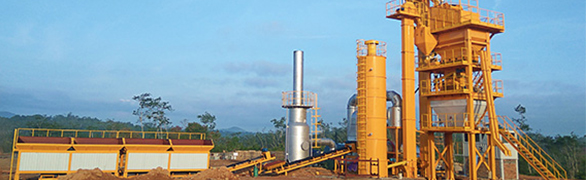
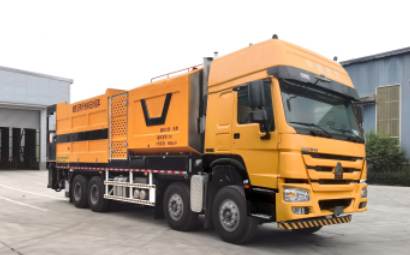
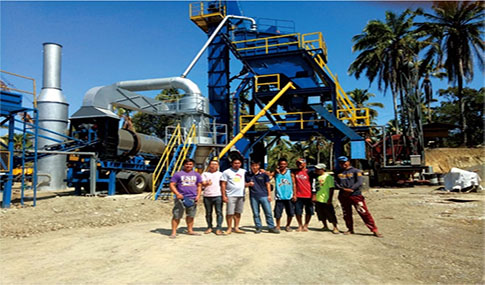
Asphalt mixing station is the core equipment for hot mix asphalt mixture production in highway, municipal road, airport and other projects. It operates under high temperature, high dust and strong wear conditions for a long time. The core components such as combustion, drying drum, dust removal and metering mixing are prone to frequent failures, which causes problems such as production line shutdown, substandard mixture quality, excessive energy consumption and environmental protection fines. According to the statistics of front-line operation data, more than 80% of the mixing stations suddenly shut down, all of which are due to lack of inspection, irregular maintenance and improper equipment selection. This paper comprehensively disassembles the working principle of mixing station, high-frequency fault disposal, graded preventive maintenance, equipment early warning identification and scientific selection standards, provides practical operation scheme with strong landing ability for construction, operation and maintenance and procurement personnel, and helps to improve quality and efficiency, comply with regulations and reduce costs.
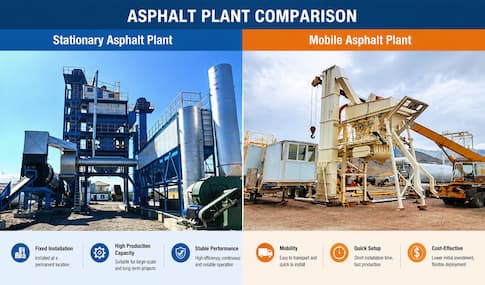
Asphalt mixing plants in the market are mainly divided into two categories: intermittent (batch) mixing plant and continuous drum mixing plant. At the same time, they can be divided into fixed and mobile mixing plants according to site requirements. The process flow, control precision and applicable scenarios of the two are significantly different, which is the basic cognition of later operation and maintenance and fault control.
Batch independent production mode is adopted in batch mixing station. Each plate of mixture is independently metered, screened and mixed. The metering accuracy can reach ±0.5% of aggregate and ±0.25% of asphalt. It is suitable for highway, airport and other high-standard pavement projects. It supports frequent switching of different graded asphalt formulas and has strong quality controllability. The complete production process is divided into six parts:
Cold material supply link: sand and gravel aggregates with different particle sizes are stored in cold storage bins, and variable frequency belt conveyors convey aggregates quantitatively to the main conveyor belt according to the design mix ratio to control aggregate gradation stability from the source. If the aggregate moisture content fluctuates greatly and the bin is blocked, it will directly increase the drying heating load and cause the burner to work overload.
Drying and heating link: aggregates are sent into rotary drying drum, fuel oil and gas burners continuously supply heat to heat the aggregates to 150-200℃ to completely remove moisture in the aggregates; dust and high temperature flue gas generated by combustion are simultaneously sent to bag dust removal system for treatment, which is the core section of equipment energy consumption and environmental protection control.
Hot material screening and storage link: After high temperature drying, the aggregate is sent to the vibrating screen by the hot material elevator, and stored in multi-layer hot bins according to particle size, so as to realize separate storage of different specifications of aggregate, which provides a basis for accurate weighing. The damage and blockage of the screen will directly cause hot material overflow and material shortage, and the mixture gradation is unbalanced.
Accurate metering and batching link: hot bin aggregate, liquid asphalt and mineral powder are accurately measured by independent weighing system, computer control system corrects proportion error in real time, measurement sensor drift and asphalt pipeline blockage are the main causes of mixture white and unqualified proportion.
Forced mixing link: all raw materials enter the double-shaft forced mixing tank, fully mixed for a fixed time, and can be flexibly mixed with recycled asphalt (RAP) and warm mixing additives; after the mixing blades and lining plates are worn, the mixing uniformity will decrease greatly, and the white material and segregation material produced cannot be used for pavement paving.
Storage and discharge of finished materials: the hot asphalt mixture after mixing is sent to the insulation finished material bin, the constant temperature is maintained at 100-180℃, and the mixture is directly loaded and transported to the construction site. The failure of the insulation of the bin body will cause the mixture to cool down too fast and the paving compaction is not up to standard.
Roller mixing station adopts integrated continuous production process, aggregate drying, heating and asphalt mixing are all completed synchronously in the same roller, without independent hot material screening and hot bin procedures, with strong production continuity, simple equipment structure and lower initial procurement cost, suitable for large-scale, single-formula rural roads and municipal maintenance projects. However, the metering control accuracy is weaker than intermittent station, the quality fluctuates obviously when the mixture specification is changed frequently, and the upper limit of recycled material mixing ratio is lower.
Whether batch or drum mixing station, the core hardware system includes nine modules: cold material conveying system, drying drum and combustion system, bag dust removal environmental protection system, thermal lifting and screening equipment, precision metering system, mixing main engine, asphalt storage and conveying system, finished product insulation bin and automatic PLC control console. Any component failure will interrupt the operation of the whole production line.
The faults of mixing station can be divided into eight categories: combustion heating system fault, drying drum body fault, material transportation blocking wear fault, bag dust removal environmental protection fault, asphalt pipeline transportation fault, mixture finished product quality defect, automatic control system fault and environmental emission exceeding standard. Each type of fault has clear inducement, intuitive production impact and standardized disposal scheme.
Burner is the energy consumption core of the whole set of equipment, and it is also the high-incidence point of failure. Long-term high temperature and dust pollution are easy to cause ignition and abnormal combustion. Common faults include ignition failure, low combustion efficiency, flame instability, local overheating of the drum four major problems.
Ignition failures are mostly caused by fuel pipeline blockage, ignition electrode carbon deposition, flame detection sensor failure, and imbalance of air-fuel ratio, which directly causes the production line to fail to start and delays the construction period; incomplete combustion caused by imbalance of air-fuel ratio, carbon monoxide and nitrogen oxides in exhaust gas exceed the standard, fuel consumption increases by 15%-30%, and production costs are wasted for a long time; Flame deviation and instability will burn the material lifting plate inside the drying drum, accelerate the local wear of the cylinder, and cause deformation and cracking of the steel plate of the cylinder in serious cases.
Targeted disposal scheme: establish monthly maintenance system of burner, regularly clean fuel injector and filter fuel impurities; adjust damper plate professionally every quarter to optimize air and fuel ratio; observe flame shape before starting up every day, standard stable flame is light blue, yellow fire and black smoke appear, stop immediately for maintenance; select compliant clean fuel to reduce carbon deposition and blockage of pipeline.
The internal lifting plate and cylinder structure of the drying drum bear the core role of aggregate heat exchange, and long-term sand erosion, high temperature thermal expansion and contraction are easy to occur loss. Typical faults are wear and fall of lifting plate, accumulation of sticking material on inner wall of cylinder, abnormal rotation speed of drum and large vibration of cylinder.
After the lifting plate is worn, the aggregate heat exchange area is greatly reduced, the aggregate is not completely dried, the residual moisture of the finished mixture, and the asphalt peeling and pit diseases appear on the road surface in the later period; the sticking of the cylinder wall will cause the deviation of the center of gravity of the drum, the operation vibration will be intensified, and the bearing and supporting wheel will be accelerated and damaged; if the rotating speed of the drum is too fast, the aggregate will stay for insufficient heating time, the moisture content exceeds the standard, and the rotating speed is too slow, the production capacity will be greatly reduced.
Daily operation and maintenance priorities: Stop the machine every month and enter the cylinder to check the thickness of the lifting plate, and replace it immediately if the wear exceeds 1/3; clean the stones adhered to the cylinder wall after production to avoid caking; regularly calibrate the speed of the drum drive motor, and correct the supporting wheel, The coaxiality of the blocking wheel eliminates abnormal vibration.
Cold bin, belt conveyor, hot material elevator and vibrating screen constitute a complete material conveying chain. Wet aggregate, fine powder agglomeration and belt aging are the main sources of failure. Common problems on site: arch material blocking in cold storage bin, belt slipping and tearing, chain wear of elevator hopper, broken and blocked screen of vibrating screen.
Interruption of cold material supply will cause intermittent equal material in mixing station, and the production capacity cannot meet the standard; belt deviation, material leakage due to damage, and continuous fluctuation of aggregate proportion; blocking and damage of vibrating screen will lead to mixing of coarse and fine aggregates, mixture grading deviates from design standard, and pavement segregation and uneven compaction after paving.
Optimize control measures: install vibration arch-breaking device in cold storage bin, cover the aggregate in stock yard with rainproof to reduce moisture content; check belt tension and wear of sweeper every week, and adjust tension in time; clean the powder of vibrating screen every day, repair and replace the holes immediately; regularly fill high temperature grease into chain and hopper to reduce the risk of metal wear and fracture.
Under the background of stricter environmental protection control, the failure of bag dust removal system not only affects production, but also triggers environmental protection punishment. The core faults include dust bag damage and blockage, pulse ash cleaning system failure, induced draft fan failure and equipment seal air leakage.
Bag blockage will cause continuous increase of pressure difference in dust removal box, blocked exhaust of flue gas from drying drum, abnormal internal pressure of drum and deterioration of combustion condition; dust will be discharged directly from chimney after bag damage, particulate matter exceeds standard, and it will face shutdown rectification and fine; poor sealing of box body and access door will suck cold air, condensed water will be produced due to sudden drop of flue gas temperature, and bag hardening will be permanently damaged due to moisture.
Standardized operation and maintenance means: record the dust removal pressure difference data every day, and start pulse ash cleaning in time when the pressure difference rises abnormally; replace the filter bags in batches every six months to one year according to the working conditions, and replace the damaged bags immediately; check all sealing gaskets of the box, and install sealing rubber strips at the air leakage points; regularly repair the pulse valve and air storage tank to ensure the stability of ash cleaning pressure.
Asphalt needs to be stored and transported at a constant temperature of 160-180℃. Abnormal temperature control and accumulation of impurities in pipelines will cause a series of quality failures. Common problems: asphalt pump leakage damage, pipeline blockage, asphalt high temperature oxidation aging, uneven metering injection.
Pipeline blockage and inaccurate measurement will produce a large amount of white aggregate, incomplete asphalt coating on aggregate surface, insufficient pavement adhesion; asphalt storage tank heating out of control temperature is too high, asphalt accelerated aging and hardening, low temperature crack resistance of mixture greatly attenuated; pipeline leakage will cause asphalt raw material waste, site oil pollution has fire safety hazards.
Control points: regular maintenance of asphalt tank insulation layer, monthly calibration of temperature control sensor; cyclic cleaning of asphalt pipeline at the end of production to prevent low temperature solidification and blocking; selection of high temperature resistant seals, regular inspection of pump flange and valve leakage; strict control of asphalt storage temperature to avoid long-term over-temperature standing.
Mixture quality problem is the most intuitive loss of mixing station operation, all caused by front-end equipment failure chain, mainly divided into four categories: abnormal temperature, aggregate segregation, residual moisture exceeding standard and uneven mixing.
The discharge temperature of mixture is too low, the viscosity of asphalt rises, the paving compaction is difficult, and the void ratio of pavement exceeds the standard; the discharge temperature is too high, the asphalt is aged, the smoke on site is pungent, and the pavement is prone to rutting and cracking; the aggregate segregation is caused by the unreasonable buffer structure of belt discharge and bin discharge, and the mixing time is insufficient, the coarse and fine aggregates are separated, and the strength of local pavement is unbalanced; the aggregate is not completely dried, and the residual moisture is generated, and the water and asphalt produce peeling reaction, and the loose and pit diseases appear quickly after opening to traffic.
Closed loop quality control: monitor discharge temperature in real time for each tray, establish temperature interval account; optimize unloading buffer device to reduce aggregate drop and segregation; strictly follow equipment standard mixing time, replace worn mixing blades in time; strictly control aggregate moisture content, and prolong drum heating time for high wet aggregate.
Modern mixing station relies on PLC, sensor and frequency conversion module to realize full automatic production. Sensor drift, line corrosion, program error and motor overload trip are easy to occur in long-term high temperature dust environment of electrical components. Load sensor data drift will cause continuous deviation of aggregate and asphalt measurement; temperature and pressure sensors fail to monitor working conditions in real time, and hidden dangers cannot be predicted in advance; aging and short circuit of the line will cause sudden shutdown of the whole machine, and even cause electrical fire.
Operation and maintenance requirements: clean the dust inside the control cabinet every week, check the tightness of the line connector; calibrate the temperature, weighing and pressure sensors every month; equip spare sensors and frequency converters for quick replacement of faults; avoid high temperature exposure of the control cabin, and install ventilation and heat dissipation devices.
In addition to bag damage, no organization dust, smoke VOC exceeds the standard, odor diffusion are all environmental protection failures. The aggregates in the stock yard are stacked in the open air without enclosures and the equipment access doors are poorly sealed, which will produce unorganized dust; the burner burns incompletely to produce black smoke and pungent asphalt smoke; the concentration of smoke pollutants increases when recycled materials are mixed. The rectification measures include installing spray dust suppression in the material yard, fully enclosed storage bin, transformation of low nitrogen burner, matching of activated carbon flue gas adsorption device, and synchronous optimization of combustion ratio to reduce pollutant generation.
The most economical and effective way to solve all kinds of faults in mixing station is to carry out graded preventive maintenance system, divide maintenance contents according to five periods: daily shift change, weekly shutdown maintenance, monthly in-depth maintenance, quarterly and semi-annual disassembly inspection and annual overhaul, form standardized inspection account, and reduce sudden shutdown and early loss of wearing parts from the source.
Daily maintenance is based on visual inspection, basic cleaning and safety test. The whole process is completed within 30 minutes, which is the first line of defense for hidden danger pre-investigation. Before production, check equipment for abnormal noise, belt/pipeline leakage and burner ignition status; clean aggregate and asphalt adhered to inner wall of cold storage bin, mixing cylinder and vibrating screen; fill lubricating grease into all bearings and rollers, check oil level of gear box and asphalt pump; test emergency stop button, safety interlock and temperature and pressure alarm device; record bag dust removal pressure difference, combustion flame status and temperature of each tank; empty storage bin, clean dust deposit in flue and discharge accumulated water at bottom of fuel oil storage tank after production. All abnormal vibration, leakage and temperature deviation shall be recorded in the operation and maintenance account, and the machine shall be shut down for maintenance the next day.
The whole line is shut down for half a day every week for in-depth inspection of conveying, screening and metering systems. Comprehensively detect belt wear, deviation and cleaner working conditions, adjust belt tension; disassemble the access port of vibrating screen, check the integrity of screen and rubber damping spring; measure the wear thickness of chain and hopper of hot material elevator, tighten all loose bolts; calibrate the no-load zero point of weighing system, check the measurement error; open the access door of stirring cylinder, check the wear degree of blades and lining plates; test the pulse ash cleaning function of dust removal system, and clean the ash deposit in ash hopper; Electrical control cabinet dust fastening terminals, check the aging of the line.
Monthly maintenance focused combustion system, metering system, hydropneumatic system core calibration. Professional adjustment of air-fuel ratio of burner, cleaning of fuel filter element and fuel injection nozzle; full-scale calibration of all aggregate, asphalt and mineral powder metering systems to ensure that errors comply with national standards; replacement of fuel oil, hydraulic oil and asphalt filter elements; measurement of wear of lifting plate and stirring liner plate of drying drum, estimation of replacement cycle; comprehensive inspection of bag box seal, repair of air leakage gap; inspection of aging cracks of hydraulic and pneumatic pipelines, replacement of failed seals; Complete record fuel and electricity consumption data, and judge whether the operating efficiency of equipment decreases compared with benchmark energy consumption.
Arrange a long shutdown every 3-6 months to disassemble and inspect the drying drum, supporting wheel, asphalt storage tank and recycled material system. After the drying drum is cooled, personnel shall enter the drum, comprehensively inspect the material lifting plate and the welding seam on the drum wall, and correct the concentricity of the drum; empty the asphalt storage tank and clean the sludge and precipitated impurities at the bottom, inspect the tank insulation and heating coil; clean the caked materials in the finished product bin and hot bin, and inspect the discharge gate; for the mixing station equipped with the recycled material system, inspect the wear of the recycled material conveying and heat exchange devices; disassemble the fan and reducer to replace the lubricating oil, and inspect the bearing clearance.
Comprehensive overhaul shall be carried out in the off-season of construction every year, and environmental protection and safety compliance inspection shall be completed simultaneously. Disassemble and repair the whole burner, replace the aging ignition components and fans; replace the dust removal bags in batches, repair the cage bones and Venturi tubes; inspect and reinforce the welding seams, supports and foundation bolts of the whole steel structure; update and calibrate the complete set of sensors and control systems, upgrade the software system; comprehensively test the fire protection, dust explosion prevention and emergency shutdown systems; conduct flue gas emission detection by the third party to ensure that the particulate matter and nitrogen oxides meet the standards; All wearing parts (lifting plate, stirring blade, screen, belt) should be replaced in batches to eliminate hidden dangers in operation throughout the year.
Set up inventory of wearing parts, such as bags, bearings, oil nozzles, belts, sensors and other common accessories in stock; regularly carry out special training for operation and maintenance personnel to master fault identification and basic maintenance skills; introduce predictive maintenance tools such as infrared thermal imaging and vibration detector to identify bearing overheating and local high temperature hidden dangers in advance; all maintenance, repair and replacement parts are completely electronically archived, and the equipment management system is used to analyze the fault cycle and optimize the maintenance frequency; Complete anti-freezing and anti-rust treatment of the whole machine before shutdown in winter, and do a good job of electrical moisture-proof and material yard drainage protection in high temperature and rainy season.
Clear warning characteristics will appear before equipment failure outbreak. As long as the operators identify the following signals during daily inspection, timely shutdown and maintenance can avoid maintenance costs of ten thousand yuan and long-term shutdown losses, and eliminate safety accidents and environmental penalties.
Abnormal vibration and abnormal sound warningMetal impact, sharp friction and continuous large vibration of drying drum, stirring host, induced draft fan and belt conveyor represent bearing wear, loose parts and lifting plate/blade falling off. Laissez-faire operation will cause cylinder tearing, spindle fracture, complete machine scrap, hear abnormal noise the first time to stop disassembly inspection.
The temperature fluctuates abnormally continuously, thedischarge temperature of the drying drum fluctuates, the bearing/motor shell is abnormally hot, the temperature control of the asphalt tank fails, and a large amount of blue-white water vapor appears in the exhaust gas. Low temperature aggregate drying is not up to standard, high temperature accelerates asphalt aging, cylinder overheating deformation, there is fire risk, it is necessary to repair burner, temperature control sensor and insulation layer simultaneously.
Dust removal system exceeds the standard andleaks ash smoke continuously from chimney, a large amount of dust accumulates on the ground of plant area, dust removal pressure difference continuously rises, ash leakage occurs in gap of box access door. It means that the bag is damaged and blocked, and the seal fails. It not only violates environmental protection regulations, but also pollutes the mixture when dust enters the mixing tank, reducing the strength of the road surface.
Material conveying block, segregation early warningcold bin frequent blocking, hot bin overflow material shortage, finished material coarse and fine aggregate obvious stratification, discharge a large number of white material. The root causes are screen breakage, measurement deviation, abrasion of mixing parts, unqualified mixture must be discarded, and paving on the road is strictly prohibited.
Ignition difficulty underabnormal conditions of combustion system, erratic flame, continuous black smoke and yellow fire, large increase in fuel consumption under the same output, frequent automatic shutdown of burners. Unbalanced air-fuel ratio, blocked oil circuit, incomplete combustion not only wastes fuel, but also produces a lot of harmful exhaust gas, which has hidden danger of explosion.
Leakage, mechanical wear visual signalasphalt, fuel oil, hydraulic oil, grease leakage; belt, liner, lifting plate wear thin; bag color damage, equipment protection baffle, bolt missing loose Leakage is easy to cause fire, wear parts continue to operate will suddenly break down.
Fault codes frequently pop up onthe electrical control system fault alarmconsole, unstable weighing readings, overload tripping of motors, abnormal high current data. Faults of sensors, circuits and frequency conversion modules will cause out-of-control ratio, even sudden power failure of the whole machine.
Safety and environmental risk signals:strong asphalt odor in the plant area, continuous dizziness and respiratory discomfort of operators, accumulation of a large amount of combustible dust on site, and repeated detection intensity of finished materials are not up to standard. It represents failure of flue gas treatment, lack of dust explosion-proof measures, and out of control of mixture quality, which requires immediate shutdown for rectification.
Follow standardized operation after early warning signal is found: the first step is to shut down smoothly, cut off the main power supply and execute LOTO safety procedures; the second step is to isolate the site, set warning signs and report to the project leader; the third step is to completely record the fault phenomenon, operation parameters and recent production conditions; the fourth step is to disassemble and repair according to the preventive maintenance list; the fifth step is to conduct no-load trial operation after fault repair, confirm that all indicators are restored to normal, and then resume mass production; Finally, root cause analysis is completed, and maintenance cycles are adjusted to avoid recurrence of similar problems.
.png)
A large number of long-term high-frequency failures of mixing stations are rooted in the selection errors in the procurement stage, only paying attention to low prices and ignoring equipment technology, core component quality and after-sales guarantee. A set of scientific purchase standards can greatly reduce the operation and maintenance cost and shutdown times in the later period, and avoid the failure of combustion, dust removal, metering and mixing system from the root of equipment.
The first step of procurement is to clarify the average annual mixture output and peak capacity demand of a single project, and reserve a 10%-20% capacity buffer to eliminate "overload of small equipment and idle waste of large equipment." 40- 60t/h small mobile roller station is suitable for rural roads and small maintenance projects;80- 160t/h intermittent station is suitable for municipal trunk roads and small and medium-sized expressway projects; large intermittent station above 240t/h meets high standard projects of expressways and airports; fixed type is selected for long-term fixed sites, and modular mobile stations are selected for multi-site turnover.
Working condition requirements distinguish formula replacement frequency: intermittent mixing station must be selected for frequent switching of grading and high requirements pavement; roller continuous station can be selected for single batch construction; original RAP thermal regeneration system shall be selected for recycled material mixing requirements.
Priority shall be given to regular manufacturers with more than ten years of road construction equipment production experience and ISO quality/environmental system certification. On-site visits shall be made to the in-use items of the same type of equipment, and the failure rate, replacement cycle of wearing parts and after-sales response speed of the equipment shall be consulted by the owner. Focus on checking the wear-resistant materials of cylinder body and stirring cylinder. The drying drum adopts high temperature resistant thickened steel plate, and the lifting plate and stirring blade adopt high chromium wear-resistant castings, which greatly prolongs the service life. The dust removal system gives priority to three-stage pulse bag dust removal, which meets the strict domestic environmental protection emission standards. The modular design of the whole machine reduces the difficulty of later maintenance.
80% of the equipment failure rate is concentrated in the core supporting components, and the brand standard of key components is clearly defined during procurement: professional industrial combustion brands are selected for burners to ensure stable combustion and low energy consumption; high-precision industrial products are selected for weighing sensors and PLC control systems to ensure stable measurement errors; temperature-resistant waterproof coated filter materials are selected for bags to reduce the probability of blockage and damage; heavy-duty industrial accessories are selected for belts, reducers and fans to reduce wear failures of conveying systems; The asphalt storage tank is equipped with complete insulation, circulation heating and anti-precipitation system to eliminate pipeline blockage and asphalt aging problems.
Low-cost equipment seems to have less investment in the early stage, but the wearing parts are replaced frequently, the fuel energy consumption is high, the number of downtime maintenance days per year is more, and the long-term comprehensive cost is higher. Total life cycle cost (TCO) shall be calculated for procurement, including equipment purchase price, transportation and installation cost, annual fuel electricity cost, annual maintenance and repair cost, replacement cost of wearing parts and investment in environmental protection transformation. Priority is given to energy-saving models with frequency conversion, waste heat recovery and low nitrogen combustion design, which can save a lot of fuel expenses in long-term production; the equipment supports the installation of warm mixing, regeneration and remote monitoring systems in the later stage, and has the ability to upgrade and expand.
After-sales service is the key threshold for stable operation of equipment. Localization service outlets, 24-hour technical remote support and warranty period of the whole machine must be specified in the purchase contract.(The warranty for core components shall not be less than 1 year), installation and commissioning and free training for operators; define the regional spare parts warehouse to ensure that bearings, bags, sensors and other wearing parts are delivered within 48 hours; support annual on-site complete machine inspection, burner professional adjustment, metering system calibration and other value-added maintenance services; equipment with Internet of Things remote monitoring function can push fault warning in real time, arrange maintenance in advance, and reduce sudden shutdown losses.
According to the environmental emission standards of the project location, the supporting dust removal, flue gas treatment, sound insulation and noise reduction systems are selected; the equipment is equipped with dust explosion prevention, fire extinguishing, multiple safety emergency stop interlocking, protective cover and other safety structures; the fully enclosed dust suppression and asphalt waste gas adsorption devices of the material yard are matched synchronously to avoid additional investment in environmental protection rectification in the later period.
The stable operation of asphalt mixing station is directly related to the construction progress of road engineering, pavement quality and economic benefit of the project. The equipment is in high temperature dust condition for a long time, and various faults are difficult to be completely eliminated. Enterprises and operation and maintenance personnel shall abandon passive maintenance mode, establish full-cycle management and control concept of prevention priority and pre-inspection, rely on four means of equipment principle cognition, standardized graded maintenance, fault early warning identification and scientific equipment selection, cooperate with personnel training, spare parts reserve and digital account management, effectively reduce downtime, reduce operation and maintenance cost, ensure environmental protection compliance, realize efficient and stable production of mixing station, and build up equipment guarantee for road engineering construction.