With the rapid development of global infrastructure construction and the continuous popularization of green and low-carbon engineering concepts, traditional road construction technologies are facing higher standards and requirements in energy saving, emission reduction and environmental protection.Warm mix asphalt (WMA), as an innovative environmental protection pavement material technology, has gradually become the mainstream alternative to traditional hot mix asphalt (HMA) in modern road engineering.Warm mix asphalt balances pavement performance, construction efficiency and environmental benefit effectively by reducing the production and construction temperature of asphalt mixture.This technology not only solves the problems of high energy consumption and large harmful gas emission in traditional hot mix asphalt construction, but also greatly optimizes the construction environment and prolongs the window period of road construction.At present, warm mix asphalt has been widely promoted and applied in global highway construction, municipal road reconstruction, airport pavement engineering and other scenarios, becoming the core key technology for green and low-carbon transformation and upgrading of pavement engineering industry.
Warm mix asphalt is a new type of asphalt mixture, which can be mixed, paved and rolled at 20 to 40℃ lower temperature than traditional hot mix asphalt, while maintaining excellent pavement performance. From the specific parameters, the production and construction temperature of warm mix asphalt is usually controlled between 110℃ and 130℃, while the construction temperature of traditional hot mix asphalt is as high as 140℃ to 180℃. In essence, warm mix asphalt relies on special warm mix additives, improved mixing technology or physical viscosity reduction technology to reduce the high temperature viscosity of asphalt binder, improve the workability and compactness of asphalt mixture in medium and low temperature environment, and finally form pavement in strength, durability, anti-skid performance and other core indicators consistent with hot mix asphalt pavement and stable and reliable.
Different from cold-mix asphalt constructed at normal temperature but with insufficient early strength, warm-mix asphalt completely retains the core performance advantages of hot-mix asphalt, and is a green and efficient pavement material technology between hot-mix asphalt and cold-mix asphalt. It has the characteristics of low energy consumption, low emission, strong construction operability and stable pavement performance, which fully conforms to the development concept of sustainable construction of modern engineering.
.jpg)
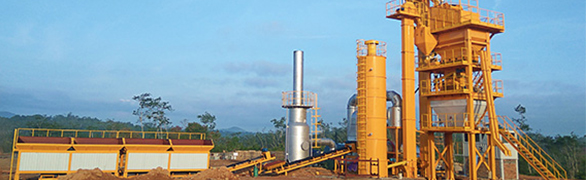
Three mature and stable technical systems have been formed for the production process of warm mix asphalt. The core principle is to reduce asphalt viscosity and improve low temperature mixing fluidity without damaging the original performance of asphalt. The whole process can be compatible with traditional asphalt mixing equipment, only need to fine-tune parameters or a small amount of auxiliary agents, equipment transformation cost is low, field operability is strong, and engineering popularization is high. Three mainstream warm mix production techniques are as follows.
This technology is currently the mainstream warm mixing process with the widest range of engineering applications. Special materials such as organic viscosity reducer, surfactant and zeolite warm mixing agent are added into asphalt binder or mixture to reduce friction resistance between asphalt molecules and effectively reduce asphalt high temperature viscosity. The mixture still has good fluidity and aggregate wrapping effect in the low temperature range of 110 DEG C to 130 DEG C, and completely meets the construction technical standards of conventional mixing, paving and rolling.
Foam warm mixing belongs to physical modification warm mixing process, without adding chemical additives. By injecting a small amount of water or special foaming agent into high temperature asphalt, a large number of microscopic foam structures are generated in the asphalt, the asphalt volume is instantly increased, the viscosity of the system is reduced, the low temperature workability of the mixture is obviously improved, and the low temperature mixing and compaction molding are realized. The process has simple formula, lower cost and outstanding environmental protection.
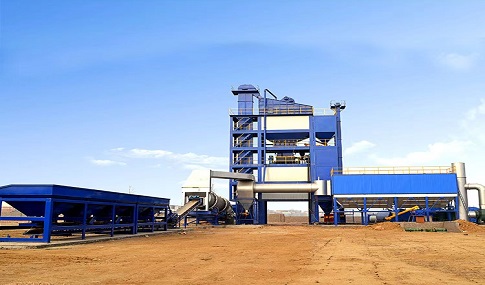
This technology relies on equipment process adjustment to achieve low temperature construction, without relying on external materials. By optimizing the heating system of mixing station, reducing the heating temperature of aggregate, cooperating with fine processes such as graded mixing and uniform slow cooling, the asphalt and aggregate are evenly mixed and bonded stably under low temperature conditions. The three technologies can be used separately or combined according to the working conditions in the project to effectively reduce fuel consumption, inhibit asphalt aging at high temperature and ensure stable performance of finished mixtures.
Warm mix asphalt and traditional hot mix asphalt are two mainstream pavement materials in current road engineering. The core performance of the two is similar, but there are obvious differences in construction conditions, environmental protection level, construction efficiency and service characteristics. The specific comparison dimensions are as follows.
The construction temperature of traditional hot mix asphalt is as high as 140℃ to 180℃. Long-term high temperature heating is easy to cause aging of asphalt binder, resulting in reduced toughness and bonding performance of materials, indirectly shortening the overall service life of pavement. The construction temperature of warm-mixed asphalt is only 110℃ to 130℃, which effectively avoids the problem of asphalt aging at high temperature, retains the flexibility and bond strength of asphalt perfectly, and significantly improves the long-term durability of pavement.
Hot asphalt mixing at high temperature consumes a lot of fuel resources, and carbon dioxide, asphalt smoke and volatile harmful organic compounds will be continuously released during the construction process, resulting in prominent environmental pollution problems. Warm asphalt can reduce fuel consumption by about 20%, greatly reduce greenhouse gas and harmful pollutant emissions, effectively improve the air quality of construction site, optimize the working environment of construction personnel, and have obvious advantages in green construction.
Hot-mix asphalt has strict requirements on environmental temperature, it is difficult to construct in low temperature environment, and the cooling curing speed after paving is slow, and the construction period is severely limited. Warm asphalt has low temperature sensitivity, can be constructed at low temperature, effectively prolongs the annual construction window period, and at the same time, the paving layer cools quickly, supports multi-layer continuous paving and rapid opening traffic, which can significantly accelerate the project progress and shorten the construction period.
Under normal road conditions, the structural stability, anti-skid performance and anti-water damage ability of warm mix asphalt pavement are basically the same as those of hot mix asphalt, and because of the low aging degree of asphalt, it has better anti-fatigue performance. But in the extreme high temperature, long-term overload traffic special conditions, hot mix asphalt technology application experience is more mature, the ultimate bearing stability is slightly better than warm mix asphalt.
.jpg)
Warm mix asphalt has significant comprehensive advantages in environmental protection, engineering economy, construction practice, pavement service performance and other dimensions, and is the core optimization technology of current green road engineering. The advantages are as follows.
By reducing the construction temperature, significantly warm asphalt can effectively reduce fuel consumption and significantly reduce carbon emissions and asphalt smoke pollutants emissions, which is in line with the concept of low-carbon building and double-carbon development. At the same time, it effectively optimizes the operation environment of the construction site, reduces the occupational health hazards caused by harmful gases, and truly realizes clean, green and safe road construction operations.
Low temperature production and paving technology can effectively avoid high temperature aging of asphalt binder, completely retain excellent viscoelasticity of asphalt, and strengthen the bonding strength between asphalt and aggregate. It can significantly improve the ability of pavement to resist fatigue cracking, water damage and permanent deformation, effectively delay the development of pavement diseases, and prolong the overall service life of roads.
Warm mix asphalt has low temperature sensitivity, is not limited by high temperature construction conditions, effectively prolongs the annual construction cycle, and can meet the construction requirements in spring and autumn and low temperature periods. The mixture has good low-temperature workability, convenient compaction, high paving density and fast cooling speed, supports multi-layer continuous construction and rapid opening to traffic, and significantly improves the overall engineering construction efficiency.
Although warm-mixing admixtures will slightly increase raw material costs, this technology can reduce fuel consumption, reduce equipment wear, shorten construction time, and reduce post-maintenance frequency. From the perspective of the whole life cycle of the project, it can effectively reduce the comprehensive construction and operation and maintenance costs and has good long-term economic value.
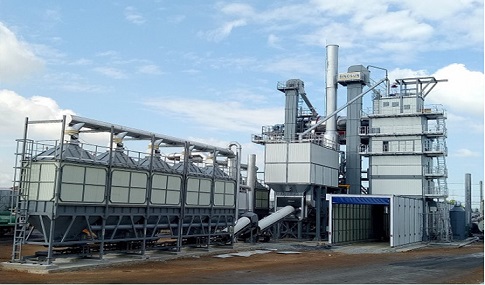
Warm mix asphalt can be directly adapted to traditional asphalt mixing, paving and rolling equipment without large-scale equipment transformation, simple process operation, low landing threshold, and can be adapted to various road engineering construction scenarios. It has strong engineering popularization value and practicability.
Warm mix asphalt has outstanding green construction advantages, but restricted by factors such as technology, cost and construction conditions, there are still obvious shortcomings and application limitations in project promotion, and it is difficult to fully adapt to extreme working conditions and ultra-high standard road projects. Specific limiting factors are as follows.
At present, most of the core technologies such as high-performance warm-mix admixture and foam warm-mix matching technology are protected by patents, and the cost of material procurement and technology application is higher than that of traditional hot-mix asphalt raw materials. For low-grade rural roads, simple temporary roads and other projects with limited budget, higher initial construction investment greatly limits the large-scale popularization and use of warm mix asphalt.
In extreme high temperature climate area and long-term heavy traffic section, the high temperature stability of warm mix asphalt mixture is slightly lower than that of traditional hot mix asphalt. If the proportion of warm mixed admixture is not properly controlled during construction, the overall stiffness of the mixture will be insufficient directly. After the road bears the rolling of vehicles for a long time, it is easy to appear rutting, settlement, pavement deformation and other common diseases, which will affect the traffic safety and service life of the road.
Warm mix asphalt has strict requirements for construction refinement. The deviation of additive content, mixture uniformity, construction temperature accuracy and other parameters will directly change asphalt viscosity and pavement compaction quality. At the same time, part of warm mixing construction technology is easy to cause residual moisture problem of mixture, which is easy to cause hidden dangers such as loose pavement, water seepage and water damage in the later stage, which puts forward higher requirements for site construction management and technical control level.
After decades of engineering application, traditional hot-mix asphalt has accumulated complete performance data and mature construction system. However, the popularization time of warm mix asphalt is relatively short, the long-term service data under complex climate, heavy traffic and alternating high and low temperature conditions is scarce, and the technical system is still continuously improved, resulting in conservative application of some high-grade key infrastructure projects.
.jpg)
With the continuous iteration and maturity of the technical system, warm mix asphalt comprehensively covers the new construction, reconstruction and maintenance projects of transportation infrastructure by virtue of its advantages of environmental protection, high efficiency and wide applicability. At present, a large-scale application pattern of multi-scenario and multi-field has been formed. The specific application scenarios are as follows.
Municipal roads are the most core and extensive application scenarios of warm mix asphalt. Urban road construction areas are mostly close to residential areas and commercial areas. The characteristics of warm mixed asphalt with low smoke and low pollution can greatly reduce the interference of construction on the lives of surrounding residents and urban environment. At the same time, its characteristics of fast forming speed and rapid opening of traffic can adapt to the new construction, reconstruction and maintenance projects of urban trunk roads, branch roads and sidewalks, which can effectively alleviate the traffic congestion caused by urban road construction.
In ordinary highway and expressway engineering, the application scale of warm mix asphalt is expanding year by year, which is suitable for all kinds of projects such as new road construction, old road overlay, disease maintenance, etc. Compared with traditional hot mix asphalt, warm mix asphalt has excellent low temperature construction performance, which can effectively extend the construction window period in plateau, high altitude and cold areas, and make up for the short board that hot mix asphalt cannot be constructed at low temperature. The engineering practice shows that the warm-mix asphalt pavement has good flatness and stable performance, which fully meets the load and long-term durability requirements of high-grade highway.
Warm mix asphalt can adapt to various high standard special pavement projects, including airport pavement, port yard pavement, urban landscape roads, etc. Airport and port roads have strict standards for construction environment, road compactness and flatness. Warm mix asphalt has the characteristics of low pollution, high compactness, and stable performance to meet its high standard construction requirements; garden landscape roads focus on low construction disturbance and road surface aesthetics. Degree, which highly matches the construction advantages of warm mix asphalt.
As a typical green pavement technology, warm mix asphalt has become a standard process for low carbon projects. At present, it is widely used in green highway demonstration projects, sponge city supporting roads, urban and rural energy conservation and carbon reduction transformation projects, which can effectively reduce the carbon emission of project construction, assist the project to successfully pass the environmental protection evaluation and green building rating, and conform to the development trend of low-carbon transformation in infrastructure industry.
In order to give full play to the comprehensive performance of warm mix asphalt and avoid application risks, multiple core factors shall be comprehensively considered for project selection, and the optimal warm mix technical scheme shall be matched to meet the project requirements. The specific selection basis is as follows:
Climate environment directly determines the construction quality and long-term service effect of warm mix asphalt. For projects with low temperature and high altitude and short construction window, foam warm mixing technology with excellent low temperature adaptability can be selected to ensure the construction workability under low temperature environment. For the construction area with high temperature and rain, the additive modified warm mixing technology is preferred, relying on its good high temperature stability and water damage resistance, effectively avoiding rutting, water seepage, loose and other common diseases on the pavement.
.jpg)
Different road grades and traffic loads have great differences in pavement performance standards. High-grade and heavy-load projects such as expressways, airport pavements, and heavy-duty trunk lines are suitable for adopting high-performance composite warm mix technology. By optimizing the admixture ratio, the pavement's fatigue resistance and high-temperature deformation resistance can be comprehensively improved. For light-load, low-standard roads such as municipal branches and landscape roads, conventional economical warm mix technology can be used to effectively control project cost while meeting basic performance.
The technology selection should take into account the initial construction cost and the full life cycle benefit. For ordinary conventional road projects with limited budget, the optimized warm mixing technology with low cost and no special additive shall be preferred to reduce the initial investment. For long-life and high-standard key pavement projects, high-performance admixture warm mixing technology can be selected. Although the initial raw material cost increases, it can greatly reduce the maintenance frequency in the later period, and the overall life cycle economic benefit is more prominent.
Equipment configuration on construction site is an important prerequisite for technology selection. For construction sites with old equipment and limited transformation conditions, the admixtures warm mixing technology with strong equipment adaptability, low transformation difficulty and convenient operation shall be preferred. At the same time, in combination with the project construction period requirements and site environmental protection control standards, the low-emission and high-efficiency warm mixing construction technology shall be selected, taking into account the construction progress, project quality and environmental protection requirements.
Technical solutions should be differentiated according to the service life of road design. For the core key projects with long design life and low maintenance frequency requirements, the warm mixing technical scheme that can effectively inhibit asphalt aging and improve the overall durability of pavement shall be preferred. For temporary roads and short-term service simple projects, conventional warm mixing technology with economic convenience and fast construction speed can be selected to balance engineering practicality and construction economy.