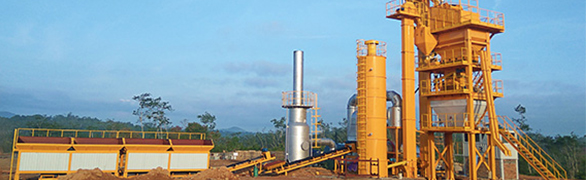
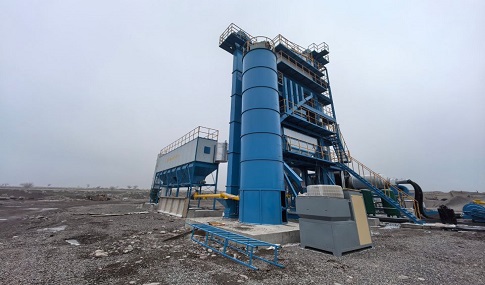
Asphalt mixer is the core equipment of asphalt mixing station, which mainly mixes heated aggregate, asphalt, mineral powder and other raw materials into uniform pavement construction mixture, which directly determines the quality and service life of asphalt pavement. The equipment is mainly divided into intermittent double-horizontal shaft models suitable for high-standard engineering and precise proportion, and continuous drum models suitable for large-scale construction and efficient production capacity. The core consists of mixing chamber, transmission system, wear-resistant mixing components, sealed unloading structure, etc. The mixing quality is affected by multiple factors such as raw material performance, temperature, mixing time, equipment wear, etc., and it is easy to have failures such as uneven aggregate coating, equipment leakage, material segregation, etc. in daily life, so it is necessary to conduct regular inspection and maintenance. Procurement and selection shall be comprehensively considered in combination with project production capacity, construction standards and site conditions. High-quality equipment can effectively improve construction efficiency, reduce operation and maintenance costs and prolong pavement service life.
Asphalt mixer is also often referred to as asphalt mixing tank, mixing pot and mixer in the industry. It belongs to special forced mixing equipment for asphalt mixture. Its main function is to fully fuse various raw materials such as dried and heated sandstone aggregate, molten asphalt binder, mineral powder filler, warm mixing/recycling additive, etc. into uniform hot mix asphalt mixture (HMA) through mechanical forced shearing, folding and kneading.
The mixing performance of the whole set of equipment directly determines the core indicators of finished materials: the integrity of aggregate asphalt coating, grading uniformity and mixture stability. Once the mixing process and equipment state are not up to standard, the finished materials are easy to have white materials, coarse and fine aggregate delamination, oil stone ratio imbalance and other problems. After paving, the rutting resistance and water damage resistance of pavement will decrease greatly. According to the production process classification, the mainstream on the market is divided into intermittent double-horizontal shaft mixing pot, continuous drum mixing system, and supporting laboratory small mixing equipment for mix ratio test and small area repair operation of pavement.
Many people in the daily communication of the industry will confuse the two, but the two belong to the subordinate relationship between thecore components and the whole production line, and there are clear boundaries between the functions, coverage and composition structure.
The asphalt mixer only undertakes a single mixing process, which is the core unit of the whole mixing plant. It only includes mixing chamber, mixing shaft, mixing arm, wear-resistant blade, driving reducer, seal, discharge gate and other components, and cannot independently complete the whole process of asphalt mixture production. The asphalt mixing station is a complete industrial production line, covering the whole process system from cold aggregate feeding, drying and heating, screening and hot storage, accurate metering, forced mixing, finished material storage, dust removal and environmental protection, asphalt storage and heating, cold storage bin, drying drum, bag filter, hot storage bin, metering system, asphalt storage tank, finished product storage bin and other supporting equipment.
In short: asphalt mixing plant must be equipped with asphalt mixer, but a single asphalt mixer cannot complete asphalt mass production, the two are the subordinate relationship between local core and complete production line, procurement, maintenance, troubleshooting must distinguish the scope of the two, to avoid equipment communication, maintenance positioning deviation.
(1).jpg)
The mixing process of asphalt mixers with different structures is very different. At present, the two types of models with the largest engineering market consumption are intermittent double-horizontal shaft forced mixing pot and drum continuous mixing system. The heating, feeding, mixing and discharging processes of the two are completely independent. The complete operation process is disassembled in detail below.
Intermittent mixing pot is the preferred equipment for high-grade highway, airport and special modified asphalt mixture projects. It adopts batch accurate metering and circular mixing mode. The production cycle of single batch is 40~60 seconds. The whole process is divided into three stages: dry mixing, wet mixing and unloading. The process precision is highly controllable.
The whole process is locked by PLC system for dry mixing and wet mixing time, and each batch of material ratio is independently weighed and recorded. It is suitable for high standard construction scenarios such as SMA modified asphalt, high content RAP recycled material and airport special mixture.
Continuous equipment without batch metering process, aggregates, asphalt, ore powder continuous uninterrupted feeding, mixing, discharging, drying, mixing integrated in the same inclined drum, hour capacity is much higher than intermittent equipment, suitable for large-scale, single formula highway engineering.
The advantages of continuous equipment are large capacity, simple mechanical structure and lower operation and maintenance cost, but the proportion accuracy depends on the calibration of cold material belt scale, and the flexibility of formula switching is weaker than that of intermittent stirring pot.
Whether intermittent or continuous, high-quality mixing effect depends onforced high-shear mixing logic: relying on wear-resistant blades/roller plates to generate continuous kneading, folding and shearing forces to break aggregate agglomeration; temperature control is the basic premise, aggregate and asphalt temperature must meet the standard, too low temperature will lead to asphalt viscosity increase, aggregate coating is incomplete; mixing time is strictly controlled, insufficient mixing time will produce white material, excessive mixing will cause asphalt aging, reduce pavement durability. At the same time, the entire chamber is fully sealed and equipped with a dust removal system to control the leakage of asphalt smoke and dust, meeting environmental protection construction standards.
The main double-horizontal shaft intermittent asphalt mixer parts system is the most complete, and the continuous drum mixing system parts structure is relatively simplified. The following takes the industry's most widely used double-horizontal shaft forced mixing pot as the core, completely disassemble all core and auxiliary parts, and mark the functions, loss reasons and maintenance points of each part.
The drum mixer has no independent double mixing shaft structure, and the core mixing components are the lifting plate and partition plate inside the drum, which divides the drum into drying area and mixing area; it is equipped with external asphalt continuous metering pump and cold material continuous conveying metering system, which drives the material to roll and complete mixing by rotating the drum. The wear loss is concentrated in the material plate inside the drum and the lining of the drum.
The asphalt mixer can be divided into four dimensions according to the production process, equipment movement form, production capacity and special function. Different models can adapt to completely differentiated engineering scenarios. When purchasing and selecting models, the project scale, construction standards and site conditions can be combined to match the models.
(1).jpg)
During procurement, equipment acceptance and daily quality control, the comprehensive performance of an asphalt mixer can be comprehensively judged through the following six core parameters. Whether the parameters meet the standards directly affects the quality of finished materials, production energy consumption and equipment service life.
This is the most core index of asphalt mixer, mainly detecting the integrity of aggregate asphalt coating, no white aggregate, no local asphalt oil mass; the fluctuation difference of the same batch of mixture asphalt aggregate ratio is controlled within ±0.3%, and the coarse and fine aggregates are not separated. It can be verified by asphalt extraction test and visual appearance test. At the same time, it is required that there is no mixing dead angle in the mixing chamber, and the gap between the blade and the lining plate is ≤20 mm.
Intermittent models pay attention to the effective mixing volume of a single batch, a single complete cycle period (40~60s), and stable hourly capacity; continuous models pay attention to the residence time of materials in the drum mixing area to ensure sufficient turning and coating time. Long-term overload feeding is strictly prohibited. Overload will greatly reduce the uniformity of mixing and accelerate blade wear.
Dry mixing time is 1-5 seconds, which is used for pre-mixing of aggregate mineral powder; wet mixing time is 20\40 seconds, which is the key to full fusion of aggregate asphalt. Fine adjustment according to mixture type, and appropriate extension of wet mixing time for modified and recycled mixture. The PLC system must have a time lock function to prevent manual shortening of mixing time and cutting corners.
The rated speed of mixing shaft and the linear speed of blades determine the shear mixing strength; the rated power of supporting drive motor matches the full load mixing load; the material of wear-resistant parts and the thickness of wear-resistant layer directly determine the replacement cycle of wearing parts. The service life of high-quality alloy blades can reach tens of thousands of batches.
The unit finished material power consumption and drying fuel consumption reflect the energy saving level of the equipment; the temperature fluctuation of the mixture in the mixing process is controlled within ±5℃, and the temperature is stable to avoid asphalt aging or poor coating; the cavity insulation structure reduces heat loss and reduces energy loss.
Including the service life of seals, replacement cycle of wear-resistant lining plates, sealing performance of discharge gates, and the degree of lubrication automation of the whole machine; the convenience of disassembly and assembly of wearing parts directly affects the length of equipment shutdown and maintenance. All high-quality equipment adopts modular quick-disassembly design, and blades and seals can be replaced without disassembling the cavity as a whole.
Even if the equipment parameters meet the standards, deviations in any link of raw materials, operation technology, equipment loss and temperature control will destroy the uniformity of mixing and eventually cause road diseases. The following six most common influencing factors in construction are sorted out.
Unreasonable aggregate grading, high proportion of needle flake aggregate, soil impurities attached to the aggregate surface will greatly reduce asphalt adhesion; the moisture content of aggregate fluctuates greatly, residual moisture is not completely dried, steam breaks through asphalt film during mixing, and white material appears; the asphalt binder grade does not match, aging and deterioration, and the additive dosage is unbalanced, which directly changes the viscosity and coating effect of the mixture; The recycled RAP material is stored in damp, the old asphalt is seriously aged, and the mixing time is not optimized, which will lead to uneven fusion of the old and new materials.
Temperature is the first influencing factor of mixing quality: the aggregate heating temperature is too low, the viscosity of asphalt rises sharply, and the aggregate cannot be evenly wrapped; the temperature is too high, which will accelerate the oxidation aging of asphalt, and the pavement is easy to crack; the asphalt storage tank is insufficient, the asphalt fluidity becomes poor, the spray atomization is uneven, and the local aggregate is short of oil; the discharge temperature fluctuates too much, and the temperature difference in paving and compaction stage will cause uneven compaction of pavement. The temperature control range of conventional mixing in the industry is 140~180℃, and the temperature of warm mixing mixture can be lowered by 30℃.
Insufficient wet mixing time is the most common quality problem on the construction site. In order to pursue production capacity, the mixing time is artificially shortened, and the aggregate coating is incomplete; if the mixing time is too long, the continuous high temperature shear will destroy the asphalt colloid structure and reduce the overall stability of the mixture; if the dry mixing time is too long, fine ore dust will be lost, and the actual asphalt aggregate ratio will be changed.
Abrasion of blade wear end, falling off of lining plate, excessive clearance between blade and cavity, forming a large number of mixing dead corners; damaged seal at shaft end, leakage of asphalt, accumulation of material in cavity, occupying effective mixing volume; blocked spray nozzle, partial loss of asphalt spraying; loose closure of discharge gate, cross mixing of different batches of mixture, destroying mixture ratio stability. The lack of regular wear inspection on a daily basis will continue to amplify quality defects.
Hot bin screening block, cold material belt scale calibration drift, asphalt weighing bucket weighing error, will cause the actual proportion deviation from the design mix ratio; coarse and fine materials in the aggregate bin segregation, into the mixing pot before the material itself layered, only rely on short-term mixing can not be completely dispersed, finished materials naturally have segregation defects.
The equipment has not been thoroughly cleaned for a long time, and there are caked asphalt residues inside the cavity, and old deteriorated asphalt will be mixed into each batch; during the rainy season, the air humidity is high, the water absorption rate of the aggregates is accelerated, and the drying load is insufficient; during low-temperature construction at night, the mixture is discharged. Rapid cooling reduces the temperature and shortens the effective compaction time; the equipment is not properly lubricated, the mixing shaft load is unstable, and the mixing shear strength fluctuates.
Many purchasers tend to choose low-cost and low-configuration mixing equipment at the initial stage to reduce procurement investment in the short term, but hidden costs such as quality rework, high-frequency maintenance and excessive energy consumption will occur in the long run; a high-quality asphalt mixer with mature technology and perfect wear-resistant configuration can create long-term benefits from four dimensions: mixture quality, production efficiency, operation and maintenance cost and environmental compliance.
The high-shear double-horizontal shaft mixing structure is matched with precision wear-resistant blades, so that each aggregate can be completely and evenly coated, the mixture grading and asphalt aggregate ratio fluctuation are extremely small, the rutting resistance, water damage resistance and low temperature cracking resistance of paved pavement are significantly improved, and the early maintenance and renovation costs after opening to traffic are greatly reduced; It can stably adapt to recycled materials with high content, modified asphalt and warm mixture, meet various high-standard engineering acceptance specifications, and avoid huge losses caused by unqualified mixture sampling and rework of whole batch of waste materials.
Optimize blade angle and cavity flow field design to achieve perfect uniformity within standard mixing time without additional extension of cycle time; fast opening and closing design of discharge gate, smooth circulation of single batch, reducing waiting time of whole mixing station; stable operation of equipment at full load, motor Load Balancer, no frequent overload alarm shutdown, guarantee continuous feeding of road paving, and avoid delay of construction period due to material waiting of paving equipment.
The whole machine adopts high chromium and nickel hard alloy wear-resistant parts, the replacement cycle of blades and lining plates is prolonged by 2-3 times, and the labor cost of purchasing and disassembling wearing parts is greatly reduced; the heat preservation and sealing structure of the cavity reduces heat loss, and the drying fuel and driving motor power consumption are lower; the automatic centralized lubrication system reduces bearing and sealing losses, and the equipment overhaul cycle is prolonged, thus reducing long-term shutdown losses. Compared with low-cost and low-equipped equipment, 3-5-year operation and maintenance cost savings can cover the initial equipment price difference.
High-quality batch mixing pot can flexibly switch between ordinary hot mix, SMA modified material, 50% recycled material and warm mix asphalt mixture. One equipment can undertake municipal, high-speed and maintenance projects without additional procurement of special equipment. Intelligent PLC control system completely retains each batch of production data, meets the requirements of project completion acceptance data retention and quality supervision department sampling traceability, and reduces project compliance risks.
The fully sealed cavity of the whole machine is equipped with negative pressure dust removal interface, so that dust and asphalt flue gas do not overflow during mixing stage; the discharge temperature is reduced by adapting warm mixing process, and the emission of asphalt flue gas is greatly reduced; the waste generation is reduced by stable and accurate measurement, and the utilization rate of raw materials is improved, which meets the environmental protection control standards of road construction in various places, and avoids the risk of shutdown rectification and environmental protection fines.
Combined with the practical operation experience of road mixing station in China, eight types of high-frequency faults in daily operation of asphalt mixer shall be sorted out, fault causes, on-site rapid treatment scheme and long-term preventive measures shall be clarified, so as to facilitate rapid positioning and maintenance of operation and maintenance personnel.
Main causes: the end of mixing blade is seriously worn, the gap between blade and lining plate exceeds 20mm; the wet mixing time is set too short; the asphalt spray nozzle is blocked and sprayed unevenly; the heating temperature of aggregate and asphalt is not up to standard; the effective volume of mixing pot is reduced due to long-term accumulation and agglomeration.
Solution: Regularly measure the blade clearance, directly replace the wear-resistant end if the wear exceeds the standard; lock the standard wet mixing time in the PLC system, and prohibit artificial shortening; shut down and disassemble the spray nozzle every day; repair the drying and asphalt heating system to ensure that the material temperature meets the standard; regularly clean the caked material in the cavity after each batch is completed.
The main causes are: missing mixing blades, angular deformation, and failure of the mixing flow field; long-term underload/overload feeding of the mixing pot; excessive discharge speed of the discharge gate, impact and stratification of materials falling; aggregate segregation in the upstream hot silo and belt conveyor.
Solution: correct and replace the deformed mixing arm blades; feed in strict accordance with the rated volume of the equipment; adjust the hydraulic discharge cylinder flow, slow down the discharge speed; rectify the upstream screening, bin structure, eliminate the segregation of aggregates before feeding.
Main causes: long-term aging and wear of high-temperature seals; blockage of lubricating oil passages, eccentric shaft caused by high-temperature wear of bearings, extrusion damage to seals; excessive internal pressure of cavities, continuous erosion of sealing layers by dust.
Solution: Regularly replace the full set of shaft end seal components; check and dredge the automatic lubrication pipeline to ensure continuous oil supply for bearings; overhaul the dust removal negative pressure system to balance the internal pressure of the cavity; stop the maintenance at the first time of leakage to avoid damage to the spindle bearing.
Main causes: stirring arm, blade loose fall off, double-shaft blade collision; reducer, coupling wear damage; cavity mixed with metal hard objects stuck blade; bearing lack of lubrication lock; feeding serious overload.
Solution: immediately shut down the power, open the access door to check the blade fastening state; disassemble and repair the transmission reducer, synchronous coupling; clean the metal debris inside the cavity; dredge the lubrication system, add high temperature grease; strictly control the single feeding amount, prohibit overload production.
Main causes: mixture discharge temperature is too high, asphalt adhesion cavity wall; each production is not cleaned in time; asphalt additive ratio imbalance, mixture viscosity greatly increased; cavity insulation failure, local low temperature asphalt solidification caking.
Solution: Calibrate drying temperature control, control standard discharge temperature; clean cavity with special asphalt cleaning agent after daily completion; optimize additive dosage; repair cavity insulation layer to maintain uniform internal temperature.
Main causes: high temperature aging deformation of gate sealing rubber strip; insufficient thrust of hydraulic oil cylinder, gate can not be fully attached; caked materials block gate closure.
Solution: replace high temperature sealant strip; overhaul hydraulic pump station pressure, oil cylinder seal; clean the asphalt around the gate to ensure that the gate is completely closed and sealed.
Main causes: high temperature aging of asphalt produces colloid impurities blocking nozzles; residual asphalt cools and solidifies after shutdown; additives mix with asphalt to produce precipitation blocking pipelines.
Solution: Clean spray pipeline and nozzle circularly at the end of daily production; filter aging impurities regularly in asphalt storage tank; optimize additive addition method to avoid precipitation blockage.
Main causes: blade and liner clearance is too large, aggregate continuous friction end; aggregate mud content is large, stone hardness is high to aggravate wear; lack of regular maintenance, agglomerated materials local continuous grinding blade; use ordinary carbon steel low wear parts.
Solution: Regularly adjust blade clearance; add aggregate washing pretreatment process; select original high-chromium alloy wear-resistant end and lining plate; establish monthly wear inspection account and replace worn parts in advance.
Establish daily, weekly and monthly three-level inspection mechanism: check seal leakage, nozzle blockage and discharge gate status every day; measure blade clearance and check transmission lubrication system every week; disassemble and repair wear-resistant parts and clean cavity volume materials every month; archive all maintenance records, reserve vulnerable spare parts in advance according to wear cycle, and minimize sudden shutdown failure.
The procurement of asphalt mixer cannot only compare the equipment quotation, but needs to comprehensively match the model in combination with the long-term demand of the project, site conditions, mixture type and operation and maintenance capacity. The standardized selection process is sorted out as follows, which is divided into seven practical operation steps, covering all procurement considerations of the project contractor and the mixing station investor.
The first step is to define three core requirements: one is the average annual mixture output per hour, reserve 10%~20% capacity redundancy, and avoid full load overload operation of equipment during peak periods; the other is the mixture production type, high-grade highway, recycled material and modified asphalt. Intermittent double-horizontal shaft mixing pot is preferred, and continuous drum type is selected for large-batch ordinary national highway projects; Third, site attributes, long-term fixed base selection fixed type, short-term mobile bid selection semi-mobile/mobile model. At the same time, the local environmental protection emission standards shall be clarified, and the supporting dust removal and flue gas treatment configurations shall be determined.
Advantages of intermittent type: high proportioning accuracy, flexible formula switching, uniform mixing of recycled materials, and adaptability to high-standard pavements; shortcomings: high procurement costs, low upper limit of hourly production capacity, and complex maintenance structure.
Advantages of continuous roller type: large capacity, simple mechanical structure, lower cost of operation and maintenance electricity accessories; short board: grading accuracy depends on cold material calibration, multi-formula switching efficiency is low, high mixing effect of recycled materials is ordinary.
The purchaser directly locks the process route according to its own main project type to avoid that the later production cannot meet the mixture demand.
Hardware directly determines the service life and mixing quality of the equipment, focusing on the inspection of wear parts materials (priority high chromium, nickel hard alloy blade lining), dual-axis synchronous drive system, full automatic lubrication, multi-layer seal at the shaft end, PLC intelligent control system, asphalt spray uniformity; reject low-cost carbon steel wear parts, simple manual lubrication, single-layer seal low-matching models, short-term low prices will cause high-frequency maintenance in the later period.
The purchase cost is only a part of the equipment investment, and the total cost of the 5-year cycle needs to be comprehensively calculated: including the replacement cost of wearing parts, the fuel consumption per unit output, the loss of downtime maintenance period, and the transportation cost of after-sales spare parts; the initial purchase price of high-quality equipment is relatively high, but the replacement cycle of wear-resistant parts is long, the energy consumption is lower, the downtime failure is less, and the long-term comprehensive cost is lower. At the same time, confirm the supplier's local spare parts warehouse and on-site maintenance service coverage ability. In remote areas, the manufacturers with local service outlets shall be preferred.
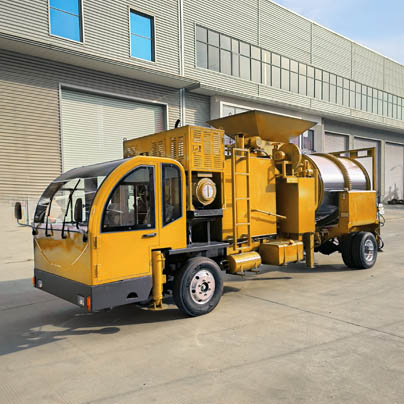
Fixed mixing base does not need to consider disassembly and transfer; county mobile bid section gives priority to semi-mobile modular models; small trailer mobile equipment is selected for rural small-scale maintenance projects; dust removal and asphalt flue gas treatment supporting schemes are confirmed for all models to meet local environmental impact assessment dust and flue gas emission limits, so as to avoid equipment entering the site and failing to accept and put into operation.
Contact the equipment manufacturer to provide the case of the landing mixing station with the same working condition and capacity, check the equipment operation status, mixture mixing appearance, wear parts loss, maintenance feedback of the operation and maintenance personnel on the spot; visually distinguish the difference between the actual workmanship and publicity parameters of the manufacturer's equipment, and avoid the inconsistency between the graphic propaganda and the actual equipment.
The contract specifies the warranty period of the whole machine, the warranty scope of wear-resistant parts, free on-site installation and commissioning, free training for operation and maintenance personnel, remote real-time technical support and spare parts supply cycle; the manufacturer is required to provide complete equipment drawings, maintenance manuals and PLC operation tutorials to ensure independent maintenance and production control in the later period.
Asphalt mixer is the core equipment of asphalt mixing plant, its performance directly determines the quality of asphalt mixture and pavement construction quality, service life and comprehensive cost. The mainstream intermittent double-horizontal shaft mixer in the industry is suitable for high-standard and multi-category mixture construction, with outstanding precision and flexibility. The continuous drum mixer is mainly characterized by high production capacity and low operation and maintenance cost, which is suitable for large-scale standardized road engineering. Each of the two types of models has its own adaptation scenario. The whole life cycle management of equipment needs to control three links: procurement selection, production management and control, daily operation and maintenance, accurately match equipment parameters, strictly control construction technology, and implement graded inspection and maintenance, which can effectively avoid quality defects and equipment failures. With the popularization of road regeneration and warm mixing environmental protection technology, high-quality mixers have become the core advantages of construction enterprises to reduce costs and increase efficiency and undertake high-standard projects.