
At present, the green and low-carbon transformation of infrastructure industry is accelerating, and resource recycling has become the core criterion of road engineering construction. Traditional hot-mix asphalt construction requires high-temperature heating of raw materials, which has problems such as high energy consumption, high carbon emissions, and serious dust pollution. Moreover, waste asphalt pavement materials are mostly discarded and landfilled, which not only causes waste of resources, but also increases the ecological and environmental burden.
Under this background, asphalt cold recycling technology operating at room temperature came into being, effectively breaking through the bottleneck of energy consumption and environmental protection of traditional hot mixing process, and efficiently realizing the recycling and reuse of waste asphalt materials. With the popularization of circular economy concept and the progress of engineering technology, cold recycled asphalt mixing plant has been widely used in road maintenance, old road reconstruction and basic construction projects, becoming the core equipment of green low-carbon road construction, which strongly promotes the green upgrading of asphalt pavement construction industry.
The cold recycled asphalt mixing station is an integrated professional road construction equipment specially developed for the cold recycling of waste asphalt pavements.Unlike traditional hot mix asphalt mixing plants, which need to heat aggregates and asphalt binders to 150-180 ° C, cold recycled asphalt mixing plants operate at room temperature throughout the process.The core function of the equipment is to crush, screen and accurately mix the waste asphalt pavement materials, mix with cement, water, emulsified asphalt, foamed asphalt and other stabilizers, and stir to prepare qualified cold recycled asphalt mixture meeting the road construction specifications.
The equipment is mainly used for centralized harmless and resource treatment of waste road materials, which can realize on-site recycling and secondary utilization of waste asphalt pavement materials, covering the whole process operation of raw material treatment, precise batching, uniform mixing and finished product discharge. The stable homogeneous recycled mixture produced can meet the construction requirements of road base, subbase and surface reconstruction.As the core equipment of pavement circulation construction, cold recycled asphalt mixing plant effectively solves the industry pain points of low recovery efficiency, poor mixture stability and high energy consumption of traditional waste asphalt treatment process.
.jpg)
The cold recycled asphalt mixing plant takes physical crushing and screening, precise proportioning and chemical stabilization at room temperature as the core principle. Through fully automatic closed-loop operation process, it realizes efficient recycling of waste asphalt materials without high temperature heating in the whole process. It relies on mechanical stirring and bonding reaction of chemical additives to form high-performance recycled mixture.
During the construction and production process, waste asphalt pavement materials recovered from the construction site are firstly transported to the inside of the equipment, and the large waste asphalt materials are crushed into uniform particle size aggregates through the primary crushing system, and then impurities such as soil and crushed stone are removed through the screening system to ensure the purity of the recycled aggregates.Then the automatic batching system accurately weighs and measures various auxiliary materials such as recycled asphalt aggregate, cement, fly ash, emulsified asphalt and clean water according to preset construction formula and proportioning parameters.The proportioned raw materials are continuously conveyed to the mixing tank.
Under normal temperature mixing condition, all raw materials are fully homogenized, emulsified asphalt or foamed asphalt evenly coats the surface of recycled aggregate, and stabilizers such as cement fill the gap of aggregate through hydration reaction, which greatly improves the bond strength and structural stability of mixture.The mixed qualified cold recycled asphalt mixture is discharged through the finished product conveying system and can be directly used for pavement paving and rolling construction.The whole set of operation flow realizes continuous, automatic and low-energy material regeneration, and the principle is simple and stable, which is suitable for various pavement regeneration construction scenarios.
A complete set of cold-recycled asphalt mixing plant consists of multiple core systems linked and coordinated with each other. Each module has clear division of labor and complementary functions to ensure stable operation and efficient production of the equipment. The core components are as follows:
The system is mainly composed of crusher, vibrating screen and conveying feeder.It can crush large pieces of waste asphalt pavement materials into standard particle size aggregates of 0-30mm, and screen out unqualified large materials and impurities to ensure uniform particle size of recycled aggregates. It is the basic core module for preparing high-quality recycled mixtures.
As the core module of equipment precision control, the system is equipped with independent weighing bin and sensing equipment for recycled asphalt, cement, emulsified asphalt, clean water and other materials, which can realize automatic weighing and quantitative feeding of various raw materials according to construction formula, with high batching precision and effective avoidance of mixture quality defects caused by uneven material ratio.
It is composed of double-shaft forced mixer and stirring driving device, and is the key equipment for material synthesis molding.It can stir the solid-liquid mixture at high speed to ensure that the stabilizer and binder are fully attached to the recycled aggregate surface, forming a dense and stable cold recycled mixture, and ensuring the overall performance of the mixture is uniform.
Comprises emulsified asphalt storage tank, clean water tank, transfer pump and flow control system, which can provide stable and quantitative liquid materials for mixing operation.It can accurately adjust the dosage of emulsified asphalt and clean water according to different pavement construction requirements, adapt to various road base reconstruction conditions, and the equipment has strong adaptability.
As the intelligent control core of the whole equipment, it is equipped with PLC programmable controller and human-computer interaction terminal, which can realize the automatic operation of crushing, batching, stirring and discharging, support parameter adjustment, fault alarm, production data statistics and other functions, and effectively improve production efficiency and intelligent construction level.
The finished product conveying and discharging system
consists of finished product conveyor belt and discharge port, which is responsible for continuous output of qualified recycled mixture, ensuring stable paving and feeding on the construction site, realizing uninterrupted continuous production of equipment and effectively improving overall construction efficiency.
According to the difference of structure form, mobile performance and production mode, cold recycled asphalt mixing plant is mainly divided into two categories: fixed type and mobile type. The structural characteristics of the two types of equipment are different, and the construction scenarios and engineering requirements are adapted.
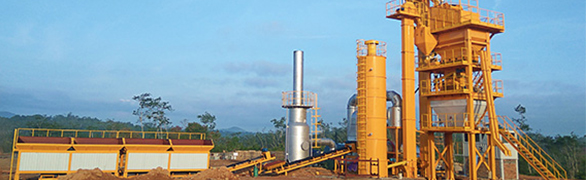
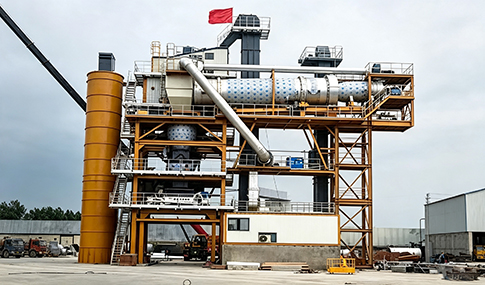
Fixed equipment is large-scale fixed production equipment, which is mostly deployed in fixed mixing stations around urban road networks and highway maintenance bases.The equipment has large capacity, strong structural stability, perfect supporting facilities, hourly output of 200-600 tons, high production accuracy and stable mixture quality.It is mainly suitable for large-scale and long-term road reconstruction projects, as well as centralized recycling and recycling of waste asphalt materials in regional infrastructure projects.Its disadvantage is poor mobility, unable to transfer at will, need to support fixed sites and infrastructure facilities.
Mobile cold recycling mixing station is modular integrated equipment, equipped with mobile chassis, which can be quickly disassembled and flexibly transferred.The equipment integrates the whole system of crushing, batching, mixing and control, and can be quickly transported to various construction sites by trucks. It can be quickly put into operation without complex site infrastructure.The equipment mainly focuses on small and medium-sized production capacity and is suitable for small-scale projects such as scattered road maintenance, rural road reconstruction, road emergency repair, etc. The core advantages are flexible transition, short construction preparation period and strong adaptability to complex working conditions.
Compared with traditional hot mixing equipment and technology, cold recycled asphalt mixing plant has significant advantages in environmental protection, economy, efficiency, construction adaptability and other aspects, which is also the core reason for its rapid promotion and application in the industry.
The equipment is produced at normal temperature, without high temperature heating process, basically without flue gas, exhaust gas and dust emission, completely avoiding the air pollution caused by fuel combustion.At the same time, it can realize 100% recycling of waste asphalt pavement materials, greatly reduce solid waste emission and waste stacking area, effectively reduce the damage of road construction to ecological environment, and meet the requirements of green and low-carbon construction.
Cold recycling process does not need to heat aggregate and asphalt, greatly saving coal, diesel and other energy consumption.At the same time, make full use of waste asphalt recycled materials, greatly reduce the purchase of raw materials such as new asphalt and new aggregates, and reduce the cost of construction materials by 30%-50%.Mobile equipment can also save equipment transfer, site infrastructure costs, and further improve the economic benefits of road maintenance projects.
Cold regeneration stirring process is simple, high automation, continuous production, fast discharge speed.After paving and rolling, the mixture does not need high temperature cooling maintenance, which can quickly open traffic, greatly shorten the road construction and maintenance cycle, reduce the road closure time, and minimize the impact of construction on road traffic operation.
The equipment is not limited by seasons and temperatures, and can operate normally in low temperature seasons, rainy weather and other conditions where hot mixing technology cannot be constructed.The recycled mixture has stable pavement performance, can meet the pavement construction requirements of different grades and different structures such as expressways, urban roads and rural roads, and has a wide range of scenarios.
.jpg)
Cold recycled asphalt mixture is the core material of pavement recycling construction, and its pavement performance directly determines the overall quality, traffic experience and service life of recycled pavement. After technical iteration and a large number of engineering applications, the mixture produced by the standardized cold recycling mixing plant has stable performance and reliable indicators, fully meets the requirements of national and industrial road construction specifications, and has excellent comprehensive road performance.
Depending on hydration reaction of cement and adhesion of emulsified asphalt, the mixture forms compact and stable space network structure and has good comprehensive mechanical properties of compression, tension and shear resistance. It can withstand vehicle load stably for a long time, effectively inhibit common diseases such as pavement deformation, cracking and damage, and ensure the integrity of pavement structure.
The material has excellent high temperature stability and low temperature crack resistance, and strong environmental adaptability. It is not easy to produce plastic deformation such as rutting and encasing under high temperature conditions in summer, and can effectively resist temperature shrinkage cracking under low temperature conditions in winter, and can adapt to complex temperature difference climatic conditions in different regions.
After full stirring and compaction, the mixture has low porosity and high overall compactness, which can effectively block rainwater infiltration and avoid road base softening and loose peeling. At the same time, the material has excellent anti-aging and anti-fatigue properties, which can resist long-term traffic load and natural environment erosion and ensure long-term stable service of pavement.
After cold recycled asphalt pavement is paved and formed, the flatness and anti-skid performance are good, which can meet the comfort and safety requirements of vehicle traffic. The overall service performance is basically the same as that of the traditional hot mix asphalt pavement, and can completely replace the conventional asphalt pavement for various road projects.
Cold recycled asphalt mixing plant and traditional hot mix asphalt mixing plant are the two core equipment for asphalt pavement construction. The two have significant differences in operation mode, energy consumption, environmental protection, materials, construction effect and applicable scenarios. The specific comparison is as follows.
Traditional hot mixing equipment needs to heat raw materials to 160-180 ° C and relies on fuel for heating production, which has high energy consumption and high fuel costs. Cold regeneration equipment operates at normal temperature throughout the process, without heating procedures, and the overall energy consumption is only 20%-30% of that of hot mixing equipment.
Hot mixing equipment will produce a lot of asphalt smoke, dust and carbon emissions at high temperature, and the air pollution problem is obvious. Cold regeneration equipment basically no flue gas emissions, dust pollution is extremely low, the production process is green and low-carbon, more in line with modern environmental protection construction requirements.
The hot mixing plant can only use brand-new aggregate and asphalt, and can not recycle waste pavement materials, so the resource utilization rate is low. The cold recycling mixing plant takes waste asphalt as the main raw material, realizes 100% recycling of solid waste, and solves the problem of waste accumulation and resource waste from the source.
After paving, hot mix asphalt needs a long time to cool and maintain before it can be opened to traffic. The road closure period is long, which has a great impact on regional traffic. Cold recycled mixture molding speed is fast, after construction can quickly open traffic, greatly shorten the maintenance period, reduce traffic interference.
Hot mixing equipment finished flatness, excellent wear resistance, mostly used for high-grade road construction and pavement surface fine renovation. Cold recycling equipment is more suitable for old road reconstruction, grass-roots reinforcement, medium and low-grade road construction and various maintenance projects, and is more practical in the field of stock road renovation.
In order to match the construction requirements of the project and ensure the construction quality and project benefits, when selecting the cold recycled asphalt mixing plant, a number of core factors should be comprehensively considered in combination with the project characteristics.
For large-scale, long-term road reconstruction and centralized regeneration projects, fixed mixing plants with high production capacity and stable performance are preferred to meet the continuous mass production needs. For small-scale scattered maintenance and emergency repair projects, mobile equipment with convenient transfer and rapid deployment shall be selected to improve construction flexibility.
For construction projects with fixed site and complete supporting facilities, fixed equipment can be deployed; for mountainous roads and scattered road sections with complex road conditions, scattered road sections and frequent transfer, mobile integrated equipment shall be preferred to avoid complicated procedures of repeated disassembly and assembly of equipment. At the same time, it is necessary to consider the environmental adaptation performance of the equipment such as low temperature resistance and dust prevention in combination with the regional climate characteristics.
The precision of raw material proportion directly determines the pavement performance of mixture. Equipment equipped with high-precision weighing sensor and intelligent batching system shall be selected to ensure accurate dosage of additives such as emulsified asphalt and cement, and avoid pavement quality problems caused by proportion deviation. At the same time, it is necessary to check the uniformity of equipment mixing to ensure the stable quality of finished mixture.
Equipment equipped with intelligent control system can effectively improve production efficiency and reduce manual operation error. Intelligent equipment with automatic parameter adjustment, fault self-test and data monitoring functions shall be preferred. At the same time, it is necessary to consider the simplicity of equipment structure, convenience of replacement of accessories and after-sales operation and maintenance ability, so as to reduce the operation and maintenance cost in the later period.
Comprehensive accounting of equipment procurement, energy consumption, transition, operation and maintenance and other full-cycle costs, combined with the project budget to select high cost-effective equipment, to avoid excessive equipment configuration caused by waste of resources, to maximize the economic benefits of project investment.
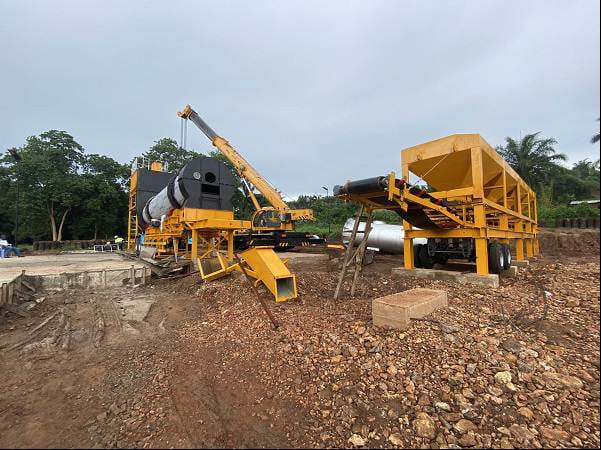
With the core advantages of green, low carbon, high efficiency and economy, cold recycled asphalt mixing plant has been widely used in various road infrastructure and maintenance projects, covering all levels of road construction scenarios.
This is the core application scenario of the equipment, which is suitable for the renovation of aging, cracking, rutting and damaged asphalt pavement such as expressways, urban trunk roads and provincial roads. The equipment can recover old pavement materials in situ to prepare recycled mixture, which is used for pavement base and surface repair to realize the upgrading of old roads.
Rural road sections are scattered and maintenance budget is limited. Mobile cold recycling mixing station can flexibly construct on site, make full use of local waste road materials, greatly reduce construction cost, meet the needs of new construction and daily maintenance of rural low-grade roads, and play an important role in improving rural traffic infrastructure and promoting rural road quality improvement and reconstruction.
For the road sections with insufficient base strength, serious settlement and structural damage, cold recycled mixture can be used to strengthen the base. High-strength recycled mixture can effectively improve the bearing capacity and structural stability of road base, prolong the service life of pavement, and solve the industry problem of repeated damage of weak sections.
In the face of emergency scenarios such as road collapse, natural disaster damage, sudden traffic accident road surface damage, etc., the mobile cold recycling mixing station can quickly enter the site to produce recycled mixture, complete rapid road repair, shorten road recovery time and ensure smooth operation of regional traffic.
The equipment can concentrate on treating waste asphalt materials generated by urban road reconstruction, highway maintenance and airport pavement renovation, realize centralized recycling and resource reuse of engineering solid waste, and assist the construction of urban circular economy system.
Cold recycled asphalt mixing plant, as a green and low-carbon core equipment in the field of modern road engineering, completely innovates the construction mode of traditional asphalt pavement with high energy consumption and high pollution. Through the core technologies of normal temperature regeneration, precise batching and efficient mixing, the full recycling of waste asphalt pavement resources has been realized, the dual problems of road construction resource waste and environmental pollution have been solved, and the organic unity of environmental benefits, economic benefits and social benefits has been realized.
Compared with traditional hot mixing equipment, cold recycled asphalt mixing station has obvious advantages in energy saving and emission reduction, cost control, construction adaptability, etc., and the performance of recycled finished products is stable and reliable, which can fully meet the needs of various road construction and maintenance projects. With the continuous promotion of global low-carbon infrastructure concept and circular economy mode, cold recycling technology and supporting mixing equipment will usher in a broader development space.
In the future, with the continuous upgrading of equipment towards intelligence, modularization and high efficiency, cold recycled asphalt mixing station will be further popularized and promoted in the field of global road infrastructure, becoming the core technical support for promoting green transformation of road engineering industry, realizing sustainable utilization of road resources and creating low-carbon environmental protection transportation infrastructure.

.jpg)