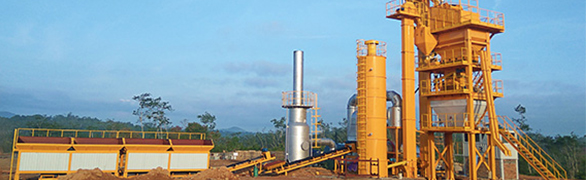
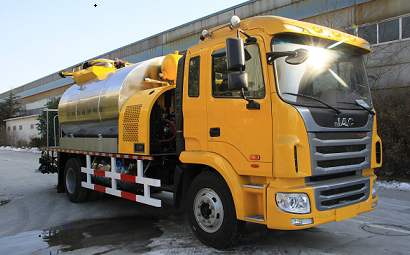
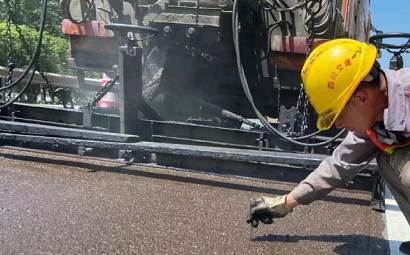
In the construction of road infrastructure, municipal maintenance, airport and port engineering, asphalt mixing station is the core equipment that determines the pavement quality, construction efficiency and comprehensive cost of the project.At present, the mainstream equipment in the engineering market is divided into two types: intermittent asphalt mixing plant (batch type) and continuous asphalt mixing plant (drum type).Many construction units, engineering contractors and infrastructure purchasers often confuse the core differences, application scenarios and cost-performance advantages of the two types of equipment when selecting equipment.
In fact, the choice of mixing plant type is not a simple equipment procurement, but a key decision that directly affects the mixture accuracy, pavement durability, 8-15 years equipment operation and maintenance cost, material loss rate and project compliance acceptance effect.This paper combines the complete equipment principle, process flow, performance parameters, advantages and disadvantages comparison and real engineering application scenarios, comprehensively disassembles the difference between intermittent and continuous asphalt mixing plants, and provides professional and landing selection guidelines for various infrastructure projects.
.png)
Asphalt mixing station is also called hot mix asphalt production equipment, HMA mixing station, is a set of integrated aggregate drying, heating, screening, metering, mixing, dust storage in one complete set of heavy engineering machinery, the core function is to gravel, gravel aggregate, mineral powder filler, liquid asphalt and various modified additives, according to the precise proportion of heating mixing, to produce uniform, stable, in line with the paving temperature standards of hot mix asphalt mixture.As the core equipment of road engineering, asphalt mixing plant is widely used in expressway, urban trunk road, rural highway, airport runway, port yard, factory pavement and old road renovation maintenance project. The capacity span ranges from 20 tons per hour small equipment to more than 400 tons per hour large fixed equipment, which can adapt to various infrastructure projects.
The basic production logic of all asphalt mixing plants is consistent, all of which need to complete six processes: cold material transportation, drying and dehumidification, proportioning and metering, mixing and fusion, dust removal and environmental protection, and finished product storage. However, according to different metering and mixing processes, the industry is uniformly divided into two technical systems: batch production and continuous drum production.The structural design, control logic and precision standards of the two types of equipment are completely different, which also creates their differentiated advantages in quality, efficiency, cost and flexibility, which is the core judgment basis for engineering selection.
.png)
Continuous asphalt mixing plant, commonly known as drum mixing plant, is a lightweight mixing equipment that focuses on uninterrupted flow production. Its core feature is single drum integrated operation, no batch interval and no process pause. The equipment abandons the complex tower screening structure and integrates the drying, heating, asphalt spraying and material mixing of aggregate into a rotating drum. The whole process of material uniform transportation, continuous processing and continuous discharge do not require shutdown to reset parameters. It is a special equipment specially designed for stable mass production and low cost construction.
In actual operation, cold aggregates of different specifications are continuously and quantitatively conveyed to the front end of the drum by a variable frequency speed belt scale, dried and dehumidified by high temperature hot air, and heated to the construction standard temperature of 140-180 DEG C; During the process of material moving backward at a constant speed with the blades of the drum, asphalt and mineral powder are injected synchronously through the precision injection system, and the materials are rolled and fused by the rotation of the drum. The mixing can be completed without independent mixing machines, and finally the finished asphalt mixture can be continuously output, which can be directly loaded or stored in the thermal insulation storage bin. The whole equipment structure is extremely simple, no complex parts such as hot material elevator, multi-layer vibrating screen, hot material storage bin, etc., low component loss, small failure rate, small site occupation area, most models support modular trailer movement, and the transition is extremely convenient.
The mainstream capacity of continuous asphalt mixing plant is concentrated in 20-100t/h, and the maximum steady-state capacity does not exceed 120t/h. The overall positioning of small and medium-sized mass production equipment has the core advantages of low cost, fast commissioning, simple operation and maintenance, low energy consumption for continuous production, and is very suitable for infrastructure projects with limited budget, scattered construction sites and no frequent replacement of mixture formula.
.png)
Batch asphalt mixing plant, also known as intermittent and batch mixing plant, is the mainstream standard equipment of global high-standard infrastructure projects at present. It adopts periodic independent batch production mode, completes a complete production cycle every 45-60 seconds, completes metering, mixing and discharging batch by batch, suspends calibration parameters, replaces formula and controllably fills up between batches. The core symbolic structure of the equipment is vertical stirring tower, equipped with hot material elevator, multi-layer vibration screening system, independent hot material insulation bin, high-precision weighing system and dual-shaft forced stirring host, with fine division of labor and controllable layers.
The complete production process has strict refinement standards: cold aggregate first enters the drying drum for heating and dehumidification, and then is conveyed to the top of the stirring tower through a sealed elevator, accurately classified according to particle size through a multi-layer vibrating screen, and classified into independent thermal insulation bins to completely avoid quality problems caused by uneven particle size of raw materials. After production start-up, the system independently weighs each grade of aggregate, asphalt, mineral powder and modified additive with high precision, and the measurement error can be controlled within ±0.25%, far exceeding the precision of continuous equipment. All materials shall be put into forced mixing tank after accurate mixing, and forced mixing for fixed time shall be completed to ensure uniform mixture without segregation. After single batch mixing is completed, unified discharge shall be carried out, and then the system shall be automatically reset to enter the next batch production.
Intermittent mixing plant capacity covers 40-400t/h, can adapt to small and medium-sized municipal projects, large-scale high-speed and airport key projects, support switching at any time bottom layer, middle layer, surface layer, modified asphalt and other formulas, at the same time can realize high proportion RAP recycled old material blending, quality traceability, strong compliance, is the first choice of high-end infrastructure projects.
The continuous equipment has uninterrupted pipeline operation in the whole process, and the process is simple and efficient: graded cold material frequency conversion uniform feeding → integrated drying and heating in the drum → spray mixing of asphalt ore powder in the middle stage → continuous discharge and storage → unified dust removal and recovery. The whole process has no hot material screening, no secondary accurate weighing, and the matching accuracy completely depends on the cold material belt calibration. The advantage is that there is no production gap, stable production capacity and lower energy consumption. When the moisture content of raw materials and particle size fluctuate, the matching cannot be automatically corrected, and it is easy to cause mixture deviation. And a large amount of waste will be generated when changing the formula.
Intermittent equipment adopts segmented refined closed-loop process, layer by layer quality control: cold material pre-transportation drying → hot material lifting screening classification → hot material constant temperature storage → single batch accurate independent weighing → biaxial forced mixing → batch discharge, data archiving → system reset cycle production. The core highlight is the addition of two key processes of hot material screening + secondary accurate weighing, which can correct errors caused by fluctuation of raw materials, and each batch of production data is automatically retained, including weight, temperature, formula, time and other information, fully meeting the requirements of engineering audit and quality inspection filing.
In order to facilitate the construction unit to accurately distinguish the actual differences between intermittent asphalt mixing station and continuous asphalt mixing station and accurately select the project type, the following seven core dimensions are comprehensively and finely compared from the following seven core dimensions: production and operation mode, mixing accuracy, formula flexibility, cost operation and maintenance, transfer capacity, recycled material adaptation and compliance traceability, so as to comprehensively restore the adaptation scenarios and performance of the two equipment. Gap provides a practical reference basis for equipment procurement and project construction.
The intermittent asphalt mixing station adopts the periodic batch circulation production mode. After each round of mixing operation, it will be temporarily shut down and reset. The overall capacity adjustment flexibility is extremely high, and the capacity range covers 40-400t/h. No matter it is a small municipal repair project, or a large-scale high-speed and airport normal pavement project, it can be flexibly adapted. However, the continuous roller asphalt mixing station adopts the whole-process uninterrupted streamline production mode, with no production pause and process interval, and the steady mass production effect is outstanding. However, the upper limit of production capacity is relatively low, and the mainstream production capacity is stable at 20-100t/h. It is only suitable for the conventional construction scenarios of small and medium-sized, centralized construction period and continuous mass production, and cannot meet the material demand of large-scale and high-volume infrastructure projects.
There is a significant gap between the two types of equipment in mixing accuracy and pavement forming quality. The intermittent mixing station is equipped with exclusive hot material screening system and independent high-precision weighing mechanism, which can carry out secondary classification and accurate measurement on heated aggregate, effectively avoid the error caused by raw material particle size and humidity fluctuation, and the produced asphalt mixture has high uniformity, no particle segregation and strong stability of finished products, which completely adapts to the construction standard of high-grade heavy-load pavement. The continuous asphalt mixing station only depends on the cold material belt flowmeter to complete the proportion control, without the hot material screening and secondary calibration procedures, the measurement deviation is relatively large, the precision of the finished mixture is limited, and the continuous asphalt mixing station can only meet the requirements of conventional pavement construction such as ordinary municipal and rural roads.
In the face of diversified pavement construction requirements, the adaptive advantages of batch mixing plant are particularly prominent. The equipment can quickly switch the mixing formula among different production batches, easily adapt to various construction technologies such as road bottom layer, bonding layer, anti-skid surface layer, modified asphalt, etc., and the formula adjustment process is simple, and the generated waste material is very little, thus greatly reducing the material loss cost. On the contrary, continuous mixing station is more suitable for long-term fixed construction with single formula. Once the aggregate proportion and asphalt dosage need to be adjusted or the mixing formula needs to be replaced during construction, a large amount of unqualified mixture will be produced from residual materials inside the drum, resulting in serious material waste and poor construction flexibility.
The cost aspect is one of the most central selection considerations for both devices. The intermittent asphalt mixing station has complex structure, equipped with vertical mixing tower, vibrating screen, hoist, multiple groups of precise weighing equipment and other parts. The cost of equipment procurement, installation and foundation construction is 30%-40% higher than that of continuous equipment with the same capacity, and there are many vulnerable parts, complicated daily maintenance points, and higher comprehensive costs for long-term operation and maintenance and parts replacement. the continuous drum mix station has that advantages of simplify structure, few parts and no complex tower structure, lower initial purchase cost, simple requirement on the foundation of the construction site, convenient daily maintenance and low material cost, and is more suitable for small and medium-sized projects with limited budget in overall comprehensive economic benefits.
The intermittent mixing station is mainly of large-scale tower type fixed structure, with large equipment volume, complicated disassembly and assembly process, long transfer period, auxiliary lifting equipment and high labor and time cost. It is more suitable for large-scale infrastructure projects with fixed mixing station and long-term fixed-point construction, but not suitable for frequently moving construction scenes. Most continuous asphalt mixing stations adopt modular and trailer integrated design. The whole machine is compact and light, without complicated civil engineering foundation, and the speed of disassembly, assembly, transportation and commissioning is fast. It can quickly adapt to remote construction projects with scattered points, short construction period and frequent transfer, and is flexible and flexible.
Under the current construction trend of green infrastructure and old road renovation, the adaptability of recycled materials is particularly important. The intermittent mixing station supports the blending and utilization of high-proportion RAP old materials, and the maximum addition proportion of recycled materials can reach more than 50%. In addition, the proportion of recycled aggregate and new materials is accurate, the mixing is uniform, and the quality of finished products is stable. It is completely suitable for large-scale old road reconstruction and pavement renovation projects, effectively reduces the raw material cost and meets the requirements of low-carbon construction. The continuous mixing plant is limited by a single drum mixing structure, the mixing proportion of recycled asphalt is limited, the mixing stability of materials is poor, and the mixture quality fluctuation is easy to occur, so that the engineering demand of high-proportion recycling construction cannot be met.
For high-standard bidding infrastructure projects, data traceability is a rigid acceptance index. The intermittent mixing station can realize the independent archiving of each batch of production data, accurately record the core data such as material ratio, mixing temperature and production time, which can be inquired and traced in the whole process, fully meeting the quality inspection, audit and compliance acceptance standards of key projects such as high-speed, airport and port. Continuous mixing station is continuous flow production, without independent batch statistical system, unable to generate standardized batch traceability data, does not conform to high-standard official acceptance specifications, and cannot participate in bidding and construction of high-end key infrastructure projects.
.png)
Core advantages: The mixture has high precision and good uniformity, eliminating particle segregation and adapting to various high-grade heavy-duty pavements; the formula can be switched flexibly, which can meet the construction of multi-layer pavement and various modified asphalts; the hot material screening can correct the difference of raw materials, and the finished product quality stability is extremely strong; the batch production data can be traced in the whole process, which conforms to the official bidding and quality inspection specifications; the RAP recycled material utilization with high proportion is supported, energy saving and environmental protection are realized, and the raw material cost is reduced; The production capacity covers a wide range, and large fixed mixing stations can be built to adapt to large-scale infrastructure projects for many years.
Core disadvantages: equipment procurement, installation, foundation construction costs are higher; tower structure covers a large area, high requirements for site foundation; equipment structure is complex, wearing parts are many, daily maintenance workload is large; mobile model transition disassembly time, need lifting equipment assistance.
Core advantages: the equipment cost is close to the people, the entry threshold is low, and the budget of small and medium-sized contractors is suitable; the structure is compact, the floor area is small, the simple flat can be put into production, and the capital construction cost is low; the modular design has fast transition speed, and the remote and scattered construction points are adapted; the mechanical structure is simple, the wearing parts are few, the maintenance is convenient, and the accessories are universal; the long-term single-formula continuous production has lower energy consumption and good fuel economy; the operation threshold is low, and ordinary workers can start after simple training.
Core shortcomings: limited measurement accuracy, unable to meet the requirements of high-speed, airport and other high-standard projects; formula switching loss, high waste rate, not suitable for multi-specification mixture construction; no hot material screening process, finished product quality depends on raw material stability;RAP recycled material adaptability is poor, not suitable for large-scale old road reconstruction; no batch traceability data, unable to participate in high-standard bidding projects.
Undertake high-grade and heavy-duty infrastructure projects such as expressways, airport runways, port storage yards, urban trunk roads, bridge pavement, tunnel pavement, etc.; the project requires frequent switching of various mixture formulas such as foundation layer, adhesive layer, anti-skid surface layer, modified asphalt, etc.; local housing construction and transportation departments require batch production data archiving and traceable audit; set up permanent central mixing station to undertake multi-year and large-volume pavement projects; The project involves the renovation of large areas of old roads, requiring high proportion of recycled asphalt; there are many procurement channels for raw materials, and the particle size of aggregates is unstable, so the equipment needs to have its own screening correction function.
Rural roads, county-level roads, community pavements, plant sites, temporary construction access roads and other low-standard conventional pavement projects; The construction points are scattered, frequent transfer is required, the construction period is short, and there are many points; The project budget is limited, and the equipment procurement and operation and maintenance cost shall be given priority; Long-term single formula construction does not require frequent adjustment of mixture ratio; Remote overseas infrastructure projects (along the Belt and Road), local technicians are scarce, and parts procurement is inconvenient; The construction site is small, and it is impossible to build the concrete foundation of tower mixing station.
Intermittent asphalt mixing plant focuses on high precision, high flexibility, high compliance and traceability. It is the just-needed equipment for high-grade, multi-formula and heavy quality inspection infrastructure projects; continuous drum mixing plant focuses on low cost, high mobility, easy operation and maintenance, stable mass production, and is the optimal solution for conventional rural municipal projects, temporary projects and budget-limited projects. There are no absolute advantages or disadvantages between the two devices, only differences in scene adaptation. When purchasing and selecting equipment, construction enterprises shall comprehensively judge the project quality standard, capacity demand, formula switching frequency, transition demand, recycled material use proportion and budget, so as to avoid problems such as substandard quality, material waste, construction period delay and unqualified acceptance caused by wrong equipment selection. If you need accurate customization scheme, you can consult professional equipment manufacturers in combination with project working conditions to obtain the equipment configuration with the strongest adaptability and highest cost performance.