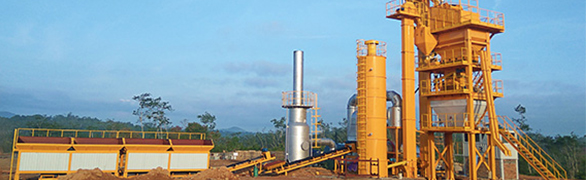
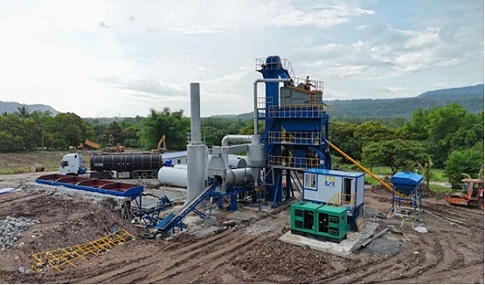
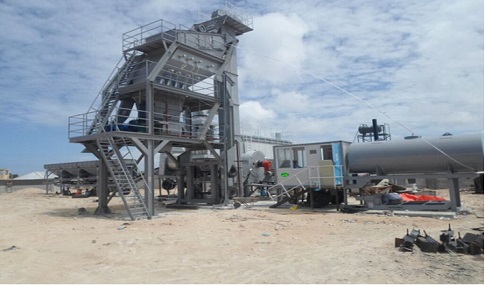
The burner of asphalt mixing station is the core heating equipment, which directly affects the mixture quality, fuel energy consumption, environmental protection emission and production stability. The selection cannot only depend on the purchase price. Burners can be divided into various types according to fuel, air supply, atomization and structure. Diesel, gas, dual-fuel and heavy oil models are respectively suitable for mobile station, fixed station in Urban area, high-yield continuous station and other scenarios. The model selection shall match the working conditions of mixing station and drying drum, calculate the heating power according to the actual production capacity, and eliminate the problems of high oil consumption and excessive exhaust gas caused by large machine and small load. Priority shall be given to intelligent low-nitrogen models with high regulation ratio, independent combustion control and variable frequency air supply, combined with local fuel conditions, maintenance capability and environmental protection upgrading requirements, avoiding procurement errors, balancing the whole life cycle cost and effectively reducing asphalt production and operation expenses.
Asphalt mixing station burner is also often called aggregate drying burner in the industry. It is a special combustion system specially developed for hot mix asphalt production line. Its core function is to provide stable heat source for cold and wet aggregates such as sand, gravel and mineral powder, and complete the drying and heating procedures of aggregates. In the conventional production process, untreated aggregate has high water content and temperature close to ambient temperature, and must be heated to 160℃-190℃ by burner before it can be fully mixed with liquid asphalt to ensure the bonding strength and paving compaction performance of the mixture. It needs to be clear that in most standard mixing station structures, the burner only heats the aggregate and will not directly contact the asphalt binder, so as to avoid environmental protection problems such as blue smoke and peculiar smell caused by asphalt aging at high temperature.
The burner is integrally equipped with a drying drum for coordinated operation. A lifting plate is arranged inside the drum to continuously raise the aggregate to form a material curtain. Flame and high temperature flue gas penetrate through the drum to take away the moisture in the aggregate through radiation heat exchange and convection heat exchange to achieve uniform temperature rise. The complete operation flow of the combustion system is divided into four parts: First, fuel transportation and atomization mixing. Diesel oil, heavy oil, natural gas and other fuels will be transported to the combustion head according to the equipment ratio, and at the same time, supporting fans will deliver combustion air. 25%-30% excess air will be reserved for high-quality models in the industry to ensure full combustion of fuel and prevent incomplete combustion from producing carbon monoxide and carbon black particles. Second, ignition forms a high temperature stable flame. After the fuel and combustion air are fully mixed, the electronic ignition electrode completes ignition, the temperature of the flame core area can exceed 1400℃, and the stable heat source is continuously output; thirdly, the high temperature flue gas exchanges heat in the drum. According to the structure of the equipment, it is divided into two heat exchange modes: forward flow and reverse flow. The flue gas passes through the material curtain to complete heat exchange, and the low temperature flue gas is exhausted after the dust removal system. Fourth, intelligent regulation maintains stable working conditions. The modern burner is equipped with variable frequency fan, independent actuator and flame monitoring module, which can realize a wide range of adjustment ratio from 4:1 to 8:1. With safety interlock device, the firepower can be automatically adjusted in the whole process without manual frequent manual adjustment.
According to the recognized industry evaluation standards in the industry, the burner is the source of variable operation cost with the highest proportion of mixing station. The four core indicators of combustion efficiency, fire regulation capability, flame stability and low nitrogen emission capability directly affect the comprehensive income of the whole production line. International mainstream equipment manufacturers such as Astec, Ammann, Webster, Benning Hove and Manini will customize special burners for different drum size, production capacity and fuel type to match equipment working conditions from the source.
.jpg)
There are many classification dimensions of burners on the market, among whichfuel type is the primary classification standard in the industry, and air supply structure, fuel atomization method, and complete machine structure are the secondary classification basis. The application scenarios, operating costs, and maintenance difficulty of different classified products vary greatly., the following is a detailed description based on actual production scenarios.
Diesel/light oil burner adopts 0#light diesel oil as fuel, the biggest advantage lies in fast start-up speed, the whole ignition temperature rise process only takes 10-15 minutes, the equipment structure is simple, the failure rate is low, the supporting pipeline does not need heating and insulation, and it is suitable for the project site without supporting oil and gas storage facilities. Disadvantages are high unit price of diesel oil market, high fuel cost pressure under long-term large-scale mass production conditions, and higher nitrogen oxide emission index than gas equipment under the same conditions. Small intermittent mixing station, mobile portable mixing station and field temporary road construction project are the core application scenarios of this model.
The heavy oil burner uses 6#residual oil and industrial heavy fuel oil as fuel, and the raw material purchase cost is much lower than diesel oil. After the large-scale fixed mixing station with stable mass production is selected all the year round, the fuel expenditure can be greatly reduced. However, the short board is very prominent: the fluidity of heavy oil at normal temperature is extremely poor, the combustion system must be equipped with 80-120℃ constant temperature preheating device, the pipeline, filter and nozzle are easy to be blocked by carbon deposit, and the cleaning and maintenance work shall be carried out every week. The overall manual maintenance cost increases significantly. Meanwhile, the sulfur content of heavy oil is higher, and the emission control of sulfur dioxide and particulate matter in tail gas is more difficult. It is only suitable for continuous production all year round. Large-scale fixed mixing base equipped with full-time equipment maintenance team.
Natural gas/liquefied petroleum gas burner is recognized as the traditional fuel model with the best environmental protection performance. It burns without carbon black and has extremely low sulfur content. The emission values of nitrogen oxides and carbon monoxide easily meet the environmental protection control standards of various places. The combustion thermal efficiency generally exceeds 90%. The only restriction condition is the need for stable natural gas pipeline supporting facilities or large LPG storage facilities. Urban Urban area, industrial park with strict environmental protection control and suburban mixing station are preferred, which is also the mainstream choice for newly built compliance mixing station.
Dual-fuel/multi-fuel composite burner supports diesel and natural gas one-button switching, some upgraded models are compatible with waste oil and biomass fuel, perfectly solving the production risks such as single fuel price fluctuation, gas supply interruption, oil transportation restriction, etc. However, the procurement cost of the whole equipment is higher, the internal control logic and pipeline system are more complex, two sets of combustion curves need to be switched and debugged regularly, and the maintenance technology threshold is higher, which is suitable for regional mixing stations with violent fluctuation of fuel price and unbalanced surrounding oil and gas resources.
Pulverized coal solid fuel burner relies on pulverized coal combustion for heat supply. In areas rich in coal resources, raw material cost advantage is very strong, but exhaust dust, sulfide and nitrogen oxide triple exceed the standard risk, so huge and complex pulverized coal conveying, dust removal and desulfurization supporting equipment are required. Environmental protection investment cost is extremely high. At present, it is only used in remote Kuangqu supporting mixing station with loose environmental protection control and low coal resources, and urban projects are basically prohibited.
The new low-carbon fuel burner (hydrogen and biomass mixed combustion model) belongs to the iterative new product in the industry. It can mix hydrogen, pure hydrogen and biomass fuel. The combustion products are mainly water vapor, and the carbon dioxide emission is greatly reduced, which conforms to the policy guidance of double carbon and emission reduction in various places. At present, the supporting infrastructure of the industry is imperfect, and the price of equipment procurement and transformation is high. It is mainly used for large-scale mixing bases for pilot projects and long-term planning of low-carbon transformation, which is the core direction of burner upgrading in the future.
It is divided into two categories: fully enclosed forced blast type (integrated air supply) and open induced air type. More than 95% of the combustion-supporting air required for combustion of fully enclosed models is supplied by the equipment's own fan. The air volume and air pressure are highly controllable, the operating noise is lower, and the firepower adjustment accuracy is high. Currently, all newly built modern mixing stations are equipped as standard; Open induced draft equipment only provides 25%-50% combustion air, and the remaining air is sucked from the periphery of combustion port by negative pressure of rear dust removal fan. The air volume fluctuates greatly and the combustion stability is poor. It only exists in old and obsolete mixing equipment. It is not recommended to select the transformation project.
Pressure atomization nozzle is the most popular solution in the market, relying on high pressure to tear fuel into fine droplets, simple equipment structure, low cost accessories, suitable for diesel oil, light fuel oil; medium atomization relies on compressed air or steam to assist in breaking heavy oil droplets, atomization effect is better, suitable for high viscosity heavy oil, but it needs supporting air compressor and steam pipeline, increasing equipment occupation and energy consumption; Rotary cup atomization relies on high-speed rotating cup body to throw out fuel oil. It was used more in the early years. Due to rapid equipment loss and high maintenance frequency, it has been phased out gradually.
The integrated gun burner integrates the fan, oil pump and control module into a single compact unit, which is compact in size and convenient for disassembly and transportation. It is suitable for small and medium-sized mobile mixing stations. The fan, oil supply system and control cabinet of the split burner are separated independently. The single heating power is larger. The fire regulation ratio can reach 8:1. The vibration noise is lower. It is suitable for large continuous drum mixing stations and high production capacity fixed production lines.
Mixing stations are divided into five categories: intermittent batch station, continuous drum station, mobile portable station, high-content recycled material station and large-scale fixed high-yield station. The production mode, production capacity and working conditions of various equipment are greatly different, and the selection standards of burners are completely different. Blind universal models will directly cause multiple problems of energy consumption, environmental protection and quality.
Intermittent station adopts 40-50 seconds single-batch discharge mode, and the production capacity range is mostly 80-320 tons/hour. The advantages are flexible mixture formula switching and accurate measurement, suitable for municipal roads and multi-label mixture alternate construction scenarios, large fluctuation of production load and frequent start and stop.
The core requirements for type selection are that the burner shall have a wide adjustment ratio of more than 4:1, excellent low fire stable combustion performance, and compact flame shape suitable for drying drum; medium and small intermittent stations (less than 120 tons/hour) shall give priority to diesel integrated burner without preheating and rapid start-up and stop; medium and large intermittent stations in Urban area shall preferably be natural gas or dual-fuel models to meet environmental protection detection requirements; heavy oil and pulverized coal burners are not recommended for intermittent stations, as frequent start-up and stop will cause waste of preheating energy consumption and rapid carbon deposition of nozzles. At the same time, the batch station with high RAP content needs to calculate the drying heat load of recycled aggregate separately, and match the combustion control system with larger adjustment range.
Continuous station uninterrupted continuous production, conventional production capacity of 200-800 tons/hour, divided into downstream drum, counter-current drum two structures, counter-current drum heat exchange efficiency is higher, recycled material adaptability is stronger, is the first choice for high production capacity station. The whole set of equipment runs stably at full load for a long time, and the heat load demand is continuous and huge.
Large fixed continuous stations give priority to heavy oil, natural gas and multi-fuel split burners, with the maximum adjustment ratio of 8:1 to adapt to the adjustment of production capacity; counter-current rollers have strict requirements on flame length and diffusion range, and flame convergence and stability models must be selected to avoid aging of cement materials and excessive blue smoke caused by direct combustion of flame recycled asphalt materials; annual production stations do not need frequent start-up and shutdown, preheating and maintenance costs of heavy oil models can be offset by low fuel unit price, and comprehensive operation income is higher.
The core requirements of field temporary construction site and special equipment for short-term road repair project are rapid disassembly, convenient transportation, simple supporting facilities, and medium and small-sized production capacity.
The burner is uniformly recommended as an integrated diesel engine type, with high integration of the whole machine, without laying natural gas pipelines and heavy oil preheating storage tanks, and only diesel storage tanks are needed to start up on site; if the project cycle is long and the natural gas pipeline can be temporarily connected to the construction site, small dual-fuel integrated burners can be selected to give consideration to cost and environmental protection. Heavy oil and pulverized coal models are completely unsuitable for mobile stations due to complicated supporting equipment.
The recycled material contains aged asphalt binder, which cannot withstand high temperature flame direct burning during drying and heating, and is easy to produce asphalt cracking odor, black smoke and mixture performance attenuation. The equipment mostly adopts double-zone drum and independent regeneration drying structure, and the fluctuation range of aggregate moisture content is much higher than that of brand-new stone.
The burner is equipped with a high-precision closed-loop temperature control system, with outstanding low-load stable combustion effect, short and concentrated flame, with segmented combustion, low-nitrogen staged combustion structure; gas, dual-fuel models are the optimal solution, fire adjustment response speed is fast, according to the moisture content of recycled materials real-time fine-tuning heat supply, stable control of the internal temperature range of the drum, avoid environmental complaints and finished material quality defects.
Urban area periphery, large-scale building materials industrial park supporting mixing base, sufficient annual production time, the pursuit of long-term comprehensive operation cost minimum, strict environmental protection control standards.
Gas source stability priority natural gas low nitrogen burner, high combustion efficiency, annual maintenance workload is very low; no pipeline natural gas resources choose heavy oil multi-fuel split model, relying on low fuel compression cost; coal only in the remote areas without environmental control pressure consideration, at the same time must be complete exhaust treatment equipment. The equipment is preferably equipped with a wide adjustment ratio split structure to adapt to the load changes of different production capacity throughout the year.
.jpg)
Fuel cost accounts for more than 60% of variable operating expenses of mixing station. Many station operators only pay attention to energy conservation in process links such as aggregate moisture content, drum insulation and plate structure, ignoring burner body design is the core source of fuel consumption fluctuation. Several key structural parameters will directly cause fuel consumption difference of 2%-5% per ton of mixture, resulting in huge cost difference in long-term production.
Burner belongs to fixed-aperture combustion equipment, and combustion mixing effect is optimal only in rated load range. The most common purchasing mistake in the industry is "enlarging the power reserve margin", purchasing ultra-high power burners according to peak extreme conditions, while the station only runs 30%-50% of the rated firepower 90% of the production time. Under low load condition, fuel atomization kinetic energy is greatly attenuated. In order to ensure full combustion, excessive combustion air can only be increased. A large amount of heat is carried by excess cold air and exhausted from flue, which directly increases unit fuel consumption, accompanied by excessive carbon monoxide and incomplete combustion particles.
Correct selection logic: heat balance calculation based ondaily average capacity of the station and moisture content of conventional aggregates, only 10%-15% moderate margin is reserved, so that the burner can operate in the high efficiency fire range for a long time, and the ineffective heat loss can be reduced from the root.
Full combustion theory requires only a small amount of excess air, and high-quality models can be controlled in the range of 20%-30% to give consideration to complete combustion and thermal efficiency. The old burner adopts mechanical connecting rod synchronous damper and fuel valve, long-term operation connecting rod wear deviation, air-fuel ratio continuous imbalance; new connectionless independent actuator with fan frequency conversion VFD, flue oxygen content closed-loop sensor, real-time dynamic correction of fuel, air supply, the whole process to maintain the optimal ratio The imbalance of air-fuel ratio is divided into two kinds of hazards: insufficient air causes incomplete combustion of fuel, carbon deposition in nozzles and increased fuel consumption; excessive air takes away a large amount of heat, exhaust gas temperature is falsely high, and fuel consumption per ton of mixture increases by more than 3%.
The adjustment ratio represents the ratio of maximum firepower to minimum stable firepower of the equipment, 4:1 is the basic standard, and 6:1 and 8:1 high-end models have significant energy-saving advantages. Burners with insufficient regulation ratio cannot operate stably at low fire under low production capacity and low water content conditions, and can only start and stop ignition frequently. A large amount of fuel will be consumed for preheating the drum every time. The fuel consumption of intermittent stations and stations with large load fluctuation is especially obvious. The burner with high turndown ratio can continuously burn stably in the whole process, without repeated start and stop, and adapt to variable production conditions.
High swirl compact flame can form concentrated heat exchange area in the drum, fully penetrate the aggregate curtain to improve heat exchange efficiency; flame too long, divergent will burn the drum wall, heat can not be transferred to the aggregate, heating efficiency greatly reduced. Only when the atomization particle size of the fuel-fired model is controlled within 15 microns can complete combustion be achieved. Pressure atomization, processing accuracy and wear resistance of the medium atomization nozzle directly determine the atomization effect. The droplets of inferior nozzles are large and the combustion is insufficient, which wastes fuel and increases the load on the bag filter.
The air volume controllability of the fully enclosed forced blast burner is far superior to that of the old open induced draft fan type; the supporting high-efficiency variable frequency fan can adjust the speed in real time according to the fire demand, greatly reducing the power loss of the fan itself compared with the fixed-frequency fan, and stabilizing the wind pressure to ensure the atomization and mixing effect. Some high-end models introduce all combustion air into the combustion head to enhance swirl mixing and further optimize combustion efficiency.
In addition, pre-film nozzles, high temperature combustion cylinders, real-time fault diagnosis and other ancillary designs will indirectly extend the service life of accessories, maintain long-term stable combustion efficiency, and avoid the problem of increasing fuel consumption after 1-2 years of equipment use. It needs to be added that burner energy saving belongs to front-end heat source optimization. In order to realize the maximum reduction of fuel consumption, it is also necessary to simultaneously match thickened roller insulation, optimize plate structure, control moisture content of incoming aggregate, adopt warm asphalt mixing process and other coordinated schemes. Multiple measures can be superimposed to maximize compressed fuel expenditure.
Dry burner is the core source of gaseous pollutants in tail gas of mixing station. Aggregate dust can be treated by bag filter at the rear end. However, nitrogen oxides, carbon monoxide, sulfur dioxide, carbon dioxide and peculiar smell flue gas are determined by combustion conditions, fuel type and burner design, which are also key control indicators for environmental protection inspection and online monitoring in various places.
NOx: divided into thermal type and fuel type, flame temperature exceeds 1300℃ will generate a large number of thermal NOx, exhaust gas exceeds the standard of the most common pollutants, will form photochemical smoke, most areas limit control in 30-150mg/Nm³;
Carbon monoxide CO: poor fuel atomization, low air-fuel ratio, flame quenching lead to incomplete combustion, representing fuel waste, toxic and harmful;
Sulfur dioxide SO 2: completely released by the sulfur element inside the fuel, heavy oil, coal sulfur content is much higher than diesel oil, natural gas, easy to form acid rain;
Carbon dioxide CO 2: an inevitable product of fossil fuel combustion, belonging to greenhouse gases, and the current double-carbon control continues to tighten everywhere;
Particulate matter PM, asphalt flue gas VOC: incomplete combustion of oil droplets, carbon black to form dust, recycled materials high temperature cracking to produce volatile organic compounds, easy to cause factory odor complaints.
Natural gas at fuel level is the best environmental protection option among traditional fuels, with sulfur content almost zero, and NOx and CO values are extremely low after reasonable debugging; diesel nitrogen oxide emission is higher than gas; heavy oil simultaneously has double risk of SO 2 and particulate matter exceeding the standard; hydrogen combustion only produces water vapor, but high temperature flame will increase NOx generation amount, so special low nitrogen combustion structure adaptation is required.
Burner design level, staged air distribution, flue gas internal circulation FGR, high swirl low temperature flame and other low nitrogen structure, can reduce 30%-50% nitrogen oxide generation; no connecting rod independent air-fuel ratio control system to eliminate rich combustion, reduce CO and asphalt blue smoke; high-quality atomizing nozzle to eliminate carbon black particles, reduce bag dust removal pressure. On the contrary, excessive power, long-term low-load operation and excessive air imbalance will simultaneously increase the emission values of all pollutants.
Source fuel optimization: Urban area and environmentally controlled areas give priority to natural gas, and conditional stations reserve dual-fuel switching function;
Hardware selection of low nitrogen burner: standard staged combustion, flue gas reflux structure, adapt to local exhaust gas limit standards, long-term reserve hydrogen transformation space;
Standardized matching and debugging: put an end to low-configuration operation of high-power burners, carry out professional combustion detection every year, and correct air-fuel ratio curve according to oxygen content and NOx value;
Process synergy emission reduction: warm mix asphalt is used to reduce aggregate heating temperature, reduce overall fuel consumption, and simultaneously reduce all combustion pollutants;
End exhaust gas treatment: SCR selective catalytic reduction equipment is installed for nitrogen oxides exceeding the standard, oxidation catalytic device is configured for carbon monoxide and odor, and simple low-temperature catalytic equipment can be selected for mobile small stations;
Long-term low-carbon layout: priority shall be given to the purchase of hydrogen-compatible multi-fuel burners for new stations, so as to adapt to the upgrading of emission reduction policies in the future and avoid large-scale investment in the transformation of the whole machine in the later stage.
.jpg)
Modern asphalt mixing station burner is no longer a single heating equipment, but an integrated intelligent equipment integrating PLC programmable controller, independent combustion management system and multi-layer safety interlock. The automation system is responsible for energy-saving and stable production, and the safety system avoids major safety production accidents such as tempering, detonation and fuel leakage.
The whole control system is interconnected with the main control cabinet of the mixing station, and the core automation functions cover the whole production process:
Proportional continuous fire PID closed-loop control: according to the aggregate discharge temperature, flue temperature automatic real-time adjustment of fire size, no manual adjustment, mixture temperature fluctuation control within ±5℃, avoid over-temperature aging, low temperature mixing is not up to standard;
Connectorless independent actuator: The fuel valve and combustion damper are equipped with independent drive motors, which can draw exclusive air-fuel ratio curves, completely solving the combustion imbalance caused by wear and deviation of old mechanical connecting rods;
Fan frequency conversion VFD speed regulation: air volume follows fire accurately matched, greatly reducing fan power consumption, while broadening the burner stable adjustment interval;
Multi-fuel automatic switching curve: dual-fuel model built-in diesel, gas two sets of independent combustion parameters, a key switch without on-site debugging;
Automatic start and stop timing: equipment startup pre-purge, ignition temperature rise, purge after shutdown full process automation, slow rise and fall fire to eliminate thermal shock of the drum;
Remote diagnosis and data storage: touch screen man-machine interface real-time display of fire load, air-fuel ratio, various temperatures, fault records, support manufacturers remote online troubleshooting, synchronous storage of production environmental protection data for environmental protection account declaration.
Burner stores and burns inflammable and explosive fuel, equipment is equipped with multi-level safety interlock, any safety condition is not met, the system automatically cuts off fuel supply and stops alarm:
Flame real-time monitoring protection: UV, IR flame detectors continuously detect the flame state, ignition failure, midway flameout instant close fuel shut-off valve, prevent fuel continued to spray into the drum accumulation deflagration;
Safety process of front and rear purging: high power fan purges residual oil and gas inside drum before ignition, and continuously purges combustible mixture after shutdown to eliminate fuel accumulation in closed cavity;
Multiple hardwired safety interlock: fan wind pressure detection, flue negative pressure detection, fuel high and low pressure protection, atomic medium pressure protection, roller over-temperature protection, complete emergency stop circuit are all hardwired safety signals, software failure does not affect safety action;
Double safety shut-off valve SSOV: oil circuit, gas circuit configuration two-stage seal shut-off valve, fault state fast closure lock fuel supply;
Cross-limiting protection logic: the system forcedly ensures that combustion air supply takes precedence over fuel supply to eliminate dangerous fuel accumulation conditions;
Fault locking manual reset: in case of flameout, over-temperature, abnormal pressure and other high-risk faults, the equipment automatically locks and stops, manual reset must be performed after manual troubleshooting, and automatic restart is prohibited to bring potential safety hazards.
Many purchasers only compare the purchase price of equipment when selecting models, ignoring the maintenance costs such as labor, accessories and shutdown loss within the service cycle of 3-5 years. The maintenance workload of burners with different fuels and structures is very different, so it is necessary to comprehensively consider the personnel configuration of their own station maintenance team.
Natural gas, LPG burner maintenance requirements are the lowest, daily only weekly cleaning flame detector, quarterly inspection of gas leakage, annual calibration of the actuator, no nozzle clogging, carbon deposition problems, accessories wear speed is very slow; diesel light oil burner maintenance medium, regular replacement of fuel filter, cleaning ignition electrode, periodic replacement of atomization nozzle; The maintenance workload of heavy oil burner has increased greatly, and it is necessary to check the preheating temperature control every day, clean the heavy oil filter frequently, disassemble the nozzle every week to clean carbon deposit, the pipeline is easy to coke, and the replacement cycle of accessories is shortened by half; the maintenance work of two sets of fuel pipelines is superimposed on the multi-fuel composite burner, and the debugging complexity is higher; the maintenance pressure of pulverized coal burner is the largest, and the pulverized coal conveying, dust removal and ash deposit cleaning of combustion cylinder take up a lot of labor, and the equipment shutdown frequency is high.
Daily pre-shift inspection: check fuel pipeline leakage, burner operation noise vibration, flame color form, filter pressure difference;
Periodic consumable replacement: fuel filter element, ignition electrode, atomizing nozzle and flame detector cooling filter element are conventional consumable parts;
Disassemble the combustion head regularly: clean the swirl blades and carbon deposit on the inner wall of the combustion cylinder to prevent the airflow disturbance from affecting combustion;
Fan and damper maintenance: clean fan impeller dust, check inverter drive operation status;
Annual professional whole machine calibration: entrust the manufacturer's technical personnel to carry out flue gas component detection, optimize the air-fuel ratio curve, and completely test the performance of all safety interlocks and shut-off valves to meet the annual inspection requirements for environmental protection and safety production.
In the procurement stage, priority is given to the models that are easy to maintain: the combustion head quick-release cover plate and external nozzle structure can replace accessories without disassembling the equipment as a whole; the connecting-rod independent actuator eliminates the mechanical connecting rod that is easy to wear, reducing the debugging frequency; the whole machine is equipped with a high-precision pre-filtration system to block impurities from entering the nozzle and prolong the service life of consumables; equipped with a fault self-diagnosis screen, the text fault prompt shortens the troubleshooting time.
At the same time, the selection strategy shall be formulated in combination with the station's own conditions: small mobile stations and stations with less than 2 maintenance personnel shall give priority to natural gas and diesel simple integrated models; large fixed stations and mixing bases equipped with full-time equipment technicians may select heavy oil and multi-fuel split burners to offset maintenance labor costs by relying on low-cost fuels; confirm the local service network of the manufacturer and the inventory supply capacity of common accessories during procurement, so as to avoid long-term shutdown of production lines caused by long procurement cycle of accessories.
There are eight typical mistakes in the purchase of burners in mixing stations in the industry. Each mistake will cause long-term fuel waste, environmental protection exceeding the standard, frequent maintenance, and greatly increase the operating cost of the whole life cycle:
In order to deal with the extremely high water content aggregate, the purchase directly selects the high-power burner far exceeding the daily production capacity, the equipment operates at low load all the year round, the air-fuel ratio is unbalanced, the fuel consumption rises, and the exhaust gas exceeds the standard, which is the biggest purchase error in the industry. Solution: Heat balance calculation based on station normalization production data, only 10%-15% reasonable margin is reserved.
Low-cost old-fashioned mechanical connecting rod burner procurement cost is low, but the combustion efficiency is poor, the annual fuel consumption is tens of thousands of yuan, the nozzle, connecting rod and other accessories are replaced frequently, and the fuel and maintenance costs spent for 2-3 years far exceed the equipment price difference. The comprehensive cost of fuel consumption, maintenance and environmental protection rectification for 3-5 years must be comprehensively calculated for type selection.
Simply focusing on the low fuel unit price of heavy oil and pulverized coal, ignoring the lack of heavy oil storage tanks in the plant area, preheating facilities, coal storage and transportation sites, or the high impurity content of local oil products, resulting in frequent clogging of nozzles, additional investment in filtration equipment transformation, but the loss is not worth it. Field investigation of local natural gas, diesel oil and heavy oil supply stability and transportation cost before procurement.
The basic style ordinary burner is selected, which only meets the existing exhaust gas limit, and there is no room for low nitrogen transformation and hydrogen compatibility upgrading. After the regional environmental protection control is tightened in the future, the combustion system of the whole machine needs to be replaced, and the transformation investment is extremely high. Priority shall be given to the general type of staged combustion, flue gas reflux and low nitrogen.
Before purchasing, the roller manufacturer shall confirm the length of the roller, the structure of forward and reverse flow, and the layout area of recycled materials. The flame burner shall be too long, and the flame shall burn the cylinder wall and recycled asphalt materials, resulting in blue smoke and peculiar smell, and the heat exchange efficiency shall decrease. The drum model shall be provided synchronously during purchase, and the manufacturer shall match the corresponding flame size combustion head.
Small stations purchase heavy oil and multi-fuel burners, but there is no professional maintenance technician, nozzle carbon deposition, fuel switching failure can not be handled in time, production line frequent shutdown, comprehensive production loss is huge, equipment complexity needs to match the technical ability of its own maintenance team.
Intermittent mixing stations and stations with large fluctuation of production capacity shall select burners with low regulation ratio below 4:1. Low production capacity conditions cannot stabilize combustion, frequent start and stop ignition increases fuel consumption, and unstable temperature control affects mixture quality. Fluctuation mode priority 6:1 and above high regulation ratio models.
When purchasing second-hand retrofitted burners, only the rated power on the nameplate was checked, the actual heating capacity and atomization effect after fuel switching were not detected, the actual heating power of some oil-to-gas second-hand equipment was reduced, and the aggregate temperature did not reach the process standard during production, delaying the construction progress. Smoke detection and thermal load measurement must be done on site before purchasing second-hand equipment.
.jpg)
A set of scientific selection process can fully avoid the above procurement errors, from demand sorting to late after-sales to form a complete closed loop, divided into nine core steps:
Combing the complete production condition data: counting the daily/peak production capacity of the station, the normal/maximum moisture content of the aggregate, the target temperature of the discharge material, the forward and reverse flow structure of the drum, the mixing ratio of recycled materials, and the altitude of the equipment, completing the professional heat balance calculation based on the data, and determining the standard heating power;
Investigate local fuel resources: verify natural gas pipeline laying, diesel transportation and heavy oil procurement channels, compare unit prices of various fuels and storage supporting inputs, determine main fuel, and evaluate the necessity of dual-fuel switching;
The burner structure shall be determined by matching the mixing station type: the mobile station shall select the integrated diesel engine type, the large continuous station shall select the split multi-fuel type, and the high regeneration material station shall be equipped with the low nitrogen and high regulation ratio gas burner;
Lock energy-saving and control core parameters: priority 6:1-8:1 regulation ratio, independent actuator without connecting rod, variable frequency fan, closed-loop air-fuel ratio control to ensure combustion efficiency in full-load range;
Check environmental protection adaptability: ask for exhaust gas detection report of the same fuel condition from the manufacturer, confirm that NOx and CO indicators meet local environmental protection limits, and evaluate the potential for future low-carbon transformation and upgrading;
Verification of automation and safety configuration: confirm the complete safety system equipped with PLC remote control, full process purge, multiple flame monitoring, dual fuel shut-off valve, fault lock reset, etc.;
Calculate long-term maintenance and service: evaluate whether the maintenance workload matches the team members, confirm the local parts warehouse of the manufacturer, and the timeliness of on-site maintenance service;
Multi-brand horizontal comparison of the whole life cycle cost: comprehensive purchase price, estimated fuel consumption per ton of mixture, annual maintenance consumables costs, downtime losses, environmental protection transformation investment, select the best comprehensive cost model;
Early docking equipment manufacturers to cooperate with matching: the drum, mixing station model synchronization to the burner manufacturers, customized adaptation flame structure, signed a clear installation debugging, after-sales warranty, annual calibration service terms.
Asphalt mixing station burner belongs to customized core heating equipment, which shall be selected in combination with station capacity, drum structure, fuel condition, environmental protection policy and maintenance capability. Do not only pursue low-cost or high-power equipment. The model selection shall conform to the actual production conditions and balance the four dimensions of procurement cost, fuel consumption, maintenance cost and environmental compliance. Small and medium-sized intermittent and mobile mixing stations are suitable for diesel and integrated gas models, which is convenient for operation and maintenance; large fixed and high renewable material stations are preferably natural gas and dual-fuel low-nitrogen burners, which can save energy and reduce consumption; hydrogen compatible models can be selected for new low-carbon stations. At the same time, it is necessary to avoid errors such as excessive equipment power and neglect environmental protection upgrades, and follow standardized selection procedures to effectively reduce the comprehensive production cost.