As the sales person in charge of asphalt mixing equipment with more than ten years of industry experience, he has been in contact with municipal maintenance units, road and bridge construction enterprises and engineering leasing companies all the year round to deeply understand the pain points of equipment procurement under the scenarios of project dispersion, site limitation, cost control and emergency repair. Although the fixed asphalt mixing station has stable production capacity, it has long civil construction period and high transfer cost, which cannot adapt to short-term and multi-point mobile construction; while the mobile asphalt mixing station relies on the trailer modular integrated design to perfectly solve the industrial problems such as long-distance mixture transportation, long station construction period and large site occupation. This article systematically explains the full set of professional knowledge of mobile asphalt mixing stations from seven dimensions: equipment definition, category classification, core advantages, comparison with fixed stations, adaptation to customers, selection points, and common cognitive misunderstandings, providing complete equipment investment for engineering companies. Reference basis.
.png)
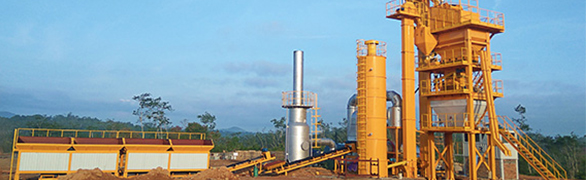
The mobile hot-mix asphalt mixing station is also often referred to as a trailer-mounted asphalt mixing machine. It has a complete set of cold material batching, drying and heating, hot material screening, precise metering, forced mixing with double horizontal shafts, bag dust removal, and finished product insulation. The silo and PLC intelligent control cabinets are all integrated on the heavy-duty trailer chassis, equipped with walking tires and standard traction interfaces, and belong to an integrated modular asphalt production equipment package.
The biggest difference from traditional fixed mixing station lies in that permanent reinforced concrete foundation is not needed. After the complete machine or sub-module is simply fixed and locked, the heavy tractor can be directly towed on the road. National roads, provincial roads and rural mountain roads can pass through. There is no need to disassemble the vulnerable core components such as mixing blades, burners and dust removal filter bags on a large scale during the transition, which greatly saves the disassembly labor and construction period.
The core idea of equipment design is to mix on-site and on-site, which directly hits the pain point existing in traditional construction for a long time: when the construction section is more than 20km away from the fixed mixing station, the long-distance transportation of hot-mixed asphalt mixture will cause temperature drop greatly, coarse and fine aggregate segregation, asphalt aging and caking ahead of time, finally resulting in substandard pavement compaction and flatness, resulting in high rework cost. Meanwhile, truck rental, fuel oil, toll and dispatching management will raise the comprehensive cost. The mobile mixing station can be directly transported to the repair site of old roads along roads, mountain construction sites, river embankment reconstruction and Urban area, so as to realize the local production of asphalt mixture on the construction site.
The whole production process fully conforms to the current road construction technical specifications, equipped with closed-loop temperature control system, high-precision cumulative weighing system, full-process dust removal environmental protection system, which can stably produce AC ordinary base mixture, SMA modified anti-skid surface layer, Superpave high-performance asphalt mixture, and the finished product quality is completely comparable to the standard medium-sized fixed mixing station. At this stage, the new mobile equipment reserves RAP recycled asphalt adding interface, warm asphalt foaming device and various additive filling ports, which can meet the green cycle construction requirements in different regions and climates. It is the core flexible production equipment for decentralized road engineering and emergency maintenance at this stage.
Combined with market sales data and tens of thousands of customer project feedback, mobile asphalt mixing station can be divided according to three dimensions: production process, towing structure and hourly capacity. Different types correspond to exclusive construction scenarios, which is also the core basis for sales team to match models for customers.
The mobile mixing station is the mainstream hot model of high-grade road projects. The coarse aggregate, fine aggregate, mineral powder and liquid asphalt shall be weighed accurately independently for each pot production, and the dry mixing and wet mixing shall be divided into two procedures, and the material proportion error can be controlled within ±0.3%. The screening tower, multi-bin hot storage bin and independent weighing hopper are all integrated with split trailers. Compared with continuous models, the number of trailers is slightly more, but it supports frequent switching of multiple mix ratios, and is suitable for high-speed reconstruction and expansion, airport runway maintenance, municipal high-standard pavement and other strict quality inspection projects.
Continuous drum type mobile mixing station integrates drying, heating and stirring into the same counter-current drum, with simple structure, less trailer number and lower equipment purchase cost. Uninterrupted feeding and discharging of materials, no intermittent weighing process, lower fuel consumption, widely favored by township maintenance teams and county-level small engineering enterprises, suitable for rural road projects that only use a single base mixture formula throughout the year. If the project needs to mix a large proportion of recycled old asphalt, the intermittent mobile station with independent recycled material weighing bin shall be preferred.
The single-trailer integrated mixing station integrates the cold storage bin, drying drum, mixing main machine, dust removal system and control room into a heavy trailer, covering an extremely small area, and the hourly capacity is concentrated at 20~80 tons. The whole machine can be transferred by one traction, and the wiring, connecting pipe and no-load test machine can be completed within 4~8 hours after arriving at the site without crane auxiliary assembly. It is the preferred model for emergency repair of road pits, renovation of community pavement and small temporary projects, suitable for narrow Urban area and mountain path transfer.
The multi-module split mixing station divides the whole equipment into cold material module, heating mixing module, hot material screening module and finished product storage module. Each unit is independently carried by trailer, and the hourly capacity can reach 80~240 tons. The multi-layer vibrating screen and multi-bin hot material storage configuration of large-scale fixed stations shall be completely retained, and the advantages of mobility, high precision and large production capacity shall be taken into account, so as to adapt to the new medium-sized national and provincial highway projects with sectional construction and transfer once every two weeks.
Small mobile mixing station (20~80 tons/hour): compact body, low tractor load requirements, can pass through narrow bridges and narrow roads in mountainous areas, complete machine power consumption, low fuel consumption, suitable for individual maintenance contractors, township traffic stations, garden trails and other small scattered projects.
Medium-sized mobile mixing station (80~160 tons/hour): the mainstream model with the highest market sales volume, taking into account the flexibility of transition and discharge quality, ordinary surface layer and recycled asphalt mixture can be produced stably, which is the standard equipment of small and medium-sized road and bridge companies in the region.
Large-scale mobile mixing station (160~240 tons/hour): multi-trailer split layout, equipped with automatic intelligent control system, large-capacity insulation finished product warehouse, can be simultaneously equipped with multiple pavers for continuous construction, mainly supplying large-scale construction groups with trans-provincial high-speed reconstruction.
.png)
For many years, the comprehensive competitiveness of various construction units and mobile mixing stations is reflected in six aspects: transfer, cost, site, finished product quality, asset flexibility and operation and maintenance cost. Each item can bring real construction period and capital income to the enterprise, which is also the core reason for the continuous rise of equipment market demand in recent years.
The core advantage of mobile mixing station is the integrated foundation-free design of trailer. The complete set of equipment is pre-installed with traction hooks. The loose parts can be towed and transferred after completion every day. The mixing main engine, burner and dust removal system do not need to be disassembled in large areas. On the contrary, it takes 15~30 days for concrete foundation pouring, maintenance and embedded parts installation in fixed mixing station, and the labor, material and time cost of civil engineering in the early stage are huge.
When the mobile station arrives at the construction site, it only needs to level the gravel ground and steel plate temporary site, and complete pipeline docking, commissioning and production within half a day to 3 days. For short-term projects with a construction period of less than 3 months, rainstorm collapse, road collapse and other emergency repair projects, the project can be mobilized and put into operation within 24 hours, greatly reducing the project preparation cycle and rushing through the traffic passage time.
When the construction site is more than 20km away from the fixed mixing station, the transportation cost of asphalt mixture will account for 15%~30% of the total cost of pavement, including transportation vehicle rental fee, diesel fuel, high speed toll and driver labor. Long-distance transportation will also cause mixture cooling, coarse and fine material separation, asphalt aging, compaction does not meet the standard to cause large-scale rework.
The mobile mixing station is used for on-site mixing, the transfer distance of finished mixture is controlled within 1~3 km, the logistics cost is reduced by more than 70% on average, and the uniform high temperature mixture is directly spread, which greatly reduces the rework probability. A mobile station can serve multiple scattered bid sections in the same area cyclically, without investing in the construction of fixed mixing stations for each construction site, greatly improving the equipment utilization rate and avoiding idle losses of multiple sets of fixed equipment.
The fixed mixing station needs to reserve a large area of raw material storage yard, finished material transfer area and vehicle rotation channel; the mobile mixing station with the same capacity adopts vertical compact modular layout, occupying only 1/3~1/2 of the fixed station. The equipment is equipped with walking tires, which can be placed on slightly undulating gravel ground without high-standard hardened site. It can be arranged on mountain slope, river embankment construction site, narrow reconstruction section of Laocheng District and isolated island temporary project, solving the industrial problem that station cannot be built in remote area without large flat land, and broadening the operation scope of road construction.
Many customers have inherent cognition that mobile equipment reduces mixing accuracy in order to sacrifice mobility. In fact, modern mobile mixing station is equipped with high-precision weighing sensor, multi-layer vibrating screen and temperature closed-loop control system of the same type as medium-sized fixed station. The weighing error of various raw materials is strictly controlled within the allowable range of specifications. The temperature fluctuation of drying drum discharge is controlled within ±5℃. The uniformity and road performance of mixture are completely up to standard.
The whole series is equipped with a first-class gravity dust removal + second-class bag dust removal linkage system, with a flue gas filtration efficiency of 99.9%. The collected dust is recycled as mineral powder for reuse, reducing the loss of raw materials. The construction of towns and scenic spots can also pass the environmental protection inspection smoothly. The high-equipped models are equipped with silencers and fully enclosed cold bins to reduce noise and dust, meeting the municipal green construction assessment standards.
Under the premise of the same production capacity, the mobile mixing station saves all civil engineering, site hardening and enclosure supporting expenses, and the total investment in one-time procurement is reduced by 20%~40%. For small and medium-sized engineering enterprises with limited working capital, there is no need to invest huge fixed assets to build permanent mixing plants. After the completion of the project, the equipment can be subleased and resold, and the asset liquidity is strong; in the off-season of the project, additional rental income can be generated from external leasing, which greatly improves the return on investment of equipment and relieves the operating pressure caused by the loss of a single project.
Integrated compact layout shortens aggregate conveying distance, improves power efficiency of elevator and belt conveyor; optimizes design of counter-current drying drum, reduces fuel consumption per ton of mixture by about 8% compared with traditional fixed station. Stirring blades, screens and dust bags are all universal standard parts, which can be replaced quickly on site without customization of long cycle accessories. The whole machine is centralized at the lubrication point, and only one inspector can complete the daily maintenance; after the completion of the project, it is directly parked in the factory area, without long-term maintenance of a dedicated fixed site, continuously saving site management expenses.
.png)
In the daily sales docking, a large number of customers are entangled in the investment choice of two kinds of equipment. The following six dimensions are compared from the transition, early investment, production capacity, operation and maintenance, residual value and applicable projects to help enterprises judge rationally and avoid idle funds caused by blind procurement.
Mobile station: trailer integration, simple locking can be transferred, deployment 0.5~3 days, dozens of times a year, suitable for multi-point mobile construction;
Fixed station: permanent infrastructure, complete disassembly and reconstruction of foundation are required for transition, the whole relocation takes more than 30 days, frequent transfer is easy to damage weighing and dust removal precision parts, only suitable for 3~5 years of long-term fixed-point production.
Mobile station: no concrete foundation, large-area site hardening investment, only temporary leveling of the site, the total investment is lower;
Fixed station: need to purchase or lease industrial land for a long time, supporting foundation, drainage, enclosure civil engineering, the overall initial investment is more than 30%, the land belongs to long-term sunk cost.
Mobile station mainstream maximum capacity of 240 tons/hour, suitable for short-term intermittent construction; daily continuous more than 16 hours of long-term operation, trailer chassis, connection structure wear accelerated;
Fixed station can customize 300~400 tons of super capacity, heavy steel frame support, 24 hours a year uninterrupted stable discharge, adapt to the annual mixture demand of more than 500,000 tons of long-term high-speed projects; super large fixed station can expand large-capacity regeneration system, multi-group additive storage bin, function expansion space is larger.
There is no long-distance mixture freight for mobile stations, but frequent transitions will result in trailer transportation costs and chassis maintenance costs;
There is no transfer loss at fixed stations, but the transportation cost of long-distance construction mixture continues to be spent, and the comprehensive logistics cost of long-term projects is extremely high.
Mobile station design service life 8~10 years, frequent transfer will cause frame fatigue loss, but after 5 years of use, second-hand sublease, resale market circulation is good, residual value is high;
The fixed station design life is 12~15 years, the component loss is small under fixed working conditions, but the disassembly and transfer difficulty is large, the second-hand market demand is small, and the residual value is low.
Mobile stations are suitable for small and medium-sized construction enterprises undertaking scattered short-term projects, municipal maintenance and repair units, cross-regional construction groups, remote infrastructure in mountainous areas, and equipment leasing companies;
Fixed stations are suitable for large-scale road and bridge groups with long-term fixed-point area projects, urban permanent maintenance centers, and road investment enterprises with great annual capacity demand.
Combined with tens of thousands of orders over the years, the revenue of mobile mixing stations purchased by six types of customers is maximized, and it has irreplaceable economic advantages compared with fixed stations.
Small and medium-sized road and bridge enterprises undertaking scattered short projects in counties and towns: most small and medium-sized engineering enterprises win the bid for village branch roads, community pavement and bridge deck thin-layer reconstruction, with scattered projects and a construction period of 1~3 months. The transportation cost of outsourced fixed station mixture is high and the quality is uncontrollable; the self-owned mobile station transfers local production section by section, completely controls the raw material ratio and discharge temperature independently, significantly improves the project profit, and is the largest purchasing group in the market.
Municipal maintenance and road emergency rescue departments: traffic maintenance centers and emergency repair teams in various places shall deal with road pits, water-damaged roads and old Urban area reconstruction all the year round. Equipment shall be mobilized quickly within 24~48 hours, and there is no time to carry out basic construction. The mobile mixing station can be parked in the unit yard at any time. In case of sudden road interruption, it can be immediately transported to the site for production and repair materials, greatly shortening the road closure period and reducing the traffic congestion loss.
Undertake trans-provincial multi-bid reconstruction and expansion of large-scale construction groups: large-scale road and bridge groups often undertake the reconstruction of expressways and national highways in different cities simultaneously, with each bid section separated by dozens to hundreds of kilometers. Each bid section is equipped with multiple mobile mixing stations for point-by-point production. The bid section is directly towed to the next construction site after completion, optimizing the layout of fixed assets of the Group and greatly improving the turnover efficiency of equipment.
Remote infrastructure construction teams such as mountainous areas, reservoir areas and Kuangqu: poor traffic conditions of mountain roads, reservoir island roads and mine access roads, difficulty for a large number of mixture transport vehicles to enter the mountain, and easy mixture segregation, cooling and scrapping during long-distance transportation. The mobile mixing station can reach the working surface along the mountain path, solving the bottleneck of material transportation, and the body is small without large leveling construction site.
Emerging engineering companies with limited funds at the initial stage of establishment: the newly established construction enterprises have insufficient working capital and cannot afford the high investment of fixed station + land + civil engineering. The mobile mixing station has low procurement threshold, and can be put into operation after entering the site to generate revenue; in the later stage, the fixed station can be purchased for fixed-point production with sufficient funds, and the mobile station can be reserved for scattered maintenance, forming a "mobile + fixed" double-line equipment layout covering all categories of projects.
Construction machinery equipment leasing enterprises: mobile mixing station has strong circulation and wide application projects, and can be leased to construction teams in different regions throughout the year; compared with fixed stations that are difficult to transfer and have low rental demand, the rental turnover rate is higher, and considerable residual value is still retained after many years of use, belonging to high-return leasing engineering equipment.
.png)
As a sales consultant, we will customize the model according to all the working conditions of customers. Ignoring the following factors, it is easy to cause problems such as insufficient production capacity, limited transition, unqualified environmental protection and long-term shutdown loss.
Calculate the daily demand for mixture based on the maximum paving area in a single day and the construction cycle: select 20~80 tons/hour integrated models for small maintenance projects with a daily output of less than 500 tons; match the transformation of national and provincial highways with a daily output of 500~1200 tons with 80~160 tons. Split medium-sized station; multiple pavers are used to simultaneously construct large-scale new construction projects, and large mobile stations of 160~240 tons are selected. Do not blindly purchase large-capacity equipment resulting in no-load waste, nor can small capacity overload slow down the construction progress.
Before purchasing, verify the road width, height limit and bridge load of each construction point: single trailer is small and narrow, light in weight, suitable for narrow bridge mountain roads in rural areas; large capacity multi-module is wide and single module is heavy, only suitable for high-speed trunk transportation. At the same time, the temporary site area shall be evaluated. The narrow reconstruction of Laocheng District shall give priority to the integrated compact type, and the large capacity split type shall be selected for the open construction site in the suburbs.
Long-term construction of high-speed surface layer, airport SMA modified mixture, need to frequently switch a variety of mix ratio, must choose intermittent mobile mixing station, multi-layer screening, independent high-precision weighing to ensure quality inspection standards; perennial construction of only a single rural base AC material, the pursuit of low investment, low fuel consumption, continuous drum type higher cost performance; need to add recycled RAP old material in large quantities, priority with independent recycling weighing bin intermittent model.
Each province and city has different control over construction dust and exhaust nitrogen oxides. Ultrafine high-temperature resistant filter bags and fully enclosed dust suppression models must be selected for scenic spots, urban core areas and ecological sensitive areas; standard bag dust removal basic style can be selected for remote rural construction sites. Priority shall be given to supporting low-nitrogen energy-saving burners to avoid shutdown and rectification of exhaust gas exceeding the standard.
More than 10 times a year, choose lightweight integrated type, equipped with anti-fatigue thickened trailer chassis, reduce frequent traction wear; less than 3 times a year, you can choose medium and large split models with stronger stability. Synchronous check customer owned tractor tonnage, large split module needs 60 tons of heavy traction, no supporting vehicles priority 30 tons conventional tractor can drag small and medium-sized models.
Mobile mixing stations are mostly operated in remote mountainous areas. Rapid maintenance of faults and timely replacement of wearing parts are the keys to ensure the construction period. Before purchasing, confirm whether the manufacturer has set up service stations and spare parts warehouses in the construction area, and whether it can provide 24-hour on-site repair; small brands without regional after-sales outlets have long transportation cycles after equipment damage, which is easy to cause long-term shutdown losses.
Budget tight customers choose basic standard configuration; long-term green construction planning, RAP regeneration reserved when purchasing, warm mixing foam, remote intelligent monitoring expansion interface, later without replacement of the whole machine can be upgraded.
When receiving customers daily, a large number of hearsay and old industry impressions form wrong judgments, which directly lead to selection errors. Combined with a large number of on-site measurements and engineering cases, the mainstream errors are corrected one by one.
Myth 1: Mobile mixing plants produce mixtures of poor quality that cannot be used on high-grade pavements: This is the most common misconception among high-speed construction customers. The regular brand intermittent mobile mixing station adopts the same weighing sensor as the medium-sized fixed station, multi-layer vibrating screen and closed-loop temperature control. The proportion error is controlled within ±0.3%. All indicators of SMA and Superpave modified mixture can meet the acceptance standards of Class I highway and airport. A large number of high-speed reconstruction and expansion in mountainous areas in China use mobile stations to complete the surface production in batches, and all the quality passes the inspection at one time. The quality gap only exists between low-cost inferior small workshop equipment and regular standard equipment, not mobile and fixed structure differences.
Mistake 2: Mobile station frame is easy to deform, and it will be scrapped after several transitions: all regular mobile mixing stations in large factories adopt heavy anti-fatigue trailer chassis, shock absorption fastening structure is installed at the connection parts of the whole machine, and special locking devices are equipped when mixing main engine and drying drum are transferred. According to the after-sales data of the manufacturer, there will be no major damage to the frame for more than 50 times under the standard operation within 8 years; only low-priced thin chassis, simple fixed inferior models, a small amount of transfer will cause deformation damage, belonging to product quality defects, not inherent problems of mobile structure.
Mistake 3: Mobile mixing station has low production capacity and is only suitable for micro-repair projects: many customers mistakenly believe that the maximum production capacity of mobile stations is only forty or fifty tons, ignoring the existence of 160~240 tons of large split models. Large multi-trailer mobile station is equipped with independent large-capacity hot storage bin and dual-power mixing host, and the continuous discharge efficiency is not lower than that of medium-sized fixed station, which fully meets the requirements of multi-paver synchronous new road construction;20~80 tons integrated type is only for small repair, and can be freely matched according to the project scale.
Misunderstanding 4: The mobile station saves the basic money, but the transfer freight is extremely high, and the comprehensive cost advantage is not high: the customer only sees the single trailer transfer cost, ignoring the huge logistics cost of long-distance transportation of the mixture. Taking the construction site 30km away from the fixed station as an example, the transportation cost per ton of mixture is about USD 25~35, and the transportation cost of a medium-sized mobile station is only equivalent to the logistics expenditure of 1000 tons of mixture; the total output of the project exceeds 5000 tons, saving freight far exceeds the transfer cost, and the cost advantage of a small project with a single batch of less than 1000 tons is not obvious.
Myth 5: Mobile station dust collection is simple, environmental protection inspection is easy to fail to meet the standard: In the early years, simple and old-fashioned mobile equipment dust collection is simple and dust is large, but the current compliance machine is standard with first-class gravity dust collection + high-efficiency bag dust removal, the filtration efficiency can reach 99.99%, optional supporting noise reduction, fully enclosed cold storage bin, environmental protection configuration and fixed station of the same specification are completely flat, urban and scenic spot construction can smoothly pass environmental protection acceptance; Only inferior equipment without qualified low-cost cutting dust removal accessories will exceed the emission standard.
Mistake 6: Mobile station operation is complex, requiring a large number of professional and technical personnel: modern mobile mixing station integrated intelligent control room, feeding, drying, weighing, mixing, dust removal all one-key automatic operation, real-time fault alarm, parameter automatic correction, daily only 1 control room operator + 1 on-site inspection, less than the same capacity fixed station 3~4 people team labor. After the equipment is delivered, the manufacturer provides 1~3 days of on-site practical operation training, and ordinary construction personnel can operate independently in a short period of time without high-paying professional technicians.
Myth 7: Long-term fixed-point production can only choose fixed stations, mobile stations are not applicable: This view is one-sided. The mobile mixing station can be parked for a long time to level the site for stable production, and the discharge stability is completely up to standard without frequent transfer. For enterprises with uncertain medium-and long-term project layout, mobile station shall be purchased for fixed-point production at the early stage, and the project can be transferred directly at the end of the project without bearing the loss of land and civil engineering sinking of fixed station; however, it is extremely difficult for fixed station resale and transfer, so it is easy to idle after the project is completed. Enterprises with uncertain project planning shall give priority to mobile equipment.