Dust pollution is the core problem restricting green operation, compliance production and long-term operation of equipment in asphalt mixture large-scale production process. During the whole process of aggregate stacking, conveying, drying, screening and mixing, asphalt mixing station will continuously produce a large amount of mineral dust, fine particles and combustion byproducts, including PM10 and PM2.5 fine particles which are extremely harmful to human body and environment. If the dust control is not in place, it will not only cause air pollution, ecological damage, occupational health damage and other problems, but also aggravate equipment wear, reduce the quality of finished mixture products, increase the cost of station operation and maintenance, and even face risks such as environmental protection punishment, shutdown and rectification.
Scientific and perfect dust control system is the core standard of standardized, green and efficient operation of modern asphalt mixing station. This paper will comprehensively disassemble the core technology and practical operation scheme of dust control in asphalt mixing station from eight dimensions: core significance of dust control, dust generation source, dust type classification, mainstream dust removal equipment system, working principle of bag dust removal, full-process dust suppression practice specification, common fault troubleshooting and scientific selection of dust removal equipment, so as to provide systematic and landing dust control solutions for engineering construction enterprises.
Dust control is the core key process of environmental protection compliance, safe production, quality improvement and cost reduction of asphalt mixing station. It runs through the whole production process and directly affects the five dimensions of ecological environment protection, personnel health, equipment operation and maintenance, finished product quality and resource utilization. It is the core content of refined operation of modern asphalt station, not a single auxiliary environmental protection process.
Asphalt mixing station organized and unstructured dust is one of the main sources of air pollution in road construction field. Suspended particulate matter produced by production will deteriorate the air quality of the plant and its surrounding areas, and settled dust will pollute soil, vegetation and water bodies and destroy regional ecology. At present, domestic mixing stations strictly implement GB28662 - 2012 Emission Standards for Air Pollutants in Iron and Steel Sintering and Pelletizing Industry, etc., and have rigid requirements for particulate emission concentration, flue gas turbidity and unstructured dust limits. Dust control does not meet the standard will lead to environmental testing unqualified, high fines, limited production capacity, shutdown rectification and other problems. The perfect dust control system has a particle collection efficiency of more than 99%, which can fully meet all levels of environmental protection standards and assist the green compliance production of the station.
Dust in mixing station is mainly mineral dust containing crystalline silica. Workers exposed to high dust environment for a long time are easy to suffer from pneumoconiosis, silicosis, respiratory tract inflammation and other occupational diseases. At the same time, dust accumulation in the plant will reduce the visibility of operation, increase the risk of mechanical collision and personal injury; excessive fine dust concentration in confined space is easy to cause dust explosion, and dust adheres to the surface of electrical components and circuits, which is easy to cause safety accidents such as short circuit and fire. Systematic dust control can reduce dust concentration from the source and comprehensively ensure personnel health and station production safety.
Untreated dust will invade core equipment such as motors, bearings, sensors, drying rollers, etc. with airflow, causing problems such as component blockage, poor heat dissipation, increased wear, and reduced operation accuracy. Long-term dust accumulation will lead to increased equipment load, frequent failures, increased unplanned downtime, greatly shorten the service life of equipment, and increase repair, replacement and maintenance costs. Efficient dust collection system can effectively reduce dust erosion and clogging of equipment, ensure stable operation of drying, screening, conveying and dust removal equipment, reduce operation and maintenance losses, and ensure production continuity.
Asphalt mixture gradation stability, bond strength directly determine the quality of pavement construction, unstructured dust diffusion and residual dust backflow will seriously damage the mixture ratio accuracy. Excessive fine dust will change the aggregate grading structure, weaken the bonding performance of asphalt and aggregate, cause excessive void ratio and insufficient stability of mixture, and finally cause quality diseases such as pavement seepage, cracking and potholes. Standardized dust control can accurately recover fine stone powder, quantitatively reuse stable mixture grading parameters, ensure that the quality of each batch of finished products is uniform and up to standard, and avoid hidden dangers of pavement quality from the source.
The bag superfine powder collected by the dust removal system is a high quality mineral filler, which can directly replace purchased ore powder for mixture production. The dust recycling rate of the industry compliance station can reach 80%~90%, greatly reducing the purchase cost of mineral powder and reducing material waste. At the same time, stable dust control can reduce the energy consumption of equipment operation and maintenance, avoid environmental protection fines, and comprehensively improve the overall economic benefits of the station.
.jpg)
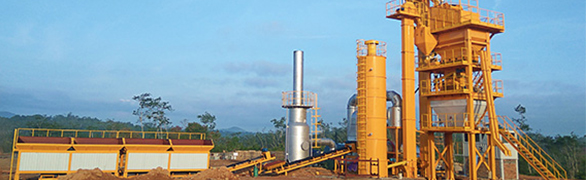
Dust in the mixing station covers the whole production chain of raw material stacking, feeding and conveying, drying and heating, screening and storage, mixing and discharging, and finished product loading. It is divided into organized process dust and unstructured dust as a whole, among which the drying drum is the core dust source, and all kinds of secondary dust are superimposed to form the overall dust pollution of the station.
Drying drum is the largest dust emission source of asphalt mixing station, and also the main generation point of organized dust. After entering the rotating drum, the fine particles on the surface and inside of the aggregate are stripped and wrapped under the action of high temperature hot air flow scouring and tumbling heat exchange, forming high concentration dust and high temperature waste gas. The hot air velocity of the drum, the powder content of the aggregate, the production capacity and the moisture content of the aggregate directly determine the dust generation amount. The drying drum of the uncontrolled mixing station can generate several tons of high concentration dust containing PM2.5 and PM10 per hour. All dusty waste gas is connected to the dust removal system for centralized treatment through pipelines.
This kind of dust is mainly intermittent mixing station. After drying, the dried aggregate has no moisture. It is easy to produce dust continuously during transfer and processing. The core points include hot aggregate elevator, vibration screening equipment, hot aggregate storage bin, weighing hopper and mixing tank. Fine powder will be released continuously by vertical lifting of aggregate, vibration, screening friction, storage discharge and stirring. The continuous mixing station reduces the hot aggregate transfer and screening link due to the integration of drying and mixing, and the secondary dust emission is lower. This kind of process dust is connected to the main dust removal system through the negative pressure air duct for treatment.
Unorganized dust is open dust, which cannot be collected centrally in pipelines, which is the main reason for dust exceeding the standard at the plant boundary, covering the whole raw material and transportation scene. Aggregate piled in the open air will be eroded by wind and dust will be generated. The material drop discharged by loaders and transported by vehicles will arouse a large amount of floating dust. The vibration dropping of cold storage bin and belt transportation, the passage of vehicles on unhardened roads in the field, and the manual feeding operation of RAP recycled materials, mineral powder and additives will generate unstructured dust with strong dispersibility and great difficulty in control, which shall be controlled by auxiliary means such as sealing, spraying and enclosure.
In addition to the core process, a small amount of dust will be generated in the combustion and finished product discharge links: firstly, fly ash, soot and unburned oil droplets generated by insufficient combustion of fuel in the drying burner form trace particles; secondly, light dust generated by fine material falling off during the discharge and loading and unloading of finished mixture will be mixed with asphalt flue gas to form compound aerosol pollutants.
Dust in mixing station can be divided into many categories according to source, particle size and physical characteristics. Different dust hazards, treatment difficulties and collection methods are significantly different. Accurate classification is the core basis for customizing dust removal scheme and selecting equipment.
Mineral aggregate dust accounts for more than 90% of the total dust, which is the core dust formed by sand aggregate processing stripping and crushing, and is the main treatment object of dust removal system. According to particle size, it can be divided into three categories: coarse particle dust (> 75 μ m), which settles quickly and is easy to collect, and is intercepted by cyclone dust collector pretreatment; conventional fine stone powder (0.1~75 μ m), which has strong suspension and wide diffusion range; bag ultrafine dust (<2.5 μ m, PM2.5 category), which has long suspension time and the greatest harm to human body. Only high-precision bag equipment can capture it. This kind of dust has high hardness and strong abrasion, and it is easy to form viscous dust when combined with asphalt flue gas at high temperature. Meanwhile, ultrafine powder has extremely high recycling value.
This kind of dust is produced by fuel combustion, which accounts for a low proportion but is extremely polluting. The amount of dust produced by fuel combustion is much higher than that of natural gas and liquefied gas. It mainly contains fly ash, soot and unburned oil droplets: the particle size of fly ash is 1~100 μ m, which is formed by the combustion of fuel impurities; soot is ultrafine carbon particles less than 1 μ m, which is easy to penetrate ordinary filter materials; unburned oil droplets form viscous aerosol, which is easy to block filter bags, which is the main cause of excessive black smoke and flue gas.
Combined with environmental protection detection standards, dust can be divided into four core control indicators: coarse dust (> 10 μ m), visible to the naked eye, easy to settle, mainly causing equipment wear and dust deposition in the plant; PM10 inhalable particulate matter (≤ 10 μ m), which can invade the respiratory tract of human body, is the key control indicator; PM2.5 fine particulate matter (≤ 2.5 μ m), which can penetrate deep into the lungs, has great harm and strong diffusion ability; TSP total suspended particulate matter, covering all particle sizes, is the comprehensive evaluation index of air quality in the plant.
Under high temperature conditions, mineral fine powder mixed with asphalt flue gas, water vapor and unburned oil droplets will form viscous oily dust with high adhesion, which is easy to bind and block filter bags and cause equipment paste bag failure. It is the main cause of bag dust removal failure, which is more common in RAP recycled material production and fuel combustion conditions. At the same time, the blue aerosol formed by asphalt flue gas cooling is mixed with dust to form compound pollutants, so it is necessary to optimize the dust removal scheme.
Modern mixing station adopts multi-stage combination process of "primary pretreatment + high-precision end dust removal", equipped with unstructured dust suppression system, dust removal efficiency can reach more than 99%, can adapt to various working conditions and environmental protection standards, the core is divided into pre-coarse dust removal and end fine dust removal two types of equipment.
The primary dust removal equipment is installed at the front end of the system, and its core function is to intercept large particle dust, reduce the load of terminal equipment, reduce filter wear, and remove 50%~90% coarse particle dust. Cyclone dust collector is the mainstream standard equipment in the industry. It relies on centrifugal force to separate coarse dust above 75 μ m. It has the advantages of high temperature resistance, wear resistance, no consumables and low operation and maintenance cost. It is suitable for high temperature flue gas conditions of drying drum. Short board is unable to capture fine dust and cannot meet environmental protection standards alone. Inertia settling box, dust box compact structure, low wind pressure loss, suitable for small portable mixing station, dust removal accuracy slightly lower than cyclone dust collector.
The secondary dust removal equipment determines the final dust removal effect, and the mainstream is divided into bag dust collector and wet dust collector. Bag dust collector is the preferred equipment for modern mixing station. It adopts high temperature resistant filter material filtration principle, which can accurately capture PM2.5 and PM10 ultrafine dust. The dust removal efficiency can reach 99%~99.9%. The exhaust emission concentration is stably controlled at 10~30 mg/m ³. Dry dust removal has no secondary pollution. Dust can be recycled and adapted to various high and low temperature conditions and mixing equipment. Wet dust collector relies on water spray to catch dust, which can absorb some harmful gases, eliminate flue gas odor, adapt to viscous and high humidity dust conditions, but the dust can not be recycled, and it needs supporting sewage treatment facilities. It is easy to freeze in winter and has high operation and maintenance costs. At present, it has been gradually replaced by bag dust collector.
Electrostatic precipitator is suitable for large-scale continuous mixing station large-flow flue gas treatment, low operation and maintenance cost but high cost, poor stability of ultra-fine dust treatment, limited industry application. Local negative pressure dust collection, fog gun dust suppression, closed enclosure, spray system, mainly used for non-organized dust control, as an auxiliary means of process dust removal.
Standardized green mixing station generally adopts two-stage dry system of "cyclone primary dust removal + pulse bag dust removal", which takes into account dust removal efficiency, resource recovery, operation stability and economy, can adapt to variable load production conditions, meets environmental protection emission standards of various regions in the country, and is the best popular configuration in the industry.
.jpg)
Bag dust collector is the core equipment of dust removal system of mixing station. Relying on the advantages of ultra-fine dust capture capacity, automatic operation and recycling, it has become the mainstream of the industry. The core adopts closed-loop operation mode of negative pressure filtration, layered dust interception and regular ash cleaning to adapt to high temperature, high dust and variable load production conditions.
The whole dust removal closed-loop process is divided into five steps: first, the high temperature dust-containing flue gas generated by drying and process equipment enters the dust collector box under the negative pressure of induced draft fan; second, the flue gas penetrates the high temperature resistant filter bag, the fine dust is trapped, and the clean air flow is discharged; third, the dust layer is formed on the outer surface of the filter bag to further improve the fine dust filtration accuracy; fourth, the automatic dust cleaning system regularly blows dust, and the dust falls into the bottom hopper; Fifthly, the collected superfine stone powder flows back to the production system through the conveying equipment to realize the recycling of resources.
Bag dust removal is a synergy of multiple physical effects: large particles rely on inertial collision and gravity settlement interception; medium particles are attached and intercepted by filter fibers; PM2.5 ultrafine dust relies on Brown diffusion and electrostatic adsorption capture. At the same time, the dust layer accumulated on the surface of the filter bag forms a secondary filter barrier, which greatly improves the fine dust capture efficiency, which is the core reason why its performance is better than other dust removal equipment.
The temperature of flue gas in mixing station is maintained at 120~250 ℃ all the year round, containing trace amount of asphalt oil smoke, which has strict requirements on high temperature resistance, corrosion resistance and viscosity resistance of filter materials. Nomex filter bag is adopted in the mainstream of the industry, which can withstand high temperature of 190~250 ℃ for a long time, and has excellent aging resistance and corrosion resistance. It is suitable for PTFE coated filter materials under high viscosity and high RAP conditions, which can effectively prevent paste bag clogging and prolong filter life. Filter bag with metal cage support to avoid negative pressure collapse and ensure stable airflow.
Dust accumulation in filter bags will increase equipment resistance and reduce ventilation, so it is necessary to clean dust regularly and regenerate. Modern mixing stations all adopt the pulse jet ash cleaning mode, which instantly injects high-pressure compressed air into the filter bag to vibrate the filter bag to remove dust. There is no need to stop the machine during the whole process, and it can operate continuously for 24 hours. It has the advantages of thorough ash cleaning, low energy consumption, and adaptability. The advantages of variable load conditions. Anti-blowing ash cleaning and mechanical vibration ash cleaning are old processes. The former is suitable for low load conditions, while the latter has high failure rate and needs shutdown operation, which has been phased out gradually.
The core parameters for stable operation of the equipment include three items: air ratio is controlled at 3.5~4.5: 1, too high ratio is easy to cause overload damage of filter bag, too low causes energy consumption waste; the operating pressure difference is stable at 1000~1200Pa, abnormal increase of pressure difference indicates filter bag blockage; flue gas temperature should be higher than dew point temperature to prevent dust hardening caused by moisture condensation.
Efficient dust control shall follow the principle of "source reduction, process dust control, terminal treatment and global control", rely on fine control of the whole process, cover six scenarios of raw materials, transportation, production, dust removal, discharge and management, and implement standardized dust suppression measures.
Closed enclosure and windproof and dust suppression net shall be set up in aggregate storage yard, fine aggregate shall be stored separately and sealed, and shall be sprayed regularly in dry and windy weather; unloading process shall be optimized to reduce unloading drop of vehicles and loaders, and buffer device shall be installed to reduce dust emission; hardening treatment shall be carried out on main roads in plant area, spraying water regularly to clean and wash vehicles leaving the site, and speed in the yard shall be strictly controlled; drainage shall be carried out in rainy days to reduce aggregate accumulation and sludge accumulation, and reduce drying dust production from source.
The cold storage bin, belt conveyor and material transfer point shall be completely closed and modified, and sealed cover and dustproof soft curtain shall be installed; all material dropping points shall be equipped with closed chute to prevent free material dropping dust; the transfer point shall be equipped with local negative pressure dust collection device to connect the overflow dust into the main dust removal system; the mineral powder and additive shall be stored in closed storage bin, and small bag dust collector shall be installed at the top to prevent dust emission during powder loading and unloading.
Optimize drying drum speed, hot air velocity, feed volume, stabilize aggregate curtain state, reduce dust stripping amount; pre-treat aggregate in storage yard, stabilize feed moisture content, avoid dust surge caused by fluctuation of working conditions; optimize burner air-fuel ratio, ensure full combustion of fuel, reduce carbon smoke and fly ash generation; fully seal drying drum, elevator, screening equipment and mixing cylinder, maintain negative pressure state of system, and prevent dust overflow.
Strictly implement the standardized operation specification of two-stage dust removal system, dynamically adjust the pulse ash cleaning cycle and injection pressure according to the production load; regularly calibrate the core parameters such as pressure difference, temperature and negative pressure, and timely deal with the problems of filter bag blockage, damage and air leakage; standardize the dust recovery process, recycle stone powder quantitatively, and avoid secondary dust accumulation; normally check the tightness of air duct, fan and valve to ensure the stability of negative pressure of the system.
Closed structure is adopted for finished product storage bin and discharge port, and negative pressure dust collection device is installed; telescopic discharge chute is adopted for vehicle loading to reduce the height of falling materials; closed shed is set up in loading area, and spraying dust suppression facilities are equipped to prevent dust diffusion during loading and unloading of finished products.
Formulate dust control plan exclusive to the station, clarify the control responsibilities of each post, suspend high dust operation in windy and dry weather; establish normal equipment inspection, dust removal maintenance and plant cleaning mechanism; carry out special training for operators, standardize equipment operation process; establish dust emission and equipment operation data accounts, and realize standardization, refinement and normalization of dust control.
.jpg)
Under high temperature, high dust and continuous variable load production conditions, dust removal system is prone to various failures, which directly lead to excessive emissions, increased energy consumption and production obstruction. In combination with high-frequency cases in the industry, sort out core fault symptoms, causes and disposal schemes to achieve accurate investigation, efficient rectification and early prevention.
Fault symptoms: the operating pressure difference exceeds 1500Pa, the dust removal air volume decreases, the negative pressure in the plant area is insufficient, the dust is increased, and the production load is limited. Core causes: filter bag dust hardening paste bag, flue gas condensation, oil smoke adhesion; pulse ash cleaning system failure, insufficient injection pressure, unreasonable ash cleaning cycle; hopper ash bridging, air duct blockage, fan efficiency decline. Troubleshooting: preheat the box in advance to ensure that the flue gas temperature is higher than the dew point; repair the pulse solenoid valve, calibrate the ash removal parameters; dredge the hopper, install vibration anti-bypass device; clean up the air duct debris, repair the fan frequency conversion system, and restore the negative pressure air volume of the system.
Failure symptoms: Ash coming out of the exhaust pipe, turbid smoke, and environmental protection detection of particulate matter exceeding the standard. Core causes: filter bag damage aging, installation sealing is not strict, flower plate air leakage; excessive ash cleaning damage filter bag protective layer; new filter bag is not pre-coated; box, access door seal air leakage. Troubleshooting and solution: shut down and replace damaged filter bags, tighten sealing accessories; optimize ash cleaning procedures, reduce ash cleaning intensity and extend interval; complete pre-coating before putting new filter bags into production; comprehensively investigate sealing air leakage points.
Failure symptoms: large fluctuations in the amount of recovered stone powder, unstable fine material content of the mixture, and poor voidage and stability of the finished product. Core causes: intermittent dust fall caused by pulse concentrated blowing; dust conveying and metering system failure; sudden increase and decrease of dust caused by fluctuation of production conditions. Troubleshooting and solution: install dust buffer bin and frequency conversion metering equipment to realize continuous quantitative material return; optimize ash cleaning sequence to match production load; adjust ash cleaning strategy at start-up and shutdown stage, and calibrate metering equipment regularly.
Failure symptoms: short-term wear, burning, corrosion of filter bags, high replacement frequency, high operation and maintenance costs. Core causes: flue gas overheating caused by thermal aging, low temperature condensation caused by acid corrosion; inlet airflow velocity is too high erosion wear; injection pressure is too large to cause mechanical damage; filter material and production conditions do not match. Troubleshooting and solution: real-time monitoring of flue gas temperature, stable and reasonable operating range; optimization of intake structure, reduction of scouring intensity; adjustment of appropriate injection pressure; matching of special filter materials according to fuel, RAP content and flue gas characteristics.
Fault symptoms: dust at plant boundary exceeds standard, dust at storage yard, transfer point and road is obvious. Core causes: material sealing facilities damaged, spray dust suppression system failure; material drop is too large, transfer dust is not collected; dust removal negative pressure is insufficient to cause process dust overflow. Check and solve: repair enclosed facilities such as enclosure and dustproof soft curtain; repair spraying and fog gun equipment; increase dust suppression frequency in dry weather; optimize material transfer process and reduce falling height; check dust removal negative pressure hidden danger to ensure full collection of process dust.
The type selection of dust removal system directly determines the treatment effect, compliance and operation and maintenance cost. It shall be comprehensively judged in combination with five factors: station type, production capacity, working condition, environmental protection standard and site condition, so as to avoid improper type selection, redundant or insufficient equipment and other problems.
Five core parameters shall be verified before type selection: first, station capacity, processing air volume shall be verified according to maximum output per hour, and 10%~20% working condition allowance shall be reserved; second, environmental protection standard, emission limit shall be determined according to regional control level; third, working condition parameters, flue gas temperature, dust concentration, aggregate moisture content, RAP content and fuel type shall be specified; fourth, site conditions, fixed/mobile station shall be distinguished, installation space and hydropower supporting facilities shall be verified; Fifthly, the demand for resource utilization, priority should be given to the dry dust removal system that can recover dust.
For large fixed high-yield and high-dust conditions, multi-cyclone dust collectors are preferred to improve the interception efficiency of coarse dust and reduce the load of back-end equipment; for small mobile portable mixing stations, inertia settling boxes with compact structure and low failure rate shall be selected; for high-wear and high-dust conditions, pre-treatment equipment shall be configured to protect the back-end filter materials and prolong the service life of the equipment.
Pulsed bag filter is suitable for more than 90% of modern mixing stations, especially for continuous production stations where environmental protection is strictly controlled, dust recovery is required, and water resources are scarce. Wet dust collector is only suitable for old stations with sufficient water resources, no recycling demand and prominent flue gas odor. It is required to be equipped with anti-freezing, anti-corrosion and sewage treatment facilities. It is not recommended to use new green stations.
Urban area strict control, high-grade engineering station: adopt "cyclone + high temperature coated bag" two-stage ultra-low emission system; small temporary mobile station: select compact integrated dust removal equipment, giving consideration to portability and compliance; high humidity, high viscosity, high RAP working conditions: supporting PTFE coated high temperature resistant filter bag, optimize dust removal logic; northern cold, water shortage station: give priority to dry bag dust removal, avoid wet equipment icing operation and maintenance problems.
Eliminate "small horse cart", reserve production allowance for equipment air volume and filter area to avoid frequent failure at full load; avoid excessive selection and reduce redundant energy consumption and cost of equipment; give priority to special dust removal equipment for asphalt working conditions rather than general industrial dust removal equipment; give consideration to equipment cost and operation cost throughout life cycle, focusing on filter life, energy consumption and failure rate; select modular upgradable equipment to adapt to environmental protection policy upgrading; Realize intelligent control of dust removal system and mixing equipment linkage.
Dust control of asphalt mixing station is a systematic project covering source treatment, process control, end dust removal, operation and maintenance optimization and scientific selection. It is not a single equipment that can achieve standard treatment. The dust control effect directly determines the environmental compliance, production safety, finished product quality and operation efficiency of the station. Modern green asphalt mixing station needs to abandon the traditional misunderstanding of "heavy equipment, light operation and maintenance, heavy end and light source", adopt the comprehensive scheme of "two-stage dry dust removal equipment + full-process dust suppression control + normal operation and maintenance investigation", accurately control the whole chain of dust generation, collection, treatment and recovery, realize ultra-low dust emission, resource recycling and long-term stable operation of equipment, and assist the green, standardized and high-quality development of road engineering construction.