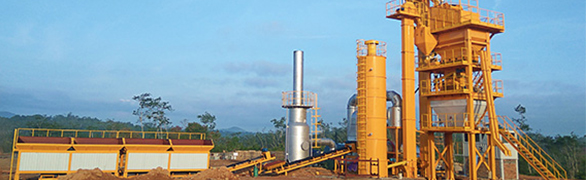
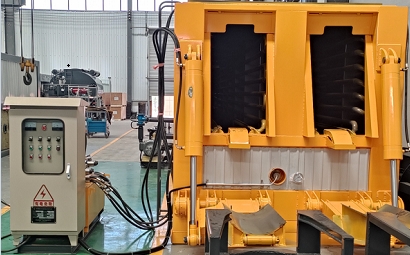
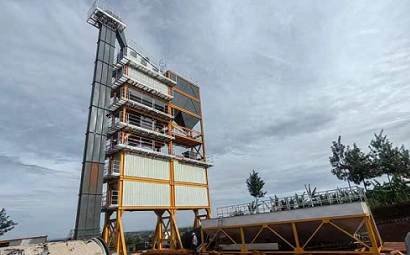
In highway construction, asphalt mixing production and waterproof engineering construction, many remote and limited logistics construction sites cannot use bulk liquid asphalt, and only 200kg steel drums or tons of solid asphalt can be used to enter the site. Traditional open fire baking and manual dumping technology not only has high labor intensity, high asphalt loss, but also easily causes asphalt aging and deterioration, and there are fire hazards and smoke pollution.Asphalt debarking equipment, also known as asphalt melting machine, is a special industrial equipment specially designed to melt solid packaged asphalt into pumpable liquid asphalt at constant temperature, and effectively supplement the process short board of solid asphalt conversion construction materials.At the same time, most practitioners are easy to confuse the functions of debarking equipment and asphalt storage tanks and the applicable scenarios of various types of models. Therefore, scientific selection shall be carried out in combination with working condition requirements, production capacity, energy conditions, environmental protection and transition requirements, standardized operation and maintenance and process optimization shall be matched, energy consumption and material loss shall be reduced, asphalt construction quality shall be stably guaranteed, and reliable raw material guarantee shall be provided for various asphalt projects.
.jpg)
Bitumen debarkling equipment is a professional industrial equipment specially designed for heating and melting solid asphalt in steel drums and ton bags. It can convert solid and semi-solid asphalt encapsulated in steel drums and ton bags into pumpable liquid asphalt by controllable heating, and directly transport it to asphalt storage tanks, asphalt mixing equipment and spraying equipment for production.
The equipment is widely used in road construction, highway maintenance, asphalt mixing station, waterproof material production and other industries, especially suitable for bulk liquid asphalt transportation difficulties, unstable supply of field sites, mountain projects.When the project is limited by logistics and asphalt can only be transported in the form of steel drums and ton bags, asphalt debarrelling equipment becomes an essential supporting equipment.
There are many names in the industry, such as asphalt debarrel machine, asphalt melting equipment, debarrel device and debag equipment, which mostly refer to the same type of equipment, but the emphasis of the name is different."De-barrel" focuses on the process action of unloading asphalt from the barrel;"melting equipment" focuses on the core function of heating liquefaction. The same equipment is often marked with multiple names in product samples from different manufacturers. When purchasing and selecting, do not be disturbed by the name. Focus on the core parameters such as equipment adaptation packaging form, processing capacity and heating form.
Most mainstream asphalt de-barrel equipment adopts indirect heating process of heat transfer oil, which does not use open fire to directly burn asphalt body. It relies on heat transfer oil furnace to produce high temperature heat transfer oil, circulates in closed cavity coil, relies on multiple heat exchange modes of heat radiation, heat conduction and heat convection, so as to gradually soften and melt asphalt in barrel, and naturally flows downward by gravity, so as to protect asphalt original performance to the maximum extent and reduce fire risk.There are also a small number of models on the market that use direct-fired heating and electric heating schemes, which are mostly used in specific operating conditions.
Taking the most widely used steel drum continuous debarging equipment in the industry as an example, the complete operation process is divided into four links: loading, heating and melting, collection and filtration, and pumping output.
The first stage is loading.The asphalt steel drum with the cover removed is transported into the closed heating melting chamber through the hydraulic pushing mechanism and the crane lifting appliance. The continuous equipment will place the steel drum upside down to ensure that the melted asphalt can flow downward by gravity.Batch-type equipment will be placed in the tray once the whole group of steel drums, complete a batch of all melted after the unified discharge.Continuous models can achieve continuous feeding of new barrels, empty barrels automatically discharged from the other end, to achieve uninterrupted operation, hydraulic drive mature models to complete a single barrel feeding push only about 20 seconds, high efficiency.
In the second stage, the interior of the cavity is heated and melted.After the heat transfer oil furnace heats the heat transfer oil, it circulates through the coils densely distributed around the cavity to evenly heat the inverted steel barrel in the cavity. The temperature of the cavity will be controlled within the range of 150 - 180℃. This temperature range can fully soften the asphalt flow and avoid the aging and carbonization of asphalt caused by too high temperature.The heat is transferred to the wall of the steel drum, and the solid asphalt in the drum gradually melts from the position close to the drum wall, and the liquid asphalt drops down along the drum mouth.The ton bag type is to lift and open the ton bag, and put the solid asphalt block directly into the heat exchange structure inside the heating cavity to complete melting.
The third stage is collection, secondary heating and filtration.After melting, the liquid asphalt passes through the grid screen inside the cavity and falls into the oil collection pool below. The grid can intercept impurities such as rust on the barrel body and packaging bag debris to prevent impurities from entering the oil circuit system.Heat conducting oil coils are also arranged inside the molten pool to heat the collected asphalt for the second time and maintain the asphalt temperature within the pumping temperature range of 110 - 130℃. Some equipment are equipped with stirring mechanisms to prevent local agglomeration of asphalt, complete asphalt dehydration, evaporate moisture carried inside asphalt, and avoid the risk of foaming in later production.
The fourth stage filters the pumping output.Liquid asphalt is further filtered by built-in filter screen, and qualified liquid asphalt is transported by high temperature asphalt pump to external asphalt storage tank through thermal insulation tracing pipeline, or directly supplied to asphalt mixing station and spraying equipment.The melted empty steel drum will be automatically pushed out of the cavity by the equipment, and the residual asphalt in the drum will be controlled within 1%. The residual asphalt in the high-performance model can be less than 0.3%, greatly reducing the waste of asphalt materials.
.jpg)
A complete asphalt debarrel equipment, by the cooperation of multiple functional modules, complete the whole process of feeding, heating, melting, filtering and conveying, different manufacturers will have different structural details, but the core components are basically the same.
It is the main body shell of the equipment. The interior of the cavity is divided into two functional areas: the upper part is the main melting heating area of steel drum and ton bag, and the lower part is the asphalt collection melting pool.The cavity shell is filled with 50‑75mm thick rock wool insulation layer, and the exterior is packaged with metal protective plates to reduce heat loss, improve thermal efficiency and reduce fuel consumption.Guide rails and grid partitions are arranged inside the cavity to support the steel barrel on the one hand and prevent waste residue impurities from entering the molten pool on the other hand.The protective door of the cavity is equipped with sealing structure to reduce smoke overflow, and at the same time, it is equipped with safety interlocking device to ensure the safety of maintenance operation.
It is the heat source core of the whole set of equipment, including heat transfer oil furnace (diesel, gas and other fuels for combustion engine), seamless steel pipe heat exchange coil and circulating pipeline.High temperature heat transfer oil circulates inside the coil, heating the barrel and the bottom molten pool asphalt in the form of indirect heat exchange.The biggest advantage of indirect heating is that the temperature is uniform, there will be no local overheating, and the asphalt bonding performance can be well retained. It is the mainstream configuration in the current market.For some models without burner, the heat source shall be provided by external heat transfer oil boiler existing on the project site.In addition to heat transfer oil heating, there are direct combustion heating and electric heating as alternatives to adapt to different site conditions.
.jpg)
According to the equipment type, the continuous steel drum model is mainly hydraulic drive system, including hydraulic cylinder, pushing arm and hydraulic power station, which can complete the pushing, inversion and automatic discharge of empty steel drums.Tons of bags off the bag type is equipped with crane lifting tools, lifting platform; intermittent batch models rely on pallets, material frame to complete batch loading.The loading mechanism directly determines the degree of automation of the equipment, reduces manual close contact with the high temperature cavity, and reduces the risk of burns.
The core component is high temperature gear asphalt pump, which is specially suitable for high temperature viscous asphalt medium; it is equipped with heat preservation pipeline, and the pipeline needs to be well heat traced and insulated to prevent asphalt cooling and solidification from blocking the pipe.A filter screen is set at the front end of the pipeline to filter out rust, package bag debris and other impurities, so as to prevent impurities from wearing asphalt pump and blocking metering pipeline of mixing station.Some equipment is equipped with liquid level float switches to realize automatic start and stop pumping linked with asphalt liquid level.
Most modern equipment is equipped with PLC electrical control cabinet, integrated temperature sensor, oil temperature meter, liquid level alarm device, safety emergency stop component.It can set the cavity temperature, molten pool asphalt temperature, automatic start and stop heating system, automatic alarm when the liquid level is too high or too low, some models support data acquisition, which is convenient for operators to monitor the operation status of the whole machine and ensure stable and safe operation of the equipment.
In addition, the steel structure base frame, sealing protection components and exhaust gas collection and treatment devices of the whole machine are supporting components; some customized models will integrate built-in oil storage tanks, taking into account short-term storage functions, suitable for small projects without large asphalt storage tanks on site.
scenarios The asphalt debarrel equipment on the market can be divided into four dimensions: adaptation packaging, operation mode, equipment movement form and heating mode. The project conditions adapted to different types of equipment are very different, so it is necessary to focus on the selection.
Steel drum unloading equipment: designed for 200kg standard steel asphalt drum on the market, relying on hydraulic push, steel drum upside down relying on gravity discharge, mainstream capacity of 2‑10 tons per hour, suitable for large quantities of barreled asphalt mobilization projects, high degree of automation of the equipment, the disadvantage is that a small amount of asphalt will remain inside the steel drum, and equipment process optimization is needed to reduce the residual rate.
Ton bag stripping equipment: suitable for 1 ton woven ton bag packaging asphalt, relying on crane crane lifting tons of bags into the cavity broken bag blanking, production capacity is generally 6‑15 tons per hour, processing capacity is larger, if the PE lining of packaging bags can be melted into asphalt at high temperature, almost zero material residue can be achieved, the disadvantage is that the site must be equipped with crane or crane to complete the loading operation.
Barrel bag dual-purpose machine, can be compatible with both steel drums and ton bags of packaging materials, supply chain raw material packaging is not fixed projects preferred, equipment to take into account two feeding mechanisms, more flexibility, equipment procurement costs will be higher than single function models.
Batch-type equipment: a batch of steel drums placed inside the tray into the cavity at one time, after the completion of the batch melting, unified take out empty drums, and then put the next batch of materials.The equipment structure is simple, the procurement cost is low, but there will be downtime waiting time between two batches of operations, and the overall production capacity is limited. It is suitable for small and medium-sized projects and intermittent construction maintenance projects.
Continuous barrel removal equipment: continuous continuous operation of "one barrel in, one empty barrel out", almost no downtime interval, high productivity, suitable for large-scale highway projects, continuous production of asphalt mixing plant.It is divided into continuous feeding model and full hydraulic feeding continuous model. Hydraulic feeding is more automatic, feeding speed is faster, and labor input is less.
Integrated equipment, all modules are integrated in the same base frame, installation and debugging is simple, the fuel can be put into use on the spot docking pipeline, suitable for frequent transfer sites.Split modular model, melting cavity and heat transfer oil furnace are arranged separately, suitable for fixed large-scale mixing station and scene with sufficient site space.There are also skid-mounted and containerized equipment, which are directly adapted to standard container transportation, export projects or projects requiring frequent cross-regional transfers are used more frequently; there are both fixed long-term installation models and trailer mobile models.Some models come with large capacity molten pool, which can realize short-term cache, suitable for small construction sites lacking large asphalt storage tanks.
Indirect heating of heat transfer oil is the first choice in the industry, with uniform and controllable temperature, protecting asphalt performance and adapting to most projects; direct-fired models with burners do not need external heat transfer oil boilers, suitable for remote construction sites without supporting boilers; electric heating models have no fuel gas consumption, low flue gas emission, but high operating electricity cost, suitable for small projects with strict environmental protection control and low production capacity in Urban area.
.jpg)
In road construction, asphalt mixing production and waterproof engineering, the traditional operation mode of manual open fire baking and open-air bucket dumping asphalt has long existed many pain points in industries such as low efficiency, many hidden dangers, serious material loss, unstable finished product quality, substandard environmental protection, etc.With the standardization, greening and automation upgrading of engineering construction, professional asphalt debarking equipment gradually replaces the traditional old technology, showing irreplaceable comprehensive advantages in many dimensions such as production efficiency, construction safety, operation cost, raw material quality, environmental protection adaptation and working condition adaptability, and becomes the core supporting equipment for modern asphalt engineering construction.
Traditional asphalt pretreatment completely depends on manual handling, open fire baking and manual pouring, which is complicated and time-consuming, and can not meet the continuous production requirements of large and medium-sized asphalt mixing stations.The modern asphalt debarrelling equipment is equipped with an integrated system of hydraulic automatic feeding, constant temperature melting, automatic slag discharge and constant pressure pumping. The continuous model can handle 4‑15 tons of asphalt melting per hour, which can match the stable discharge of asphalt mixing station in all weather.The whole process of automatic operation of the equipment does not require manual repeated handling and on-duty baking, greatly simplifies the asphalt pretreatment process, completely solves the problems of intermittent operation, insufficient production capacity and delayed construction period of the traditional process, and effectively improves the overall construction progress and project production capacity.
The traditional open-air open fire heating process has extremely high risk. Operators need to contact high-temperature asphalt and open fire in close proximity, which is easy to cause scald and asphalt splash accidents. Meanwhile, open fire directly contacts asphalt, which is easy to cause safety accidents such as asphalt fire and smoke explosion. The safety control pressure of construction site is extremely high.The asphalt debarrel equipment adopts fully enclosed heat preservation cavity design, with indirect heating process of heat transfer oil, completely abandoning open fire direct burning mode and eliminating fire hidden danger from the root cause.The equipment is equipped with intelligent temperature control system, over-temperature alarm, emergency shutdown and automatic interlocking protection functions. The whole process of automatic unmanned close operation effectively avoids various safety risks caused by manual operation and comprehensively improves the safety standardization level of construction site.
Traditional artificial asphalt operation has large manpower investment, serious material waste, high energy consumption and extremely high comprehensive construction cost.The asphalt debarking equipment realizes highly automatic operation, greatly reduces on-site operators, and some ton bag debarking models can reduce labor costs by more than 60%.At the same time, the gravity discharge structure of the equipment is optimized, and the residual asphalt rate in the bucket and bag can be controlled within 1%, minimizing the waste of asphalt raw materials.The whole machine is equipped with high-density insulation layer and waste heat recovery system, which avoids the problem of serious heat loss caused by traditional open fire heating and effectively reduces fuel energy consumption. Long-term engineering projects can save a lot of material costs and energy costs and greatly improve the economic benefits of the project.
The traditional open fire baking has the problems of uneven heating and local overheating, and the barrel wall asphalt is easy to have high temperature carbonization and aging deterioration, which leads to the decrease of asphalt adhesion performance and imbalance of indicators, which directly affects the adhesion, durability and overall pavement quality of asphalt mixture, and is easy to cause later quality problems such as pavement cracking, water seepage and damage.The asphalt debarrel equipment adopts indirect circulation heating of heat transfer oil, and the temperature of the cavity is uniform and controllable, which can accurately lock the optimal melting temperature of asphalt and avoid local high temperature damage to asphalt physical and chemical properties.At the same time, the equipment has built-in multi-stage filtration, dehydration and impurity removal structure, which can effectively remove rust, packaging bag debris and other impurities, output clean and stable liquid asphalt, and guarantee the construction quality of asphalt mixture and waterproof project from the source.
.jpg)
The traditional open-air baking process will produce a large amount of unstructured asphalt flue gas, dust and harmful gases will spread wantonly, pollute the construction site and surrounding environment, it is difficult to meet the environmental protection control requirements of the current green construction site and civilized construction, and it is easy to face problems such as environmental protection rectification and shutdown punishment.The asphalt debarrel equipment adopts fully enclosed operation structure, which can be equipped with flue gas collection and purification treatment device to effectively inhibit the unstructured emission of asphalt flue gas and greatly reduce construction pollution.At the same time, equipment energy consumption is lower, material utilization rate is higher, resource waste and carbon emission are reduced, which fully conforms to the green and low-carbon development trend of infrastructure projects and meets the environmental protection construction requirements of various municipal and highway projects.
For special construction scenarios where bulk liquid asphalt cannot be transported in remote mountainous areas, field construction sites, and limited logistics, barrel and bagged solid asphalt are the only raw material transportation methods, and traditional processes are difficult to efficiently complete pretreatment operations.The asphalt debarking equipment supports the treatment of multi-specification asphalt raw materials in steel drums and ton bags, and is equipped with modular, skid-mounted and container-type structures. The equipment can be flexibly transferred, quickly installed and deployed, adapted to various working conditions such as large and small temporary projects, maintenance projects and long-term mixing station production, breaking through the site and logistics restrictions, and greatly improving the scene adaptability and equipment reuse rate of asphalt construction.
In the asphalt mixing station supporting system, asphalt debarrelling equipment and asphalt storage tank are complementary and indispensable core equipment, which belong to different process links, with completely different function positioning, operation principle and core parameters, so most engineering procurement and construction personnel are easily confused.In order to facilitate project selection, equipment matching and process landing, the following multi-dimensional comparison table clearly distinguishes the core differences, applicable working conditions and collaborative logic between the two.
|
Comparison Dimension |
Asphalt Drum Decanter (Asphalt Melter) |
Asphalt Storage Tank (Insulated Storage Tank) |
|
Equipment Process Positioning |
Raw-material processing and conversion equipment; a front-end asphalt pre-treatment unit that completes liquefaction of solid asphalt. It is the "processing end" of the entire feeding system. |
Material constant-temperature storage equipment; a mid-stream buffer unit in asphalt production that only keeps liquid asphalt at temperature. It is the "reserve end" of the feeding system. |
|
Compatible Input Media |
Only compatible with solid and semi-solid asphalt, including 200 kg standard steel-drum asphalt, 1-ton bulk-bag packed asphalt, and other formed solid raw materials. |
Only compatible with already-melted high-temperature liquid asphalt. It cannot directly accept solid drum- or bag-packed asphalt and has no melting capability. |
|
Core Functions |
Uses thermal oil for indirect constant-temperature heating to soften and melt solid asphalt. Through filtration, dewatering and heat exchange, it converts solid raw material into clean, pumpable liquid asphalt, solving the pain point that packed asphalt cannot be used directly in production. |
Keeps liquid asphalt at constant temperature for storage, preventing solidification and aging, stabilizing asphalt temperature and performance, and providing a continuous, balanced raw-material buffer for the mixing plant. |
|
Core Performance Indicators |
Takes melting capacity (t/h) as the core parameter, commonly 2–15 t/h, determining the asphalt pre-treatment processing speed. |
Takes effective volume (m³) as the core parameter, commonly 10–100 m³ and above, determining the asphalt storage buffer capacity. |
|
Storage / Usage Properties |
The built-in melting pool is only a short-term buffer structure with small capacity that does not support long-term storage. Melted asphalt must be pumped out promptly, and prolonged standing can cause performance degradation and coking. |
Designed specifically for long-term constant-temperature storage with excellent insulation. It can keep asphalt at temperature 24 hours a day, continuously supporting the mixing plant's continuous production. |
|
Core Supporting Structure |
Melting chamber, thermal-oil heating system, hydraulic feeding mechanism, high-temperature pumping system, filtration and decontamination device, PLC temperature-control system. |
Sealed insulated tank body, constant-temperature heating coils, level-monitoring system, circulating pump device, temperature-sensing and alarm system. |
|
Applicable Core Working Conditions |
Remote sites, logistics-constrained projects, and scenarios without bulk asphalt supply; specifically handles drum- and bag-packed solid asphalt raw materials. |
Various asphalt mixing plants and waterproofing production lines; provides a stable liquid-asphalt reserve for continuous production and balances the feeding rhythm. |
|
Process Coordination Logic |
Front-end process: solid asphalt → drum melting → liquid asphalt discharge. |
Back-end process: receive melted asphalt → constant-temperature storage → metered use at the mixing plant. |
|
Equipment Substitution Relationship |
Cannot replace the storage tank; it only handles processing and has no storage buffer capacity. |
Cannot replace the drum decanter; it has no melting capability and cannot process solid asphalt. |
The selection should not only depend on the equipment quotation, but also be considered comprehensively in combination with raw material packaging, mixing station capacity and site conditions. Large selection will cause investment waste, and small selection will directly cause production bottleneck of mixing station.
The first step is to confirm the packaging type of asphalt raw materials, which is the first key point of selection.If all the materials are 200kg steel drums, the steel drum unloading model is preferred; all the raw materials are ton bags, and the bag unloading model is selected; the raw material packaging is not fixed, sometimes the steel drum is sometimes the ton bag, and the barrel bag dual-purpose machine is directly selected.
The second step is to calculate the required melting capacity in tons per hour.Bitumen consumption per hour shall be calculated in combination with asphalt mixing plant output, asphalt proportion of mixture and daily effective working hours.Capacity of small-scale maintenance project is 2‑6t/h; medium-sized project is 6‑10t/h; high-speed large-scale mixing station is more than 10‑15t/h.It is recommended to reserve a margin of 10‑15% in the selection to cope with the decrease of melting efficiency in low temperature environment and avoid long-term operation of equipment at full load.Batch type is selected for batch production; mixing station needs 24 hours continuous production, and continuous type is preferred.
The third step is to determine the heating plan.If the project site has been equipped with heat transfer oil boiler, the indirect heating model of heat transfer oil shall be preferred, and the asphalt quality is the best; if there is no supporting boiler in remote field site, the integrated model with burner shall be selected, and diesel or gas shall be selected as fuel according to site conditions; the urban environmental protection control is strict and the production capacity is not large, so the electric heating scheme can be evaluated.Be sure to pay attention to the thickness of the insulation layer of the equipment. The better the insulation, the lower the fuel consumption in the later period.
The fourth step is to determine the automation mode and equipment structure.Intermittent construction of small projects, limited budget, batch type can be selected; large mixing station priority full hydraulic continuous PLC automatic model.The project needs frequent transfer, and priority is given to skid-mounted and container integrated type; split type can be selected for fixed mixing station.At the same time, check the on-site power supply, fuel supply and lifting conditions. For the ton bag type, confirm that the crane and crane are available on site.
Fifth, focus on key performance indicators and after-sales.Focus on the residual rate in the asphalt barrel, give priority to the equipment with residual rate ≤1%; confirm the configuration of the filtration system; whether the safety protection and flue gas treatment configuration meet the local environmental protection requirements; give priority to the PLC intelligent temperature control model.At the same time, the after-sales service and spare parts supply of equipment shall be evaluated. For overseas projects, the size of container transportation shall be confirmed to facilitate cross-border logistics.
The sixth step is to comprehensively calculate the full life cycle cost, and not only compare the purchase price of equipment.Comprehensive evaluation of purchase price, transportation and installation cost, fuel consumption, labor cost, spare parts cost for later maintenance.Low-cost equipment with poor thermal efficiency and high asphalt residue will incur higher operating costs for long-term operation.
When the project inquires from the manufacturer, it is recommended to sort out these key information and provide it to the supplier: asphalt packaging specifications, asphalt consumption required per hour, mixing station size, whether there is a heat transfer oil boiler on site, available fuel types, construction site temperature and environment, Whether the equipment needs to be relocated frequently and environmental protection requirements make it convenient for manufacturers to accurately recommend suitable models.
Focus on the core heat source system of the equipment, reduce energy consumption and avoid asphalt aging through refined control.Daily need to keep the heat transfer oil clean, regularly check the heat exchange coil, clean coking, blocking problems, ensure heat exchange efficiency; timely repair equipment damaged insulation layer, reduce heat loss of the whole machine.The waste heat of the combustor can be used to preheat the feed cavity, further reducing fuel consumption.Relying on PLC intelligent temperature control system precise temperature control, prevent over-temperature heating, while saving energy, effectively protect the original performance of asphalt, avoid high temperature carbonization, deterioration.
Mainly used to reduce equipment downtime and improve overall production efficiency.Adapt to the continuous production demand of asphalt mixing station, give priority to continuous operation mode, avoid energy consumption waste and capacity loss caused by frequent start and stop of equipment.For low temperature and cold working conditions, the asphalt raw materials in steel drums and ton bags are pre-heated in advance to shorten the melting time of the cavity.Accurately match the melting speed of the equipment with the raw material consumption speed of the mixing station, maintain a reasonable level of asphalt in the molten pool, ensure continuous and stable pumping of the asphalt pump, and eliminate supply interruption problems.
Targeted reduction of asphalt residue waste, to ensure the cleanliness of the discharge.When the steel drum is removed from the drum, ensure that the steel drum is completely inverted, reserve sufficient melting and standing time, and evacuate the asphalt in the drum to the maximum extent; the ton bag type preferably selects the high temperature melting liner packaging bag to achieve near zero material residue.At the same time, clean the equipment filter regularly, discharge slag in time, avoid impurity accumulation blocking pipeline, affect equipment heat exchange effect, reduce material waste and equipment failure.
Through standardized operation and normal maintenance, ensure long-term efficient operation of equipment.Regularly carry out special training for operators, standardize core operation processes such as temperature setting and material loading; optimize equipment installation layout, shorten pipeline distance between barrel removal equipment and asphalt storage tank, reduce heat loss during transportation, and provide overall cold protection for equipment in winter.Establish normal maintenance mechanism, regularly clean coking residue in cavity and coil, inspect core accessories such as hydraulic system, asphalt pump, temperature sensor, etc., overhaul cavity sealing structure, check insulation failure point through thermal imaging inspection when necessary, and comprehensively guarantee stable working condition of equipment.
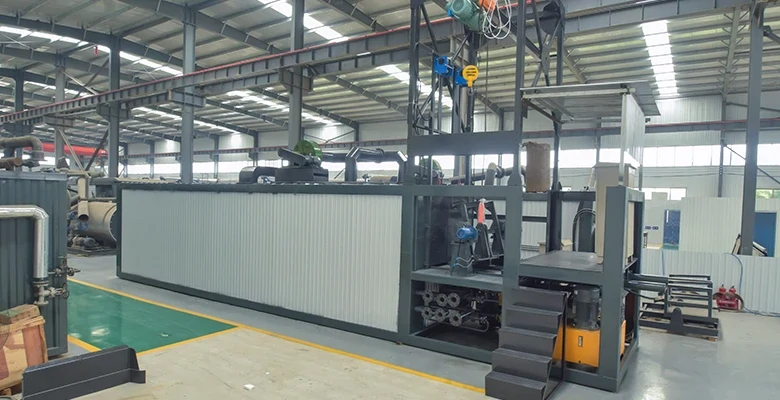
In the construction scenario where only barrelled and bagged solid asphalt can be used, asphalt debarrelling equipment is the core upstream feeding equipment of asphalt mixing station. The two equipment are linked together to complete the whole process production from solid asphalt to finished hot mix asphalt mixture, which is the core production combination of bulk asphalt transportation restricted construction site.
The whole production process is divided into three core stages of melting, dumping and mixing production, which are interlocked and continuous.First, asphalt melting stage, barrel or ton bags of solid asphalt into the barrel removal equipment, heating and melting through a closed cavity, liquid asphalt falls into the bottom of the melting pool, and then through secondary heating, dehydration, filtration treatment, up to pumpable standards.The second stage is the transfer storage stage, in which qualified high temperature liquid asphalt is transported to the matching asphalt storage tank by special asphalt pump through the heat preservation tracing pipe.Finally, mixing production stage, asphalt mixing station extracts constant temperature liquid asphalt from storage tank, intermittent equipment accurately weighs and puts it into mixing pot to mix with hot aggregate and mineral powder; continuous drum equipment continuously measures asphalt to complete aggregate mixing and produce qualified hot mix asphalt mixture.
The asphalt debarrel equipment mainly focuses on raw material processing and conversion, and its core function is to melt solid packaging asphalt into clean, constant temperature and pumpable liquid asphalt, solving the pain point that solid asphalt cannot be directly used for mixing production.The asphalt storage tank plays a buffering and pressure stabilizing role, continuously receives the liquid asphalt produced by the debarking equipment, maintains a stable storage level, can make up for the supply gap caused by the temporary shutdown of the debarking equipment, and ensures uninterrupted and continuous production of the mixing station.The asphalt mixing station is responsible for the finished product processing. Through accurate metering and mixing technology, liquid asphalt and aggregate auxiliary materials are fused to produce asphalt mixture up to standard.
Capacity matching is the basis. The melting capacity of debarging equipment per hour shall be slightly higher than the asphalt consumption of mixing station, so as to ensure that the liquid level of storage tank is sufficient continuously and avoid production and supply interruption.In terms of pipeline matching, all oil pipelines must be treated with heat preservation and tracing to prevent asphalt from cooling and solidifying and blocking pipelines.In terms of automatic control, the equipment shall realize the linkage of liquid level and temperature signal, automatically suspend pumping at high liquid level of storage tank and automatically replenish materials at low liquid level, so as to realize unattended coordinated operation.The site layout shall shorten the pipeline distance between the barrel removal equipment and the asphalt storage tank as much as possible to minimize the heat loss during transportation.
Asphalt debarrelling equipment is the core pretreatment equipment suitable for barrel and ton bag solid asphalt, effectively filling the process blank of solid packaging asphalt conversion into liquid asphalt required for construction, widely used in field and remote engineering projects.The equipment completely replaces the traditional backward operation mode of open fire baking and manual dumping, realizes safe, automatic and low-loss asphalt melting operation, and greatly improves construction efficiency and operation safety.Equipment selection should not only compare the purchase price, but also comprehensively judge the asphalt packaging type, construction capacity, site energy conditions, transition requirements and environmental protection standards, clarify the functional differences between them and asphalt storage tanks, and improve the configuration of the whole asphalt feeding system.At the same time, after the equipment is put into use, the daily operation and maintenance and process optimization can be standardized, which can fully release the equipment performance, reduce energy consumption and material loss, stably guarantee the construction quality of asphalt mixture, and provide continuous and reliable liquid asphalt raw material supply for road construction and waterproof engineering.