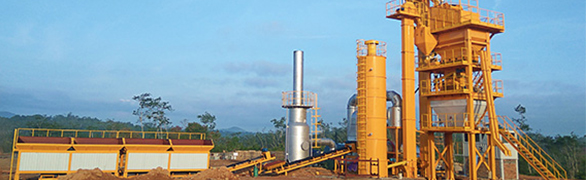
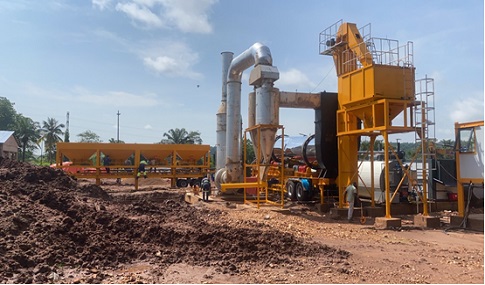
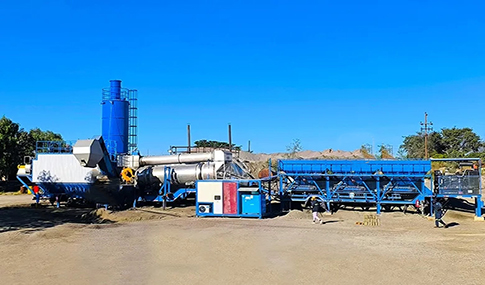
40‑60TPH drum asphalt mixing station is widely used in small and medium-sized road projects such as rural road reconstruction, municipal maintenance, secondary road reconstruction and expansion. As a continuous production equipment, it is different from intermittent mixing station, which can complete aggregate drying, heating, asphalt and mineral powder mixing operation in a single drum, continuously produce hot mix asphalt mixture, and has the advantages of stable production capacity, high cost performance and flexible movement to meet the construction needs of small and medium-sized projects. Many purchasers often confuse the differences between 40TPH, 50TPH and 60TPH models, which are easily misled by nominal production capacity, ignoring the impact of aggregate moisture content and field conditions on actual production capacity. This article comprehensively disassembles the principle, configuration, parameters, advantages and disadvantages, cost and selection skills of the equipment to help practitioners accurately select and purchase scientifically.
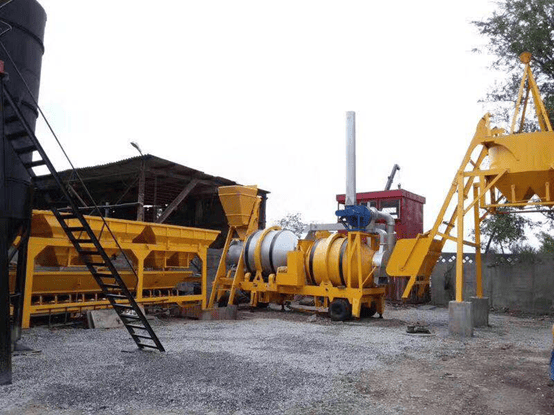
40‑60TPH drum mixing plant belongs tocontinuous asphalt mixing equipment, the whole production process all production lines run uninterrupted, there is no batch waiting unloading link of intermittent station. The benchmark condition of nominal capacity of equipment is generally set as the standard working condition of aggregate moisture content of 3%‑5%. Once the moisture content of sand and gravel on site is high, the actual output of equipment will obviously decrease, which is also the main reason why many project sites cannot reach the nameplate capacity.
The whole production process starts from the loading of cold aggregate, gravel and sand with different particle sizes are sent to the cold bin respectively, and each bin is equipped with an independent variable frequency speed feeding mechanism. According to the grading design of asphalt mixture, the discharge flow of each aggregate is accurately controlled. The materials are collected into the aggregate belt and conveyed to the weighing belt mechanism. The instantaneous aggregate flow is collected in real time by the weighing sensor, and the data is transmitted to the PLC control system synchronously, so as to link the feeding speed of the subsequent asphalt pump and mineral powder conveying system to ensure the stable proportioning. Some models are also equipped with single-layer vibrating screens to screen out oversized impurities in advance to avoid failures caused by large stones entering the drum.
The metered aggregate is fed into the upper end of the obliquely arranged drying and mixing drum by an oblique feeding belt. The working speed of the drum is maintained at 10‑12 rpm, the drum body has a reasonable inclination slope, and the material moves slowly to the discharge end by its own weight and the lifting and throwing of the plate in the drum. The plate in the cylinder repeatedly raises the aggregate to form a uniform curtain, maximizing the contact area between the aggregate and the high temperature flue gas, and realizing efficient heat exchange. Burner is arranged at the feed end of the drum, pressure injection fuel burner is adopted, diesel oil, heavy oil and other fuels can be burned, and high temperature flue gas is generated to dry and heat the aggregate. The mainstream 40‑60TPH models on the market are mostly of downstream structure, with the aggregate movement direction consistent with the hot flue gas flow direction; a few upgraded models adopt counter-current design, with the aggregate and flue gas moving in reverse direction, with higher heat utilization efficiency and lower dust emission, but the equipment cost will increase.
The aggregate is dehydrated and heated in the drying zone at the front of the drum, the moisture content is reduced to less than 0.5%, and the aggregate is heated to 150‑180℃ construction temperature. The materials are moved to the mixing area in the middle and rear section of the drum, away from the open flame. The hot asphalt in the insulation tank passes through the heat preservation tracing pipe and is accurately sprayed into the drum by the variable frequency gear pump. The mineral powder (filler) is added in proportion simultaneously. Relying on the continuous rotation of the drum and the stirring of the internal copying plate, the asphalt, mineral powder and hot aggregate are fully coated and mixed to form a uniform hot mix asphalt mixture. The roller cleverly separates the drying area from the mixing area to avoid aging and burning of asphalt in direct contact with high temperature flame.
Dust-containing tail gas generated in the production process is treated by multi-stage dust removal system, and first enters multi-cyclone dust collector to complete coarse particle dust recovery. According to the environmental protection requirements of the project, bag dust removal or wet washing device can be added for deep purification. The collected dust can be re-mixed with the mixture or discharged centrally. The induced draft fan maintains the negative pressure inside the drum to ensure sufficient combustion and prevent dust from spilling out.
The mixed finished hot asphalt mixture is discharged from the low outlet of the drum, conveyed by the discharge belt, and falls into the discharge hopper with hydraulic clamshell gate, and is directly loaded into the transport truck continuously; if the site paving is temporarily suspended, the finished material can also be conveyed to the hot storage bin for short-term insulation storage. The whole control system monitors the discharge temperature, the flow rate of each material and the operation status of the equipment in real time. As long as the raw materials are continuously supplied, the equipment can continuously produce asphalt mixture, and there will be no gap period when the intermittent station has to wait for unloading and re-metering every batch.
A complete set of 40‑60TPH drum mixing station consists of cold aggregate supply system, weighing and conveying system, drying and mixing drum assembly, asphalt supply system, mineral powder filling system, dust removal and environmental protection system, finished product unloading system, PLC electrical control system and supporting auxiliary system. The configuration of each module directly determines the stability of equipment, finished product quality and later maintenance cost.
The cold aggregate supply system is generally equipped with 4 cold bins with a total storage capacity of 20‑31 tons, which are used to store crushed stone aggregates of different specifications. The bottom of each bin is equipped with independent variable frequency drive feeding gate to realize independent adjustment of each aggregate flow; the bin is equipped with anti-blocking vibration motor and no material alarm device to avoid material arching and blocking. All aggregates are collected into the aggregate belt and conveyed to the inclined feed belt. Many users tend to ignore the accuracy of the cold bin feeding mechanism, the roller mixing station does not have secondary screening and weighing of hot materials, and the grading accuracy of the mixture depends entirely on the stability of the cold material feeding, which is also the key point for equipment quality control.
The weighing and conveying unit is equipped with a continuous electronic weighing system, which relies on weighing sensors to monitor the instantaneous conveying amount of aggregates in real time, and the data is sent to the PLC controller in real time, so as to link the output flow of asphalt pump and mineral powder spiral, and realize automatic matching. Some models are equipped with single-layer vibrating screen to intercept large particles of stone exceeding specifications and protect subsequent drum equipment.
Drying mixing drum (hot drum) is the heart of the whole set of equipment, the cylinder is an inclined steel cylinder, the main specification diameter is about 1.2 meters, the length is 6‑6.3 meters, the aspect ratio is maintained in the range of 4‑6, and it is driven by chain sprocket. The cylinder body is internally designed with a special copying plate. The front copying plate focuses on raising aggregates to realize drying and heat exchange, and the rear copying plate focuses on mixing materials and coating asphalt. The outside of the cylinder is insulated with rock wool to reduce heat loss. One end of the drum is equipped with a high-pressure jet fuel burner. The output capacity of the burner directly determines the drying ability. When the aggregate moisture content is high, a larger power burner is needed to ensure the production capacity. Multi-cyclone primary dust collectors are generally integrated or placed next to the drum.
The asphalt storage and supply system includes asphalt storage tanks with thermal insulation heating, which are normally equipped with 15 tons of storage tanks. The storage tanks are equipped with heat transfer oil tracing system to ensure that asphalt maintains flowing temperature. It is equipped with heat transfer oil insulation gear asphalt pump and full section insulation pipeline to prevent asphalt pipeline from cooling and solidifying. Asphalt pump adopts frequency conversion speed regulation, receives PLC signal, automatically adjusts asphalt injection quantity according to aggregate flow rate, and ensures stable asphalt aggregate ratio.
Mineral powder filler system is optional but very common in engineering, composed of mineral powder bin, screw conveyor or pneumatic conveyor mechanism, mineral powder is also measured by PLC linkage, transported to the roller mixing area to participate in mixture production.
Dust removal environmental protection system, basic configuration is multi-cyclone dust collector, remove large particle dust; if the project environmental protection control is strict, need to add bag dust collector or wet scrubber as secondary dust removal. The induced draft fan provides negative pressure for the whole set of equipment, and the collected dust is discharged through the screw mechanism, which can be mixed with mixture or discarded.
The finished product unloading system includes heat-resistant discharge belt and discharge hopper (GOB hopper). The discharge hopper is equipped with hydraulic clamshell gate, which can continuously load trucks and reduce spilling materials. The user can select the finished product hot storage bin as required to realize short-term storage of finished mixture.
The control system adopts PLC computer control cabinet to realize interlocking control of the whole set of equipment: aggregate weighing signal linkage asphalt, mineral powder output, burner automatic temperature control, with temperature, flow, fault alarm, production data recording functions. In addition to the above main modules, the whole set of equipment also includes burner fuel tank, heat transfer oil heating system, switchboard, mobile model will also increase chassis frame axle and other structures, fixed equipment is supporting equipment base frame.
DM‑45 on the market, such as 40‑60TPH equipment, belongs to a capacity range model, not a fixed single value. The nameplate of the equipment is marked with 40‑60TPH, which means that under standard conditions, the capacity can fluctuate in this range; the actual capacity can reach 40,50 or 60 tons per hour, which will be affected by the moisture content of aggregate, altitude, mixture temperature and recycled material mixing ratio. Many procurement customers tend to regard interval equipment as fixed 60 tons of equipment. In the construction site with high sand moisture content, the actual production capacity will be significantly reduced to 40‑50 tons.
40TPH belongs to the lower limit capacity of 40‑60TPH range, which is suitable for small rural roads and maintenance projects. The drum size is small, the power of burner and induced draft fan is low, the total installed power of the whole machine is about 70‑ 80kW, and the supporting generator set is 82.5‑ 100KVA, covering an area of about 30‑ 35m ×30‑ 35m. Even if the aggregate moisture content is high, it is easier to maintain stable discharge, the equipment is small in size, easy to move and transfer, and the equipment purchase cost is lower.
50TPH is the most common actual working point of 40‑60TPH equipment. Under the standard condition of aggregate moisture content of 3%, most DM‑45 equipment in place is stable at 50 tons per hour. Most of the component specifications are close to the 40-ton version, the burner and fan power are medium, and all configurations are at a balanced level, taking into account the production capacity, fuel consumption and equipment cost. It is the most cost-effective gear for small and medium-sized road projects.
60TPH belongs to the upper output of this range, and some manufacturers classify 60TPH as an entry version of 60‑90TPH equipment. To run 60 tons per hour steadily, larger rollers, higher output burners, and larger induced draft fans are needed. The installed power of the whole machine increased to 80‑100kW, the supporting generator set increased to 110‑125KVA, and the equipment area expanded to 35‑40 meters ×35‑40 meters. At the same time, the control requirements for aggregate moisture content are high. If the sand and gravel are wet, it is difficult to maintain 60 tons of production capacity continuously. It is suitable for medium-sized county and township highway and municipal reconstruction projects, which need to produce a large amount of asphalt mixture every day.
Among the three, the belt, bin and other components will be moderately enlarged, and the dust removal system, asphalt pump and mineral powder system will be matched according to the production ratio. The equipment infrastructure and PLC control logic are basically consistent. From the perspective of project selection, small volume, frequent transfer, large fluctuation of moisture content of raw materials, priority should be given to actual production capacity of 40‑50 tons; project duration is tight, daily mixture demand is large, drying conditions of aggregate raw materials are good, and then 60 tons of upper capacity should be pursued. At the same time, it should be noted that the fuel consumption per ton of mixture is maintained at 5.5‑7kg /ton under standard conditions, but the total fuel consumption will increase with the increase of production capacity.
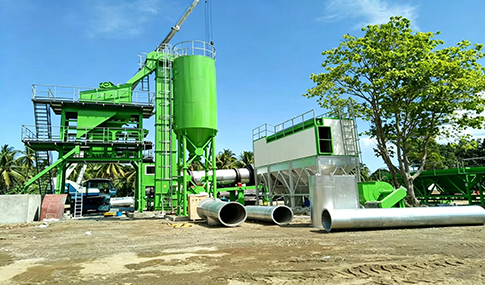
Understanding key technical parameters is an important basis for identifying equipment configuration during procurement. All parameters are based on the standard working condition of aggregate moisture content of 3%, and there will be fluctuations in actual projects.
Overall capacity performance: rated capacity 40‑60 tons per hour, mixture discharge temperature adjustable 140‑180℃, fuel consumption per ton of mixture 5.5‑7kg diesel equivalent.
Cold aggregate system: standard 4 bins, total storage of 20‑31 tons; each bin equipped with variable frequency drive motor, aggregate belt width 500‑600mm; equipped with vibration anti-blocking mechanism; feeding belt width about 500 mm.
Screening and conveying: single-layer vibrating screen, inclined feeding belt length of about 15 meters; continuous weighing sensor with PLC interlocking control asphalt, mineral powder addition.
Drying and stirring drum: drum diameter is about 1.2m, length is 6.0‑6.3m, rotation speed is 10‑ 12rpm, cylinder slope is not more than 9cm/m, cylinder body is 50mm glass wool insulation, cylinder is divided into drying zone and mixing zone copying plate.
Combustion system: high-pressure injection automatic burner, fuel oil support diesel, heavy oil, burner oil supply capacity of 250‑350LPH, supporting high-power blower.
Exhaust dust removal: induced draft fan air volume 10000‑10500CFM, motor power 15‑20HP; primary multi-cyclone dust collector, optional bag dust removal or wet scrubbing secondary dust removal.
Asphalt system: asphalt storage tank 15 tons, thermal oil jacket insulation gear asphalt pump, asphalt pump flow 60‑80LPM.
Mineral powder system (optional): mineral powder bin volume 1‑1.5m³, screw conveyor metering.
Discharge system: heat-resistant discharge belt, discharge hopper capacity 1‑1.5 tons, hydraulically driven clamshell discharge gate.
Electric power: total installed power of the whole machine 70‑80kW, recommended supporting generator set 100KVA; complete PLC automation control system, with production data recording.
Site conditions: The equipment covers an area of about 35 meters ×35 meters; the equipment is divided into two configurations: fixed chassis and mobile trailer chassis.
It is necessary to remind that there will be small differences in the parameters of different manufacturers (Himalaya, Atlas, Apollo, etc.). Purchasing cannot only look at the nameplate capacity. It is necessary to ask the manufacturer for the corresponding performance curve of aggregate moisture content-capacity, confirm the guaranteed output under the actual moisture content condition of the project site, and avoid the situation that the equipment cannot meet the construction demand.
Roller continuous mixing station can be widely used in small and medium-sized road market, which comes from its unique product advantages, but at the same time there are inherent shortcomings, and engineering procurement needs to be treated dialectically.
The first is the high operating efficiency brought about by continuous and uninterrupted production. The whole equipment production line operation, no intermittent mixing station each batch of metering, mixing, unloading waiting period, as long as the raw materials continue to supply, stable output of hot mix asphalt mixture, the same floor area and investment conditions, effective output is higher, suitable for long-term continuous paving operation.
The second is lower initial investment and running costs. Compared with batch mixing plants at the same capacity level, the equipment purchase price can be reduced by 30‑50%. The equipment omits complex parts such as hot material elevator, hot material screening building, hot bin, independent mixing cylinder, etc., greatly reduces the number of parts, and the hardware investment is lower. Drying and mixing are completed in the same drum, heat is fully utilized, fuel consumption per ton of mixture is controlled within a reasonable range, and fuel cost of the project is reduced.
The equipment structure is simple, and the maintenance pressure is small in the later period. The number of moving parts is small, the parts worn by high temperature are less, the failure points are less, and the downtime maintenance time is short. The training threshold for operators is relatively low, and extremely professional technicians are not required. After simple training, they can work on duty, which is very suitable for projects in remote areas.
Compact and mobile. The whole machine covers an area of about 35×35 meters, which is much smaller than that of intermittent mixing plant with the same capacity. There are fixed versions and mobile models with trailer chassis. Modular disassembly, fast disassembly and transfer speed, suitable for multi-point construction of projects and scenes requiring frequent transitions.
The adaptability of recycled asphalt RAP material is excellent. Compared with intermittent equipment of the same level, the roller mixing station can easily add a higher proportion of recycled materials for old pavement. The recycled materials rely on hot aggregate and high temperature flue gas to realize the recycling of old asphalt pavement materials, which is in line with the development direction of green construction.
Relying on PLC continuous weighing control system, it can ensure the mixture ratio stability in the long-term production process. As long as the cold aggregate raw material gradation is stable, it can continuously produce qualified hot mix asphalt mixture.
However, there are obvious limitations in the drum mixing station, which is also a key point that cannot be ignored when selecting. There is no secondary screening and weighing process for hot aggregate in the roller mixing station, and the mixing accuracy is highly dependent on the cold material feeding system and the stability of aggregate raw materials. If the particle size and moisture content of the incoming sand and gravel aggregates fluctuate greatly, the quality of the finished mixture will be easily affected. The equipment is more suitable for producing the same mixture formula for a long time. If it is necessary to frequently switch multiple asphalt mixture formulas, it is difficult to quickly empty the residual materials inside the drum, and more waste will be generated. Under this condition, the batch mixing station will be more suitable. In airport runways, high-standard high-speed pavements and other projects with high requirements for mixture precision and batch traceability, roller mixing stations are often difficult to meet the specification requirements, and intermittent mixing stations are required.
Combined with equipment capacity, cost and mobility characteristics, the daily output of 40‑60TPH drum mixing station is approximately 300‑700 tons, which fluctuates according to daily working hours, which is very suitable for road engineering projects with medium volume and relatively stable formula.
Rural and village-to-village road construction upgrading projects are its most important application scenarios. Rural road projects in counties and townships often have limited budgets and scattered site locations, often requiring equipment to be transferred from one village to the next. The mobile roller mixing station is convenient to disassemble, does not need complex civil engineering foundation, can quickly enter into operation, controls the overall project cost, and adapts to rural road reconstruction and maintenance projects.
Urban municipal road engineering, including urban street reconstruction, road widening, internal roads in residential areas, parking lot paving, municipal daily road maintenance. Many urban municipal projects have medium daily asphalt demand, compact equipment and small occupied space, which is suitable for construction sites with limited space in cities.
National and provincial trunk highway maintenance, overlay, widening project. Most of these projects are long-distance pavement maintenance, the mixture formula is fixed for a long time, and the asphalt mixture needs to be continuously supplied. The continuous discharge of the roller mixing station can match the uninterrupted paving operation and reduce the road closure time.
The equipment can be used on non-high-grade main runway pavement such as supporting roads for small and medium-sized infrastructure, internal roads of industrial parks, roads in campus hospitals, auxiliary roads of airports, access roads of logistics parks, etc.
Construction sites in remote mountainous areas, overseas aid and poor traffic conditions. In areas where transportation conditions are limited, it is difficult to dispatch finished hot asphalt mixture from remote mixing stations. The 40‑60TPH mobile drum mixing station is directly deployed around the construction site to produce mixture locally, which greatly reduces the transportation cost of hot materials. It has been widely used in many remote infrastructure projects in Southeast Asia and Africa.
It is suitable for the project of recycling RAP of old asphalt pavement, which can add old pavement milling materials into the mixture, realize the recycling of waste materials, and save the cost of stone and asphalt raw materials.
However, it is clear again that this equipment is more suitable for long-term conditions where the mixture formulation remains unchanged. If the project requires frequent switching of mixtures of subbase, lower and upper layers within one day, intermittent mixing stations are preferred. At the same time, the actual production capacity is restricted by the moisture content of aggregates. In rainy season, the sand and gravel materials are wet, so the margin for production reduction shall be reserved in advance.
Many project procurement will be entangled, in the end to choose the drum continuous mixing station or intermittent batch mixing station, the two equipment is not absolutely good or bad, only depends on the actual needs of the project.
In the production mode, the drum mixing station continuously dries and mixes, and the material flows out continuously; the batch mixing station is a batch metering-mixing-unloading cycle, and there is a short interval between each batch completion.
Quality control of proportioning: intermittent mixing station has hot aggregate screening and independent weighing of hot materials, which can correct errors caused by cold materials, high measurement accuracy of single batch, high upper limit of mixture quality, and can keep production records of each batch for convenient quality traceability; roller mixing station relies on continuous measurement of cold materials, without secondary screening of hot materials, and the quality of finished products depends highly on the stability of raw materials. It is suitable for conventional roads. There are shortcomings in high-grade and high-standard projects.
Formula switching flexibility: intermittent mixing station can switch different mixture formula at any time, switching waste less; drum mixing station frequent formula change will produce waste, suitable for a single formula long-term production.
Procurement and operation and maintenance costs: The procurement, civil construction and operation and maintenance costs of the drum mixing station are lower; the equipment cost of the intermittent mixing station is high, the components are complex, and the maintenance workload is large.
Site and mobile: roller mixing station occupies a small area, mobile model disassembly and transition fast; intermittent mixing tower tall, occupies a large area, mobile version disassembly cumbersome, need large lifting equipment.
Reclaimed material adaptation: The original design of the drum mixing station has good compatibility with RAP recycled materials; the batch mixing station can also be used for recycled materials, but additional recycled material systems need to be configured.
Suitable for project differentiation: choose 40‑60TPH drum mixing station, your project should meet: medium-scale road engineering, long-term stability of mixture formula, limited budget, scattered site, frequent transfer, rural, municipal maintenance, national and provincial road surface, remote site local production.
Intermittent mixing station is selected, which is suitable for high-standard high-speed and airport runways. A variety of mixture formulas are required in one day, and the batch traceability and mixture accuracy are strictly required.
Many engineering units will be equipped with two types of equipment at the same time, which can be flexibly transferred according to different project types to maximize the utilization rate of equipment.
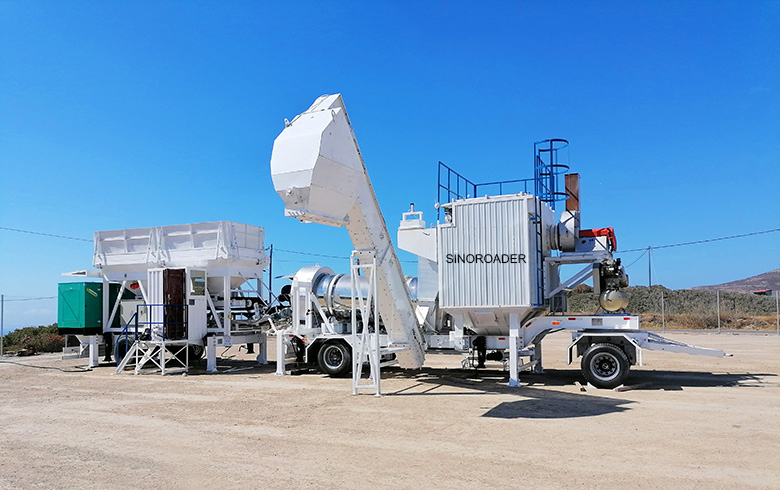
The market price of 40‑60TPH drum asphalt mixing station is greatly affected by whether the equipment is fixed or mobile, automation level, environmental protection configuration, brand and whether it contains optional accessories. The mainstream supply in the market comes from overseas manufacturers such as India, and there are continuous equipment of the same level available in China.
Fixed 40‑60TPH drum mixing station, basic semi-automatic version price is lower; standard automatic PLC version is the main market shipment; high-equipped models equipped with bag dust removal, increase asphalt storage tank, supporting mineral powder system, the price will rise further. Mobile version because of the addition of trailer chassis, axle, mobile adaptation structure, the overall procurement cost is significantly higher than the fixed type.
Equipment quotation is generally factory ex-factory price, most excluding taxes, sea freight, site installation and commissioning, civil engineering foundation, generator sets, spare parts package. Many procurements tend to ignore subsequent hidden costs: equipment transportation, field installation, site hardening foundation, supporting generator sets, wearing parts and spare parts, personnel training, customs clearance for export projects, all of which must be included in the total budget.
The core factors affecting the price: the first is fixed or mobile, mobile chassis brings a large cost increment; the second is automatic configuration, simple relay control cabinet price is low, complete PLC SCADA computer control system price is higher; the third environmental configuration, only the primary cyclone dust removal price is low, increase bag dust removal, wet scrubber, the cost will obviously rise; The fourth is brand difference, the first-line brand cylinder steel plate, burner, sensor quality is better, after-sales spare parts response is strong, the price is higher than ordinary small factory equipment; the fifth type of optional parts, mineral powder system, larger asphalt storage tank, hot storage bin, dual fuel burner, each increase will raise the price of the whole machine.
The price of second-hand refurbished equipment will be greatly reduced, but the risk of later failure is higher when evaluating barrel wear, burner and sensor aging problems. It is recommended to obtain detailed quotations from at least 3 manufacturers, compare the configuration lists item by item, do not simply compare prices, confirm clearly which parts are included in the quotation and which are additional optional items, and confirm the warranty terms and spare parts supply capabilities.
Purchase a set of 40‑60TPH drum mixing station. Do not just focus on the nameplate 40‑60TPH number. Combine the project working conditions, site, budget and long-term operation and maintenance comprehensive judgment, and sort out the requirements item by item according to the following steps.
The first step is to sort out the core requirements of the project. Calculate the daily asphalt mixture demand of the project, reserve a margin of 10‑20% on the basis of theoretical production capacity, and fully consider the moisture content of local sandstone aggregate. In rainy season, the moisture content of aggregate is high, and the actual production capacity will decrease. Sort out whether the mixture formula of the project changes frequently. If multiple ratios are frequently switched, carefully select the roller mixing station. Clarify the project type, whether it is rural road, municipal maintenance or national and provincial road overlay; whether it is necessary to mix recycled RAP materials, confirm the required mixing ratio of recycled materials; whether the construction site is a long-term fixed location or multiple construction sites are moved back and forth.
The second step is to determine the type of equipment: fixed or mobile. Fixed procurement costs are lower, suitable for long-term fixed construction sites, and it is convenient to install hot storage bins and advanced dust removal equipment in the later stage; mobile initial investment is higher, but the disassembly and transfer speed is fast, suitable for multi-point scattered projects and remote construction sites. When purchasing mobile models, focus on checking the quality of chassis axles and the time spent on assembly and disassembly of the whole machine.
The third step is to focus on reviewing the configuration of core components. The cold material system confirms 4 bins, each bin is independent of frequency conversion speed regulation feeding, equipped with vibration anti-blocking, no material alarm. Check the drum size and plate structure of the drying drum, and give priority to confirming the aggregate moisture content-capacity performance curve provided by the manufacturer; confirm whether the downstream or counter-current structure has high thermal efficiency, better emission but higher price. Combustor confirmation fuel supply capacity, confirm the type of fuel support, priority can be diesel, heavy oil compatible models. The weighing system must confirm that the continuous weighing sensor is interlocked with PLC completely, and the asphalt pump and mineral powder system are automatically adjusted according to the aggregate flow rate. Dust removal system: at least standard multi-cyclone primary dust removal; strict urban environmental control projects, must be added bag dust removal or wet washing device. Bitumen system confirm tank volume, heat transfer oil tracing insulation complete set configuration. Check the installed power of the whole machine and confirm the specifications of the supporting generator set.
The fourth step is to evaluate the strength of the manufacturer and after-sales guarantee. Priority shall be given to manufacturers with a large number of similar project landing cases, and on-the-spot inspection of equipment of the same model in operation shall be conducted as far as possible. Focus on confirming equipment steel thickness, wear parts quality; confirm warranty period, local or project area spare parts supply capacity, fault response time, whether to provide installation debugging and operator training. Verify that the equipment meets local road construction codes and environmental emission regulations.
The fifth step is to calculate the full life cycle cost, not only to see the ex-factory price of the equipment. Transportation, installation, civil engineering, generator set, environmental protection selection and initial spare parts are all included in the total investment. At the same time, evaluate the later operation: fuel consumption level, wear parts replacement cycle, spare parts procurement difficulty, and the second-hand residual value of famous brands is also higher. When comparing prices among multiple manufacturers, it is necessary to unify the configuration list and then compare the prices.
Step 6: Evaluate the objective conditions of the site. Confirm the size of the construction site, and the equipment needs to be about 35× 35m to level the site; confirm the power supply conditions, and if there is no external power grid, complete the generator set; wet dust removal equipment also needs on-site water supply; evaluate the moisture content of local aggregates, and select the model with larger burner allowance in humid areas. At the same time, confirm safety configuration, emergency stop switch, equipment protection, burner flame monitoring, etc.
When inquiring with suppliers, key questions must be raised: how many tons per hour can the equipment guarantee under the condition of aggregate moisture content of 4‑5%; environmental protection configuration options and emission indicators; standard configuration list and optional accessories list; equipment production delivery cycle, payment terms; supply of core wearing parts (copy plate, burner accessories, belt, load cell); provide customer cases of projects under the same conditions.
If the project budget is tight and the construction site is fixed, the standard fixed model shall be preferred; the project shall be transferred at multiple points, and the remote construction site shall be preferred to the mobile version; the urban environmental protection control shall be strict, and the secondary dust removal shall be added; the moisture content of raw material aggregate shall be high, and the equipment with sufficient margin of burner power shall be selected; the long-term stable operation shall be valued, and the mature brand with perfect after-sales service shall be preferred instead of the lowest quotation. The actual performance of equipment is often more important than paper parameters.
40‑60TPH drum asphalt mixing station is the core production equipment of small and medium-sized road engineering. With the advantages of continuous operation, cost friendly, convenient movement and simple operation and maintenance, it is widely suitable for various conventional pavement construction projects such as rural roads, municipal maintenance and national and provincial road reconstruction. The equipment has clear application boundary, which is more suitable for medium and long-term continuous paving operation with stable mixture formula, and is not suitable for frequent replacement of mixture ratio and high-standard high-end pavement engineering. This kind of scenario is more suitable for intermittent mixing station. The actual capacity of the equipment is greatly affected by the aggregate moisture content and site conditions. Do not simply refer to the nameplate nominal capacity selection. Procurement and selection shall not only pay attention to low price, but comprehensively consider equipment configuration, environmental protection standard, transition demand, after-sales supporting facilities and operation cost of the whole life cycle, and verify the actual performance of equipment in combination with actual working conditions of the project, so as to select mixing equipment with strong adaptability, stable operation and optimal cost performance ratio.