
Asphalt drum mixing plant, also known as continuous asphalt mixing plant, is the core equipment for producing hot mix asphalt mixture, widely used in highway, municipal roads, parking lots, bridge deck pavement and various maintenance projects. The core difference between it and intermittent station is integrated continuous production, stone drying and asphalt mixing are completed synchronously in the same drum, material loading to finished product discharge is uninterrupted, and batch operation is not required, which is very suitable for large-scale long-term pavement construction projects.
The equipment can process raw sand and mineral powder, and is compatible with RAP recycled material blending, which meets the requirements of low-carbon cycle construction. The product line covers fixed, mobile and towed models, which can not only meet the requirements of long-term high-speed and large-capacity construction, but also adapt to sporadic repair in towns and temporary pavement in mountainous areas, balancing production capacity, transfer capacity and construction cost. Therefore, the application popularization rate in domestic construction units and asphalt processing plants continues to rise in recent years.
The core logic of asphalt drum mixing station is "continuous feeding, synchronous drying and mixing, continuous discharge", the whole process relies on automatic PLC control system linkage operation, without manual frequent intervention, the complete production process can be divided into seven core links, each ring cooperate with each other to ensure the mixture temperature, proportion, uniformity stability standards.
The front end of the whole equipment is equipped with 4 - 6 groups of independent cold bins, which store coarse and fine aggregates of different particle sizes, river sand and machine sand respectively. The bottom of each bin is equipped with variable frequency speed belt feeder. The operator sets the conveying flow of various aggregates in the central control system according to the mixture ratio parameters designed by the project, and the equipment automatically and continuously conveys aggregates according to the proportion. The aggregate conveyor belt is equipped with an online moisture sensor to detect the moisture content of sand in real time. The data is transmitted to the burner control system synchronously to automatically adjust the flame output power to avoid problems such as insufficient drying of wet materials and temperature fluctuation of mixture. A variety of aggregates are collected to the main conveyor belt and uniformly conveyed to the feeding end of the inclined roller, and the whole process is uninterrupted and uniform.
After the aggregate enters the inclined large-scale rotating drum, the drum rotates continuously at low speed. Special lifting blades are installed on the inner wall of the drum to continuously lift and throw the stone to form a uniform material curtain, maximizing contact and heat exchange with high temperature and hot air. The feeding end of the drum is equipped with a high-power fuel oil/natural gas burner, which generates high temperature hot air of 1000-1500℃, quickly evaporates the moisture inside the aggregate, and heats the stone to the standard production temperature of 150-180℃.
According to the flow direction of hot air and materials, it is divided into two processes: downstream roller flame and stone forward, simple structure and lower cost; counter-current roller hot air and stone reverse hedge, higher heat exchange efficiency, lower fuel consumption, but also the current new environment-friendly roller mixing station mainstream configuration.
The interior of the drum is divided into drying area and mixing area. After drying and heating, the stone moves to the mixing area at the middle section and discharge end of the drum. Liquid asphalt is continuously injected into the drum through special insulation conveying pipeline and high-precision metering pump, and evenly sprayed on the surface of tumbling high-temperature aggregate. The drum rotates continuously to drive the stones to rub and collide constantly, and the asphalt fully covers each aggregate; if the project needs to mix recycled asphalt and mineral powder filler, a feeding port can be added simultaneously in the mixing area, and the recycled asphalt and mineral powder enter the drum synchronously to fuse with hot aggregate and asphalt, and the whole process is continuously mixed, and there is no mixing waiting time of intermittent equipment.
The standard hot mix asphalt mixture after mixing is continuously discharged from the tail end along the inclined slope of the drum and conveyed to the thermal insulation finished product storage bin through the finished product conveying belt. The storage bin is designed with multi-layer thermal insulation, which can stably maintain the paving temperature of 140-160℃ of mixture, buffer the productivity difference between continuous production and intermittent loading of trucks, and avoid the imbalance of proportioning and temperature caused by frequent start and stop of equipment. The simple equipment without storage bin can directly unload the mixture into the transport truck and send it directly to the construction site for paving.
Dust and flue gas generated in drying and mixing process will be continuously extracted from the drum by induced draft fan. Large particle powder will be intercepted by cyclone primary dust removal device, fine dust will enter bag dust removal box for deep filtration, and the filtered collected powder can be transported back to the drum to participate in mixing, so as to realize the recycling of raw materials; The purified standard tail gas is discharged through the exhaust stack, meeting the emission standards of environmental protection waste gas and dust everywhere. The model equipped with wet scrubbing and dust removal equipment is more suitable for use in urban Urban area factories with strict environmental protection control.
The entire equipment is equipped with a PLC programmable automatic control system. The central control console can view all core parameters such as cold material conveying speed, drum speed, burner temperature, asphalt injection flow, dust removal pressure differential, and finished material temperature in real time. It supports storing multiple sets in advance. Construction mix formula, switch production parameters with one button. The system comes with data recording function, which completely retains hourly output, material consumption and temperature data, which is convenient for later quality acceptance and cost accounting. Automatic alarm will be given when abnormal temperature, material interruption, dust removal and blocking occur, reducing the difficulty of manual inspection.
The bottom of the thermal insulation storage bin is equipped with a discharge gate, which can be automatically unloaded and loaded according to the arrival rhythm of trucks. Under the continuous production mode, there will be no equipment shutdown waiting for vehicles, so as to ensure the uninterrupted progress of pavement paving process and greatly improve the overall construction efficiency.
The classification standard for drum mixing station in the industry is clear, which is mainly divided according to the four dimensions of equipment movement form, drum airflow process, production capacity and special function. The engineering scenarios, budgets and construction requirements adapted to different types are obviously different, and can be accurately matched in combination with project attributes when purchasing.
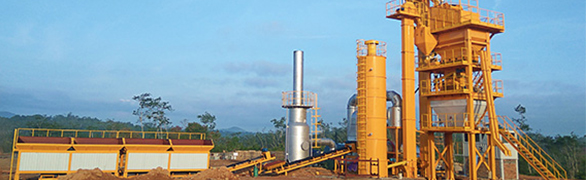
Fixed asphalt drum mixing stationbelongs to permanent floor-standing complete equipment, the overall steel structure base is fixed, the overall transfer is not supported, the single unit capacity covers 120-400 tons/hour, and it is suitable for the periphery of sand and gravel yard, long-term infrastructure projects and large-scale asphalt processing plants. The equipment has high degree of automation, complete supporting dust removal, large-capacity finished product warehouse and recycled material system. The comprehensive cost of single-ton asphalt production is lower and the stability is strong. It is suitable for large-scale asphalt production for several years. However, the investment cost of early site infrastructure and equipment is high, so it is impossible to transfer in a short distance.
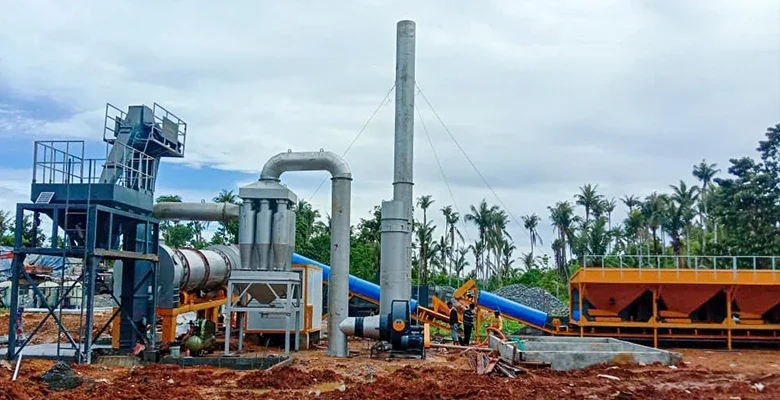
Portable roller mixing stationmodular skid-mounted structure, all core assemblies independent skid-body assembly, disassembly can be transported to different areas of the site through flat trucks, disassembly and commissioning cycle is short, production capacity of 60-120 tons/hour, is a common model of medium-sized road and bridge construction enterprises, taking into account production capacity and transfer requirements, suitable for multiple highway projects in the same area rotation construction.
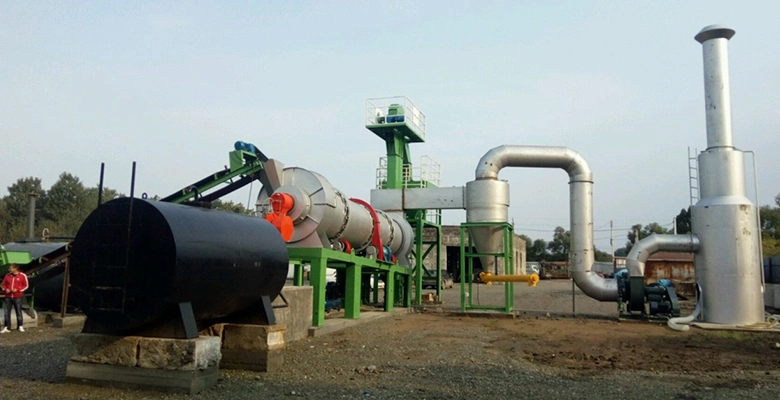
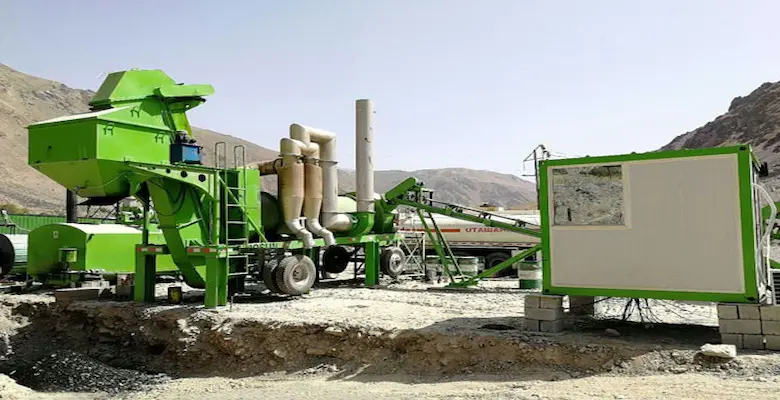
All mobile drum mixing stationmachines are integrated on heavy trailer chassis, with walking chassis, trailer traction can quickly transfer the site, 20-60 tons/hour small mini models, no need for complex site hardening, simple fixation can be put into operation upon arrival at the construction site, suitable for mountain road maintenance, community reconstruction, emergency road repair and other small scattered projects. Short board is limited in production capacity and is not suitable for continuous supply of 100 km large-scale high-speed projects.
Traditional classic model of downstream roller mixing station, burner hot air and aggregate travel direction are consistent, equipment structure is simple, purchase price is low, operation threshold is low, mostly used for budget limited, basic rural road construction. However, the heat exchange efficiency is low, the fuel consumption is higher, the asphalt stays longer in the high temperature area, the asphalt aging is easy to occur due to improper control, the mixture performance is reduced, and the upper limit of the recycled material blending ratio is low.
Counterflow drum mixing station hot air flow and stone travel direction opposite, stone moves to the direction of the burner, low temperature exhaust gas discharged from the feed end, heat utilization rate greatly improved, compared with the downstream model can save 10%-20% fuel consumption; Asphalt is added in the low temperature mixing area, the risk of high temperature aging is greatly reduced, 30%-50% high proportion recycled RAP material can be stably mixed, dust emission is less, it is suitable for high standard municipal and high speed projects, and it is also the preferred model for environmental protection transformation and equipment renewal.
Mini roller station: 20-60 tons/hour, road maintenance, sporadic repair, rural roads dedicated;
Medium standard roller station: 60-120 tons/hour, municipal roads, county roads, small and medium-sized bridge pavement;
Large-scale high-capacity roller station: 120-400 tons/hour, national high-speed, airport runway, large-scale industrial park supporting projects.
Special roller station for high mixing recycled materials: supporting independent RAP crushing, conveying and preheating system, counter-current roller structure, maximizing the recovery of waste asphalt pavement, reducing the purchase cost of primary stone and asphalt, and conforming to the double-carbon environmental protection policy;
Special roller station for warm asphalt mixing: add automatic filling system of warm asphalt mixing agent, which can reduce production temperature by 30-50℃, further reduce fuel consumption and exhaust emission;
Environmental protection and low emission roller station: upgrade bag dust removal, closed bin and sound insulation structure, adapt to strict environmental protection control construction areas such as Main City and surrounding scenic spots;
Intermittent/continuous dual-purpose roller station: high-end models can freely switch between continuous roller production and intermittent batch production, taking into account the needs of mass production and multi-formula precision production.
The complete set of drum mixing station consists of seven core assemblies + multiple sets of auxiliary equipment. Each component performs its own duties. Any component failure will directly affect the mixture quality and equipment capacity. The following assembly functions and structural characteristics are disassembled one by one.
It contains 4-6 component cooling bin, frequency conversion feeding belt, aggregate collection conveyor and moisture detection sensor. The core function is to accurately control the proportion of various coarse and fine aggregates, realize dynamic continuous metering through frequency conversion speed regulation, replace the weighing process of intermittent station hot bin, and simplify the equipment structure. The bin is equipped with anti-blocking vibration device to avoid wet sand frame arch breaking and ensure uniform and stable feeding.
The most important part of the machine, inclined steel drum, multi-layer wear-resistant lifting blades welded inside, divided into drying area, mixing area two functional sections. Both ends of the drum are equipped with sealing and dustproof structure to reduce heat loss and dust leakage; the internal air duct and asphalt filler position of downstream and counter-current models are designed differently. Roller supporting wheel, stop wheel support rotation, wear resistant lining plate, blades belong to wearing parts, need regular maintenance and replacement, blade wear will directly reduce the stone heat exchange, mixing uniformity.
Installed at the feed end of the drum, supports diesel, heavy oil, natural gas fuel, automatic adjustment of fire size, high temperature control accuracy. Modern low nitrogen burner can reduce nitrogen oxide emissions, adapt to local environmental testing standards; burner supporting ignition protection, wind pressure protection, temperature chain protection, flameout, over-temperature automatic shutdown, avoid safety hazards, for aggregate drying to provide stable heat source.
It consists of asphalt storage tank, heat transfer oil heating pipeline, circulating pump, high-precision flow metering valve and roller injection pipeline. The asphalt storage tank is continuously kept at constant temperature to ensure asphalt fluidity. The metering valve accurately controls the asphalt injection amount in real time, and the error can be controlled within ±0.3%, so as to avoid too high or too low asphalt aggregate ratio of the mixture and eliminate the road surface flooding and loose diseases.
It is divided into two stages of dust removal: first-stage cyclone dust collector captures coarse powder, second-stage bag dust collector filters fine dust, and some models are equipped with wet dust removal device. The collected stone powder is sent back to the drum mixing area for secondary utilization through the screw conveyor, reducing raw material waste and controlling dust pollution on the construction site. It is an essential part for the equipment to pass the environmental protection acceptance. The bag filter bag needs to be cleaned and replaced regularly. Blockage will cause abnormal negative pressure inside the drum and reduce production capacity.
The discharge belt receives the finished mixture of the roller and conveys it to the vertical insulation storage bin. The bin is filled with insulation rock wool. It is equipped with discharge gate and anti-segregation diversion device to alleviate the contradiction between continuous production and truck transportation rhythm, and prevent the mixture from being stored for a long time. The temperature drops rapidly and the coarse and fine aggregates separate. Small mobile equipment can omit storage bin, direct unloading loading.
Centralized control console, integrated temperature, flow, speed, pressure full parameter monitoring, support formula storage, automatic production, fault alarm, data storage export. The whole process of automatic operation requires only 1-2 operators to be on duty, greatly reducing labor costs, stabilizing production quality and reducing matching deviation caused by human operation errors.
RAP charging system for recycled materials, ore powder storage and conveying bin, equipment weighing and calibration system, induced draft fan, exhaust chimney, maintenance platform, etc., which are optionally installed according to project requirements.
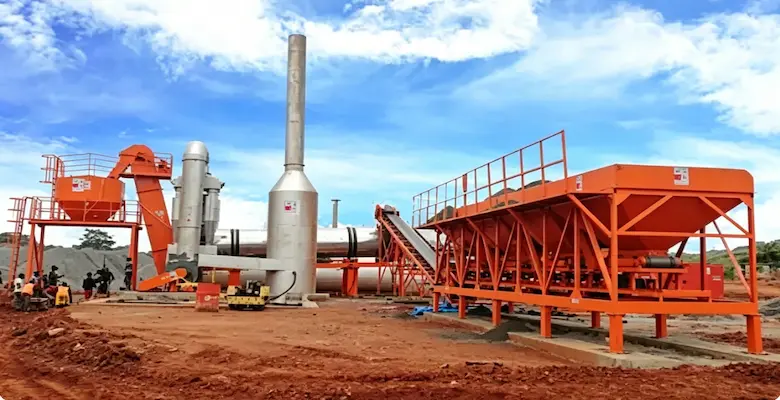
In the selection of asphalt construction equipment, the core performance, process characteristics and application scenarios of drum continuous and batch mixing stations are quite different, which directly affects the construction quality, schedule and cost. The following table comprehensively compares the differences between the two mainstream equipment from the core dimensions of production process, capacity efficiency, equipment cost, construction accuracy, environmental performance and adaptation scenario, so as to facilitate the rapid selection of construction units.
|
Compare Dimensions |
Asphalt drum mixing station (continuous) |
Batch mixing station (batch type) |
|
Core Production Process |
Integrated continuous production, drying, mixing process integrated in a single drum, the whole process of uninterrupted feeding, mixing, discharging, no hot material screening, batch weighing process, production without interval |
Cyclic batch production, stone independent drying after hot screening classification, hot bin storage, accurate weighing of ingredients tray by tray, forced stirring in the mixing pot, single batch after unloading and then start the next round of production |
|
Productivity and construction efficiency |
Continuous discharge without interruption, high production capacity of large models, no material breakage problem in mass construction, stable construction schedule, suitable for long-term continuous operation |
There are batch operation intervals, low continuous mass production efficiency, fixed single batch output, and gaps in supply connection easily occur in large-scale paving. |
|
Equipment and operation and maintenance costs |
Simplified structure, eliminating complex parts such as hot screens and multiple groups of hot bins, lower equipment purchase price, small footprint; fewer moving parts, long replacement cycle of wearing parts, lower labor duty, fuel and operation and maintenance costs |
Complex equipment structure, many parts, high procurement cost; large daily maintenance workload, high labor and consumables costs, and higher comprehensive operation costs for mass production |
|
Mixing accuracy and stability |
Continuous dynamic metering, moderate mixing accuracy, easy to be affected by aggregate moisture content, particle size fluctuations, mixture uniformity has a small deviation, not suitable for extremely harsh quality conditions |
Accurate weighing ingredients tray by tray, controllable gradation, small error of oil-stone ratio, high quality accuracy of mixture, strong stability, higher upper limit of quality control |
|
Formula adaptation flexibility |
Weak flexibility, frequent switching of mixture ratio needs to empty the whole production line, easy to produce waste, only suitable for long-term construction of single formula |
Very flexible, can switch a variety of proportions at any time, adapt to the simultaneous production of multi-specification mixtures, adapt to fine construction requirements |
|
Environmental protection and recycled material adaptation |
Less dust overflow, low dust removal load; mainstream counter-current model can be mixed with RAP recycled materials in a high proportion, good resource utilization effect, low carbon environmental protection advantages outstanding |
Dust emission is relatively higher; it can adapt to the production of recycled materials, but the comprehensive adaptability and upper limit of blending are slightly lower than that of counter-flow drum equipment. |
|
Equipment transition performance |
Modular design mature, small and medium-sized portable, mobile models easy to disassemble, can be quickly transferred, adapt to multi-regional project rotation construction |
The equipment structure is complicated, the disassembly process is complicated, time-consuming, and the flexibility of transition is poor. Most of them are fixed site operations. |
|
Core application scenarios |
Highway long-distance paving, large-area parking lot paving, rural road reconstruction and expansion, road maintenance, limited budget, single formula mass production, multi-site rotation construction, high-proportion recycled material construction projects |
Airport runway, urban core high-standard trunk road, multi-formula diversified construction, strict quality acceptance standards, small-batch fine pavement engineering |
The asphalt drum mixing station has strong comprehensive application advantages. It adopts continuous production mode and no batch operation interval, which can stably supply large-scale engineering projects and effectively guarantee the construction period; the overall structure of the equipment is simplified, the number of parts is less, and the failure rate is low, which greatly reduces the daily maintenance workload and operation and maintenance difficulty. Compared with the intermittent mixing station with the same capacity, the comprehensive operation cost in fuel consumption, parts replacement and manual duty is lower. At the same time, this kind of equipment has a wide range of models, covering fixed, portable, towed mobile and other types, which can be adapted to large, medium and small construction projects and a wide range of scenarios; among them, the mainstream counter-current model has excellent compatibility with recycled asphalt materials, and can be mixed with waste asphalt materials in a high proportion to realize low-carbon construction and cost reduction. Moreover, the dust emission of the equipment is low, and it can easily meet the environmental protection control standards of various regions with supporting dust removal equipment. In addition, the equipment has a high degree of automation, and only one person can complete the operation of the whole set of equipment, and the operation threshold is low, which greatly improves the convenience and efficiency of construction production.
The asphalt drum mixing station also has certain use shortcomings, the flexibility of the overall formula switching of the equipment is poor, frequent replacement of the mixture ratio is easy to cause waste of raw materials, and the continuous metering mode is easy to be affected by the fluctuation of moisture content and particle size of raw materials, slightly reducing the uniformity of the finished mixture; Traditional downstream drum equipment has hidden danger of asphalt aging at high temperature, which can be effectively avoided only by selecting mainstream counter-current model. Meanwhile, the production capacity of small mini mobile model is limited, which cannot meet the continuous large-batch feeding demand of super-large infrastructure project. Compared with intermittent mixing station, the response speed of real-time quality sampling inspection and parameter adjustment is relatively lagging behind, which is more suitable for large-scale construction scenario with fixed formula and unified working condition.
The continuous production mode of drum mixing station determines that the quality control is based on real-time online monitoring and prevention in advance, and cannot be corrected separately for each batch like intermittent station. Therefore, the whole process is divided into three links: pre-production, mid-production and sampling detection to implement quality control, so as to ensure that the hot mix asphalt mixture meets the road construction specifications.
Before formal production, the target mixture ratio of the project design Job Mix Formula must be confirmed, and all raw material tests must be completed: screening of coarse and fine aggregates, crushing value, moisture content and adhesion test; PG grade and viscosity test of asphalt binder; asphalt content and aging degree test of recycled asphalt; fineness of mineral powder and hydrophilic coefficient test. At the same time, complete the calibration of all equipment such as cold material feeder, asphalt metering pump and temperature sensor, eliminate metering error and avoid the imbalance problem of proportioning from the source.
Aggregate proportioning control: the central control real-time observation of each cold material delivery flow, every 500-1000 tons of mixture sampling screening, verification of synthetic grading within the allowable deviation range, deviation occurs timely adjust the corresponding bin feeding speed;
Oil stone ratio control: relying on high-precision asphalt flowmeter to control injection quantity stably, regularly sampling combustion method to detect actual asphalt content, error control within ±0.5%;
Temperature control: the standard temperature of the roller discharge mixture is 140-160℃, and the temperature of the stone in the drying section is controlled at 150-180℃. If the temperature is too high, asphalt aging and pavement cracking will occur; if the temperature is too low, asphalt coating will be incomplete and pavement will be loose; the burner fire will be adjusted in real time according to the moisture content of the aggregate;
Mixing control of recycled materials: add RAP materials strictly according to the design proportion, synchronously reduce the injection amount of primary asphalt, and detect the stability and void ratio of recycled mixture every shift;
Dust control: bag dust removal system to recover powder stable back mixing, to avoid excessive or missing powder change mixture gradation;
Appearance inspection: observe the color of discharged mixture in real time, no white material, no asphalt caking, no coarse and fine aggregate separation phenomenon, and immediately stop the machine to check the failure of drum blade and asphalt spray nozzle in case of abnormality.
Sample at fixed frequency according to tonnage and shift to detect volume indexes such as mixture gradation, asphalt content, void ratio, mineral aggregate void ratio, saturation degree, etc. After pavement compaction, nuclear densitometer and core drilling sampling are used to detect compaction degree to judge whether the overall performance of mixture meets the standard. Simultaneously and completely record production accounts and test data, and retain acceptance data.
Mixture coarse aggregate segregation: optimize storage bin anti-segregation device, truck multi-point unloading, adjust drum speed and blade state, standardize sand and gravel stacking management;
Incomplete asphalt coating, white material: aggregate drying is not thorough, improve burner power, overhaul moisture sensor, clean blocked asphalt injection pipeline;
Temperature fluctuation of mixture: moisture content of cold material fluctuates greatly, rainproof shed is added, temperature sensor is calibrated daily, and feeding speed is stabilized;
Water damage on the road surface and aggregate peeling: Add anti-peeling additives, regularly test the adhesion between aggregate and asphalt, and optimize the ratio of mineral powder in the mixture.
The roller mixing station operates continuously and heavily for a long time, and is prone to problems such as temperature fluctuations, dust removal failures, abnormal burners, and unbalanced ratios. Knowing the causes and treatment plans of failures in advance can greatly reduce downtime and lost time.
Causes: large fluctuation of sand moisture content, failure of moisture sensor, blockage of burner nozzle, rapid and slow delivery speed of cold material, abnormal rotation speed caused by wear of roller supporting wheel; solutions: daily calibration of moisture detection equipment, construction of rainproof storage shed for sand and stone, regular disassembly and cleaning of burner nozzle, uniform feeding of each bin, maintenance and replacement of worn supporting wheel and transmission belt.
Cause: insufficient drying temperature of stone, blocking of asphalt injection port, wear and tear of lifting blades in drum, low temperature of asphalt storage tank leading to poor fluidity; solution measures: increase burner output power, dredge asphalt injection pipeline, replace worn drum blades, stabilize heat transfer oil temperature to ensure asphalt fluidity.
Causes: dust accumulation and blockage of bag filter bags, dust leakage due to filter bag damage, insufficient air volume of induced draft fan, aging and air leakage at both ends of drum; solutions: regular pulse dust cleaning, replacement of all damaged filter bags, maintenance of induced draft fan motor and air duct, replacement of drum sealing insulation cotton.
Causes: fuel impurities block the pipeline, the air ratio of the throttle is unbalanced, carbon deposits on the ignition electrode, and abnormal temperature sensor signals; solutions: regularly filter the fuel, adjust the air intake ratio of the throttle, clean up carbon deposits on the electrode, and verify the temperature control sensing elements.
Cause: cold bin sand frame arch blocking, conveyor belt slip, RAP material bonding blocking feed port, metering system calibration offset; solution: open bin vibration anti-blocking device, tension repair conveyor belt, recycled material crushing drying in advance, calibration of all metering equipment before daily start
Incentives: leakage of asphalt pump seals, asphalt caking on flow metering valves, large fluctuations in storage tank temperature that change asphalt viscosity; solutions: overhaul pump body seals, regularly clean metering valves, and maintain constant temperature and insulation of asphalt storage tanks 24 hours a day.
Establish three-level maintenance system of daily inspection, weekly inspection and monthly inspection: calibrate measurement, check temperature and dust removal system before commencement every day; overhaul roller blades, belts and burners every week; comprehensively inspect transmission system, bags and sealing parts every month; prepare vulnerable spare parts such as blades, filter bags, gaskets and nozzles in the factory; standardize start-up and shutdown procedures for operators, and adjust drying temperature and feeding speed in rainy season and winter.
Through process optimization, equipment transformation, operation and maintenance upgrading and automation upgrading, the production capacity can be increased by 15%-30%, fuel consumption can be reduced by 10%-25%, ineffective downtime can be reduced, and the production cost per ton of asphalt can be greatly reduced.
Sand and gravel are stacked in different areas, covered with canopy, and the moisture content of raw materials is strictly controlled to reduce the fuel consumption of drying from the source; all cold material metering feeders are calibrated every day to ensure the stability of aggregate proportion and avoid repeated adjustment of parameters due to abnormal proportion; automatic moisture linkage temperature control system is installed, and the power of burners is automatically adjusted synchronously with changes in moisture content without manual intervention.
Regularly replace worn lifting blades to ensure the integrity of stone curtain and improve heat exchange efficiency; downstream old equipment can be upgraded to counter-flow drum to reduce fuel consumption from the structural level; optimize drum speed, tilt angle, balance drying effect and mixing uniformity; select low-nitrogen energy-saving burner to accurately control air-fuel ratio and reduce ineffective heat loss.
Make full use of the advantages of highly compatible RAP materials in the drum mixing station, gradually increase the blending ratio of recycled materials within the allowable range of specifications, reduce the procurement cost of primary stone and new asphalt; and provide special RAP preheating feeding devices to avoid adhesion and blocking of recycled materials and stabilize blending capacity.
Old simple control system upgraded to full-process PLC intelligent central control, built-in multiple standard ratio one-button switching, automatic recording of production data; remote monitoring module installed, real-time viewing of equipment operation status in the background, pre-judgment of faults in advance; automatic filling system of warm asphalt additive, reducing production temperature, saving fuel and reducing exhaust emissions.
Strictly implement preventive maintenance plan to avoid sudden failure of equipment for a long time; reserve a full set of vulnerable parts to shorten the maintenance time; balance equipment capacity with the construction rhythm of transportation fleet and paving team to avoid idle standby or truck congestion waiting; regularly carry out professional training for operators, standardize feeding, temperature control and formula adjustment operations, and reduce capacity loss caused by human error.
Asphalt drum mixing station continuous integrated operation, low operation and maintenance cost, suitable for RAP regeneration construction, is the mainstream equipment for road construction and maintenance in China. It integrates drying and mixing processes, simple structure and easy operation, suitable for mass paving; divided into fixed and mobile models according to form, counter-current drum becomes the mainstream of the market by virtue of energy-saving advantages, and can continuously produce qualified hot mix asphalt with complete quality control system.
Project selection can be distinguished according to needs: roller station is preferred for large-batch, single ratio and cost control projects, and intermittent station is selected for multi-formula high-standard fine pavement. Daily equipment maintenance, optimization of mixing process, introduction of intelligent control system and increase of recycled material content can improve production capacity, reduce fuel and raw material consumption, and conform to the development direction of high efficiency and low carbon of road engineering.

.jpg)