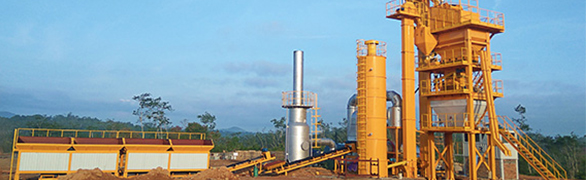
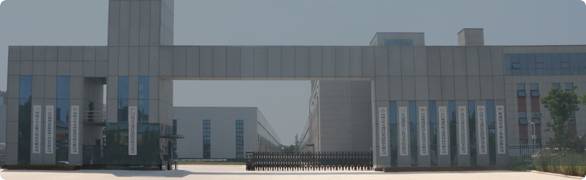
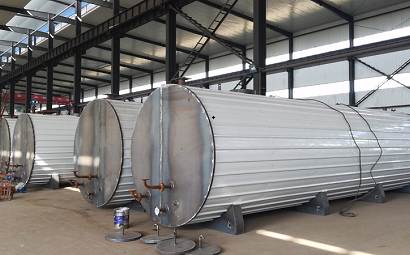
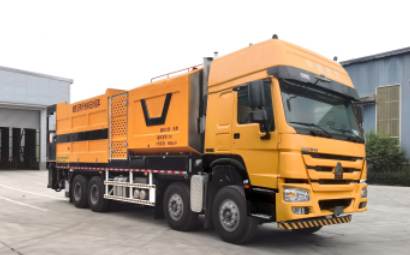
With the continuous increase in traffic infrastructure, municipal road maintenance and pavement engineering in the park, a large number of road construction enterprises, engineering contractors and infrastructure companies began to consider building their own asphalt mixing plants.The purchased asphalt mixture has long-term pain points such as supply delay, transportation price increase, uncontrollable quality, queuing and shutdown in peak season, etc. Owning its own mixing station has become the core grasp for enterprises to reduce cost and increase efficiency, improve project undertaking ability and create differentiated competitive advantage.
However, asphalt mixing plant belongs to large-amount heavy capital equipment, often hundreds of thousands to tens of millions of investment, complex equipment types, strict environmental protection compliance requirements, this article combined with industry practical experience, from investment value, equipment classification, procurement core considerations, manufacturer screening, common procurement errors, project demand calculation, fuel operation cost, comparison of old and new equipment eight dimensions, complete disassembly asphalt mixing plant procurement process, help construction enterprises, investors to make high returns, Low-risk purchasing decisions.
Asphalt mixing plant belongs to the core equipment of vertical integration of industrial chain. For construction units undertaking road, municipal, high-speed and airport pavement projects all the year round, self-built equipment is not pure equipment investment, but long-term profitable assets. The five core advantages directly determine the comprehensive income of the project.
There are additional costs such as middleman price difference, long-distance transportation fee and peak season premium for purchased asphalt mixture. Self-built mixing station can completely cut off intermediate links and realize nearby production and supply.The equipment can be mixed with RAP recycled materials in large quantities, greatly reducing the purchase cost of primary stone and asphalt, shortening the material transportation distance, reducing vehicle fuel consumption, loss and labor shift cost, and increasing vehicle utilization by more than 50%.In addition, it can avoid the idle loss of equipment and labor caused by the shortage of materials in the third-party material yard during the construction season.Under the stable construction volume, the mixing station with an annual output of more than 50,000 tons/hour can recover its cost in 1-2 years, and the mixture with an annual output of more than 50,000 tons can realize stable profit, and the profit will continue to increase after large-scale production.
temperature is not up to standard and other problems, easy to cause road cracking, water seepage and other diseases, increase repair costs.The self-owned mixing station can control the raw material ratio, discharge temperature and recycled material content in the whole process. The intermittent equipment has high weighing accuracy. It can flexibly switch various formulas such as modified asphalt and recycled mixture. It can accurately adapt to different construction specifications such as high speed, airport and municipal roads. The finished product quality is stable, greatly reducing the repair probability and easily passing the high standard engineering acceptance.
production capacity is independent and controllable, can undertake more projects, shorten the construction period, improve bidding competitiveness.Surplus mixture can be sold to the outside world, adding stable revenue; equipment and site form high-quality fixed assets, maintaining and increasing value continuously.At the same time, the environmentally-friendly mixing station can realize closed-loop utilization of waste materials, control emission indicators in compliance, avoid environmental shutdown risks, and create green construction qualifications.Enterprises can also hedge the risk of price fluctuation of building materials and stabilize project profits by reserving raw materials and allocating the proportion of recycled materials.
.jpg)
asphalt mixing plant according to the production process is divided into intermittent, continuous drum two core categories, combined with the installation form is divided into fixed, semi-mobile, full mobile trailer type, different equipment capacity, precision, applicable scenarios, operating costs vary greatly, selection errors will directly cause long-term losses.
single cycle 40-50 seconds, aggregate drying, screening, accurate weighing, into the independent mixing pot and asphalt, mineral powder mixing, batch discharge, but also domestic high-speed, airport and other high-grade pavement engineering mainstream equipment.
single drum integration to complete aggregate drying, heating, mixing, raw materials at one end of the continuous feeding, finished mixture uninterrupted discharge, relying on flow control system to control the proportion, no independent hot material screening bin.
The core advantages of the machine structure is simple, procurement costs, civil engineering investment is lower, the area is smaller; continuous uninterrupted discharge, the same specifications under the production capacity is 30%-50% higher than the intermittent type, suitable for long-term single formula continuous construction; less mechanical parts, simple daily maintenance, energy consumption, comprehensive operation and maintenance costs are lower, small mobile models transition convenient.
Obviously short board depends on flow measurement, weighing accuracy is weaker than intermittent type, debugging is complicated when frequently changing formula, and grading deviation is easy to occur; the consistency of raw material aggregate specifications is high, and the quality of finished materials fluctuates greatly when stone screening is not standardized; the production stability of high content recycled asphalt mixture is weaker than intermittent equipment.
permanent installation of independent concrete foundation is required, and the production capacity can be 200-400 tons/hour. It is equipped with large hot storage bins, finished product storage bins and complete environmental protection dust removal system, which is suitable for long-term single regional operation and large-scale asphalt mixing plants with annual production capacity of more than 100,000 tons.
Semi-mobile mixing station: modular split structure, flat truck transfer after disassembly, simple hardening site can be installed, 3-5 days to complete the construction, suitable for regional multi-project rotation construction;
Full-trailer mobile mixing station:
The whole machine is integrated into the trailer chassis, requiring no large concrete foundation. It can be transferred and installed in a single day, with a production capacity of 40-120 tons/hour. It is suitable for remote field repairs, short-term small construction sites, and road emergency maintenance.
Small maintenance, county municipal scattered projects: 40-80 tons/hour mobile;
Medium-sized municipal, national road transformation, annual output of 5- 100,000 tons of mixture: 100-160 tons/hour intermittent station;
High-speed, large-scale infrastructure projects with an annual output of more than 100,000 tons: fixed equipment with an annual output of more than 200 tons/hour.
Full-cycle financial cost calculation Most purchasers only pay attention to the bare metal price of equipment, ignoring the comprehensive landing cost. The complete capital investment includes four parts:
Cost of bare metal equipment: hundreds of thousands of small mobile stations, millions of medium-sized intermittent stations, and tens of millions of large environmentally friendly intelligent stations;
Installation cost: site leveling, concrete foundation, asphalt tank, mineral powder bin, dust removal system, circuit and waterway supporting, accounting for 15%-30% of bare metal price;
Daily operating cost (OPEX): fuel, electricity, operator salary, wearing parts replacement, environmental protection operation and maintenance, testing expenses; fuel accounts for 30%-50% of the total operating expenditure, which is the largest long-term expenditure.
Compliance and financing costs: environmental impact assessment, emission permits, land and industrial land approval fees, loans, interest on phased purchases.
Site selection and supporting infrastructure assessment The site directly affects the approval efficiency of transportation, raw materials and environmental protection. Six conditions shall be checked for site selection:
Raw material transportation distance: the closer to the sand and stone yard, the better, reduce the aggregate transportation cost; at the same time, radiate the surrounding construction projects, shorten the finished material distribution radius;
Site space: reserved aggregate stacking area, finished product bin, dump truck turning channel, environmental protection equipment area, future expansion space, high terrain for drainage, to prevent moisture from increasing drying energy consumption;
Basic supporting facilities: stabilize industrial electricity, tap water, fuel oil/natural gas transmission pipelines, and the lack of supporting facilities will greatly increase the cost of transformation;
Land attribute: industrial land, agricultural land and residential land cannot pass EIA approval;
Surrounding residential areas: away from residential areas and schools, avoid noise, dust and odor complaints, and shorten the EIA approval cycle;
Traffic conditions: large dump trucks in and out smoothly, avoid height limit, weight limit road sections.
Environmental compliance and policy approval rigid requirements At present, the environmental control of domestic asphalt mixing plants continues to be tightened, the approval cycle is generally several months to one year, and local policies are given priority before procurement:
Required approval documents: environmental impact assessment report, emission permit, safety production permit, construction permit;
Standard configuration of core environmental protection equipment: pulse bag dust removal equipment, low nitrogen energy-saving burner, closed bin, asphalt flue gas recovery device, noise and noise reduction barrier; old simple dust removal equipment cannot pass environmental protection acceptance;
Recycling policy bonus: encourage RAP old material recycling, high recycling equipment can enjoy environmental protection subsidies, while reducing the pressure of stone mining indicators;
Safety specification: supporting raw material testing laboratory, fire and explosion proof asphalt storage system, equipment safety protection device, meeting emergency inspection standards.
Equipment automation, energy saving and sustainable configuration Intelligent, energy-saving configuration directly determines long-term operating costs, procurement priority screening of the following configurations:
PLC automatic intelligent control system: remote monitoring, data storage, automatic matching, fault warning, reduce manual operation, matching error artificial risk zero; support mobile phones, computers to remotely view production capacity, energy consumption data;
Waste heat recovery energy-saving structure: counter-current drying drum, recovery of waste gas heat preheating cold aggregate, each ton of mixture can save 1-2 liters of fuel, long-term savings of huge fuel costs;
High RAP recycling package: original material + old pavement milling material collaborative mixing system, up to 50% recycled material, greatly reducing the cost of asphalt, new stone procurement;
Warm mix asphalt compatibility module: reduce mixture heating temperature, reduce fuel consumption and exhaust emissions, adapt to low temperature winter construction.
Equipment durability and post-maintenance convenience Equipment long-term open-air high-intensity operation, parts replacement, maintenance convenience directly affect shutdown losses:
Core host, drying drum, mixing pot selection wear-resistant thickened plate, reduce wear replacement frequency;
Wearing parts (screening net, conveyor belt, burner accessories) standardized universal models, easy to quickly purchase replacement;
Modular design of the whole machine, sufficient maintenance operation space, no need for large disassembly tools for daily maintenance.
Manufacturer after-sales and localization service network No matter how good the equipment lacks after-sales support, failure shutdown will directly cause project shutdown losses, focus on verifying the manufacturer's service network, spare parts inventory and technical team before procurement.
.jpg)
screening standards on the market asphalt mixing plant manufacturers are divided into international first-line brands, domestic head engineering machinery brands, small and medium-sized OEM processing plants, different manufacturers of technology, quality assurance, after-sales gap is very large, 5 dimensions screening reliable suppliers.
Check the industry history and market reputation of the enterprise, give priority to the manufacturers of deep-ploughing asphalt mixing equipment for more than 10 years, and the long-term market verification represents mature technology and few design defects.International brand representatives: Amman, Switzerland, Wittgen/Banninghofen, Italy Manini, USA Astek; can visit the same equipment in operation in the same region, connect with existing customers, understand the equipment failure rate, energy consumption, manufacturer after-sales response speed, real user feedback is the most intuitive reference.
Product qualification, technical standards and customization ability Regular manufacturers equipment with CE, ISO9001 quality system, environmental testing certification, the whole machine in line with the national road construction equipment specifications; reject without any test report, incomplete equipment.
At the same time, confirm the customization ability of the manufacturer: whether the equipment structure can be adjusted according to the site size, recycled material blending ratio and fuel type to meet the personalized needs of the project.
Improve the localization after-sales core judgment standard: whether there is a local office, spare parts warehouse, resident technical engineer.For manufacturers without service outlets in different places, the transportation cycle of accessories and engineers after equipment failure is as long as several days, which directly causes project shutdown.
Clarify the warranty terms in the contract: warranty period of core components such as host, burner and weighing system, warranty period of 1-2 years from conventional high-quality manufacturers, and provide free installation guidance, operator training and remote online fault diagnosis service.
Comprehensive quotation comparison multi-manufacturer synchronization to obtain detailed itemized quotation, split bare metal, dust removal, regeneration system, installation, transportation, spare parts, training costs, unified configuration standards after the comparison of total prices.
Low-cost equipment generally has short boards: thin steel plate wear parts, simple dust removal system, low-equipped burner, no intelligent control system, short-term savings in procurement funds, long-term fuel loss, maintenance and replacement, environmental protection rectification costs increased significantly, comprehensive holding costs are much higher than high-end equipment.Synchronously communicate with installment, lease and manufacturer financial schemes to relieve the pressure of one-time large-amount funds.
Comprehensive strength and long-term viability of the enterprise Check the scale of production plants, independent processing production lines, R & D team configuration, avoid small workshop assembly plants; give priority to manufacturers with stable financial resources and continuous investment in environmental protection equipment R & D, ensure that original spare parts can still be purchased after 5-10 years, and there will be no failure of manufacturers.At the same time, the delivery cycle, installation period, equipment performance guarantee index and overdue default compensation clause shall be specified in the contract to avoid the risk of delivery delay.
after a large number of engineering enterprises procurement capacity shortage, environmental protection standards, back to the cycle lengthened, after-sales management and other problems, the root causes are early decision-making errors, comb the industry high-frequency errors and avoidance programs.
Mistake 1: Blind purchase of large models Many bosses only look at the peak production of construction in 1-2 months of the year, directly purchase ultra-large capacity mixing stations, 80% of the time low-load no-load operation, fuel, depreciation, labor costs remain high, and a large amount of funds are idle.
Mistake 2: Choose the equipment with the lowest price. Low-cost equipment is generally reduced in environmental protection, wear resistance and intelligent configuration. The burner has low thermal efficiency and consumes more fuel per ton of mixture. The fuel cost of 1-2 years is far more than the equipment price difference. Simple dust removal equipment cannot pass the EIA, and hundreds of thousands of additional modifications are required in the later stage.
Mistake 3: Ignoring the EIA, land and site supporting parts, the EIA procedures are started only after the equipment is delivered. The approval period is more than half a year, and the equipment is idle, resulting in huge depreciation; the site is not hardened in advance, and there is no industrial electricity, so installation and commissioning cannot be carried out.
Mistake 4: Confusing intermittent and roller equipment to undertake high-speed, airport high-grade pavement but purchasing continuous roller stations, mixture accuracy is not up to standard, project acceptance repeated rework; long-term large-area rural road construction procurement high-end intermittent stations, equipment idle waste.
Mistake 5: The terms of the purchase contract are vague, without performance, after-sales and delivery constraints. The simple contract only indicates the equipment model, without specifying the production capacity, weighing accuracy, emission index, warranty scope and overdue compensation; there is no basis for accountability when the manufacturer delays delivery and the equipment fails to meet the standards.
Mistake 6: Without measuring the basic demand of the project, blindly investing in self-built mixing stations, the annual mixture output of small enterprises is less than 30,000 tons, fixed depreciation, labor and environmental protection operation and maintenance costs cannot be covered by production savings, and self-built equipment increases losses instead.
Before formal inquiry and procurement of equipment, six self-inspection requirements shall be completed first. All selection, budget and site planning shall be carried out around their own real needs to avoid procurement errors from the source.
Self-examination question: How many tons of asphalt mixture is needed every year?Is the construction stable throughout the year or concentrated in the peak season of half a year?Do you sell mixture to increase capacity demand?
High-speed, airport, heavy-duty factory area: SMA modified asphalt, high-standard grading, frequent formula replacement → intermittent equipment;
Paving of rural roads and base: single common asphalt mixture, long-term continuous construction → roller equipment;
At the same time, confirm whether it is necessary to mix a large amount of recycled RAP materials and warm asphalt additives, and require the manufacturer to support the corresponding system in advance.
shall be investigated and recorded on the spot, such as site area, terrain elevation difference, power supply capacity, water source, distance from residential area and land use nature, aggregate stacking area and vehicle passage route shall be planned synchronously, local environmental protection and land department shall be consulted synchronously, and the construction restriction requirements of mixing station shall be confirmed.
the total budget of equipment procurement, bear the pressure of installments, expect the return period, distinguish between self-owned funds and loan funds, calculate the difference between self-production and outsourcing per ton of mixture, and calculate the annual guaranteed output.At the same time, reserve funds for equipment installation, environmental protection transformation and site civil construction shall be reserved.
needs Investigate local environmental protection and recycled asphalt policies in the next 3-5 years in advance to confirm whether high proportion of old material recycling and low nitrogen emission are required; plan business expansion direction (new high-speed projects, external sales of mixture), reserve expansion space for equipment and upgrade, and avoid equipment falling behind and being eliminated in 2-3 years.
is the largest operating expenditure of the mixing plant, accounting for 30%-50% of the total operating cost. The procurement cost, combustion efficiency and environmental protection standards of different fuels vary greatly. The optimal fuel scheme is selected according to local energy conditions.
Short board: the area without pipeline coverage cannot be used, and there is a one-time investment in laying pipelines in the early stage.
2.0#diesel/light fuel advantages: universal in the whole country, not limited by pipelines, stable ignition, suitable for field mobile mixing stations;
Short board: high unit price, high fuel cost pressure for long-term large-scale production, and higher exhaust emission than natural gas.
Short board: it needs supporting fuel preheating device, combustion produces more dust and sulfide, environmental protection treatment cost is higher, equipment pipeline is easy to coke and block, maintenance frequency increases.
Short board: unit calorific value cost is much higher than natural gas, only suitable for small short-term mobile mixing station emergency use.
.jpg)
often struggle with the selection of old and new equipment. The differences in early investment, long-term operation and maintenance and compliance risks between the two are obvious. Combined with the enterprise operation cycle and technical team strength, comprehensive judgment is made.
are equipped with the latest energy-saving, environmental protection, intelligent technology, waste heat recovery, low nitrogen combustion, complete automatic control system, long-term fuel, lower labor cost; complete original warranty of the whole machine, 1-2 years of free maintenance and replacement of core components, manufacturers provide a full set of operation and maintenance training; fully in line with the current environmental protection emission standards, no additional cost to modify the dust removal, flue gas treatment system, environmental impact assessment passed once; The production capacity, regeneration system and fuel type can be customized 100% according to their own needs, and the equipment matching degree is high; the residual value of equipment is higher, and the second-hand resale discount is lower after 5 years, which is suitable for enterprises with stable operation for more than 5 years.
The investment in one-time procurement in the early stage of short board is high, and the large-scale intermittent station is often more than one million, so the capital pressure is high; the equipment production and transportation delivery cycle is long, and it needs to wait for 1-3 months.
The purchase price of second-hand asphalt mixing plant is only 3- 30% off for new machines, which greatly reduces the initial capital investment and has little pressure for capital withdrawal; the spot is withdrawn, and the disassembly and commissioning are completed in a short time to quickly meet the material demand of short-term projects; the mature models have been verified by the market, and the actual production capacity and operation status can be checked on the spot.
The short board technology is old, there is no energy-saving waste heat recovery system, the fuel consumption per ton of mixture is higher, and the long-term operation cost continues to increase; There is no original warranty, equipment wear and aging parts need to bear the replacement cost themselves, and frequent failure shutdown affects the construction; The dust removal and combustion system of the old equipment does not meet the current environmental protection standards, and it needs to invest hundreds of thousands to hundreds of thousands of yuan to pass the EIA; The original spare parts of the old model have been discontinued for many years, and it is difficult and expensive to purchase accessories; The true loss of equipment and internal faults cannot be visually judged. It is easy to buy accident machines and overhaul machines without professional detection.
In short, asphalt mixing plant is the core heavy asset of road construction enterprises. Procurement decision can not only look at equipment quotation, but also comprehensively evaluate its annual output, project type, site conditions, environmental protection policy and long-term operation cost.Priority shall be given to sorting out the basic requirements of their own projects, matching the appropriate intermittent/drum, mobile/fixed equipment, screening regular manufacturers with perfect after-sales and independent R & D strength, avoiding common procurement errors such as capacity mismatch, low price trap and environmental protection approval delay.