In highway maintenance, municipal road reconstruction, rural road network construction and scattered small-scale infrastructure projects, the pain points of traditional fixed asphalt mixing station, such as large capital investment, long relocation period, high loss of long-distance transportation of hot-mixed asphalt mixture and complicated environmental protection approval, have long troubled construction enterprises. Mobile asphalt mixing plant (also known as portable asphalt mixing plant) has become the mainstream production equipment for short-term projects, remote construction sites and sectional maintenance projects by virtue of its core advantages of complete machine modularization, trailer vehicle-mounted, large-scale concrete foundation free and rapid transfer deployment.
Mobile asphalt mixing station is a mobile complete set of pavement material production equipment integrating aggregate drying, proportioning and metering, asphalt mixing, dust treatment, finished material storage and intelligent control system. All core components of the whole machine are mounted on the trailer chassis and skid base, which can be directly transported according to highway regulations without pouring large-area concrete foundation in advance. It can directly produce hot mix asphalt mixture (HMA) on the construction site or nearby the project.
The equipment produces asphalt paving materials conforming to national standards through mixing sand, gravel, mineral powder, asphalt binder and recycled old asphalt pavement material (RAP), serving various projects such as highway repair, national and provincial road reconstruction, rural road construction, parking lot, park road, urban pipe network supporting pavement, etc. The core design logic of mobile station is built around "flexible transition, rapid production and adaptation to temporary construction site", and the production capacity range covers 20-240 tons/hour, fully matching the material requirements of small and medium-sized and phased construction projects.
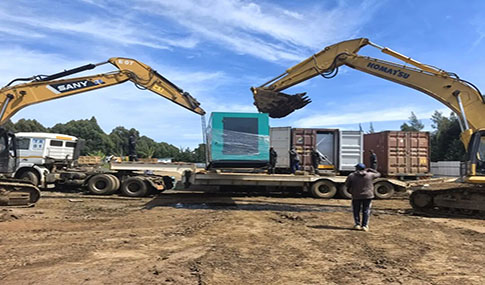
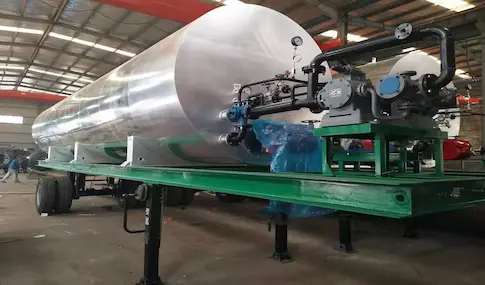
High mobility: cold storage bin, drying drum, mixing host, bag dust collector, asphalt insulation tank, operation control room are all modular sub-trailer chassis, compliance to meet road transportation standards, without dismantling a large number of main structures, single or multiple trailer combination can complete the overall transfer; skid semi-mobile models can be hoisted by crane, suitable for remote construction sites without heavy transport roads in islands and mountains.
Compact floor area: under the same production capacity, the overall floor area of the mobile station is only 1/3 of that of the fixed mixing station. The layout of narrow Urban area construction site and narrow rural site can also be completed without large-area land lease, which greatly reduces the rent and leveling cost of the site.
Rapid disassembly and commissioning: mature prefabricated modular design, pipeline, circuit factory pre-connection, small continuous mobile station 1-3 days to complete the construction and commissioning, intermittent batch mobile station up to 5 days to normal discharge, compared with fixed station several weeks of basic construction cycle, the construction period advantage is significant.
Double mainstream process structure: divided into two types: continuous drum type and intermittent batch type, suitable for different engineering quality standards, taking into account the two requirements of low-cost rapid construction and high proportion accuracy, some high-end models support warm asphalt, high proportion RAP recycled material processing, in line with green construction policy.
Fixed asphalt mixing station is suitable for long-term and super-large capacity continuous production projects for more than 3 years, which requires supporting large-scale concrete foundation, permanent land approval and complex civil construction; while mobile station is perfectly suitable for short-term scattered projects. The core gap between the two is reflected in four aspects: mobility, construction period, investment and application scenario.
In terms of relocation flexibility, mobile stations take trailers as carriers, and it only takes 1-2 days to disassemble and transport within dozens of kilometers; fixed stations cannot be moved once they land, so the cost of dismantling and reconstructing civil works is extremely high. In terms of station construction cycle, mobile station only needs simple gravel cushion leveling without reinforced concrete foundation; fixed station foundation pit, pile cap and equipment foundation construction cycle lasts for several weeks. Capacity level, mobile station main abortion can be 20-200 tons/hour, fixed station generally more than 200 tons/hour, suitable for large-scale continuous feeding. In terms of comprehensive investment, the early civil engineering, site and environmental impact assessment supporting investment of mobile station is lower, and the repeated transfer of multiple projects can dilute the cost of single station construction; the one-time civil engineering investment of fixed station is huge, which is only suitable for single long-term construction site.
.png)
Mobile asphalt mixing plant can be divided into various types according to mixing process and mobile structure. Different equipment has obvious differences in capacity, precision, construction difficulty, cost and applicable scenarios. Construction enterprises can select according to project standards, formulation requirements, construction cycle and transition frequency. Core parameters and performance comparison of various mainstream models are shown in the table below.
|
Model classification |
Core Features and Capacity |
main advantage |
has shortcomings |
Applicable engineering scenarios |
|
Batch type (forced agitation) |
Batch weighing and stirring, complete a discharge batch every 40-50 seconds, mainstream capacity 60-160 tons/hour, high measurement accuracy |
The mixing ratio error is very small, and various mixture formulas can be quickly switched. It supports the production of modified asphalt and RAP recycled materials with high content. The finished product quality is stable, and it fully meets the inspection standards for high-grade road construction. It is green and environmentally friendly. |
The equipment structure is complex, the components are numerous, the construction cycle is longer, and the crane is required to assist in lifting high-rise components. The equipment procurement, maintenance and energy consumption costs are relatively higher. |
High-standard key projects such as new construction and overhaul of expressways, urban trunk roads, airport supporting roads, etc., adapt to projects requiring frequent switching of asphalt ratio and strict laboratory quality inspection requirements |
|
Drum continuous (continuous stirring) |
Drum integrated drying and stirring, uninterrupted material feeding, no batch weighing process, capacity 20-120 tons/hour, is the mainstream model of small and medium-sized projects |
Simple structure, high pre-installation degree, can be quickly built and put into production within 3 days, low procurement and operation and maintenance costs, low fuel energy consumption, compact models, convenient transfer transportation, and adaptation to narrow construction sites. |
Poor flexibility of formula switching, time-consuming adjustment of material proportioning, relying on belt frequency conversion measurement, limited proportioning accuracy, unable to meet the production requirements of ultra-high grade modified asphalt mixture |
Short-term, single-formula projects that pursue low-cost and rapid production, such as rural road maintenance, thin-layer pavement overlay, factory and park roads, small parking lots, and road emergency repairs |
|
Full trailer on-board |
The core module is equipped with a separate trailer chassis, with its own hydraulic self-leveling system, which can be transported on the road in compliance with regulations. |
No need to disassemble large parts, fast disassembly speed, can realize the same day transfer, the same day production, adapt to the high-frequency mobile construction needs |
The overall cost of the equipment is relatively high, and the cost performance of long-term fixed site use is average. |
High-frequency mobile maintenance unit, multi-bid section alternate construction, road engineering projects requiring frequent transfer |
|
skid semi-mobile |
Steel skid base, crane lifting and transportation, strong foundation adaptability |
Stable structure, better site adaptability than vehicle-mounted type, suitable for medium and long-term fixed temporary site use |
The convenience of transition is weaker than that of trailer type, the construction cycle is longer, and supporting lifting equipment is required. |
Fixed temporary construction site with 1-6 months use period, low transition frequency and remote location |
|
Ultra-compact unibody |
The whole machine integrates a single trailer, capacity 20-60 tons/hour, small size |
Small footprint, no need for over-limit transportation approval, can enter the narrow construction site, simple and flexible construction |
Limited production capacity, only suitable for small-scale sporadic construction, unable to meet the needs of large-scale continuous feeding |
Small-scale and small-range construction scenarios such as small-scale pavement repair, community roads, narrow roadways, etc. |
Overall selection principle: intermittent batch mobile mixing station is preferred for high-standard, multi-formulation and long-term key projects; drum continuous type is preferred for ordinary maintenance, short-term repair and cost control projects; vehicle-mounted type is selected for high-frequency transfer, skid type is selected for medium and long-term fixed construction sites, and ultra-compact integrated equipment is selected for small-scale sporadic construction.

Mobile asphalt mixing station supports fast construction without foundation, but site conditions and preliminary planning directly affect installation progress, equipment stability and operation failure rate. Most of the problems of construction delay, equipment vibration and proportion deviation are due to improper site treatment and layout. The construction site shall be leveled and compacted, the bearing capacity shall meet the standard, the soft foundation shall be reinforced by gravel bedding, and the drainage system shall be improved; the site shall be reasonably divided into functional areas, the equipment layout shall be optimized, the supporting facilities such as water, electricity and fuel shall be matched, and the fire prevention and dust prevention planning shall be made to effectively avoid the hidden dangers of construction.
Equipment module structure, site supporting conditions and construction management also directly affect the efficiency of construction. Integrated pre-wired modular models are simple to assemble and faster to put into production, while split and intermittent models have more complex splicing, sealing and debugging processes. In addition, factors such as approval of overrun transportation, allocation of hoisting resources, operation experience of personnel, environmental protection and land use filing will affect the overall construction progress. Overall, it takes only 1-3 days to complete the installation of integrated equipment with good site conditions, and 4-7 days for poor site or split intermittent models.
The whole installation process is divided into seven stages: preliminary preparation, site leveling and positioning, equipment hoisting and positioning, mechanical pipeline assembly, electrical energy connection, no-load commissioning and calibration, and trial production feeding. All procedures must strictly follow the technical manual of the equipment manufacturer and implement safety protection measures simultaneously. The detailed practical operation specifications of each stage are as follows:
Complete the full-dimensional project evaluation 7 days before the official mobilization construction, first determine the equipment capacity matching degree according to the daily mixture demand of the project, calculate the daily aggregate, asphalt and fuel consumption, and plan the raw material storage site; complete all approval procedures simultaneously, including temporary land use filing, dust noise environmental protection filing, and large transportation road passage permit; sort out the complete set of equipment drawings, wiring diagrams, parts list, and inventory the accessories, seals, sensors and tools attached to the vehicle; Coordinate hoisting cranes, transport vehicles, certified electricians and technical guidance personnel of equipment manufacturers to arrive in advance; draw equipment layout plan according to site wind direction and driving route, and mark the accurate placement position of each trailer, bin, dust collector and asphalt tank.
Clean weeds, silt and construction waste on the site according to the layout plan, backfill gravel in layers in soft areas and compact them, and use laser level to level them as a whole; lay out the equipment reference center line along the planned area, mark the positioning points of cold storage bin, drum host machine, dust removal tank, asphalt tank and control room; excavate annular drainage ditch, and set up simple fire prevention isolation area for storing fuel oil and asphalt; Plan the one-way route of loaders and discharge trucks to avoid the risk of cross collision of vehicles on site.
Trailers shall enter the site in sequence, and the cold material batching bin module shall be lifted first, followed by drying drum, bag dust removal box body, asphalt insulation tank, operation control room and finished product bin; the equipment shall be equipped with hydraulic support legs, wooden sleepers and steel base plate support chassis, and the whole process laser level shall be used to calibrate the whole machine level; the inclination angle of drum and belt conveyor shall be adjusted strictly according to the manufacturer's parameters; all trailers shall be braked and wheel wedges shall be fixed to prevent sliding caused by equipment vibration; Intermittent mixing station synchronous hoisting hot material hoist, vibration screening tower, hot silo high-rise structure, installation of stairs, safety guard rails, aerial operation supporting scaffolding and anti-falling measures.
After the positioning of all equipment main bodies is completed, carry out mechanical component docking: splice each section of conveyor belt and elevator chain, install hopper, chute and waste recovery channel; dock dust removal air pipe and exhaust gas pipeline, install high temperature resistant sealing gasket on all flanges, tighten bolts evenly to prevent dust and smoke leakage; assemble burner, asphalt conveying pump, valve and insulation pipeline, and conduct sealing pressure test on pipeline joints; install safety protection baffle, belt shield and maintenance platform for the whole machine; After all mechanical assembly is completed, all fasteners shall be inspected thoroughly to ensure no loose, misplaced or missing parts.
The certified professional electrician shall complete the complete circuit connection, and the external power supply or generator set shall be connected to the main control cabinet, and the motor, sensor, temperature controller, emergency stop interlock and dust removal fan shall be connected in turn; the grounding protection circuit shall be laid, and the whole machine shall be grounded at multiple points to prevent static electricity and leakage risks; the diesel fuel pipeline, dust removal spray water pipe and asphalt tank heating circuit shall be connected separately, and the high temperature pipeline shall be insulated and protected; all cables shall be fixed through pipes to avoid being crushed and damaged by heavy vehicles; Check the circuit diagram after wiring is completed, and check the short circuit and virtual connection hidden danger.
After mechanical and electrical assembly is completed, enter no-load commissioning stage, first fill lubricating grease to all bearings, chains and transmission parts; start fan, belt, roller and dust removal equipment in turn, observe motor rotation, operation noise and belt tightness, and check abnormal sound, deviation and vibration; shut down after no-load operation for 2-4 hours and tighten all bolts for the second time, which is easy to cause fasteners to loosen due to equipment transportation and no-load vibration; complete core metering calibration: Cold bin belt scale, hot material weighing sensor, asphalt flow meter are all calibrated with standard weights, input aggregate moisture content compensation parameters, correct proportioning error; debug roller temperature control system, test burner temperature rise, constant temperature, flameout protection function, ensure stable discharge temperature controllable range.
After no-load calibration, carry out classification test machine, firstly circulate 5-6 batches of dry asphalt material, preheat the drum and clean impurities in the equipment; introduce a small amount of asphalt production test mixture, sample and detect the asphalt aggregate ratio, aggregate coating uniformity and discharge temperature on site; fine adjust the belt speed, asphalt pump flow rate and combustion power according to laboratory test data, and correct the proportion deviation; Continuous full-load production complete shift, monitor dust emission, equipment vibration and pipeline leakage in the whole process. After all indicators meet the standards, carry out equipment start-up and shutdown, troubleshooting and daily maintenance training for field operators, hand over equipment operation records and calibration accounts, and formally put the equipment into normal production.
After installation of mobile asphalt mixing station, standardized commissioning and commissioning shall be carried out to ensure discharge quality, equipment stability and environmental protection compliance. The whole process includes safety pre-inspection, no-load trial operation, metering calibration, commissioning and completion acceptance. Safety protection and locking system shall be implemented in the whole process. Before commissioning, it is necessary to comprehensively check the mechanical structure, electrical system, dust removal equipment and asphalt pipeline, supplement oil, clean up the site, prepare emergency materials, and thoroughly investigate potential safety hazards. Subsequently, no-load test run shall be carried out step by step for no less than 4 hours, monitoring the operation state of equipment, correcting abnormal sound, deviation, vibration and other problems, fastening accessories and preheating rollers, and verifying the stability of temperature control system.
Measurement calibration is the key to control the quality of mixture. After each transfer of equipment, it is necessary to accurately calibrate the metering devices such as aggregate batching, hot material weighing and asphalt flow, correct the error of high temperature operation, input the aggregate moisture content parameters to start automatic compensation, and keep calibration accounts for quality traceability. After the calibration is completed, through three-level debugging of dry material circulation, low-ratio trial production, and full-load mass production, the equipment parameters are gradually optimized, and the discharge temperature, ratio and material uniformity are strictly controlled to meet the needs of conventional production and recycled material processing. After the equipment is stable and meets the standards, the commissioning and testing data are sorted out to complete the acceptance, minor defects are rectified, and operation, maintenance and standardized shutdown training are provided to the operators to officially complete the production handover.
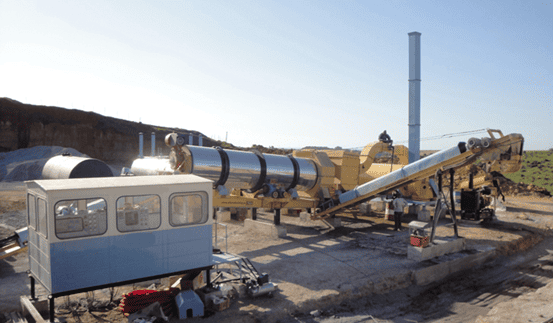
The modular design of mobile station simplifies the construction process, but the field construction environment is complex, and it is easy to have problems such as site settlement, equipment alignment deviation, transportation part damage, measurement failure, etc. Combined with the field installation cases of tens of thousands of equipment, nine high-frequency faults and targeted solutions are sorted out:
Core causes: geological survey is not done, equipment is directly placed in backfill soil and silt layer, and there is no gravel cushion or pad support; accumulated water softens foundation and intensifies settlement in rainy days.
Solution: survey the ground bearing capacity before mobilization, lay crushed stone more than 20cm in layers in soft foundation area; lay thickened steel pad or wooden sleeper at the bottom of roller, asphalt tank and weighing bin to disperse load; excavate drainage ditch around the site to block accumulated water; cast small concrete bearing pad at site for a long time, re-measure the flatness of equipment with level meter regularly, and stop immediately for leveling in case of settlement.
Core causes: lifting positioning without cable, laser horizontal calibration, multi-trailer splicing reference is not uniform, hydraulic leg adjustment is inconsistent.
Solution: all modules are positioned outward in turn based on the centerline of the drying drum, and the alignment of the belt and drum is calibrated throughout the process; the hydraulic legs are uniformly adjusted after the equipment is in place to ensure the level of the whole machine; the belt deviation and material leakage are observed during the no-load test, and the leg height is finely adjusted to correct the deviation; all the butt flanges are tightened uniformly to avoid local stress vibration.
Core causes: trailer size and weight are not calculated in advance, excessive transportation and escort procedures are not handled, and urban roads are restricted.
Solution: Set up the preparatory stage to plan the transportation route synchronously, and handle the road overrun permit 7-15 days in advance; give priority to selecting the single-trailer integrated model to reduce the overrun component; split the multi-module transportation to split the large parts, arrange the professional large transportation fleet, and equip the escort personnel with the vehicle.
Core causes: generator power selection is too small, cable diameter is insufficient for long-distance laying, and the voltage drop of synchronous start-up of multiple high-power motors is too large.
Solution: Calculate the total peak power of the equipment, reserve more than 20% power redundancy for the generator set; shorten the cable laying distance, select thick national standard cables; install voltage stabilizing devices in the control room, set the dust removal, combustion and mixing equipment start timing separately, and avoid synchronous start voltage drop; have municipal grid conditions to give priority to access to industrial three-phase power.
Core causes: the project site is narrow, large cranes cannot enter the site, and the self-dismantling equipment type is missing.
Solution: In the procurement stage, priority should be given to self-lifting and hydraulic self-erection of finished product silos and hot material screening towers; small truck cranes should be coordinated in advance for lifting in different periods; site entrances and exits should be optimized to broaden the lifting operation space; manufacturers 'technicians should guide the sectional lifting on site to reduce the lifting difficulty.
Core causes: no construction buffer period reserved, no temporary rain and wind protection measures, asphalt pipeline easy to solidify in low temperature environment.
Solution: 30% construction period buffer shall be reserved in installation plan; outdoor electrical control cabinet and sensor shall be erected with protective canopy; hoisting operation shall be suspended in windy weather; asphalt tank shall be preheated and insulated in the whole process during low temperature construction, and heat tracing and insulation layer shall be installed on pipeline.
Core causes: the equipment is not fixed firmly, the sensors, belts and seals are not packaged separately, and the list of accessories with the vehicle is not checked.
Solution: The first time the equipment enters the site, the accessories are fully checked, and the damaged parts are photographed; the precision sensors and instruments are separately buffered and packaged for transportation; the wearing parts (belts, gaskets, dust removal bags, sensors) are stored with the vehicle, and the damaged parts are reissued by the manufacturer simultaneously; the loose components of the trailer are reinforced throughout the transportation to avoid bumps and collisions on the road.
Core causes: lifting vibration caused by load cell shift, zero drift, not completed no-load calibration direct feeding production.
Solution: measurement calibration shall be carried out after the equipment is completely in place, leveled and tightened; all cold material scales, hot material weighing and asphalt flow meters shall be re-calibrated every time; aggregates with different moisture contents shall be stored, and moisture content correction parameter library shall be established to adjust the proportion in real time according to the on-site sandstone.
Core causes: The team only contacts the fixed mixing station, is not familiar with the modular rapid assembly process, and lacks technical guidance from the manufacturer.
Solution: For the first time, the manufacturer's engineers are required to stay in the field for guidance; a standardized installation checklist is prepared, and the responsible person for lifting, electrical and mechanical assembly is clearly defined; special safety training on equipment structure, aerial operation and live operation is carried out before work, and inexperienced personnel are prohibited from operating key processes independently.
The full-cycle cost of mobile asphalt mixing plant mainly includes equipment procurement, transfer construction and various hidden operating expenses. Equipment procurement is the core expenditure, the overall price is affected by production capacity, process, configuration and brand, small drum type models have higher cost performance, large production capacity and high equipment cost, and intermittent equipment cost is generally higher than drum type in the same production capacity. Additional expenses will be incurred for each transfer, disassembly, transportation, site construction and formalities filing of equipment. Long-distance transfer and poor site conditions will further increase expenses. Meanwhile, frequent transfer of equipment will accelerate the loss of accessories, superimpose hidden costs such as production energy consumption, replacement of environmental protection consumables, disassembly and shutdown, and long-term operation expenses should not be underestimated.
Construction enterprises can realize equipment cost reduction and efficiency increase through fine management and control, accurately match equipment production capacity according to project demand, give priority to self-leveling integrated model in high-frequency transition scenario, so as to reduce transportation and hoisting cost; add RAP recycled material module to recover old materials on site, which can greatly reduce raw material cost, coordinate continuous construction of multiple bid sections, reduce transition times and dilute fixed cost of single construction. In addition, batch procurement of wearing parts reduces the price of consumables, optimizes energy consumption with energy-saving rollers and frequency conversion systems, plans transportation routes in advance, and completes environmental protection procedures, which can effectively avoid additional costs such as shutdown and lease caused by approval delays, and comprehensively improve the overall operation efficiency of equipment.
The construction of mobile asphalt mixing station involves multiple safety risks such as hoisting, aerial operation, high voltage electricity, high temperature construction, dust and waste gas, etc. The whole process shall strictly comply with industry specifications, equipment operation standards and safety supervision requirements to implement safety control. Risk assessment shall be carried out before construction, all kinds of potential safety hazards shall be investigated, special operators shall be ensured to work with certificates, labor protection appliances and emergency materials shall be provided, and dangerous operation areas shall be designated. During construction, site layout and vehicle traffic shall be standardized, pipeline safety shall be checked; hoisting, mechanical assembly, electrical wiring and asphalt pipeline construction shall be operated according to standards, energy isolation, equipment grounding, high-altitude protection and pipeline pressure test shall be implemented, and safety problems such as electric shock, leakage and equipment instability shall be avoided.
Safety specifications shall also be strictly observed during equipment commissioning, commissioning and daily operation and maintenance. Special personnel shall be on duty during commissioning, and personnel shall be kept away from dangerous areas such as high temperature and rotation. The site shall be cleaned before equipment startup. In case of abnormal noise, leakage, smoke and other faults, the equipment shall be shut down for maintenance immediately, and dust removal and fire prevention facilities shall be started in the whole process. At the same time, it is necessary to establish a long-term safety management mechanism, implement the pre-shift safety disclosure, on-site sundries cleaning and personnel shift system, eliminate fatigue operation, unify safety standards for the whole process of equipment transfer and disassembly, and keep account materials such as safety inspection, hoisting and training, so as to ensure safety compliance and controllable inspection in the whole construction process.
Mobile asphalt mixing station has become the mainstream asphalt production equipment for road maintenance and small-scale infrastructure projects by virtue of its core advantages of flexible transfer, rapid station construction and low-cost adaptation to temporary projects. A complete, compliant, efficient and stable station construction process needs to be systematically controlled from six dimensions: early model selection, site planning, modular installation, calibration test machine, cost control and full-process safety. Ignoring any link will cause multiple losses such as delay of construction period, substandard mixture quality, environmental protection punishment, safety accident and extra cost increase.
In the stage of equipment procurement and site construction, the construction unit shall give priority to prefabricated modular and pre-wired self-leveling models, complete site survey, transportation approval and environmental protection filing in advance, strictly follow the standardized installation and commissioning process, and simultaneously implement full-cycle safety control, which can not only greatly shorten the production cycle, but also effectively control the comprehensive construction cost, ensure the stable output of asphalt mixture, and assist the road project to land efficiently, green and safely.
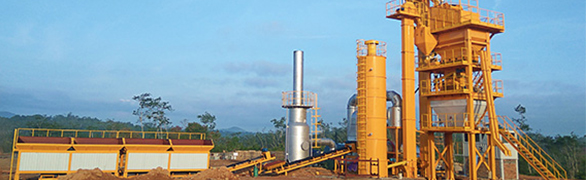

.png)