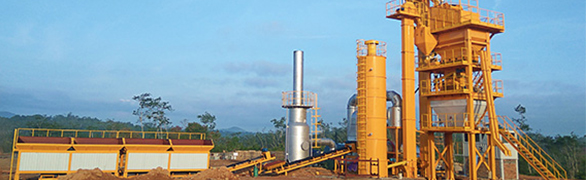
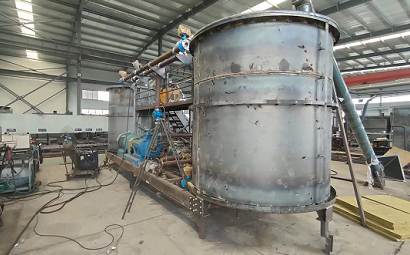
Asphalt mixing plant is the core equipment for road, municipal maintenance and airport construction. The capacity in t/h determines the construction progress and comprehensive cost. Many practitioners confuse the rated capacity with the actual capacity, and improper selection can easily lead to paver downtime, high energy consumption and delayed schedule. This article combines industry standards and site practice to explain the definition of mixing plant capacity, calculation methods, various types of equipment capacity range, key factors affecting output, capacity calculation formula, comparing the differences between mobile and stationary mixing plants, and sorting out the complete selection program, which will provide practical and professional guidance for construction units and purchasing engineers.

Asphalt mixing plant capacity, refers to the total amount of equipment per unit of time can produce hot mix asphalt mixture (HMA), the industry's unified unit of measurement for the tons / hours (t / h, also known as TPH), is the equipment nameplate, technical bids, construction organization design of the mandatory indicators.
Production capacity directly determines three core engineering dimensions: one is the overall construction progress of the project, matching the continuous operation of pavers and rollers; the second is the comprehensive operating costs, including fuel, electricity, labor, and depreciation of equipment; and the third is the scale of the project to match the different scenarios such as rural roads, municipal maintenance, high speeds, airports and so on, corresponding to completely different production capacity ranges.
Capacity in the industry is divided into two core standards, the gap between the two values is huge, and is the root cause of most project planning errors:
The maximum production capacity is calibrated by the equipment manufacturer in the laboratory under standard working conditions. There are only ideal working conditions: stable aggregate moisture content of 5%, homogeneous grading of raw materials, no frequent change of mix formula, suitable ambient temperature, skilled operators, no equipment downtime for maintenance, and continuous and stable supply of cold material.
Formula for calculating rated capacity of intermittent mixing plant: weight of discharged material in a single tray × number of trays in circulation per hour; the circulation cycle of a conventional single tray is 45-60 seconds, e.g., 2.5 tons/tray, 80 trays per hour, and the rated capacity = 2.5×80=200t/h.
The rated capacity of continuous drum mixing plant is calibrated by the overall capacity of drying drum, burner and belt scale, and it relies on continuous material conveying to realize stable theoretical output.
The real output of construction site is limited by environment, raw materials, equipment and labor, and the general stable range of the industry is only 70%-90% of the rated capacity, and even only can reach 65%-75% of the rated capacity under the extreme rainy, low temperature in winter, and frequent replacement of modified mix.
Take an example: a nameplate 200t/h medium-sized mixing plant has a stable output of 140-180t/h on normal sunny days; when the moisture content of aggregate rises in the rainy season and the SMA-modified material is frequently produced, the actual output is only 130-150t/h. If the material consumption is measured directly according to 200t/h during the planning process, the supply of mix is bound to be insufficient, and the paver will have to stop and wait for the work to be done.
At present, the mainstream of the market is divided into two categories: batch mixing and continuous drum mixing, and the logic of capacity realization is completely different, so when selecting a mixing plant, you can't just look at the t/h value:
Intermittent mixing plant (batch type)
Batch mixing is a complete process of weighing, dry mixing, wet mixing and unloading of materials in each tray, and the upper limit of capacity is determined by the weight of a single tray and the cycle time. The advantages are high metering precision, switching between AC, SMA, recycled RAP and other mixes at any time, suitable for high standard pavements such as highways and airports; the shortcomings lie in the loss of production capacity during the cycle gap, and the stability of output is weaker than that of the continuous type when paving a large amount of pavements continuously.
Capacity coverage: 40~400t/h, 40~160t/h for small mobile models, 300~400t/h for large fixed 4000/5000 models.
Roller continuous mixing plant
Drying, heating and mixing are all synchronized in the rotating drum, with uninterrupted material delivery, no batch interval and stronger continuous output capacity. It is suitable for single-mix, oversized projects, such as new long-distance national highways and large park roads; the disadvantage is that the formula switching is cumbersome, and the frequent replacement of the mix will greatly reduce the actual production capacity.
Capacity coverage range: 20~240t/h, large customized continuous equipment up to 600~800t/h.
The official measurement standard of the rated capacity of manufacturers
Core parameters: the weight of a single disk, a single complete cycle length.
The standard cycle time is 45~60 seconds. Modified asphalt and SMA mixes need to extend the mixing time to 60~90 seconds, which directly reduces the number of trays per hour.
Calculation example: 3000 mixing plant, single tray 3 tons, standard cycle 45 seconds, one hour can be circulated 80 times, rated capacity = 3 × 80 = 240t/h; if the cycle of producing modified material is extended to 60 seconds, only 60 trays per hour, the theoretical capacity is reduced to 180t/h.
There is no batch limitation, the capacity is determined by the diameter of the drying drum, the heating power of the burner, and the range of the cold material belt conveying scale. The manufacturer calculates the total weight of the mix per hour by superimposing the continuous aggregate delivery on the belt scales and the flow rate of the asphalt metering pumps, which are calibrated to the rated t/h at .
Purchase, construction and acceptance stage, the real output needs to be measured, to avoid false capacity labeling manufacturers:
Roller-type equipment: read the cumulative total amount of aggregate conveyed by the cold material belt, the total amount of asphalt, plus the conversion of hourly production; combined with the weighbridge transport vehicle weighing documents cross-verification.
Universal verification means: counting the total loading tonnage of transportation trucks in a single day, divided by the effective power-on hours of the day, to get the real and stable production capacity, which is the most authoritative data for project settlement and equipment acceptance.
Pre-project planning, need to reverse the derivation of the minimum required capacity of how much equipment, the complete steps:
Calculate the total project asphalt mix requirements
Total tons = paving area (㎡) × paving thickness (m) × asphalt mixture density (conventional 2.3~2.4t/m³, common value 2.35t/m³)
Case: 5km road, width 7m, surface layer thickness 0.05m
Total area = 5000×7=35000㎡; total tons = 35000×0.05×2.35=4112 tons
Accounting project effective production of total working hours
Total working hours = effective construction days × daily actual start-up hours (conventional 8~12 hours, minus rainy days, equipment maintenance, morning and evening warm-up downtime)
Case: Project plan 200 hours of effective production time
Base demand hourly production capacity = total tons ÷ total working hours = 4112 ÷ 200 ≈ 20.6t/h
Overlay the actual capacity loss coefficient (0.7~0.9), inverse rated capacity of the equipment
Minimum rated capacity = base demand capacity ÷ 0.75 (conventional intermediate loss factor) = 20.6 ÷ 0.75 ≈ 27.5t/h
Increase the safety margin by 10%~25% to cope with construction peaks, fluctuations in aggregate moisture content, and unexpected downtime.
The final selection capacity = 27.5×1.25≈34t/h, and the market standard model directly chooses 40t/h small mobile mixing plant.
Supplementary matching calculation: the mixing plant capacity must match the paving efficiency of the paver.
The hourly material consumption of paver ≈ paving width (m) × traveling speed (m/min) × paving thickness (m) × mix density × 60, and the difference between the two capacities should be controlled within ±15t/h, so as to avoid material breakage of the paver or failure of the mix due to accumulation of pressure and cooling.
Combined with equipment type, mobile attributes and project scale, the industry has formed a unified capacity grading, covering all construction scenarios:
Representative models: LB1000, LB1500 mobile intermittent, small drum continuous station
Applicable projects: new construction of rural roads, pothole repair, parking lots in small districts, sporadic maintenance of townships and municipalities, and short-distance feeder roads; the volume of work is generally less than 5,000 tons, and the construction period is flexible, with multiple points of decentralized construction.
Advantage of capacity: modular trailer design of the whole machine, 1~3 days to complete the transfer, small footprint, low investment in the foundation, low fuel consumption; low idle loss in the off-season, suitable for small maintenance companies, local municipal units.
Capacity shortcomings: unable to support synchronous operation of multiple pavers, obvious capacity bottleneck in continuous high-intensity paving, not suitable for high-speed and main road large-area construction.
Representative models: LB2000, LB2500 intermittent, 120/160t/h drum mobile plant.
Applicable projects: urban trunk roads, county road network upgrading, industrial park roads, high speed daily maintenance projects; it is the most demanded model in the infrastructure market, taking into account the capacity and flexibility.
Advantage of production capacity: balance between investment cost and production efficiency, both mobile transfer to undertake a number of small and medium-sized projects, fixed site long-term production is also economical; intermittent models can be flexibly switched between ordinary asphalt, modified asphalt, recycled RAP mixes, suitable for most of the municipal road standards.
Representative model: LB3000, LB4000 fixed batch mixing plant
Applicable projects: new highways, first-class national highways, urban expressways, large-scale interchange pavements; single-project mix demand of 10,000 tons, with a compact construction period and the need for all-weather continuous paving.
Capacity advantage: large-capacity drying drum, multi-bin hot material storage, high-power burner, stable actual capacity up to 160~280t/h, which can supply 2 or more pavers for continuous operation at the same time; complete recycled material system, which is suitable for supplying commercial asphalt mixture to the outside world from a long-term fixed site.
Representative models: 5000-type batch plant, large-scale counter-current drum continuous plant
Applicable projects: airport runway, ultra-long highway construction, large-scale urban ring road, large-scale commercial asphalt mixing plant; year-round continuous production, the daily demand for more than 3000 tons of mixture.
Capacity characteristics: high investment in equipment infrastructure, large footprint, fixed installation can not be frequent transfer; rely on large-scale production to reduce the cost of fuel per ton of mixture, labor sharing, suitable for large infrastructure groups, professional asphalt mixing and processing plant.
|
Equipment type |
Conventional Rated Capacity Limit |
Core Capacity Characteristics |
Applicable Mode |
|
Mobile / Portable Mixing Plant |
40~160t/h, a few customized models up to 200t/h. |
Restricted by the size of trailer transportation, drying and mixing components, low sustainable and stable production capacity, flexible in transit |
Short-term decentralized projects, multi-point maintenance, remote rural sites |
|
Fixed mixing plant |
80~400t/h, super-large drums up to 800t/h |
No transportation size constraints, can increase the drying drum, hot material silo, burner, long-term continuous production of low loss, the actual production capacity of up to 85% ~ 90% of the rated |
Long-term fixed station, high-speed / airport large-scale projects, commercial mixes for export. |
Most of the site equipment can not reach the rated capacity of the nameplate, the root cause is concentrated in six variables, of which the moisture content of the aggregate is the first constraint, the comprehensive impact of the amplitude of up to 10%~30% output loss:
Manufacturers calibrated rated capacity uniformly 5% standard moisture content aggregate; construction site open piles of sand and gravel, rainfall after the moisture content rose to 8% ~ 15%, the drying drum needs to consume more heat to evaporate water, drying speed drops significantly, directly forming a full equipment capacity bottleneck. Industry data: For every 1% increase in the moisture content of aggregate, the actual production capacity drops by 8%~10%, while fuel consumption rises by about 10%.
Optimization plan: build rainproof shed for sand and gravel materials, harden the site and drain the water, install online moisture content sensor, and automatically match the burner power and cold material feeding speed.
Low temperature winter: the ambient temperature is lower than 5℃, the temperature of aggregate is low, the heating load of drying is increased, the temperature of discharged material is not up to the standard under the same feeding speed, so we can only reduce the feeding speed;
High altitude construction: thin air leads to insufficient oxygen supply to the burner, the heating efficiency decreases, and the capacity decreases by about 3% for every 1,000 meters above sea level;
Rainy and high humidity weather: it is impossible to stack aggregates in the open air, the supply of raw materials is interrupted, and the frequent starting and stopping of equipments will lose effective working hours.
Conventional AC ordinary asphalt mixture mixing cycle is short, the equipment can run at full capacity; the production of SMA, modified asphalt, high dosage of RAP recycled materials, the specification requirements to extend the dry mixing, wet mixing time, the cycle of the single disk cycle to lengthen the number of disks of material per unit of hour to reduce the number of disks.
For example, the 4000 mixing plant is rated at 320t/h for the production of ordinary AC material, and the actual stabilized production capacity is only 180~220t/h for the production of SMA-13 modified material, which is a drop of more than 30%. Frequent replacement of multiple ratios requires emptying the hot material silo and cleaning the mixing tank each time, which results in a large amount of additional production time lost.
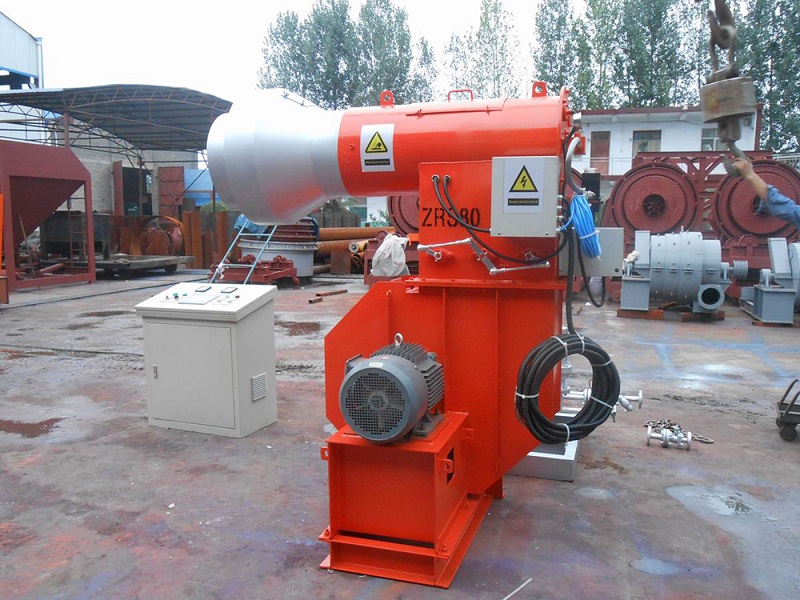
Drying drum and burner are the bottleneck components of the whole mixing plant: carbon deposits on the burner, wear and tear of the drum heat exchanger plate, and insufficient induced draft fan will directly limit the efficiency of aggregate drying; deviations in the calibration of the cold material belt scale, hot material screening, and metering system will lead to frequent shutdowns to adjust the parameters; and the wear and tear of the conveyor belts and elevator will cause interruptions of the material feed, which will greatly compress the effective production time.
The actual production capacity of the equipment without daily preventive maintenance is generally 10%~15% lower than that of the same model of well-maintained equipment.
Operator proficiency directly affects the cycle time: novice operators frequently make dosage errors, waiting for unloading, slow fault disposal, lengthening the cycle of a single tray; skilled technicians can maintain a stable minimum standard cycle time.
External logistics short board also restricts the production capacity: insufficient deployment of dump trucks, plant unloading channel congestion, insufficient storage capacity of hot material silo, mixing plant output mixture can not be transferred in a timely manner, can only slow down and reduce production to wait for the vehicle, the most common ineffective production capacity loss at the construction site.
In some areas, environmental protection emission control is strict, and the system automatically reduces the feeding speed of the equipment when the smoke and dust exceed the standard; at night, the construction noise and dust control limits the production, shortens the effective operating hours, and the average daily actual output decreases significantly.
Equipment selection is on the small side (rated capacity is insufficient)
Planning the construction period according to the ideal rated capacity and ignoring 70%~90% actual loss, the mixture supply cannot keep up with the speed of the paver, frequent paving stoppages and waiting for materials, and quality defects such as cold joints and substandard compaction occur on the road surface; the overall construction period is lengthened, the cost of labor and machinery leasing increases excessively, and in serious cases, fines are incurred in case of project default.
Equipment selection is too large (rated overcapacity)
Purchasing a large mixing plant far exceeding the project demand, equipment purchase, installation, and basic civil construction investment increase dramatically; daily low load operation, fuel and power loss per ton of mix rises significantly, and equipment depreciation is idle and wasteful; small construction sites with large-scale equipment start-up warm-up, maintenance costs are higher, and the comprehensive cost rises by more than 20%.
Optimization measures to improve the actual capacity of mixing plant on the ground
Raw material control: Aggregates are fully covered with rain-proof silos, moisture content is detected before entering the site, and highly humid aggregates are pre-treated by drying in advance; sand and gravel of different specifications are stacked in separate silos to reduce the frequency of ratio switching.
Equipment operation and maintenance: calibrate the measuring scale and clean the carbon deposits on the burner before the daily shift, and regularly overhaul the drying drum, induced draft fan and screening system to ensure that the core components work at full capacity.
Production scheduling: Uniform planning of the day's mixture formula, centralized production of the same material to reduce the number of switching times; advance planning of the dump truck transportation fleet, to ensure that there is no waiting for the unloading of materials.
Planning reserve margin: When calculating the required rated capacity of the project, 20%~25% safety buffer is uniformly reserved to offset the loss of capacity caused by water content, low temperature and modified materials.
Intelligent upgrading: installing fully automatic moisture content linkage feeding system, intelligent control of hot silo material level, remote production monitoring, automatically matching the optimal feeding speed, and stably maintaining more than 80% of the rated actual production capacity.
Integrate the road length, width, paving thickness of each structural layer, distinguish between ordinary asphalt, modified SMA, recycled RAP material consumption, respectively, after calculating the tonnage summary of the total demand; phased construction projects according to the maximum paving volume of a single stage to calculate the peak demand.
Combining with the local rainy season, winter shutdown, and environmental protection and production restriction policies, calculate the monthly and daily hours of stable operation; highways and key projects can realize 10~12 hours of continuous operation per day; municipal maintenance projects only have 6~8 hours of effective operation per day.
Total mix tonnage ÷ total effective working hours = base hourly capacity requirement, which is the minimum stable output standard for the construction site.
Select the correction factor based on the project conditions:
In the calculation of the minimum rated capacity based on 15% ~ 25% as a buffer, against the industry standard t / h model selection; priority to match the market maturity of mainstream specifications, to avoid customized niche non-standard equipment, the procurement of maintenance parts difficult.
Multi-site short-term transfer, maintenance of sporadic projects: choose 40~160t/h mobile intermittent mixing plant;
Single medium-sized municipal main road, construction period within half a year: 80~160t/h mobile station to balance the cost-effective;
Long-term fixed site, high-speed / airport 10,000 tons of projects: 200t/h or more fixed intermittent mixing plant;
Oversized single mix, no frequent formula switching for new roads: optional large capacity drum continuous mixing plant.
Calculate whether the actual stable output of the mixing plant matches the hourly material consumption of the paver, and when multiple pavers are constructed synchronously, synchronize and superimpose the capacity demand of all the paving equipments, so as to avoid the shortfall of the mixture supply.
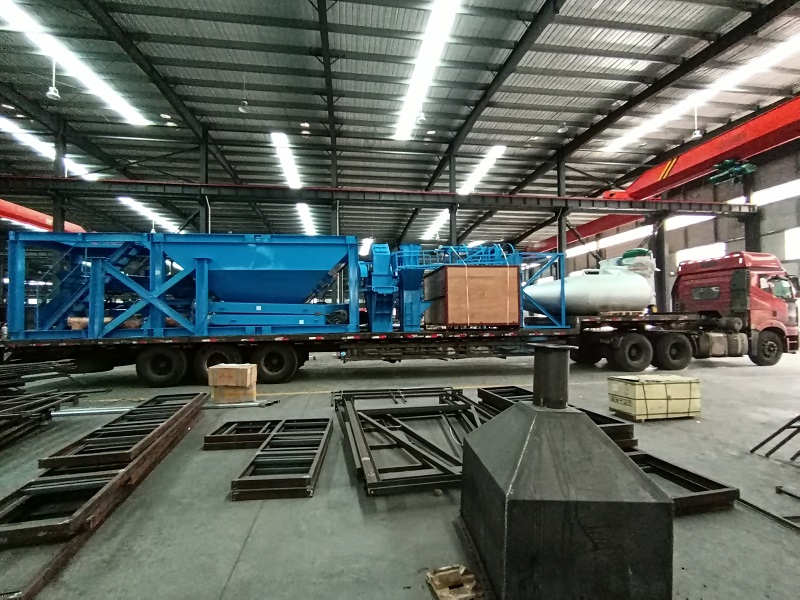
A: The nameplate 200t/h is the ideal rated capacity of the laboratory, the construction site aggregate moisture content, mixing time, logistics and transportation, equipment loss of multiple factors superimposed on the actual capacity of the conventional rated 70% ~ 90%, 140 ~ 180t/h is a standard normal range; if less than 140t/h, focus on investigating the sand and gravel moisture content, the burner condition, dump truck scheduling issues.
A: Conventional mobile mixing plant mainstream upper limit of 160t/h, customized models up to 200t/h; suitable for small high-speed maintenance, feeder high speed construction; new mainline high speed, long distance pavement paving, priority to 240t/h or more than the fixed mixing plant, sustained output is more stable, reduce the turnaround downtime loss.
A: The mixing cycle of SMA mix is 30%~50% longer than that of ordinary AC material, and the actual production capacity of the same equipment will be directly reduced by 25%~35%; when planning, it is necessary to calculate the rated equipment demand according to the correction factor of 0.65~0.7, and it is not possible to calculate according to the standard of ordinary asphalt material.
A:Despending 1 hour each for equipment warm-up and cleaning, every 2 hours increase in effective working hours will increase the daily mix production by 20%~25%; for projects with tight schedule, under the premise of environmental protection policy, extending the daily effective working hours is more cost-effective than replacing the equipment with larger capacity.
A: the year-round external supply of mixed materials for the fixed site, the mainstream choice of 240 ~ 320t / h intermittent mixing plant; the scale of production in this range of low-cost, suitable for municipal, road orders of all kinds, taking into account the flexible production of ordinary materials and modified materials; annual order volume of more than 400,000 tons of supporting parallel dual-machine (two 240t / h equipment), simultaneous production of the peak hours.
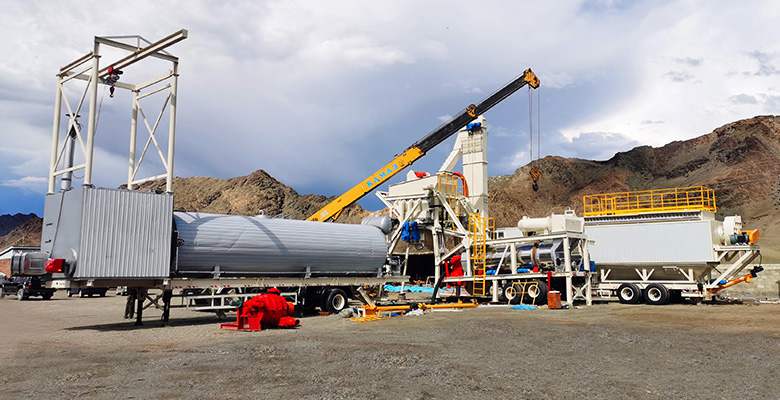
Asphalt mixing plant capacity is the core parameter of road construction, you need to distinguish between the rated and actual capacity, the site output is only rated 70% -90%. Selection of first accounting for the total material and effective working hours, superimposed on the loss factor and reserve 20% capacity margin, according to the duration of the work, the transfer, the type of mixture to choose the appropriate model. Aggregate moisture content, climate, formula, maintenance and logistics constrain the output. Optimized control can raise the actual capacity to over 80% of the rated capacity, avoiding problems of schedule, cost and pavement quality, accurately matching the paving demand, and reducing the total construction cost.