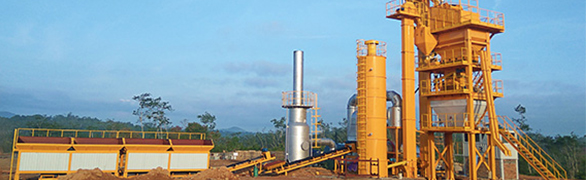
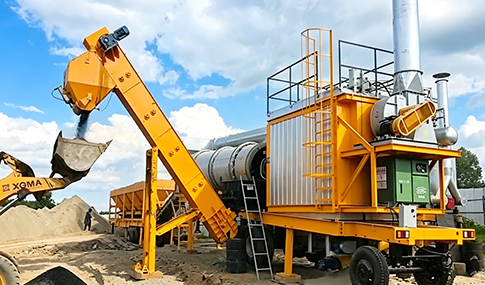
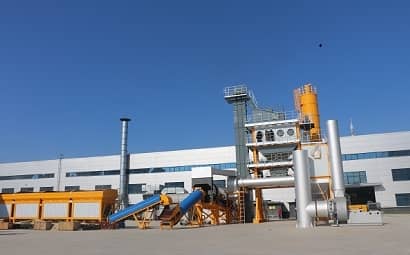
Mobile asphalt mixing stations, also known as vehicle-mounted, towed or portable asphalt mixing equipment, are on-site mixing equipment with integrated modular design. They produce materials that meet road construction standards by accurately proportioning raw materials such as aggregates, asphalt, and mineral powder. Hot mix asphalt mixture. Compared with the fixed asphalt mixing plant with large civil engineering volume, long production cycle and only suitable for long-term mass production at fixed sites, the mobile model integrates eight core systems, such as batching, drying, mixing, dust removal, material storage and electric control, on the trailer chassis. It does not require large-area hardening foundation, and can be quickly disassembled and flexibly transferred. Usually, it can complete the commissioning and production in 1 to 3 days. It is highly suitable for remote construction sites, sectional construction, temporary maintenance and multi-point alternate operation projects. It is the core equipment of small and medium-sized road construction.
At present, mobile asphalt mixing plants in the industry are mainly divided into intermittent forced mixing and continuous drum mixing processes, which have significant differences in capacity interval, measurement accuracy, energy consumption index and adaptation scenario. On the whole, the mobile mixing station has the core advantages of flexible transfer, low civil construction cost, small mixture transportation loss and high equipment reuse rate, which can effectively solve the industry pain points such as difficult material supply for remote construction, large temperature drop for long-distance transportation of hot materials and high construction cost. However, due to the limitation of highway transportation size and load regulations, there is an upper limit on the overall specification and production capacity of the equipment. When the super-large engineering quantity is continuously produced for a long time, the operation cost of single ton mixture is slightly higher, and the durability of core components is somewhat different from that of heavy fixed equipment, which is more suitable for small and medium-sized construction scenarios with high frequency transition.
.jpg)
All technical parameters of mobile asphalt mixing station shall be calibrated according tostandard working conditions: aggregate moisture content of 5%, ambient temperature of 20℃, maximum aggregate particle size ≤40mm, conventional sand and gravel ratio, continuous and stable feeding, actual output, oil consumption and energy consumption will fluctuate by 15%-30% due to rain, high altitude and humidity of raw materials on actual construction site, and rated parameters of samples shall not be directly used as construction capacity basis during procurement.
Capacity unit is ton/hour (t/h, industry abbreviation TPH), which is the primary parameter to distinguish equipment model and match project scale. The capacity of mobile asphalt station in the market covers the whole range of 20t/h-320t/h, and it is subdivided into three grades to adapt to different projects:
Small model 10-40t/h: mostly used for rural road repair, community road renovation, sporadic pit maintenance, the whole machine lightweight, single vehicle can be transported, occupying a very small area;
Medium-sized models 40-120t/h: municipal trunk roads, county road reconstruction, small and medium-sized park roads, the most widely used in the market, giving consideration to production capacity and transition convenience;
Large-scale mobile model 120-320t/h: highway section construction, airport liaison road, large-scale park new road, performance close to fixed station, only retain modular transfer capacity.
The mainstream production capacity of intermittent mobile asphalt station is concentrated at 60-320t/h, and that of continuous drum type is mostly 20-160t/h; the rated production capacity marked on the sample is the theoretical peak production capacity; the vehicle waiting, aggregate drying delay and equipment start-up and shutdown loss are considered on the construction site, and the stable effective production capacity is usually calculated at 7- 20% discount.
Mixing mode directly determines the metering accuracy and mixture adaptability, corresponding to two completely different parameter systems:
Batch-by-batch mixing is adopted in the intermittent forced mixing mobile station, and each pot is independently proportioned for production. The core parameters are 800kg-4000kg of single pot stirring capacity, and the standard single stirring cycle is 45 seconds. Measurement accuracy is the core advantage: aggregate measurement error ±0.5%-1.5%, asphalt asphalt stone ratio error ±0.25%-0.5%, mineral powder filler error ±0.2%-1%, can switch a variety of modified asphalt, graded mixture formula at any time, adapt to high speed, airport and other high standard pavement engineering.
Continuous roller type mobile station aggregate drying, asphalt mixing in the same drum uninterrupted completion, no independent hot material screening bin, the whole machine structure is more compact, light weight, faster transition, but the ratio adjustment flexibility is weak, measurement accuracy is slightly lower than intermittent, suitable for long-term single mixture maintenance engineering.
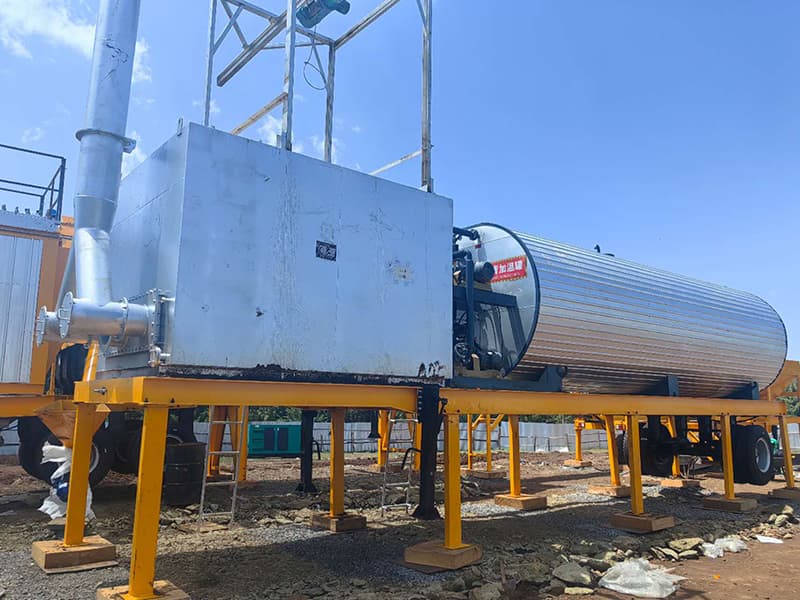
Drying drum is the key bottleneck to determine the upper limit of equipment production capacity. The parameters include drum diameter and drum length. The industry conventional size interval diameter is 1500mm-2600mm and length is 6000mm-9000mm. The larger the production capacity, the larger the drum specification is synchronously enlarged. Drum supporting burner supports multi-fuel adaptation: diesel oil, heavy oil, natural gas, pulverized coal, dual fuel combustion models optional.
The temperature calibration parameters are common industry standards: the aggregate discharge heating temperature is controlled at about 160 ° C, the finished asphalt mixture discharge stable range is 130-180 ° C, and the conventional construction adjustment is 140-180 ° C; if the aggregate is soaked in rainwater with a high moisture content, It is necessary to extend the drum heating time, and the fuel consumption will increase simultaneously under the same production capacity.
Fuel consumption is measured by fuel consumption per ton of finished mixture, and the value is stable under standard conditions: diesel/heavy oil models consume 5.5-7.5kg per ton of asphalt, and pulverized coal models consume higher energy, consuming 10- 15kg pulverized coal per ton of mixture.
Drum type continuous equipment continuously heats at a constant speed, and the fuel utilization rate under stable conditions is slightly better than that of intermittent type; while in rainy season, the aggregate moisture content exceeds the standard, low temperature winter construction, frequent start and stop of equipment, the unit fuel consumption will increase by 10%-30%, and floating space must be reserved for project budget calculation.
A complete set of mobile mixing station includes all motors such as cooling belt, drum drive, mixing main engine, dust removal induced draft fan, asphalt heating pump, screening elevator, etc. The total installed power range is 75kW-800kW. The larger the capacity, the more synchronous the power increase: 60t/h model is about 185kW, 160t/h model is about 500kW, and the total power of 320t/h large mobile station can reach 800kW.
The general power supply standard for domestic construction sites is 380V/50Hz. For remote construction sites without municipal power grid, it is necessary to match the corresponding power generator set, and 20% of the rated power of the generator shall be reserved for starting redundancy to avoid equipment startup and shutdown due to insufficient voltage. Among them, the bag-type dust removal induced draft fan alone occupies a large amount of power, 300㎡ filter area dust removal fan power 37kW, 1050㎡ large dust removal fan power up to 200kW.
The number of cold bins is 4-5 bins in general, 3 bins or 6 bins in special multi-specification aggregate conditions; the capacity of single bin is upgraded with the model. The 60t/h model is equipped with 4 4.5m³ bins, and the 200-320t/h large model is equipped with 5 12-15m³ large capacity bins. The conveying capacity of the supporting conveyor belt is higher than the rated capacity of the equipment, so as to avoid the feeding link becoming a production bottleneck. Frequency conversion belt speed control system can independently adjust the feed speed of each bin, accurately match the design grading.
Environmental protection acceptance is a rigid requirement for road construction. The filter area of bag filter is 300㎡-1050㎡, and the larger the capacity, the larger the filter area will be expanded simultaneously. The dust concentration of the standard emission index is ≤20-50mg/Nm³, the noise of the whole machine operation is controlled within 70dB (A), and the low-noise fan and thickened sound insulation cotton accessories can be upgraded for urban and scenic construction. Equipped with bag dust cleaning pulse system, it can produce continuously for a long time and reduce the frequency of dust cleaning.
Finished product hot bin: 15-100 tons storage bin is selected, paver feeding is intermittent, and the mixture is buffered when the transportation vehicle is insufficient, so as to avoid frequent start and stop of equipment;
RAP old material recycling adaptation: the new mobile station supports 30%-50% waste asphalt pavement recycling material mixing, greatly reducing the cost of stone, asphalt procurement;
Transfer supporting parameters: size of complete machine disassembly and transportation, weight of single trailer, disassembly cycle of 1-3 days, simple leveling and hardening of ground for foundation civil engineering, no need for reinforced concrete base;
Electric control system: automatic PLC computer control, support manual/automatic dual mode, store hundreds of sets of mixture formula, automatically record production data, fault alarm, measurement error correction.
|
Compare Dimensions |
intermittent mobile asphalt mixing station |
continuous drum mobile asphalt mixing station |
|
productivity interval |
60-320t/h, covering large, medium and large high-standard projects |
20-160t/h, mainly small maintenance, single mixture project |
|
measuring accuracy |
Three-system high-precision metering, adapt to high speed, airport strict specifications |
Continuous feeding ratio, precision to meet the requirements of ordinary municipal road construction |
|
installed energy consumption |
Higher total power at the same capacity of 60-100t/h |
Fewer motor configurations, lower energy consumption at the same capacity |
|
fuel consumption |
The difference between standard mode and continuous mode is smaller, and the fuel consumption is smaller when the mixture formula is changed frequently. |
Continuous uniform production under stable conditions, slightly better fuel efficiency, slightly lower fuel consumption |
|
ease of transition |
Modular structure after disassembly transfer, disassembly cycle is relatively longer |
Simplified structure, smaller weight of the whole machine, faster disassembly and transportation than intermittent |
|
applicable scenarios |
Multi-formula switching demand, new construction/expansion project of high-grade pavement |
Road maintenance works for long-term single ratio production and frequent short-distance transfer |
The core principle of equipment parameter selection: Based on the actual daily average asphalt demand of the project, reserve 15%-25% capacity redundancy to prevent insufficient capacity from delaying the construction period, and at the same time avoid long-term low-load operation of the equipment from increasing the cost per ton of materials.
Rated hourly capacity of required equipment = total tonnage of asphalt mixture of the project divided by (effective construction days × effective daily production hours), the calculation result rises by 15%-25% redundancy, and finally matches the corresponding model of mobile mixing station.
Examples of measurement: 10 km rural trunk road, pavement width 7 m, paving thickness 50mm, mixture density 2.4 t/m3; total mixture tonnage = 10000×7×0.05×2.4=8400 t; 20 construction days are planned, with effective production of 8 hours per day, basic hourly capacity = 8400 <$(20×8)=52.5t/h, superimposed redundancy of 20%, and finally 60t/h mobile asphalt mixing station is selected to fully match the construction demand.
Fuel parameters shall be preferentially matched with local mainstream fuel, heavy oil burner shall be selected for heavy oil production area, gas burner shall be selected for abundant natural gas area, so as to reduce long-term fuel expenditure; power supply conditions of the site shall determine the upper limit of installed power of the whole machine, and the power of generator set shall be calculated in advance without stable power grid; bag-type dust collector with large filtering area shall be preferentially selected for urban construction, so as to meet local environmental protection emission limit; For frequent transfer projects at multiple construction sites, focus on checking the movement-related parameters such as the disassembly size of the whole machine, the weight of single trailer, the disassembly cycle, etc.
.jpg)
A large number of construction units only refer to the rated parameters of the sample when purchasing equipment, ignoring the actual working conditions of the construction site, resulting in problems such as insufficient equipment capacity, excessive energy consumption and difficult transition. The high-frequency errors are summarized as follows:
When purchasing engineers and construction directors check equipment parameters, they can check them item by item according to the following dimensions to avoid selection errors:
Capacity calculation: accurately calculate the total tonnage of asphalt mixture construction of the whole project, accurately calculate the effective construction days and daily effective production time in combination with the construction organization scheme, eliminate invalid working hours such as equipment preheating, site arrangement, process handover, shutdown and waiting for materials, and abandon the idealized full load calculation standard. On this basis, 15%-25% scientific capacity redundancy space shall be strictly superimposed to specially offset various uncontrollable losses such as high aggregate moisture content on construction site, rainy weather interference, transportation vehicle scheduling lag, short-term maintenance of equipment, high and low temperature extreme conditions, etc. At the same time, reasonable reduction of 15%-30% shall be made to the rated capacity marked by the equipment manufacturer in combination with the actual working conditions of the construction site, and finally verify that the actual output capacity of the equipment can be stable, and the daily asphalt material demand of the project can be covered continuously and fully, so as to eliminate the problems of material interruption and delay caused by insufficient equipment capacity, or low load idling of equipment caused by overcapacity and soaring production cost per ton of materials from the root cause.
Process matching: The mixing process needs to be selected based on the pavement grade, acceptance criteria and the amount of mixture formula. For high-speed, airport and other high-grade, multi-formulation construction projects, intermittent mixing equipment with accurate measurement shall be preferred to ensure stable mixture ratio and construction quality. Country roads, daily maintenance and other single formula common projects, optional structure is simple, convenient transition, cost-effective continuous roller equipment. The measurement accuracy of aggregate, asphalt and mineral powder must be verified during selection to avoid quality problems such as pavement cracking and oil flooding caused by imbalance of proportion.
Drying heating system: focus on verifying core parameters such as drying drum diameter, drum length, rated heating power, etc. to ensure that the drying capacity of the drum is fully matched with the equipment capacity, and to avoid insufficient drying becoming a production bottleneck. In combination with the dry and wet state of aggregates on the construction site, high moisture content in rainy season, low temperature and severe cold in winter, burners suitable for diesel oil, heavy oil, natural gas and other local mainstream fuels shall be selected to ensure complete drying of aggregates, stable discharge temperature of mixture, and effectively avoid quality problems such as excessive moisture content and substandard temperature of finished materials.
Electrical energy consumption: the total installed power of the whole equipment shall be strictly checked during selection, the power grid load conditions on the construction site shall be investigated in advance, and the generator set with matching power shall be matched for remote construction site without mains supply, and sufficient starting redundant power shall be reserved to avoid equipment starting trip, voltage instability, frequent shutdown and other faults. At the same time, the fuel oil and electricity consumption per ton of mixture under standard working conditions and actual working conditions shall be fully included in the project cost accounting, and the unit price of equipment purchase shall not be paid single attention. By comparing the energy consumption parameters of different models, equipment with stable energy consumption and low operation and maintenance costs are selected to effectively control the long-term production and operation costs of the whole project.
Environmental protection supporting facilities: when selecting the type, it is necessary to check the effective filtering area, pulse ash cleaning performance and dust and noise emission indicators of the bag filter of the equipment to ensure that all parameters fully comply with the environmental protection control standards of the construction territory. For construction in sensitive areas such as Urban area, residential area and scenic spot, dust removal equipment with large filtration area shall be selected first to ensure stable control of dust emission concentration within the specification limit. At the same time, verify the overall noise reduction design of the equipment, effectively reduce the construction noise pollution, avoid shutdown rectification and administrative punishment caused by substandard environmental protection parameters, and ensure the orderly implementation of project construction compliance.
Mobile transfer parameters: during model selection, key transfer parameters such as transportation size after overall disassembly of equipment, bearing weight of single trailer, disassembly and commissioning cycle of complete equipment shall be checked, and adaptability shall be comprehensively evaluated in combination with road width, bearing limit and traffic conditions on construction site. For projects with frequent transitions in multiple sections and regions, modular high-integration equipment shall be preferred to ensure quick disassembly and convenient transportation, and greatly shorten the shutdown period of transition. If the construction site is fixed for a long time, there is no need to excessively pursue lightweight transition configuration, avoid redundant structure configuration to raise equipment procurement cost, and realize accurate matching between construction scenario and equipment mobility performance.
Expansion configuration: it is necessary to check the expansion function parameters of equipment according to the construction requirements of the project, so as to improve the adaptability of equipment and construction flexibility. The reconstruction and renovation of old roads shall focus on checking the maximum mixing ratio of RAP waste asphalt recycled materials, so as to confirm that the construction requirements for waste recycling can be met and the procurement cost of raw materials can be effectively reduced. In view of intermittent paving and insufficient allocation of transport vehicles, it is necessary to verify the storage capacity of the finished hot silo to ensure the continuous and stable supply of the mixture. At the same time, check the measurement accuracy, formula storage, error correction and data recording functions of the automatic electric control system, so as to improve the mixing accuracy and intelligent construction level.
Long-term cost: equipment selection should not only pay attention to the initial purchase price, but also comprehensively calculate the whole life cycle use cost, covering equipment purchase cost, daily fuel energy consumption, wear and tear parts loss, off-site transportation, equipment maintenance and repair, etc. The model selection shall give priority to the model that can operate stably in the range of 70%-85% of rated capacity. This working condition interval is the best efficient working interval of equipment, which can not only avoid energy consumption caused by low load idling, but also prevent long-term full-load operation from accelerating equipment aging and increasing maintenance costs, effectively reducing the comprehensive construction cost of the project as a whole.
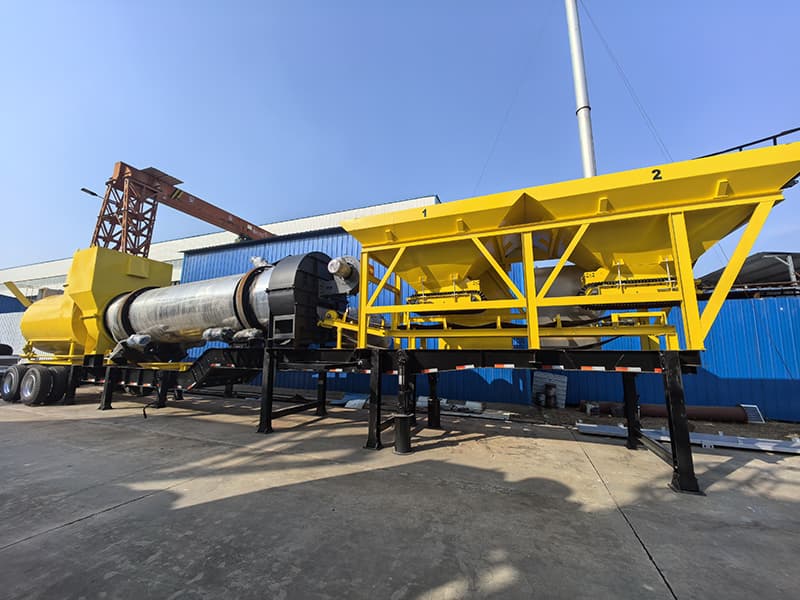
All basic parameters of mobile asphalt mixing station are the core basis for evaluating equipment adaptability, calculating construction cost and predicting production efficiency, and cannot be selected solely by hourly capacity value. In the procurement stage, it is necessary to first clarify the total project quantity, construction period, pavement quality standards, transfer frequency, site environment and fuel conditions, combine the production capacity calculation formula to calculate the reasonable production capacity range, and then compare the drying and energy consumption of intermittent and continuous equipment., measurement, environmental protection, mobile supporting full set of parameters, while avoiding common selection misunderstandings such as false production capacity, mismatch of working conditions, and neglect of supporting bottlenecks.
The mobile asphalt mixing station with reasonable matching parameters can not only give full play to the core advantages of flexible transfer and cost reduction of on-site mixing, but also ensure the stable quality of asphalt mixture and greatly reduce the extra costs such as construction shutdown, material waste and environmental protection rectification; if the parameter selection is unbalanced, it will directly cause delay in construction period, rapid increase in operation cost and premature aging loss of equipment. Before purchasing, it is necessary to ask the equipment manufacturer for the complete model technical parameter table, and make reduction calculation in combination with the field working conditions of the project itself, so as to select the mobile asphalt mixing station with excellent cost performance and practicality.