Mobile Asphalt Plant Buying Guide
In road maintenance, urban and rural highway construction, remote area infrastructure and multi-site decentralized construction scenarios, mobile asphalt mixing plant has become the core equipment of choice for engineering contractors by virtue of the core advantages of flexible transfer, rapid production and on-demand production. Compared with the traditional fixed asphalt mixing plant, mobile equipment to break the site and distance limitations, effectively reducing the cost of asphalt mixture transportation, to protect the quality of paved roads. This article provides a professional, practical mobile asphalt mixing plant procurement reference.
- what is a mobile asphalt mixing plant?
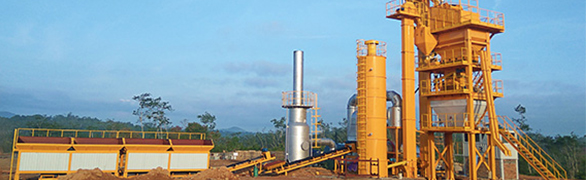
Mobile asphalt mixing plant is also often called portable asphalt mixing plant, is an integrated, transferable complete set of asphalt hot mix production equipment. It mixes raw materials such as aggregate (gravel, crushed stone, sand), asphalt binding material (asphalt), admixtures and recycled asphalt pavement material (RAP) according to scientific ratios, and produces hot-mix asphalt mixture (HMA) that meets road construction standards. The whole set of equipment abandons the huge civil structure of fixed mixing plant, and takes wheeled chassis, trailer and skidding frame as the bearing basis, specializing in serving the construction site near the production operation.
The mobile asphalt mixing plant has a number of outstanding advantages: the equipment is equipped with wheeled chassis and trailer structure, which makes it easy to transfer and has strong mobility; the whole machine has a high degree of integration and compact size, which is suitable for all kinds of restricted site operations. The output of the equipment covers 30-240 tons per hour, which is suitable for small road repair and medium-sized road construction. Relying on the modular pre-assembly process, installation and commissioning, dismantling and transfer of time-consuming, high production efficiency, very suitable for short-term and phased projects.
- Why Choose a Mobile Asphalt Plant?
It does not require complex civil construction, fast installation and dismantling, can be flexible to and from a number of construction sites, perfectly suited to road maintenance, long term projects, construction in remote areas. On-site production of hot mix asphalt mixture, shorten the transportation distance, reduce the loss of material cooling, not only to save fuel and transportation costs, but also to protect the quality of paving, while the equipment occupies a small area, environmentally friendly, is the ideal choice for multi-site, short-term projects.
Compared with the traditional fixed asphalt plant, mobile asphalt plant mobility, flexible deployment, without spending a lot of time to build infrastructure. Whether it is urban road maintenance, rural highway construction, or field emergency construction, can be quickly put into production. In-place mixing and discharging, effectively avoiding long-distance transportation of material segregation, cooling problems, while compressing the logistics expenditure, comprehensively enhance the quality of pavement construction.
- Types of Mobile Asphalt Plants
According to the mixing process, mobile asphalt mixing plant is mainly divided into two categories of drum-type continuous mixing plant and intermittent batch mixing plant, the two working principle, performance characteristics, applicable scenarios are significant differences, but also the core of the procurement selection of differentiation, the following is a detailed breakdown for you to compare.

(A) Mobile drum-type continuous asphalt mixing plant
This is the most widely used mobile model in the engineering field, and also the most portable category. The whole set of equipment relies on a single rotating drum to complete the whole process of aggregate drying, heating, asphalt mixing, continuous feeding of raw materials, uninterrupted discharging of the mixture to achieve continuous production.
The overall structure of the equipment is streamlined, usually integrated in 1-3 trailers, the number of parts is small, the transfer, installation, dismantling process is simple, a single person with small equipment can complete the basic operation. The logic of equipment operation is simple, the threshold for starting is low, and the daily maintenance workload is small, so the comprehensive operating costs are lower. Stable production capacity and high output efficiency, 30-240 tons / hour capacity of the full range of models, while the compatibility of recycled asphalt (RAP) is excellent, is the first choice for pavement maintenance, rural roads, long line segmentation construction projects.
(B) Mobile batch asphalt mixing plant
This model follows the precise mixing process of the stationary batch mixing plant and is a high-precision production equipment. The working process is divided into several procedures: the aggregate is dried first, then sieved and classified according to the particle size and deposited into the hot bin, and then the system weighs all kinds of aggregates, asphalt and fillers accurately, and puts them into the mixing cylinder to complete the mixing, and produces a batch of asphalt mixture every 40-50 seconds.
Its biggest advantage is the high proportioning accuracy and flexible formula, which can be adjusted at any time according to the construction requirements of the proportion of raw materials, add all kinds of additives, and the output of the mixture is of uniform and stable quality, which is able to meet the strict technical specifications of highway, airport runway, urban core main road and other high-standard projects. Even if a project requires a variety of ratios of asphalt mixture, the model can also be easily dealt with.
- Key Factors to Consider Before Buying a Mobile Asphalt Plant
Mobile asphalt plant and fixed asphalt plant is a road project two mainstream production equipment, the two in the structure, transfer, capacity, cost and applicable scenarios on the obvious differences, combined with the project requirements for a reasonable choice, can effectively improve construction efficiency, control operating costs.
- Structure and transfer capacity
The mobile asphalt plant adopts a modular trailer and wheeled chassis design, with a compact overall structure. It does not need to pour a large concrete foundation, and only needs to simply level the site for operation. The equipment is easy to dismantle and install, and can be transferred and resume production in 24 to 72 hours. It can be flexibly transferred to and from multiple construction sites, and can be normally transferred even in mountainous areas, narrow roads and other complex areas. On the other hand, fixed asphalt plant belongs to large permanent equipment, which is bulky and has many components, and must be constructed on heavy reinforced concrete foundation, with a long period of civil construction, and basically can not be relocated after landing, forcing transportation is not only costly, but also prone to cause equipment damage.
(B)Production capacity and mixing quality
The mainstream hourly output of mobile station is 30-240 tons, mainly small and medium-sized capacity, which can meet the needs of small and medium-sized projects and daily maintenance. Among them, there is limited space for formula adjustment in the drum model, and the accuracy of the batch type is better, but the overall precision is not as good as that of the fixed equipment. The fixed asphalt plant has a wider capacity range of up to 400 tons/hour, which can realize all-weather large-scale continuous production. It is equipped with a complete screening, storage and high-precision weighing system, with precise proportioning and the ability to flexibly switch between a variety of mix formulas, which fully meets the material requirements of high-standard projects such as highways and airport runways.
(C)Comprehensive cost
The initial investment of the mobile station is lower, eliminating the large amount of civil construction costs, covering a small area, and the site rental cost is also less, so the capital is returned quickly. However, frequent transshipment will continue to generate additional expenses such as transportation, overrun permits, dismantling and installation. Fixed station procurement, civil construction, site acquisition and other initial investment is high, the return on investment cycle is long, but no need to repeatedly relocate after completion, no transfer costs for long-term operation, lower maintenance costs per unit of production capacity, more suitable for long-term stable operation.
(D)Material Transportation and Applicable Scenarios
This is the most critical distinction between the two. Mobile station can be arranged in the construction site, asphalt mixture production, direct supply of materials, significantly shorten the transportation distance, to avoid material cooling, segregation, while saving logistics costs, very suitable for long-term segmented construction, multi-point maintenance, remote mountainous areas and emergency repair and other short-term, decentralized projects.
As a regional centralized production center, the fixed station radiates to the surrounding construction sites, and all the mixes need to be transported over a long distance, which has high logistics cost and easily affects the paving quality. It is more suitable for the project is concentrated, stable demand for materials in the region, mostly used for urban road network reconstruction, large-scale infrastructure projects, as well as the scene of perennial supply of asphalt materials to the outside world.

- Mobile Drum Mix Plant vs Mobile Batch Mix Plant
(A) Fast production speed
This is the most core advantage of mobile equipment. The engineering team can be based on the construction progress, the equipment is free to transfer to the various operating points, especially suitable for highway reconstruction and expansion, long road maintenance, multi-point municipal maintenance and other mobile projects. For remote areas such as mountainous areas, villages and islands where transportation is inconvenient and fixed mixing stations cannot be built, mobile mixing stations are the only feasible production solution, completely breaking the site restrictions.
(B) All-round cost reduction and efficiency increase
Firstly, save the transportation cost of mixture: realize on-site production at the construction site, the hot mix asphalt mixture is directly transported to the paver, which greatly shortens the transportation distance. Hot-mix asphalt cooling speed, long-distance transportation not only need insulation tanker, but also cause the performance of the mixture degradation, the production of nearby not only save fuel, vehicle loss, but also to avoid the quality problems caused by transportation. Second, reduce the initial infrastructure investment: eliminating the fixed mixing plant concrete foundation, site hardening, permanent ancillary facilities and other high civil construction costs, the initial investment pressure is smaller. Thirdly, lower site rental cost: the equipment covers a small area, no need for a large exclusive site, temporary rental of small sites can be used, site rental expenses are significantly reduced.
(C) On-site production
The shorter the time from production to paving, the better the temperature is maintained, and the better the compaction, bonding and other core indicators are guaranteed. The mobile mixing plant produces on-site and uses it instantly, effectively avoiding problems such as cooling and segregation of the mixture during long-distance transportation, and improving the quality of pavement paving from the source. Meanwhile, the operator can control the ratio of raw materials and production status, adjust the production details flexibly, and further optimize the quality of finished products.
(D) High space utilization
The compact structure design allows the equipment to adapt to the narrow space in city streets and alleys, inside factories and narrow construction sites. The new generation of mobile mixing plant is equipped with high-efficiency bag dust removal and noise reduction devices, and the dust and noise emissions are in line with the national standards; coupled with the mature recycled asphalt material utilization technology, it not only reduces the solid waste pollution, but also practices the green construction policy, which makes it easier for it to pass the environmental protection inspections around the world. At the same time, the operation range of the equipment is centralized, and the damage to the surrounding land and vegetation is far less than that of a fixed mixing plant.
(E)Wide range of applications
In terms of project scale, it can undertake small-scale pavement repair, medium-sized municipal roads and large-scale highway maintenance projects; and in terms of project type, it can be adapted to road renovation, airport supporting projects, park roads, temporary right-of-way, post-disaster road repair and other scenarios. Part of the lightweight ultra-mobile models, can also be used for emergency temporary construction, strong practicality.
- Mobile Asphalt Plant Transportation and Installation Considerations
Mobile asphalt mixing plant belongs to the large amount of investment in engineering equipment, the price range is extremely large, from hundreds of thousands to millions. Procurement can not just look at the surface parameters, need to combine the project scale, frequency of use, budget, local policy and other multi-dimensional comprehensive consideration, the following six elements are the core basis for purchasing decisions.
(A) Matching capacity
Equipment capacity (tons / hour) is the primary selection index, be sure to match the capacity of the average daily construction volume, rather than peak production. If you buy large capacity equipment to cope with occasional high production conditions, long-term low-load operation of the equipment will result in increased fuel consumption, uneven wear and tear of parts, and higher unit production costs; on the contrary, insufficient capacity will result in the production not being able to keep up with the paving progress, resulting in downtime and waiting for the project to be completed. Reference selection criteria: 20-80 tons/hour small-sized equipment for daily road repair and sporadic maintenance; 80-160 tons/hour medium-sized equipment for regular municipal roads and rural highways; 160 tons/hour large-sized equipment for large-scale highway projects and centralized and continuous construction. At the same time, it is also necessary to combine with the enterprise's future business expansion plan to reserve a certain capacity space.
(B) Determine the mixing process
Combining the characteristics of the two types of machines, the logic of selection should be clear again: for multi-location transshipment all year round, single mix formula, and the pursuit of high cost-effectiveness, give priority to drum-type continuous mixing plant; for high-standard highway and airport projects, which require a variety of mix formulas in one project and have stringent requirements for mixing accuracy, choose intermittent batch mixing plant. At the same time, check in advance whether the project needs to use a large amount of recycled asphalt, and the drum type plant is more advantageous in terms of RAP dosage suitability.
(C) Evaluate the need for mobility
First of all, count the number of times the equipment is transferred every year and every month: if high-frequency transfer (many times a month to change the site), give priority to the integrated trailer, single chassis ultra-mobile models, less disassembly of the equipment, hauling and transferring of convenient; if low-frequency transfer (months or even a year to move once), you can choose the skidding type, semi-mobile equipment, this kind of equipment capacity is greater, greater stability, taking into account both the capacity and the base of the mobile ability. At the same time, we also need to consider the construction terrain, mountainous areas, muddy construction site priority for tracked models, cross-country through the better; long-distance inter-regional transfer, containerized equipment, strong protection, logistics and transportation is more convenient. In addition, it is better to know in advance about the height, width and weight limitations of the passing roads, so as to avoid the obstruction of large-scale equipment transportation.
(D) Accounting for the full life cycle cost
Many purchasers are prone to fall into the "only choose the lowest price" misunderstanding, and the comprehensive cost of equipment includes the purchase price, transportation costs, installation costs, operation and maintenance costs, accessories and other parts. First, the purchase price: the same capacity, the drum type equipment purchase price is lower, batch type due to the complex structure of the price is higher; brand new equipment to enjoy the full warranty. Third, additional costs: equipment transfer trailer fees, over-the-road transportation permit fees, site leveling fees, environmental certification fees, etc., should be included in the budget in advance. Overall recommendation: give up low-priced poor-quality models, poor-quality equipment, high failure rate, frequent maintenance, downtime caused by the loss of the project is far greater than the difference in the purchase price of the machine.
(E) Screening regular manufacturers
Mobile mixing plant is not a simple splicing of equipment, you must choose to focus on research and development and production of mobile equipment of the regular manufacturers, rather than only do fixed mixing plant, simple transformation of the product of small workshops. Before purchasing, check the qualification of the manufacturer, industry reputation, actual landing cases, and prioritize the brand with many years of experience in engineering equipment manufacturing and perfect national service network. Focus on examining the after-sales system: including equipment installation and commissioning guidance, operator training, warranty period, the speed of supply of spare parts, door-to-door maintenance service capacity. Engineering equipment, once the remote site failure, after-sales response is not timely will directly lead to project stagnation, perfect after-sales equipment is the guarantee of stable operation. At the same time, pay attention to the degree of automation of the equipment, PLC intelligent control system can reduce the difficulty of operation and improve the accuracy of production.
(F) Compliance with local regulations
The environmental emission, noise and dust control standards for engineering equipment vary from place to place, so before purchasing, be sure to consult the local housing construction and environmental protection departments in advance to clarify the emission requirements of equipment, temporary construction permits, and the process of mobile equipment reporting. Priority is given to the purchase of models equipped with high-efficiency dust removal, quiet system, exhaust gas purification device, to ensure the smooth passage of the environmental assessment. At the same time, the field survey of the construction site: to confirm the site leveling, drainage conditions, in and out of the vehicle traffic routes, power supply, raw materials (aggregate, asphalt) stacking space, to ensure that the equipment into the site can operate normally.

- Understanding Mobile Asphalt Plant Costs
(A)capacity and technology
Capacity is the most intuitive factor affecting the price of the equipment, the mainstream mobile asphalt mixing plant hourly output range of 30-240 tons. 30-80 tons / hour small equipment structure is simple, mostly used for pavement maintenance and repair, the price is low; 80-160 tons / hour medium-sized models are suitable for municipal, rural road projects, the highest cost-effective; 160 tons / hour or more large equipment with materials and supporting specifications are higher, and costs The price rises accordingly. Selection should be combined with daily construction volume to avoid wasting resources by blindly pursuing large capacity.
The mixing process further widens the price difference, and the equipment is divided into two categories: drum type and intermittent batch. Drum type has a streamlined structure, no need for complex screening and weighing system, and the price is 20%-30% lower than batch type under the same capacity, which is suitable for regular projects with fixed formulas and frequent transfer of site. Intermittent batch equipment has high mixing precision and adjustable formula, which can meet the high standard construction of high speed and airport, but it has many parts and complicated manufacturing process, and the overall price is higher.
(B)Structure and accessories
Mobile structure design will produce obvious price difference. One-piece trailer model is flexible for transshipment, and the reinforced chassis enhances the cost; crawler is suitable for mountainous, muddy and other complex terrain, the cost of walking mechanism is higher, and the price is about 15% higher than the ordinary trailer model; container type is convenient for long-distance transshipment, and the semi-mobile structure is simple and the cost is the lowest, and it is suitable for long term stationary operation.
Equipment materials and core components determine the product grade, high-quality models use wear-resistant and anti-corrosion steel, with brand burners, reducers, mixing liners and other components, the purchase price is higher, but the operation is stable and the failure rate is low. And low-priced products use low-quality materials and miscellaneous accessories, save money in the early stage, the high cost of maintenance in the late stage. In addition, environmental protection, dust removal, asphalt regeneration, intelligent control systems, as well as storage silos, generator sets and other optional devices, but also according to different functions, so that the overall price of 10% -30%, need to be combined with the construction requirements of the need to install.
(C)after-sales service
After-sales service is a hidden cost that can not be ignored. Regular factory has a mature R & D, production and quality inspection process, equipment stability is stronger, while building a perfect after-sales network, can provide installation and commissioning, operation training, parts supply and door-to-door maintenance and other services, the comprehensive use of the lower cost, the offer will be higher than the small workshop products.
Some small manufacturers and labeled products focus on low prices, simplify the production process, omit quality control and after-sales links, equipment workmanship is rough, once the site malfunction, not only difficult to repair, but also direct delays in the construction period, but cause greater losses, do not just greedy for low prices when purchasing.
(D) transportation and landing
In addition to the equipment itself, transportation, installation and compliance procedures will also affect the overall cost. Mobile asphalt mixing plant mostly belongs to the ultra-limited equipment, cross-regional transit need to apply for permits, equipped with escort vehicles, long-distance transportation, complex road conditions will increase logistics spending. Projects with high transfer frequency, the long-term accumulation of transportation, dismantling and installation costs should not be underestimated. At the same time, site formation, pipeline docking, equipment commissioning and other installation work, as well as environmental reporting, construction permits and other formalities, will also incur corresponding costs.
- Common Mistakes to Avoid When Buying a Mobile Asphalt Plant
As a high-value engineering equipment, procurement errors will directly cause economic losses, schedule delays, combined with the industry's hands-on experience, summarize the five high-frequency procurement mistakes to help you avoid the pit
(A)Blind pursuit of large capacity
Many purchasers in order to cope with occasional high production conditions, blind procurement of large capacity equipment. Long-term low-load operation of the equipment, not only fuel consumption soared, parts wear and tear, but also cause idle funds, waste of space. Correct practice: the average daily production of the project as the core selection basis, the peak period can be solved by extending the operating hours, staggered production.
(B)Compare only the price
Low-priced equipment commonly used low-quality steel, low-end motors, simple dust removal system, short-term seem to save the cost of purchasing a machine, but the use of frequent failures, maintenance, downtime waiting for maintenance caused by the loss of the project, the additional cost of maintenance parts, will far exceed the difference in the purchase price. At the same time, poor quality equipment emissions do not meet the standards, but also face environmental penalties. Procurement of core principles: comprehensive comparison of quality, configuration, after-sales, choose cost-effective products, rather than the lowest price products.
(C)Choose the wrong equipment manufacturers
Some manufacturers do not have mobile equipment R & D capabilities, directly to the fixed mixing plant simply reduced after the transformation as a mobile equipment sales. These products have poor mobility, cumbersome disassembly and installation, unstable center of gravity, and are very prone to safety problems during the transfer process. Be sure to choose manufacturers specializing in the research and development and production of mobile mixing plant, and field study the real operation of the equipment cases.
(D)Ignoring the need for transfer
Before purchasing, there is no statistics on the frequency of transfer, and the batch-type equipment with complex structure is purchased for the maintenance project with multiple transfers per month, which results in time-consuming and labor-intensive transfers and greatly reduces the construction efficiency. Be sure to clarify the equipment use scenarios, transfer frequency, terrain conditions, and then determine the equipment mobile structure and model.
(E)Neglecting supporting equipment and compliance procedures
Only purchasing the main mixing plant, and then purchasing the auxiliary equipment separately, there is a mismatch of interfaces; or after the equipment is delivered to the site, it is found that the environmental protection and construction permits have not been issued, resulting in the equipment not being able to be put into operation. When purchasing, synchronize the planning of a full set of auxiliary equipment and dock with the local authorities for formalities in advance, so that the equipment, formalities and auxiliary equipment can be put into place in a trinity.
In the actual procurement process, first of all, according to the engineering standards, mix formula, transfer frequency to determine the core drum or batch type models; then combined with the average daily project volume to match the reasonable capacity; comprehensive consideration of equipment quality, manufacturer strength, after-sales service, full-cycle cost, refusing to low-priced low-quality products; at the same time, planning ahead of the transportation, installation, compliance procedures, to avoid all kinds of procurement misunderstandings.
Only to achieve the appropriate model, reasonable capacity, cost control, perfect after-sales service, in order to let the mobile asphalt mixing plant to play the maximum value for the project to reduce costs and increase efficiency, to achieve a higher return on investment.