How to Set Up an Asphalt Mixing Plant?
During road construction, the asphalt mixing plant is the key capacity equipment, directly affect the ashpalt mixture quality, construction effciency and overall project‘s revenue. A set of compliant, standardized plant construction program can not only safeguard the quality of all kinds of roads paving, but also cut down the energy consumption, spare the environment penalty, minimize equipment failure and downtime loss.
This paper integrates the AASHTO, ASTM, EN and domestic road construction specifications, integrating the asphalt mixing plant construction station a complete process, taking into account the needs for positioning, equipment selection, site selection, formalities, infrastructure installation, commissioning test production, operation and maintenance control of the ten core modules for new construction and expansion projects popularized practicality programs.
Define Your Asphalt Production Requirements
The first step to build a station is to lock the production demand exactly. All equipment setup, size of site, environmental standards are based on the production. We can avoid unnecessary oversize equipment, redundantly set up the system or complying standards not engough problem. The essentials is four dimensions, the raw material formula, production method, testing quality, environment and safetyt.
Raw material configuration and mix formula design
The specification of raw material is the key factor to the quality of hot mix asphalt mixtures (HMA). It is essential to develop the specification of raw material and ratio during the early phase of construction, and get the official JMF construction ratio confirmed. The main raw materials are aggregate, asphalt binder, mineral filler and functional additives, which can be used in combination with RAP recycled asphalt for cost control. Aggregate takes 92. 8% of sum weight and is the main base components containing of crushed stone, gravel, sand and stone chips, and the gradation must meet the project design specification that pass AASHTO T27 sieve analysis machine to control the gradation.
Roadbitumen applies PG performance grading system, it can adapt to regional climate and road condition. Roadbitumen should be heated to 110 -165 during production in order to consider viscosity of the asphalt standard, high temperature easy to aging and low temperature can not wrapped comprehensive aggregate.
Addition of mineral powder filler, warm mixing agent, modifiers and other additives, can improve the mixture anti-cracking, high temperature resistance, waterproof capacity. All formulates, must to laboratory trial mixing, set approved control JMF ratio and strict tolerances before batch production.
Requirements related to standardized manufacturing process
Asphalt mixing production has fixed process parameters, and the plant equipment should be compatible with this standard capacity. The entire process is detailed below: aggregate stacking and transportation drying and heating screening and mixing discharge of finished products, the whole process should be temperature-controlled and steady, and the proportion could be accurate.
Sand and aggregate needs to pile up in a certain schedule, since they are moist, be fed into the drying cylinder through the cold bin, then raised to the temperature of 115-177 to be dried fully. Once the dried aggregate is held under the sieve and weighed, then being uniformly coated with asphalt and mineral powder, and the mixing time of intermittent mixer will be set to 25-30 seconds, so that aggregate is uniformly covered and ensure the quality and avoid white material and segregation.
The discharge temperature of hot mix asphalt mixture must be stabilized at 138 C - 177 C. Warm mix asphalt can be moderately cooled, and the construction quality and energy saving effect should be considered. The capacity should be stabilized in all links of production. Parameters should be strictly controlled to make all batches qualified.
Testing for quality and conformity to industry standards
Asphalt production complies AASHTO, ASTM, EN 13108 and DOT traffic rules. The construction of the station should establish standard laboratory on site, maintain the constant temperature 18-27 , with a full set of test instruments.
Everyday need to test aggregate gradation, asphalt content, mixture gap rate, mineral gap rate and other core indicators, the establishment of FPC factory control system, through the stereotypes of the test and the regular sampling, data traceability, to ensure the product compliance with the standards.
Requirements for environmental protection, safety and regular operation
The modern mixing plant should consider the production capacity and green emissions production, should be equipped with exhaust gas treatment equipment, such as bag filter, scrubber tower, etc., for controlling particulate matter, NOx, VOCs and other pollutants emissions. At the same time improve equipment protective, fire ventilation system, and build up a standardized safety production system.
Choose the Right Type of Asphalt Mixing Plant
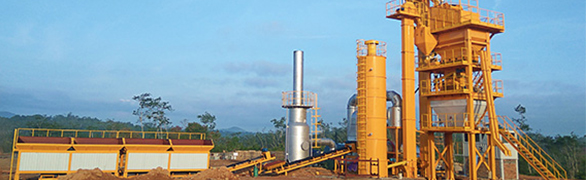
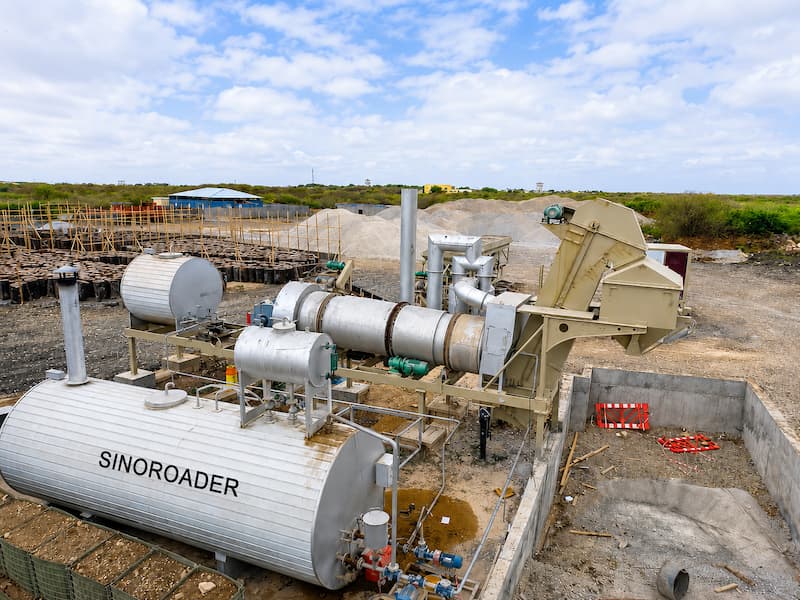 Equipment selection determines the production accuracy, capacity efficiency and operation and maintenance costs, the mainstream industry is divided into intermittent batch plant, continuous drum station, and is divided into two categories of fixed and mobile, need to be combined with the size of the project, the duration of the project, the type of mixture comprehensive selection.
Intermittent batch plant(Batch Plant)
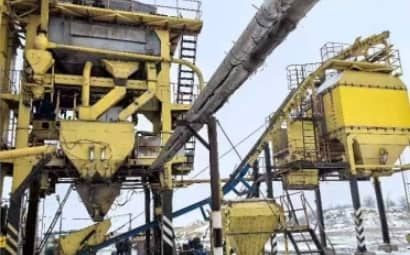
Intermittent batch plant is to use standalone batch of weighing and mixing, and the aggregates are required to be dried and sorted, and accurate weighting and mixed together with asphalt by single cycle. This will get very high accurate proportioning, amount error of about +/-0.5%, asphalt error about +/-0.25%, which is applicable for high standard project.
The equipment has flexible production changeover, which could switch to multi-specification JMF formula rapidly, to meet various construction requirements. Weaknesses are low continuous production capacity, complex structure and high procurement and maintenance costs, suitable for high standard, multi-formula and long-period construction.
Continuous drum mixing plant (Drum Plant)
According to the structure, the drum plant is divided into downstream and counter-current type. The counter-current type can be finished drying and mixing continuously in the same tube with discharging uninterrupted along assembly-line, which has higher heat exchange efficiency, lower emission, and leads the market as the dominating.
The main advantages are: large capacity, simple operation and maintenance, high cost performance, the basic road projects in large-scale, long construction period, single formula. The disadvantages are: proportioning accuracy is a little lower, poor flexibility of production change, it is not suitable for high frequency production change the high grade project.
Fixed VS Mobile Mixing Plant
- Fixed type: device has solid structure and big capacity. It is fit for regional normalized fixed-point production, and it is a first choice for regional mixing center.
- Mobile type: modular design, convenient for assembled, disassembled, transported and quick construction. It is suitable for remote area and temporary decentralized plant. It can be used repeatedly and reduce the cost.
Omni-directional Selection Decision System
Selection according to the standardized logic:
- Select counter-current drum station for big single batch project;
- Select batch station for high-standard multi-formulation project;
- Select fixed type for long-term fixed point operation;
- Select mobile type for temporary transfer project.
New equipment that can accept RAP regeneration, warm mixing technology and automation control system should be given priority to realize long-term reuse.
Select an Ideal Plant Location
The choice of the site directly influence the logistics costs, approval process and production stability, and the errors in site selection can easily raise the cost, environment complaint, production suspension and rectification, etc. The high quality site should meet the five requirements, including: convenient logistics, raw material close, standard-compliance, ground steadiness and expansion.
Near to the market and the raw materials source, compressed logistics costs
Hot mix asphalt mixture should be laid within the 1-2 hour time limit, the best service radius should be between 20km to 50km, which would keep the mixture‘s temperature within the allowable range while cutting down on transportation costs. The site is required to be located near the aggregate sources, storage and asphalt transportation locations. If the RAP recycled materials needed to be used, arrange must be made in advance for the recycled raw materials.
Developing the already selected road transportation services to cater for the congested routes
Traffic load in the mixing plant is heavy, and the station must be set in near the main road, national road or highway entrance and exit. station has enough space for weighing, turning, queuing, large stations may use the railroad and marine transportation to reduce the bulk transportation cost.
Regulatory and planning constraints, which avoid environmental effects and policy and political risks
The site should be alternative to sensitive location, such as residential area, schools, hospitals and ecological protected zones. The site should also follow the selection criteria about wind direction, it should be downwind location relative to residential area in the year around. There should be green buffer areas to disturbed dust, noise and smell nuisance and prevent complaints of shutdown factory.
Geological and topographical conditions required to satisfy production requirements
Preferred land is a little higher, flat and dry with smooth surface for good drainage and water discharge during rainy season; the land must have a hard and stable soils for the needs the heavy machinery loading as the site and replace and compact the soft soil before, as well as reinforce the pile foundation for causing the equipment to sit and distort.
Complete supporting facilities, reserve a space for expansion, and put on a complete supporting facilities
High voltage power, production water, fuel system, communication network and other infrastructures should be prepared within the site. Plant planning should include raw material storage, equipment operation and maintenance, parking lot and greening, and also to reserve capacity for long-term upgrade of production capacity and equipment alteration in the long run.
Avoidance of Common Misconceptions in Site Selection
It is crucial to prevent above five biggest misunderstanding: near residential, soft geology, no drain, narrow transport and no expansion space, the analysis of environment and traffic impact should be finished before the station construction in order to smooth the landslide formalities.
Obtain Necessary Permits and Regulatory Approvals
Asphalt mixing plant is one kind of industrial sewage projects, formalities approval cycle is 6-24 months, is the key of the station core links. Not finished procedures strictly forbid to put into use, otherwise be punish, suspend and rectified, the core involves environment protection, construction, security, operation of four major types of licenses.
Essential environmental authorisations (highest rank)
Noise from the mixing plant, the generation of particulate matter, NOx, VOCs and other emissions will be exhaust in production, and a complete and comprehensive set of emission procedures must be followed (with the NSPS Subpart I new source standards), and within 60-180 days of commissioning, a stack emission test must be performed. The main procedures consist of EIA report, air emission permit, storm water discharge filing and sewage discharge filing, solid waste disposal filing and the SPCC leakage prevention plan.
Land and Construction Procedures
Including land use side compliance certificate, planning permission, civil construction and equipment installation filing audited by the housing and planning department to verify the nature of the site, the layout of the plant and all of its components, and the authorisation of the basic construction program.
Safety and Operation Procedures
It must be apply by you for industrial and commercial operation license, safety production filing, and put into action OSHA security standards, strengthen fire emergency, limited space operation, apparatus protection plan, fully prepared fire security acceptance and safety scheme filing.
Established approval procedure and landing skills
- Approval process: site assessment -> ENVIRONMENTAL IMPACT ASSESSMENT Preparation and publicity -> dock with the department -> data submission -> on-site verification -> equipment acceptance -> emission test -> Issue procedure.
- Employ a local professional consulting teams represent the enterprise, take the initiative to dock with the competent department, finished the public notification, and apply the general permit policy to shortening the approval cycle.
Prepare the Site and Infrastructure
Construction quality of equipment after the construction of starting infrastructure construction is to determine the ability to hold stability and service life and the aim of overall cycle of 4-12 weeks, is avoiding the later equipment vibration settlement foundation core to fail.
Debris and earth removal from site, and level application
Remove all debris and vegetation, its level accuracy and slope adopted “high in the middle and low around” design, slope 1.5%-2% for smooth drainage. Replace and tamp soft backfill, foundation reinforcement shall satisfy the bearing requirement of equipment;
Drainage and Environmental Protection Infrastructure Construction
Construct the drainage system uses the standards set by SWPPP, and construct the open ditch, dark ditch and sand filtering machine to accomplish the rainwater purification and recycling. Construct the equipment and silo basement above the historical flood level to prevent flood accident.
Equipment specialized foundation construction
Heavy equipment (drying cylinder, mixing mainframe, powder bin, etc) reinforce concrete foundation strictly according to the drawing of the manufacturer and reserve correctly the position of a bolt. The foundation of intermittent equipment should be more accurate, and the foundation of moved equipment can simplify the form by using temporary hardened ground. The aggregate and RAP stacking area should be fully hardened to avoid the moisture of raw materials combined with each other.
Full set of supporting infrastructure
Connect to high-voltage power distribution system, set up backup generator to avoid power failure; construct water pipe system for production, fire fighting and life; write out standards of laying up fuel gas storage tanks and pipelines, as well as fire and explosion-prone items, simultaneously to finish supporting facilities such as factory lighting, security fence, laboratory, office place, weighbridge system and others.
Install Asphalt Mixing Plant Equipment
After the completion of infrastructure maintenance to start the installation equipment, installation accuracy directly affects the stability of equipment, mixing accuracy and energy consumption level. The conventional installation cycle 2-4 weeks, the longest large-scale stationary equipment up to 2 months. You need to strictly follow the manufacturer‘s specifications and safety standards.
Before-erection work
Ensures the appropriate foundation strength, flatness, position of anchor bolts, number of the equipment parts which check any transportation damage and lost property. Define the secure work space, install the safety equipment, such as protective gear and licensed operators, check safety lock and tag system.
A simple, multi-stage and loaded installation process
Installation steps as per the material flow direction:
- Install cold material transportation, drying and combustion system firstly;
- Then install dust removal and environmental protection equipment;
- Complete hot material screening, weighing and mixing system;
- Build asphalt, powder storage and transportation equipment;
- Finally dock and debug finished product silo, electronic control PLC system and security facilities.
The type of installation of each model changed
- Fixed equipment: focus on accurate calibration of elevation, coaxiality, permanent roaching, strict control of installation errors.
- Mobile equipment: focus on completing the modular splicing and fast interface docking, so that disassembly and assembly could be more convenient.
All rotary drive equipment should be subjected to laser calibration so that eccentric vibration problem could be solved completely.
installation safety and quality control
All special operations is licensed, and all the installer adopt safety protection measures. Ensure the entire device installation process complete record, checked, tighten the bolts, the interface sealed, run pipeline, to prevent leakage, wrong installation, leakage, and hidden dangers such as. Equipment installation after testing, without-load debug, material trial production, before the four link production standard testing, schedule 1-4 weeks, in order to ensure the high quality of production, passage of environmental acceptance of the key steps.
Conduct Testing and Plant Commissioning
Pre-commissioning Mechanical and Safety Verification
Thoroughly examine the mechanical framework, transmission parts, sealing system without jamming and damage; ensure electrical wirings, sensors, PLC controlling, safety interlock and emergency stopping are working well; ensure all fireproof, block out, dust collecting safety and environmental safeguard facilities reach up to snuff.
No-load test run and equipment calibrations
Maintain the full operation of simulation of the whole machine to troubleshoot irregular noise, vibration, run-off problem of the machine. And to ensure the automation control logic is normal. Precise calibration of system parameters and recording the calibration data, including the aggregate scale, asphalt metering pump, temperature and flow sensor.
Trial production and quality optimization with materials
The machine is used for aggregate drying test, so that the best parameters of combustion and temperature regulation are obtained; produce the mixture according to the JMF (Japan mixture standard), laboratory real-time detect parcel asphalt content, the real-time detect degree to grading, asphalt content, vacancy rate, fine adjustment equipment parameter of each indicator such as temperature are resolved white things, segregation, uneven temperature, etc.
acceptance of the production capacity and compliance with the environment
Confirm the rated capacity of equipment after the trial production is stabilized, ensure stable operation. Hand over to a third party for completion of exhaust gas, noise and dust test, acquisition of comply report, completion of official commissioning record and obtain legal production qualification.
Train Operators and Establish Maintenance Procedures
Perfect personnel training and management system is the core guarantee to stabilized production quality and characterized by decreased failure rate, longer life of each equipment and lower production cost.
comprehensive training for all positions
Operators, maintenance, experimenter doing layered training, including equipment operation, switching formulas, temperature control, quality testing, troubleshooting, safety and environmental protection, emergency handling and other content. Combined with factory producing practical teaching and on-the-job assessment, the company established the annual re-education mechanism, so each employee equipped with a license to work.
classified preventive maintenance system
Implement daily, weekly, monthly and annual maintenance system and cancel the inertial mode:
- Daily: check the belt, seal, dust, oil temperature and oil pressure;
- Weekly: check metering accessories and combustion system;
- Monthly: check the whole set of machine structure, wiring and piping;
- Annually: check the whole set of machine, exchange wear parts and correction of accuracy.
Keep high frequency wearing parts such as filter elements, liners, belts reserved as possible as; to slacken in downtime.
Digital Operation and Maintenance Management
Cherished with CMMS equipment management system, the digital recording of maintenance accounts, operation data, fault record and spare parts inventory information, fault warning and maintenance reminder and the high efficiency of operation and maintenance are all achieved. It satisfied all flat kinds of audit check demand.
Understand Asphalt Plant Setup Costs
The construction cost of the mixing plant is classified into the initial fixed asset investment (CAPEX) and the subsequent operating costs (OPEX), whose separate manifests are nearly two of initial capital investment and can be utilize for investment budgeting and profitability accounting, as well as will be optimized by control to obtain the cost decrement.
Cost Composition of Early Fixed Investment
Equipment purchase accounts for 50% -70% of the total investment, while the cost of a drum station capacity of the same batch station is 20% -30% less. Ancillary facility, formalities, testing, personnel training, etc. Followed by the cost of civil infrastructure and equipment installation. The total investment varies with equipment capacity, environmental protection configurations, site conditions.
Structure of production and operation expense in later stage
Material cost is 70%- 80% of Operating cost; energy cost occupied 15%-20%, the other labor, maintenance, transportation, depreciation equitment cost and so on. The industry has a single-ton mix production costing about US$40-80, differs much wildly with raw material price, equitment efficiency and capacity utilization rate.
Efficient cost reduction core strategy
Through precise selection so as not to waste equipment, locate close to the construction site to optimize logistics costs, raise mixing proportion of RAP recycled materials, employ warm mixing energy-saving technology, automate to spare labor force, conduct preventive maintenance to lower failures, enhance production capacity to dilute the depreciation cost, fully control production expenses.
Best Practices for Long-Term Success
After production and operation, the fine management of the mixing plant is the key to its long-term profitability, risk aversion and competitiveness promotion, and a continual system can be formed based on five aspects: quality, efficiency, safety, environment friendly and digitalization.
To strictly control the quality system and win the reputation of product in market
Strictly implement JMF proportion standards for different JMF, sampling of mix quality regularly, adjusting production parameters online. Standardize raw materials storage to realm, avoiding moisture and mixing, and establish the “analysis-adjustment-prediction” mode of quality control, to ensure the stable quality of paving.
Increase process efficiency and energy efficiency; Reduce energy consumption and losses
Optimization of combustion, drying and mixing parameters, rely on automation system, use the frequency conversion equipment to lower non-effective using energy. Reasonable planning of production scheduling, enhance the equipment Overall Equipment Effectiveness (OEE) and the capacity utilization rate, and lower the production cost per ton.
Adhere to safety compliance and eliminate business risks
To do a daily training to prevent safety accidents, the emergency drill, firm implementation of special operation scheme, have equipment and fire things regularly checker; bring some checks on water, finish the environment protection testing, sent out and review at short notice; Keep communities relations.
Implement green production and promotecircular production
Encourage high proportion of RAP recycler material and warm mix asphalt production technology to reduce consumption of raw material and energy. Upgrade low-NOx combustion and high efficiency dust removal equipment to reduce pollutant emission, adaptation to the industry‘s green development trend.
Data-driven management for ongoing optimization
By means of the production, energy consumption, maintenance and cost data, the company performs fine operation analysis, accurately figures out profit of each ton, continually optimize the full chain of purchase, production, operation and maintenance. And obtain stable long term profit.
Summarize
The construction of asphalt mixing plant is a complete closed-loop system of demand positioning -> model selection -> site selection -> compliance license -> infrastructure construction -> equipment installation -> commissioning -> operation and maintenance -> cost control -> long-term operation. It is not a simple procurement of equipment and site construction, and the standardization of each link can effectively avoid the misunderstanding of station construction, compliance risks and operation hazards, and realize high precision, low energy consumption, green and stable production, which can provide reliable guarantee for engineering construction and create sustainable economic benefits.