In the field of road engineering, pavement maintenance and infrastructure construction, the production, transportation and preparation of asphalt mixture is the core link that determines the project cost, construction efficiency and project quality. The traditional fixed asphalt mixing plant is subject to the site, geographical location, transfer capacity is more limited, the face of scattered points, remote, short construction period of the project is often unable to do. Mobile asphalt mixing plant by virtue of flexible transportation, rapid construction, on-site production, adaptability and other core advantages, has now become the mainstream equipment for road maintenance, rural infrastructure, field engineering, emergency repair and other scenarios. This article combines industry practice, explaining the definition of mobile asphalt mixing plant, the core advantages, and the difference between stationary equipment, applicable groups, common cognitive misconceptions and professional buying skills for construction companies, engineering units to provide a comprehensive reference.
What is a mobile asphalt mixing plant?
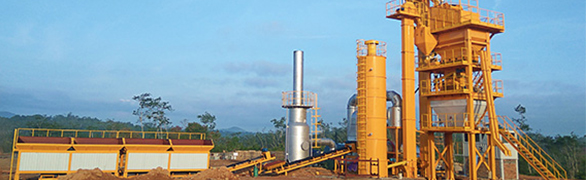
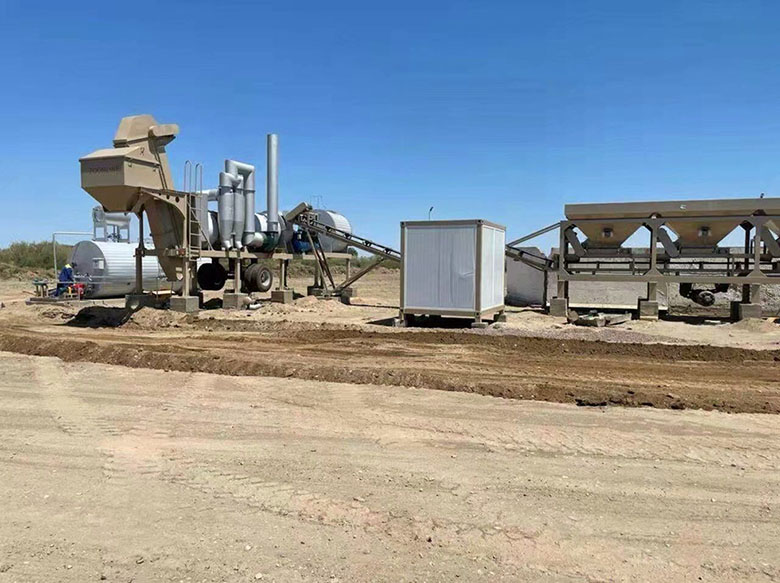
Mobile asphalt mixing plant is also often called portable asphalt mixing plant, is an integrated, can be transferred to the whole set of asphalt production equipment. It breaks the traditional mixing plant fixed site mode, can be directly deployed in the construction site or construction area around, in situ to complete the whole process of hot mix asphalt mixture production.
The equipment mainly dries, heats and mixes sand, gravel, sand and gravel aggregates with asphalt binding material to produce asphalt mixture that meets the construction standards. The finished material can be directly used in highways, municipal roads, parking lots, factory pavements, airport runways and other types of paving projects. With the popularization of the concept of green construction, the mainstream models at this stage support the mixing of recycled asphalt pavement material (RAP) to realize the recycling of construction waste.
Core structure and functional characteristics
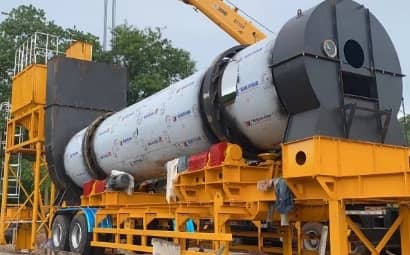
All the production modules of the mobile asphalt mixing plant are uniformly integrated in the wheeled chassis, trailer base or skid, with a high degree of integration of the whole machine. The plant can be flexibly transferred between different construction sites without large-scale dismantling, which is perfectly suited to the project mode of alternating operations in multiple locations.
Compared with the stationary asphalt mixing plant, it adopts a compact and integrated design, and the components are tightly arranged, so the overall footprint is greatly reduced. Even for temporary sites with narrow space, complicated terrain and limited access conditions, the plant can be successfully landed and put into operation.
In terms of production process, the mobile mixing plant is consistent with the traditional fixed equipment. Aggregate is thoroughly dried and heated first, and then the high-temperature aggregate is evenly mixed with liquid asphalt, making the whole production process mature and stable. At the same time, the modernized model strengthens the adaptability of recycled materials, and practices low-carbon and environmental protection construction requirements under the premise of guaranteeing production capacity and quality.
Classification of Mainstream Equipment
According to the production process, mobile asphalt mixing plant is divided into two main types, different types of adaptable engineering needs have their own focus.
The first one is batch mixing plant, which adopts the production mode of discharging materials in batches, and can precisely regulate the formula proportion of asphalt mixture. This type of equipment has strict control over the specifications of the mixture, which is very suitable for high-grade highways, key infrastructure and other projects with stringent requirements on construction standards. The modular design of the equipment is outstanding, the only shortcoming is that the overall portability is slightly lower than the continuous model.
The second type is the drum continuous mixing plant, which relies on the rotating drum to realize uninterrupted mixing of materials. With simple structure, easy dismantling and assembly, and stronger transfer capability, it is suitable for large-volume asphalt production with uniform formula, and it is also the main model of high mobility mixing plant in the market nowadays.
There are many variants of the plant to suit the terrain and transportation needs. The tire model conforms to the road driving standard and is suitable for regular highway transshipment; the crawler model has a strong gripping ability and can adapt to complex field terrain such as mountains, mud, potholes, etc.; and the semi-mobile model needs to be simply disassembled for transshipment, but has a higher production capacity, which takes into account both mobility and production efficiency.
Advantages for basic applications
Flexible transfer is the core highlight of the mobile mixing plant. For short-term projects, decentralized locations, and projects in remote areas, the mobile equipment can effectively eliminate the high cost of long-distance transportation of asphalt. At the same time, the equipment supports rapid construction, without complex infrastructure construction, and can be put into production within a short time after entering the site. In addition, near the production of materials can also significantly reduce the transportation vehicles to and from the effective reduction of exhaust, dust and other pollutant emissions, environmental performance is more outstanding.
2.Second, the core advantages of mobile asphalt mixing plant
Compared with the traditional fixed asphalt mixing plant, mobile mixing plant for today's diversified construction scenarios optimized and upgraded, from the operational flexibility, installation costs, productivity, environmental protection, operation and maintenance and other dimensions of the formation of differentiated advantages, but also the key reason why it is favored by many engineering units.
Relying on trailer and wheeled chassis design, the mobile asphalt mixing plant is flexible and free from single site constraints. For the short construction period, the construction of scattered projects, such as county road section maintenance, rural road network repair, multiple sporadic road repair and other projects, the equipment can follow the construction progress and constantly switch sites.
The efficiency of equipment transfer is very impressive, most of the models can be disassembled, transported, re-installed and debugged within 24 to 72 hours. The construction unit can follow the project rhythm of continuous operation, effectively improve the equipment utilization rate throughout the year, to avoid the waste of resources caused by long-term idling of large equipment.
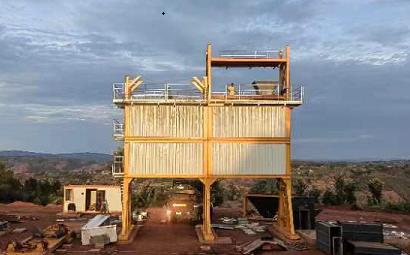
Fixed asphalt mixing plant needs to pour a large permanent equipment foundation, supporting sites, pipelines, fences and other infrastructure large amount of work. The mobile mixing plant almost does not need to build a permanent foundation, most of the models are placed directly on the level ground can be put into use.
The equipment is pre-assembled and docked at the factory, and the modularized design greatly simplifies the installation process, making the overall installation time much shorter than that of fixed equipment. The workload of site leveling, planning and infrastructure construction in the early stage of the project is sharply reduced, while the difficulty of site approval and formalities is also reduced, so that the equipment can be quickly launched into production after entering the site, which helps the project to seize the construction period.
On-site production is the core highlight of mobile mixing plant cost reduction. In the traditional mode, asphalt mixture needs to be transported from the fixed mixing plant to the construction site over a long distance, which generates high expenses in terms of fuel consumption, vehicle wear and tear, transportation labor, and scheduling management. The mobile plant produces materials directly on site, completely eliminating the long-distance transportation link and significantly compressing logistics costs.
The overall structure of the equipment is streamlined, covers a small area, site rental, preliminary procurement of lower investment for small and medium-sized projects, temporary engineering projects, the overall investment cost-effective. At the same time, equipment installation, daily operation and maintenance requires fewer personnel, further reducing the project labor costs, so that small and medium-sized construction companies can also be easily configured.
In urban road reconstruction, old neighborhood road renovation, factory construction and other scenarios, the site is generally small space, large equipment is difficult to enter the field. The mobile asphalt mixing plant adopts a highly integrated design, with each functional module closely combined, and the overall footprint is much smaller than fixed equipment of the same capacity.
Compact layout design makes it easy to move into all kinds of space-restricted construction sites, will not affect the construction progress because of site problems, broadening the scope of application of the equipment.
Asphalt mixture will continue to cool down during long-distance transportation, which not only affects the material compatibility, but also reduces the quality of road compaction. The mobile mixing plant realizes seamless production and use, and the output of asphalt mixture is fresh and at the right temperature, which guarantees the construction quality from the source.
The equipment is highly responsive and can flexibly adjust the production capacity according to the construction progress on site. In the face of emergencies such as rush schedule, emergency road repair, and sudden road damage treatment, the equipment can guarantee material supply in the first time, effectively avoiding the risk of delay and guaranteeing on-time delivery of the project.
Transportation vehicles are an important source of exhaust and dust pollution at construction sites. The mobile mixing plant reduces the traffic of a large number of freight vehicles, which directly reduces the exhaust emission, and at the same time relieves the traffic congestion around the construction site as well as the additional energy consumption caused by the congestion.
At this stage, all the compliant models are equipped with professional dust and noise reduction devices, strictly controlling the dust and noise pollution on site. At the same time, the equipment natively supports the mixing of recycled asphalt materials, recycling and reuse of waste pavement materials, reducing solid waste to landfill, and in depth fits the development direction of the construction industry's circular economy and green construction.
Modern mobile asphalt mixing plant is generally equipped with intelligent electronic control system, aggregate weighing, asphalt proportioning, material heating, mixing time and other processes can be automated to complete the mixing ratio is accurate and stable quality.
Especially the drum continuous model, the operation logic is simple and intuitive, the operator can be skilled after a short period of training, effectively alleviating the shortage of skilled technicians in the industry. The equipment supports a variety of mix formula switching, in the rated capacity range, can continue to produce stable asphalt materials in line with different construction standards.
Mobile mixing plant and fixed mixing plant core functions are the same, are used to produce hot mix asphalt mixture, but the two in the design concept, mode of operation, applicable scenarios have essential differences. Construction units need to combine the project scale, duration, site conditions, long-term planning and comprehensive selection, the following table + detailed explanation to clearly distinguish between the two types of equipment.
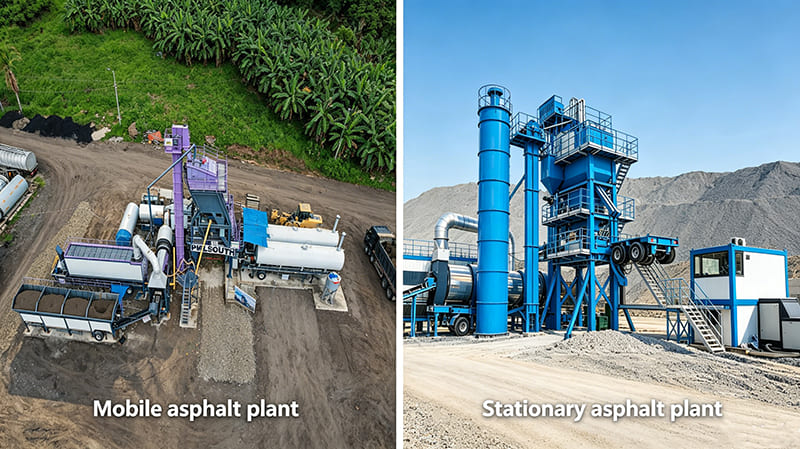
| Comparison dimension |
Mobile asphalt mixing plant |
Stationary Asphalt Mixing Plant |
| Mobility |
Strong mobility, supporting multiple transshipments throughout the year |
Fixed location, basically no further movement after commissioning |
| Installation time |
Hours to days, no permanent foundation required |
Weeks to 1-3 months, large permanent foundations must be built |
| Production capacity |
Mainstream 40-200 t/h, mainly small and medium capacities |
Higher capacities, generally 80-400 tons/hour and above |
| Suitable for projects |
Short-term projects, decentralized locations, remote sites, road maintenance |
Long-term projects, single large site, urban core infrastructure projects |
| Site requirements |
Small footprint, low site requirements |
Large footprint, need to plan for exclusive production plants |
| Installation cost |
Low upfront investment, low site preparation and approval costs |
Large investment in infrastructure and plant support, high initial cost |
| Operating Costs |
Extremely low material transportation cost, long-term High cost per ton for large-scale mass production |
High material transportation cost, low cost per ton under continuous mass production |
| Mix accuracy |
High quality, intermittent models for high precision ratios. |
Overall stability, suitable for ultra-high standard asphalt formulations. |
| Frequency of changeover |
High, multiple site changes in one season |
Very low, virtually no site changes |
| Initial investment |
Low total equipment cost |
Higher overall investment for equipment + ancillary facilities |
| Environmental performance |
Low transportation emissions, strong adaptability of recycled materials |
Mature emission control in the plant, but more emissions from external transportation of materials. |
Mobile Asphalt Mixing Plant
Advantage: Flexible equipment can be transferred to other sites, fast installation, low pressure on the initial capital investment; local production greatly reduces the logistics cost, suitable for rural roads, pavement repair, field infrastructure, site constraints and other types of projects; recycled materials are convenient to utilize, and environmental protection advantages are outstanding.
Shortcomings: the limit capacity of a single machine is limited, unable to meet the demand for continuous mass production of large-scale projects; if high-frequency inter-regional transfers all year round, equipment dismantling, transportation, reassembly will incur additional operation and maintenance costs; part of the continuous model, in the ultra-fine asphalt ratio production, the accuracy is slightly inferior to the high-end fixed intermittent mixing plant.
3.2Stationary asphalt mixing plant
Advantage: large production capacity, strong continuous operation ability, top mix proportioning accuracy, suitable for long-term fixed-point, large output construction projects; after long-term operation optimization, the cost of a single ton of material is lower under continuous mass production, and the overall stability of the equipment is very strong to meet the needs of airports, trunk roads and other high-standard projects.
Shortcomings: the equipment position is fixed, can not follow the project movement, the flexibility is very poor; installation cycle is long, foundation construction, plant support, approval procedures are cumbersome, huge investment in the early stage; production of asphalt mixture must rely on trucks to transport, long-distance transportation will increase the cost of logistics, and at the same time, cause the material to cool down, loss.
3.3Professional selection advice
If your business is based on short-term projects, multi-point decentralized construction, remote field projects, daily road maintenance, emergency repair, give priority to mobile asphalt mixing plant. The flexible transfer capability and on-site production mode can maximize cost reduction and efficiency.
If you are undertaking multi-year continuous construction, a single fixed site, large capacity demand for urban trunk roads, large transportation hubs, the city's overall road network reconstruction and other projects, the pursuit of long-term volume production benefits, fixed asphalt mixing plant is a more secure choice.
If the demand is between the two, both need a certain degree of mobility, but also want to improve production capacity, you can consider semi-mobile, containerized mixing plant. In addition, the selection should be combined with the local terrain and road conditions, environmental regulations, the use of recycled materials and other factors to make a comprehensive judgment.
The advantages of mobile asphalt mixing plant is not applicable to all construction subjects, its value in a specific unit, specific project scenarios in order to maximize the play. Clearly target users and suitable projects, is the premise of a reasonable allocation of equipment.
4.1the core applicable user groups
4.1.1Road engineering and pavement enterprises
This kind of enterprise undertakes all kinds of short-term paving contracts all year round, and the construction location changes frequently. Using mobile asphalt mixing plant, the equipment can follow the project synchronization transfer, completely solve the problem of asphalt long-distance transportation, while guaranteeing the freshness of the mixture, and improve the quality of pavement construction.
4.1.2 Municipal units, township management
Municipalities and townships are mainly responsible for the daily repair of roads, renovation of old pavements and maintenance of rural highways under their jurisdiction. These projects have scattered locations, small single project volume, and limited overall budget. Mobile equipment is quick to install, low investment, and simple to operate and maintain, which perfectly matches the needs of road operation and maintenance work.
4.1.3 Transportation department and public works unit
For the construction and maintenance of county feeder roads, bridge supporting pavement, temporary bypass roads, and the operation and maintenance of large rural road networks, mobile mixing plants are flexible in deployment and quick in response, and can be quickly put into emergency construction and regular maintenance work.
4.1.4 Small and medium-sized construction enterprises
Many small and medium-sized construction teams are mainly engaged in paving projects such as community roads, parking lots, factory floors, and commercial supporting pavements. With low procurement threshold, fast entry speed and simple operation, the mobile mixing plant is a good choice for small and medium-sized construction enterprises to expand their business and control costs.
4.1.5 Remote area infrastructure project team
Mining access roads, oil and gas field supporting projects, deep mountain field infrastructure and other areas with poor transportation conditions make asphalt long-distance transportation difficult and costly. Mobile mixing plant can be directly stationed at the site to produce materials, which has become the essential equipment for such remote projects.
4.1.6Airport and large site operation and maintenance team
The repair and localization of airport runways and large park pavements require fast construction speed and timely supply of materials. The mobile mixing plant can be produced nearby, avoiding the delay of long-distance transportation of materials and guaranteeing the normal use of the site.
4.1.7 Seasonal construction and emergency repair team
Some areas are affected by the climate, asphalt construction there is a clear peak season, mobile equipment in the construction season to move around a number of sites to improve the equipment utilization rate. In flooding, geological disasters and other emergencies, road emergency repair work, the equipment can also quickly enter the scene, complete the road surface repair.
Rural highway construction and renovation, daily maintenance of roads at all levels, sporadic pavement repair, is the most basic and common application of mobile asphalt mixing plant scenarios. Small and medium-sized paving projects with shorter construction period and scattered construction sites, as well as sites with difficult access and narrow working space, are also very suitable for this equipment.
At the same time, focusing on cost control, requiring the use of recycled asphalt, the implementation of green construction projects, mobile mixing plant can also be used to achieve the dual objectives of cost reduction and environmental protection.
For long-term fixed-point, continuous operation for several years of mega-city core road network, national transportation hubs and other projects, the mobile mixing plant capacity is insufficient to meet the demand for large-volume continuous production. It is recommended to use high capacity stationary asphalt mixing plant for these projects which are in pursuit of ultimate capacity and long-term stable production.
The industry for mobile asphalt mixing plant there are a lot of one-sided cognition and inherent misunderstanding, many purchasers, construction units, so the selection errors. Combined with the actual application of the industry, the following one by one to dismantle the misunderstanding, restore the truth.
Misconception 1: mobile mixing plant production of asphalt quality is poor
This is the most widely circulated misconception. At present, the mainstream brand of mobile asphalt mixing plant, equipped with weighing, batching, heating, mixing control system, and high-end stationary equipment technology is the same source. Especially the intermittent mobile mixing plant, the mixture proportioning accuracy can fully meet the construction standards of high-grade highway.
In fact, the quality of asphalt product mainly depends on the quality of raw materials, the level of daily maintenance of equipment and the professional ability of operators, and whether the equipment has the ability to move is not directly related. Formal manufacturers of mobile mixing plant, the finished material in full compliance with national road construction standards.
Myth 2: low capacity equipment, unable to undertake regular large-scale projects
The mainstream capacity of the mobile mixing plant ranges from 40-200 tons/hour, which can fully cover most of the road maintenance, rural infrastructure, small and medium-sized paving projects in China.
The road maintenance, sporadic repair and remote infrastructure projects do not require large capacity. In this type of scenario, the flexibility and transfer capability of the equipment is far more important than the ultimate capacity, and the mobile mixing plant is fully capable of handling all types of formal engineering projects.
Myth 3: Mobile mixing plant must save more money overall
The initial cost of purchasing, installing, and supporting the site of mobile equipment is indeed lower, but if the enterprise has high-frequency trans-regional transfer all year round, the equipment dismantling, long-distance transportation, and reassembly will generate additional costs, and the wear and tear of the equipment and operation and maintenance costs will also be increased.
If it is a single site, year-round continuous mass production of large-scale projects, fixed mixing plant production costs per ton of material, on the contrary, more advantageous. Whether or not the equipment as a whole saves money is ultimately determined by the type of project, the frequency of turnarounds, and the life cycle of the equipment.
Myth 4: The stability and reliability of mobile equipment is not as good as fixed type
Professional mobile asphalt mixing plant in the design stage, for repeated transfer, dismantling, vibration and other working conditions to do the structural strengthening. Body frame, line interface, connecting parts are anti-vibration, anti-wear reinforcement treatment.
The equipment is tested under strict working conditions before leaving the factory, and is stable and reliable in continuous operation within the rated working range. Coupled with the local production to reduce the loss of asphalt transportation links, the overall operating efficiency performance is very good.
Myth 5: Complicated and time-consuming installation process
Fast installation and production is the core selling point of the mobile mixing plant. The whole machine adopts modular design, the line is laid in advance, without pouring concrete foundation, and it takes only a few hours to a few days to complete the construction, commissioning and production of conventional models.
The dismantling process of the equipment is also simple, specially designed for high-frequency transfer operations, and there is no problem of cumbersome and time-consuming installation.
Myth 6: Mobile mixing plant can only be used for small temporary projects
In addition to small temporary sites, mobile mixing plant is also widely used in the county's overall road network maintenance, municipal key repair works, airport operation and maintenance, field large-scale infrastructure and other medium-sized formal projects.
The equipment supports a high percentage of recycled asphalt mixing, which meets high environmental requirements and construction specifications, making the application scenario far more extensive than the public knows.
 Myth 7: Mobile mixing plant pollution, environmental protection does not meet standards
Regular brand mobile mixing plant, all standard with bag dust removal system, low emission burners, noise reduction devices, environmental configuration and fixed mixing plant standards are identical.
At the same time, the in-situ production mode significantly reduces the transportation vehicle traffic, and the overall exhaust and dust emissions are further reduced. In areas with strict environmental control, compliant mobile equipment can also be normal construction.
7.high quality mobile asphalt mixing plant professional shopping guide
Selection of mobile asphalt mixing plant can not only compare the price, you need to combine their own engineering needs, equipment performance, process technology technology, brand after-sales service, long-term use of the cost of multi-dimensional considerations. Combined with industry experience, we organize seven core purchase points to help users select cost-effective, durable and reliable quality equipment.
7.1 Sort out your own project needs and match the equipment parameters.
First of all, according to the daily average project volume, peak project volume to determine the capacity of the equipment, give priority to the selection of 40-200 tons / hour range of suitable models. Avoid delays caused by small capacity, and do not blindly purchase large-capacity equipment, resulting in a waste of resources.
Secondly, the frequency of statistical equipment transfer, year-round construction of multiple locations, giving priority to the high mobility of the trailer-type, tire-type models; transfer less often, the pursuit of higher capacity, you can choose semi-mobile equipment.
Finally, according to the asphalt mixture formula requirements to choose the process: high-grade roads, the formula of the project selection of intermittent mixing plant; large quantities, the formula of a unified conventional paving project, give preference to the drum continuous mixing plant.
7.2Focus on the mobile capacity and installation design
Priority is given to models with integrated modular design and wheeled or crawler chassis to ensure the convenience of transit. At the same time, check the overall size of the equipment and the configuration of the axle group to ensure that it meets the local highway transportation standards and can be transferred on the road without any obstruction.
Focus on checking whether the equipment is pre-assembled for the whole line and whether it is equipped with hydraulic self-lifting structure, which can greatly simplify the installation process and reduce labor input. Choose the chassis according to the construction terrain: choose the tire type for regular road construction, and give priority to the crawler model for mountainous and muddy construction sites.
7.3 Verify the production process and intelligent configuration
Carefully check the aggregate weighing system, asphalt injection system, temperature control system, accurate electronic control system is the core to ensure the quality of the mixture. At the same time to confirm the equipment on the recycled asphalt material (RAP) compatibility ratio and operational stability, recycled material utilization capacity directly affects the later construction costs and environmental acceptance.
In addition to check the drying, heating, mixing system materials and workmanship, the durability of the core components, which directly determines the overall service life of the equipment. 4.
7.4 Evaluation of energy consumption, operation and maintenance and environmental protection configuration
Focus on the energy-saving design of the burner, equipment insulation structure, low energy consumption equipment can save fuel expenses in the long term, enhance project profits. Observe the structural layout of the equipment, core components, wear parts are easy to repair, replacement, prioritize the choice of accessories with strong versatility, convenient procurement models, reduce equipment downtime.
Environmental protection configuration is a mandatory requirement, must confirm that the equipment is equipped with complete dust removal, noise reduction, exhaust gas treatment devices, to ensure compliance with local environmental protection, safety supervision regulations, to avoid the construction is called off.
7.5 Prioritize the selection of formal brands, pay attention to after-sales service
It is recommended to choose the old brand manufacturers with more than ten years of experience in the industry, with ISO, CE and other international certifications. Big brand production process is mature, the market landing case is rich, the quality of equipment is more guaranteed.
Detailed understanding of the brand's after-sales service system, including round-the-clock technical support, door-to-door maintenance, operator training, the length of the machine warranty, the supply of spare parts and so on. At the same time, reference to the industry's user reputation and real cases, to avoid unqualified small manufacturers, to reduce the risk of equipment failure.
7.6 Comprehensive accounting of the full life cycle cost of equipment
Do not just compare the price of the bare machine when choosing, you need to transport costs, installation costs, fuel consumption, daily maintenance, replacement of accessories and other long-term expenditures are all included in the scope of accounting.
At the same time, consider the second-hand residual value of the equipment, high-quality mobile mixing plant versatility, good market circulation, the second-hand resale price is higher, the overall return on investment is more substantial. Combined with the logistics costs saved by on-site production, the revenue of the whole life cycle of the equipment is comprehensively estimated.
7.7 Other practical purchase details
Check the parameters of the equipment in advance to ensure that it meets the requirements of local safety, environmental protection and site approval, so as to avoid procedural problems affecting the normal start of work. If conditions permit, apply to the manufacturer for on-site testing, or visit the same type of equipment in operation, to visualize the operating status of the equipment.
If the enterprise business is in the expansion stage, give priority to support the modular upgrade model, the later can be retrofitted with functional modules to enhance production capacity, expand functionality, without the need to replace the entire machine. Finally, check the material of the machine body, give priority to the use of wear-resistant, rust-resistant high-strength steel, to cope with the wear and tear brought about by repeated transportation, to extend the service life of the equipment.
8.Summarize
Comprehensive content, mobile asphalt mixing plant by virtue of flexible mobility, rapid deployment, in situ production, cost control, green five core advantages, accurately solve the traditional fixed mixing plant transfer difficulties, high logistics costs, site restrictions, schedule lag and other industry pain points. It distinguishes itself from the positioning of fixed equipment with large capacity and long-term fixed-point operation, and focuses on small and medium-sized capacity, multi-point construction, short-term projects, remote construction sites, and road maintenance, emergency repair and other scenarios, which makes it the ideal production equipment for municipal departments, small and medium-sized construction enterprises, and pavement paving teams.
The manufacturer supports all types of asphalt mixing plant customization, drawing issuance, site planning, door-to-door installation and commissioning services, according to your project duration, site, budget free one-on-one equipment selection program and landing quotes, consult at any time to obtain the industry the same project landing cases.
Myth 7: Mobile mixing plant pollution, environmental protection does not meet standards
Regular brand mobile mixing plant, all standard with bag dust removal system, low emission burners, noise reduction devices, environmental configuration and fixed mixing plant standards are identical.
At the same time, the in-situ production mode significantly reduces the transportation vehicle traffic, and the overall exhaust and dust emissions are further reduced. In areas with strict environmental control, compliant mobile equipment can also be normal construction.
7.high quality mobile asphalt mixing plant professional shopping guide
Selection of mobile asphalt mixing plant can not only compare the price, you need to combine their own engineering needs, equipment performance, process technology technology, brand after-sales service, long-term use of the cost of multi-dimensional considerations. Combined with industry experience, we organize seven core purchase points to help users select cost-effective, durable and reliable quality equipment.
7.1 Sort out your own project needs and match the equipment parameters.
First of all, according to the daily average project volume, peak project volume to determine the capacity of the equipment, give priority to the selection of 40-200 tons / hour range of suitable models. Avoid delays caused by small capacity, and do not blindly purchase large-capacity equipment, resulting in a waste of resources.
Secondly, the frequency of statistical equipment transfer, year-round construction of multiple locations, giving priority to the high mobility of the trailer-type, tire-type models; transfer less often, the pursuit of higher capacity, you can choose semi-mobile equipment.
Finally, according to the asphalt mixture formula requirements to choose the process: high-grade roads, the formula of the project selection of intermittent mixing plant; large quantities, the formula of a unified conventional paving project, give preference to the drum continuous mixing plant.
7.2Focus on the mobile capacity and installation design
Priority is given to models with integrated modular design and wheeled or crawler chassis to ensure the convenience of transit. At the same time, check the overall size of the equipment and the configuration of the axle group to ensure that it meets the local highway transportation standards and can be transferred on the road without any obstruction.
Focus on checking whether the equipment is pre-assembled for the whole line and whether it is equipped with hydraulic self-lifting structure, which can greatly simplify the installation process and reduce labor input. Choose the chassis according to the construction terrain: choose the tire type for regular road construction, and give priority to the crawler model for mountainous and muddy construction sites.
7.3 Verify the production process and intelligent configuration
Carefully check the aggregate weighing system, asphalt injection system, temperature control system, accurate electronic control system is the core to ensure the quality of the mixture. At the same time to confirm the equipment on the recycled asphalt material (RAP) compatibility ratio and operational stability, recycled material utilization capacity directly affects the later construction costs and environmental acceptance.
In addition to check the drying, heating, mixing system materials and workmanship, the durability of the core components, which directly determines the overall service life of the equipment. 4.
7.4 Evaluation of energy consumption, operation and maintenance and environmental protection configuration
Focus on the energy-saving design of the burner, equipment insulation structure, low energy consumption equipment can save fuel expenses in the long term, enhance project profits. Observe the structural layout of the equipment, core components, wear parts are easy to repair, replacement, prioritize the choice of accessories with strong versatility, convenient procurement models, reduce equipment downtime.
Environmental protection configuration is a mandatory requirement, must confirm that the equipment is equipped with complete dust removal, noise reduction, exhaust gas treatment devices, to ensure compliance with local environmental protection, safety supervision regulations, to avoid the construction is called off.
7.5 Prioritize the selection of formal brands, pay attention to after-sales service
It is recommended to choose the old brand manufacturers with more than ten years of experience in the industry, with ISO, CE and other international certifications. Big brand production process is mature, the market landing case is rich, the quality of equipment is more guaranteed.
Detailed understanding of the brand's after-sales service system, including round-the-clock technical support, door-to-door maintenance, operator training, the length of the machine warranty, the supply of spare parts and so on. At the same time, reference to the industry's user reputation and real cases, to avoid unqualified small manufacturers, to reduce the risk of equipment failure.
7.6 Comprehensive accounting of the full life cycle cost of equipment
Do not just compare the price of the bare machine when choosing, you need to transport costs, installation costs, fuel consumption, daily maintenance, replacement of accessories and other long-term expenditures are all included in the scope of accounting.
At the same time, consider the second-hand residual value of the equipment, high-quality mobile mixing plant versatility, good market circulation, the second-hand resale price is higher, the overall return on investment is more substantial. Combined with the logistics costs saved by on-site production, the revenue of the whole life cycle of the equipment is comprehensively estimated.
7.7 Other practical purchase details
Check the parameters of the equipment in advance to ensure that it meets the requirements of local safety, environmental protection and site approval, so as to avoid procedural problems affecting the normal start of work. If conditions permit, apply to the manufacturer for on-site testing, or visit the same type of equipment in operation, to visualize the operating status of the equipment.
If the enterprise business is in the expansion stage, give priority to support the modular upgrade model, the later can be retrofitted with functional modules to enhance production capacity, expand functionality, without the need to replace the entire machine. Finally, check the material of the machine body, give priority to the use of wear-resistant, rust-resistant high-strength steel, to cope with the wear and tear brought about by repeated transportation, to extend the service life of the equipment.
8.Summarize
Comprehensive content, mobile asphalt mixing plant by virtue of flexible mobility, rapid deployment, in situ production, cost control, green five core advantages, accurately solve the traditional fixed mixing plant transfer difficulties, high logistics costs, site restrictions, schedule lag and other industry pain points. It distinguishes itself from the positioning of fixed equipment with large capacity and long-term fixed-point operation, and focuses on small and medium-sized capacity, multi-point construction, short-term projects, remote construction sites, and road maintenance, emergency repair and other scenarios, which makes it the ideal production equipment for municipal departments, small and medium-sized construction enterprises, and pavement paving teams.
The manufacturer supports all types of asphalt mixing plant customization, drawing issuance, site planning, door-to-door installation and commissioning services, according to your project duration, site, budget free one-on-one equipment selection program and landing quotes, consult at any time to obtain the industry the same project landing cases.