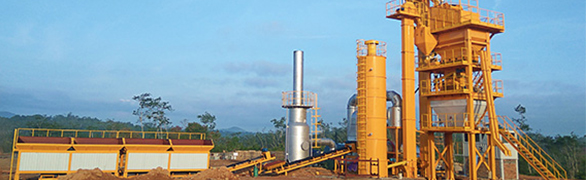
As the number of road maintenance projects, municipal road repair projects, infrastructure construction in remote rural areas and periodic, scattered short-term road maintenance projects is increasing, the existing fixed asphalt mixing plant,which need huge investment in founding and high transportation cost when changing the plants, is no more suitable for the flexible work requirements of small and mediumsized general contracting engineering enterprises. With the characteristics of quick response, flexible operation, small occupation, better investment return and producing mix on the construction site, mobile asphalt mixing plant (also known as portable asphalt mixing plant) is the optimal equipment for engineering contractor.
A portable asphalt plant, or portable asphalt plant, is a modular, trailer mounted relocatable hot-mix asphalt plant. Its basic purpose is the on-site heating, screening and batching of sand and stone aggregates, followed by the homogeneous combination of the constituents with bitumen, mineral powder and asphalt pavement (RAP) to form hot-mix asphalt mixture (HMA).
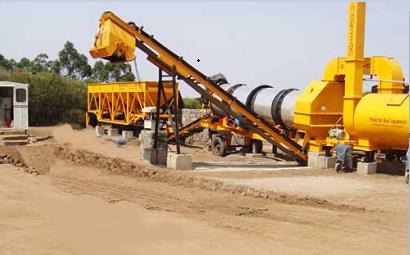
Mobile plants have the main objective of being able to be relocated quickly (as opposed to stationary asphalt mixing plants that consequently require large, concrete nature foundations to be cast, and have a construction period of 30–45 days, and so cannot operated in several regions of the country), and to be set up in an emergency in a very short period of time. They are best suited for short duration, multi-site, isolated project works. All the principal units of the equipment- cold aggregate silos, drying drums, main mixing units, dust collection, asphalt storage tanks and control system- are built on trailers, skids or wheeled chassis for off site road transport by a conventional tractor unit, and can be refitted without demolition.
Modular trailer integration design: The entire unit is split into several trailer sections, equipped with suitable axles suitable for road-width and road-height restrictions,suitable for remote mountain areas and country roads; including small ‘mini’ models that can be hauled by one car and medium and large models that are made up of 2-4 trailer units.
Installation and commissioning speed: small mobile drum plants take 4 8 hours to be ready for use,while medium mobile batch plants take 1 3 days. For small mobile plants, only a levelled, hardened site is required, which saves hundreds of thousands of civil engineering foundation costs.
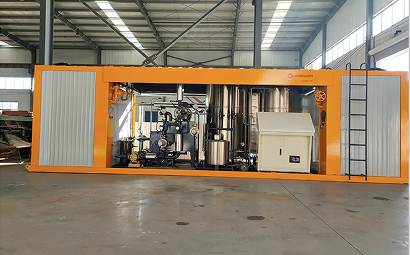
Fully integrated production process, in addition to include cold material feeding, aggregate drying and heating, dust collecting, bitumen pumping, mix agitation, finished product storage and recycled material blending also has no need to add other large equipment auxiliary machinery;
Integrated environmental protection features: New models all standard with bag type dust collectors, bitumen fume treatment system and soundproof demounting, which meet the acceptance standards of domestic environment impact assessment of municipal and rural roads, can be in urban construction areas in accordance with standard operation.
A mobile plant will be regarded as temporary construction equipment and land use approval procedures will be simplified; the land use of the fixed plant shall be planned and approved for long time, while that of the mobile plant shall be mainly for temporary construction equipment. The mobile Plant will take third space compared with the fixed Plant of the same capacity. It could be used in barren mountain and the narrow site of rural towns.
In terms of the model from simple loader to single site construction,the hot aggregate is eliminated from the factory, or fixed asphalt plant, or if the distance is too long, a one- way distance is usually more than ten kilometers, relative to the freight, pay an additional 30 80 yuan per ton; mobile plants is on-site production, ensuring that hot asphalt mixed in good condition, no temperature decreases and asphalt nodulation in the long-term transportation under the asphalt being difficult to use, is a direct increase serious savings on transportation fleet and fuel costs.
Road maintenance and patch repairs, upgrading a rural road network, replacements to after natural disasters and surfacing of car parks or industrial sites are normally scattered and short term projects. A single mobile plant could service or travel to many sites during a year. This would greatly enhance the utilisation of the equipment.
A mobile plant, and the civil engineering costs of site preparation, compared to a fixed plant will cost significantly less to buy for the same capacity of production. Smaller contractors will not, as is the case with larger projects, have a lump-sum expenditure of millions of pounds on infrastructure and second-hand equipment can reduce these costs considerably.
Newer, off-the-shelf mobile pavers are able to use 30%–50% of milled in-situ material as aggregate for overlay. This greatly limits the consumption of new aggregate and asphalt raw materials. This offsets with green construction policy while passing the benefit of raw material cost savings.

The 2 types of mobile asphalt mixture plants available worldwide are classified as mobile batch-type and mobile continuous drum-type asphalt mixture plants. The purchase costs, production accuracy and applications of them have great variations, which are the key factors deciding the equipment budget and the payback period.
Working Principle
The mixing, drying and bitumen spraying are all continuous and co-current in one single rotating drum. The materials are entrained and unloaded in a continuous operation without batch-by-batch measurement and stopping; the overall structure is easy and small.
1. Low procurement costs; few components; low failure rate; simple routine maintenance;
2) Continuous, uninterrupted carry; more efficient for producing the same mixture constantly over long periods;
3. Smaller footprint; fewer trailer units; faster relocation and assembly/disassembly;
4. Mature recycled asphalt blending process (RAP), makes the production more stable with higher amount of recycle;
5. Lack of variation in mix ratio adjustment ability to change mix formula can also be easily compromised. Emptying the drum in order to change mix formula may easily result in overuse of mixed product.
Suitable Projects
Rural low-grade roads and car parks site hardening, batch road maintenance, and small-to-medium-sized projects over a longer term, that demand one single mix ratio. The first preference for contractors with tight finances and quickly changing sites.
Mobile Batch-Type Asphalt Mixing Plant
Working Principle
The aggregates should then be separated and accurately weighed;powder/mineral content and bitumen should be metered separately, fed into the forced action mixing drum on a batch-by-batch basis for mixing. When one batch has finished its process of mixing and completion of discharge, the next one can be mixed (raw materials dosage adjustment can be made in real time).
Key Features
1. An extremely high accuracy of metering (the permissible deviations for oil-to-aggregate ratio and for aggregate-gradation being limited to ±0.5%) and a mix quality capable of being specified for the construction of motorways and airports.
2. Flexible mixing switching allowing to produce asphalt mixes of various specifications with virtually no waste in the case of different batches;
3. Fully automatic control system (able to keep dozens of pavement mix designs) in order to cover all needs of various types of local authority and trunk road works.
4. The machine is complicated 4. Mixer tower, hot material silo and various weighing modules are costly to purchase and require numerous parts to be maintained;
5. The presence of batch production mode demands a marginally higher energy consumption per unit than drumtype ones with sudden operation.
Suitable Projects
Motorways, municipal arterial roads, airport runways, high specification bridge pavement, entire municipal engineering projects which often requires changing mix specifications, large projects with high acceptance standards for pavement quality.
Comparison of Overall Value Between the Two Machine Types
1. Mixing quality accuracy: batch-type>drum-type: batch-type for high standards projects-mobile batching plants-
2. Range of formulations: Batch-type has a significant edge; creation of many types of mixture specifications causes consumption of less raw materials..
3. The initial purchase price: drum-type plants are much lower in cost than batch-type for practically the same installed capacity difference of price is possibly as much as 2 times;
4. Cost of moving: Drum-to-be plants are small and portable and require less spaces,trucks, trailers for disassembly/reassembling and less labours and grates for dismantling/erecting.
5. EntailiaMS long term operation and maintenance costs: Drum-type plants are easier to operate and maintain, and annual costs for operating them are about 30% less than for batch-type plants;
6. Long-term production efficiency: over a period of hours most a single mix ratio, drum type plants are up to produce more;
7. Recycling capacity of material: New counter flow drum plants can. Be used with a larger percentage of RAP, representing excellent value for money;
9. General investment: Drum-type plant should be used for short-term maintenance works andsmall-scale projects; batch-type plant for high standard multi-specifications long-term projects.

The total purchase price for a complete of mobile asphalt mixing plant can be quite different, the purchase price of brand new equipment without accessories can be between US $50,000 and US$600,000 (or Chinese RMB 350,000–4.2million); while the purchase price for Second-hand refurbished equipment is 30% 60% less. It can be seen that machine prices are explicitly divided according to various production capacities and templates:
1. Small mini mobile drum-type plants (capacity 20–60 tonnes per hour)
intended for: occasional / one-off repairs to buildings in towns and villages, small car parks, and short-term, ad hoc projects such as maintenance
Cost of new equipment: US$50,000-150,000 (RMB 350,000-1,050,000)
Representative models: 20TPH, 30TPH and 40TPH mini trailer-mounted drum stations; built-in single trailer, no large lifting equipment is needed when they are moved to a new site
2. Medium-sized mobile drum-type (capacity 60–120 tonnes per hour)
Good for: road improvement at county-level, construction, large-scale road maintenance and small/medium industrial park paving projects
Cost of new equipment: US$100,000 – US$250,000 (RMB 700,000 – 1,75 million)
The market‘s best-selling models and the greatest degree of market penetration by domestic engineering contractors. Was designed to work in conjunction with the 30%-40% RAP (recycler) blended formulation
3. Mobile batch-type mixing plants (capacity 40–160 tonnes per hour)
Is applicable to: Motorways;major urban arterial roads and high-level infrastructure projects]8. Summary of the selection procedure in CFR: The map is classified and then checked in each category for requirements like: Volume of traffic, level of service, time of achievement, service area, etc. For the selection, factors like: investment and traffic are taking into account.
Cost of new equipment: US$200,000 – US$600,000 (RMB 1.4 million – 4.2 million)
Costs for higher specification equipment (fully automatic PLC remote monitoring, high proportion recycled material incorporated systems, large baghouse dust collector and multiple finished product silos) increase rapidly towards US$600,000
4Large platform plants High specification (full plant accord EPA standards, high RAP content, power fully auto.)
Production capacity: 120--160 TPH (drum or batch type) integrating bulk baghouse dust collectors, bitumen fume treatment, remot intelligent monitoring, high capacity bitumen tanks and 50% recycled material system. Not including base machine US$550,000; most China top of the range is more than 3.5 million RMB.
5. Prices for second-hand / refurbished mobile asphalt mixing plants
Price varies by age, wear conditions, and whether the whole layout of the environmental protection system has been installed. The price could be US$100,000 US$300,000 (RMB 700,000 2.1 million) which are ideal for small maintenance companies or those who have limited funding or simply a short-term transitional solution; Second-hand equipment should be paid more attention, including dust collection system, drying drum and wear on the main mixing unit as the costs could be high to repair.
For many compradores, the differentiation in price due to configuration, brands and extra modules, is constantly overlooked when comparing production capacity only. Hereunder 10 items are the main causes for the quotation variation, which need to be checked by each item when requesting quotation:
1. Hourly Production Capacity (TPH)
The most influential factor in price is production. This can account for some 30 40% of the overall fluctuation in price. For example, as the specification of the whole unit‘s materials, drying drum, burner, conveying system and dust collection equipment increases exponentially, the difference in price on such a scale from between a 20TPH mini model and a 160TPH large model can be as much as 8 10 times. Therefore, when selecting a model, do not simply seek the highest throughput; select a model that is in line with the asphalt production that you average on an annual basis, as excess capacity will continually place an increasing burden on fixed costs such as fuel and maintenance.
2. Machine Type: Batch-type vs. Continuous Drum-type
Cost is roughly twice for mobile batch-type units compared to drum type units at the same production capacity. This is primarily because the batch-type units use an independent hot-mix screening system, has a number of high-precision load cell sets,vertically arranged mixing tower,multi-compartment hot-mix storage etc., which significantly increases the complexity of mechanical structure and electrical control system(while the integrated drum cannot).
3. Mobile Trailer Chassis and Rapid Relocation Configuration
Simpler skid-type figures with no trailer chassis are less expensive, but to move to a further site needs pulling apart and hiring of a flat bed lorry and a fully road legal trailer chassis, hydraulic automatic outriggers, quick connect piping, multi-unit integrated lightweight design increase the cost of the trailer chassis manufacture and the hydraulic system, but the cost of crane hire, labour and dismantling and re-assembly time in the long term for multi sites construction is less, making the latter more economical.
4. RAP (Recycled Asphalt Pavement) Support Systems
Standard base models cannot recycle blends of recycled material, and can only feed new aggregates. Models equipped with high-proportion recycled material system (30%–50%) includes a cold-recycled hopper, a counter-flow drying drum, anti-adhesion liners, accuracy recycled material measurement, total pricing price of equipment is increased by 15%–25%. For long term projects for large quantities of milling and recycling old material, this module can amortize quickly premium equipment price.
5. Environmental Dust Control and Exhaust Noise Reduction Systems
While in cities, scenic and ecology areas where environmental restrictions are always very strict; big-scale pulse-jet baghouse dust collector,an asphalt fume purification equipment,whole machine sound insulation casing, sewage recovering equipment need installed. Initial basic and simple dust collection models are cheap but fail to reach the environmental impact assessment; adding the environmental protection equipment at a later stage end up more expensive. The factory additional cost of original integrated environmental protection modules is about 10~20%.
6. Automated intelligent control systems
Simple semi-manual control cabinets are limited to a start/stop operation, so the addition of a high-end PLC operating a touch screen, remote 4G monitoring, data storage, automatic mix ratio correction and fault warning system will all increase the cost of electrical control components and sensors. Fully automatic models will reduce the on-site operator(s) by 1–2; thus saving over time.
7. Equipment Brand and Country of Origin
Imported European or American brands (like Astec or ADM) deliver a high quality of assembly controls and long service life, but are hugely expensive for a full unit sale and later maintenance and parts; prominent Chinese manufacturers (Aimix, Zoomline, Luhong etc.) guarantee excellent price/performance ration for the domestic situation, with optimised diesel fuel and aggregate parameters, readily available spare parts; budget items derived from little portable workshops tend not only to be low quality in steel‘s thickness, spirit burners or the general collection system, but also come back to haunt with rapid repairs required within a year or two.
8. Customised Additional Equipment
Other customised features such as integrated diesel generator sets, large capacity vertical bitumen storage tanks, multi-unit finished product silos, polymer-modified bitumen system, safety platforms and low temperature anti-freeze heating pipe work. Each additional configuration will increase the quotation. Before acquisition, identify the necessary features of the project and exclude the customised modules not needed can keep the budget in control.
9. Brand-new equipment vs. second-hand refurbished equipment
New equipment will have a full warranty, be environmentally friendly and have no risk of deterioration. Second-hand equipment has a saving of 30–60% over buying new, but will not have the full warranty. Additional capital will need to be invested in replacement of worn parts and environmental upgrades. This equipment is suitable for short-term transitional projects of 1 to 2 years duration, but for long-term operation then new equipment would be recommended.
10. Transport, Installation, Customs Clearance and Associated Miscellaneous Costs
Cross-regional transport, permits for over-sized and out of gauge cargo,Import duties for int. shopping, on-site hoisting, initialization of equipment, operator training, original manufacturer spare parts kits and so on – adding the above, 10–30 % of the original equipment prices. Most of the manufacturers quote just a base price and do not include all the additional charges which result in increased expenses on delivery.
The majority of buyers treat the the purchase price of equipment as the only cost, and ignore the hidden costs throughout its life time. Hidden costs over 5 years may reach 30-100 per cent of to the original buy price; and must all be included to the budget before delivery:
Medium- to large-sized mobile stations are deemed as road oversize cargo, are typically carried by many trailer groups. Long-distance item transportation, road oversize permissions and onboard crane vehicle hire are very expensive. Sea freight, import tax and export tax, customs clearance agent charge are the expenses for international buying, while the total logistics cost exceed 15per cent of equipment price for overseas project purposes.
Even though the mobile plants have no necessary fixed foundations, site levelling, compaction, laying a simple hardened surface, excavate drainage trenches and laying power and water supply pipelines and in hilly or muddy areas, the construction of temporary roads must be done. The site preparation cost can be from 50,000RMB up to 200,000RMB, considering the difficult terrain where it is levelling and packing.
Travel costs for the manufacturer‘s technical personnel, the use of large cranes for disassembly and re-assembling, calibration and metrological testing of the whole unit, the certified operators training are part of this. Failure to do commissioning correctly could induce mixing ratio errors, poor quality output and breakdowns which will lead to project delays.
In many areas, local ecological and environmental bureaus have stringent requirements concerning dust and flue gas emissions from the equipment used in asphalt production. This means that third-party testing, intermediary emission permit processing, and implementation of audible screens at the job site are required. For certain urban projects,progress of a noise monitoring report is also required; there is a fee for these approvals and adjustments.
It is noted that drying drums and asphalt heating tanks are the largest energy users. Each year, they consume a thousand of diesel, natural gas and electricity costing from 15,000 to50,000yuan. The changes in price of the fuel lead to the change of cost per ton of mix. Meanwhile,more energy could be used for aging and inefficient equipment.
Wear and tear items, including conveyor belts, drum liners, dust filter bags, burner parts and metering sensors also sit firmly in ongoing expenditure, consumption of consumables and spare parts replacing these items on an annual basis, but especially equipment failures during a high demand period when construction is at its busiest can have a knock on effect to delay the paving programme and to offer subtle costs in the shape of lost man hours and contractual penalties without them being so obvious.
When the site is modified, the equipment needs to be taken apart,carried on a flatbed truck, put back together again with a crane, and recalibrated. For contract maintenance companies that shift sites regularly, the total yearly cost of all this means they can pay over 100,000 for labour, vehicle and crane hire.
There are several ongoing fixed costs such as individuals’ salary for permanent operators and maintenance people; insurance for equipment, property and third-party liability; interest and installment fees on loans for bought items; and annual depreciation and functional depreciation of equipment.
Loading equipment, asphalt tankers, spare storage silos, diesel generators and milling and recycling equipment: not many buyers only account for the main mixing plant. This may cause to facing over cost if other items are bought at a later date.
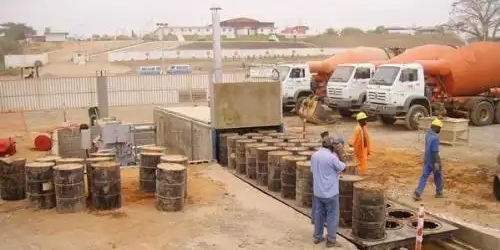
The cumulative operating cost per tonne for a mobile asphalt mixture plant is between 30~70yuan/tonne. This is higher than the cost per tonne for a large, fixed plant, largely because of the distribution of the cost of relocating the plant. However, with the minimisation in the cost of long-haul asphalt transport, overall project costs are significantly reduced. The cost breakdown is:
The most basic cost is towards the aggregates, mineral powder and base bitumen; a higher amount of RAP will decrease the direct cost of the mix; the variation of these will be directly affected by the local prices of aggregates and bitumen procurement;
Use a lot of energy for drying and heating. Can use diesel or natural gas, high efficiency counter-flow drums, insulated tanks can cut this down 20 per cent. The larger the production output per year, the lower fixed energy cost on a tonne basis.
Salaries for operators, loader drivers and maintenance personnel in a fully automated, intelligent model, the number of operators needed can be reduced and this can lead to benefits in costs per tonne.
Routine Maintenance, changing of wear and tear parts and dust collection bags; With rapid wear and tear as it moving from site to site.
Site fencing Dust control consumables Annual emissions testing Equipment insurance and apportioned costs for cross-site transport.
Impact of Production Scale on Costs
The individual small projects of which the annual total output is lower than 50 000 tonne: operating costs per tonne are higher comparatively (60 70 yuan/tonne);
medium scale, stable projects with an annual total output of 80,000-100,000 t: economies of size costs per tonne in 35-45 yuan:
Buy using more recycled material and auto plant models, the cost of per tonne could be reduced by50-20%.
By integrating equipment selection, procurement negotiation and construction supervision, these 8 high-impact approaches can both cut initial investment, and enhance the operation and maintenance (O&M) in parallel, thus to minimize the life cycle costs by 20-40%:
Precisely match machine capacity to requirements; avoid ‘overkill’
Choose equipment according to year-round asphalt requirements; if the project requires a yearly throughput of less than 50,000 tonnes, 60–100 TPH drum-type mobile plants should be used first while batch-type ones should be only used for high-quality long-distance motorway and urban road projectsto prevent the extra waste inthe procurement, transportation andenergy consumption.
Prioritise drum-type mobile plants (where there are no high-standard pavement requirements)
For similar plant production, drum type plants: -have reduced procurement and running costs -can be moved more quickly. Can be used for nearly all maintenance and rural road jobs thereby saving capital expenditure.
Cost reduction shop around from several manufacturers, and negotiate discount package (after sales service+ spare parts)
Get itemised quotations from at least three selling companies at the same time. Talk for a combined offer for transport, installation, spare parts for 1–2 years and on site training that will lower the final cost, do not accept low-price offers for “bare machine” with splitting of charges.
If your budget is limited, opt for high-quality refurbished equipment
Choose second hand facilities that have been in use for under 3 years and have complete environmental protection systems in place. Also ensure the drums or combining units are not damaged or worn before purchase, this can reduce purchase costs by approximately 40 per cent. Get third party equipment examined before purchasing, this helps prevent use of outdated equipment.
Select modules as required; avoid unnecessary high-spec configurations
In the lack of the urban construction demands, can break down the high-end flue gas treatment system; In the long term, with the only mix ratio, without high-end electronic control system with several recipes. Eliminate user-defined configuration the excess budget.
1. Maximise the use of RAP (Recycled Asphalt Pavement)
Elect to order models fitted with recycled material system (at least 40 -50 per cent of the mixture in terms of recycled milled asphalt). This approaches offers the biggest saving on new procurements of both asphalt and aggregate.
2. Select energy-efficient burners and insulated tanks
Use, where possible, high-efficiency counter-current drying drums and completely insulated bitumen storage tanks to minimize fuel costs. Fuel costs can be reduced by over 20 per cent in the long term.
3. Improve annual equipment utilisation to spread fixed costs
Arrange the series of project construction activities to reduce waiting time of equipment Ensure the concurrent operations on various sites. As the output increases per year, the fixed expenditure has a divided proportion as depreciation, labour and insurance has.
4. Establish a standardised preventive maintenance regime
Change worn parts frequently to prevent project delays due to unforeseen equipment failures and cut costs from intensive expenditure on large overhauls; Clean dust filter bags and calibrate the metering systems.
5. Source raw materials locally to minimise short-distance transport
Arrange to mix plants close to sand, gravel and asphalt equipment locations so that the additional freight cost for raw material is further reduced.
6. Upgrade to a fully automated intelligent control system
Further the operator numbers on-site should be reduced by monitoring the equipment running parameters by remote control, and quickly change the circulating ratio, energy resources will lead to the lowest blighter and raw material wastage.
With the current rural revival policy environment in China as well as the daily operation of the general road maintenance and emergency construction infrastructure projects, the market demand for mobile asphalt batching plants, the equipment development trends are lighter, more intelligent, greener, more recyclable, integrate the environment conscious concepts, etc.. For the engineering contractors, a mobile asphalt batching plant adapted to the scale of your projects, freeing you from the asphalt price and the supply lock of the batching OEM if you buy ready-mixed asphalt,and meanwhile, exercising full control of the construction schedule and pavement quality independently, and saving huge logistics cost by selling on local and improving the whole profit margin of the project significantly, with properly considering your annual average project tonnage, environmental standards in your project construction region and pavement grade requirements and comparing with the pricing, model selection and cost-structuring effect principles described in this article, everything can be straightforward.