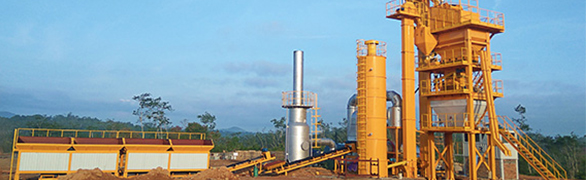
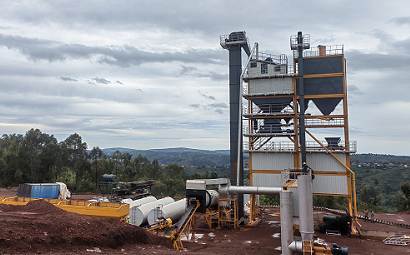
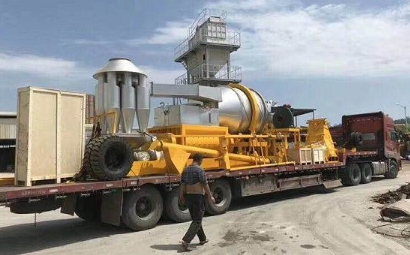
Asphalt mixing plants are essential pieces of equipment for roadworks, including motorways, local roads, airport runways and car parks, and are used to produce hot-mix asphalt (HMA). Currently, infrastructure professionals, equipment procurers, plant operations and maintenance staff, and road construction technicians frequently search for information on the working principles of asphalt mixing plants, troubleshooting production faults, and the raw material proportions for asphalt mix. This article will systematically break down the knowledge of the entire process, taking into account the complete production workflow, equipment structure, factors affecting performance, and practical troubleshooting solutions, systematically break down the knowledge of the entire process, balancing industry expertise with practical application, and covering the full range of requirements from equipment selection and production control to cost reduction, efficiency improvement and environmentally friendly operation and maintenance.
Asphalt mixing plants are commonly referred to within the industry as asphalt mixing equipment, hot mix plants or black mix plants. They are industrial facilities that integrate raw material conveyance, drying and heating, precise metering, forced mixing, dust extraction and environmental protection, and finished product storage. Their core product is asphalt concrete (hot mix asphalt, HMA), and they serve as the essential preliminary equipment for asphalt pavement construction.
Its core production process involves the precise proportioning and thorough mixing of crushed stone of various sizes, sand and gravel aggregates, bituminous binder, mineral powder, recycled asphalt pavement (RAP) and various modified additives under high-temperature conditions, thereby producing a finished hot mix asphalt (HMA) with properties such as high strength, water resistance, rutting resistance and crack resistance. This mixture is transported to the paving site in insulated tipper lorries; after being laid by a paver and compacted by a roller, it ultimately forms a complete asphalt pavement.
Based on production mode, the industry is generally divided into two main categories: batch-type mixing plants and continuous drum-type mixing plants. Based on their installation type, they can be further categorised into large-scale fixed mixing plants, mobile portable mixing plants and specialised recycling mixing plants. Modern mixing plants are all equipped with fully automatic PLC-based intelligent control systems, capable of monitoring mix proportions, temperature, dust emissions and output data in real time, whilst ensuring both quality control and environmental protection requirements are met.
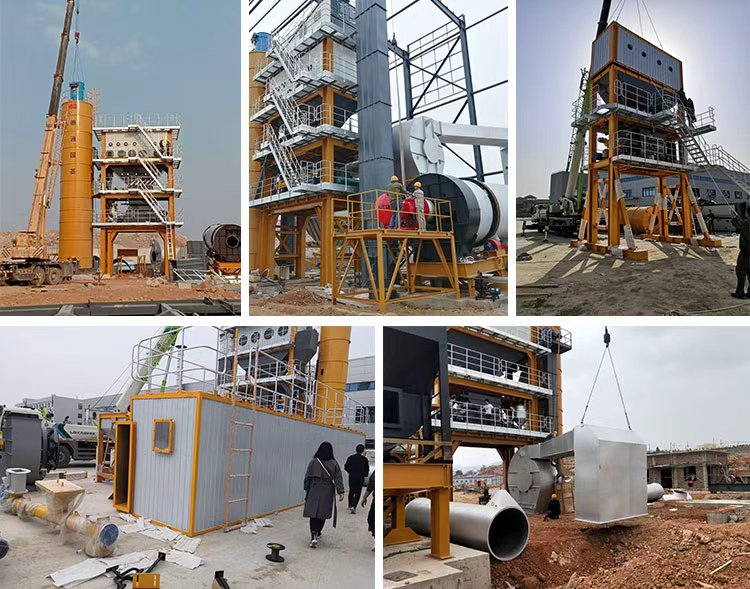
Over 90 per cent of the performance and service life of asphalt mixtures depends on the quality of the raw materials and the accuracy of the mix proportions. The proportions, functions and categories of the four core raw materials produced by mixing plants are as follows:
Aggregates form the load-bearing framework of asphalt pavements, determining the pavement’s load-bearing capacity, skid resistance and structural stability. Aggregates are divided into two categories: coarse aggregates and fine aggregates:
Coarse aggregates include large-grained materials such as granite, basalt, crushed stone and pebbles, which are used to provide overall structural strength and resist rutting caused by vehicle loads.
Fine aggregates include manufactured sand, natural river sand and stone dust, which are used to fill the voids between coarse aggregates, improve the workability of the mixture and ensure compaction after paving.
The raw materials are primarily sourced from quarries and sand and gravel pits, although recycled aggregates recovered from milling operations may also be used. During production, aggregates must be clean, free from soil and impurities, meet the required hardness standards, and have a continuous and uniform gradation. If the aggregate contains excessive amounts of clay, this can lead to delamination between the asphalt and the aggregate, resulting in pavement defects such as potholes and loose surfaces at a later stage.
Commonly known as asphalt cement or matrix asphalt, this is a by-product of petroleum refining and is a black, highly viscous liquid material. Acting as the ‘glue’ in the mixture, it coats all aggregate particles, providing waterproofing and flexible bonding, thereby mitigating stress-induced cracking in the road surface.
Prior to mixing, the bitumen must be heated to 150–180 °C using thermal oil to reduce its viscosity and ensure it coats the aggregates evenly. For high-grade roads, SBS-modified bitumen or rubber-modified bitumen is typically selected to significantly improve resistance to rutting at high temperatures and cracking at low temperatures.
Accounting for 1%–2% of the mix, mineral powder filler is used to fill the voids between aggregates. Its main components are ultra-fine powders such as limestone powder, fly ash, slaked lime and cement. It fills the minute voids in the aggregates, improving the mix’s density, stiffness and water resistance, whilst also enhancing the performance of the bituminous binder and reducing damage to the road surface caused by rainwater penetration.
Recycled Asphalt Pavement (RAP) is a recovered material obtained by milling, crushing and screening waste asphalt pavements. With a blending ratio of 20%–50%, it can significantly reduce the procurement costs of aggregate and bitumen, facilitate the resource utilisation of solid waste, and offers environmental benefits.
Warm-mix asphalt additives (WMA): These include foaming agents and wax-based additives, which can reduce the mixing temperature by 30–50 °C, thereby reducing fuel consumption, asphalt fumes and carbon emissions.
Modifying additives: These include rubber powder, fibres and anti-rutting agents, which are suitable for motorways and heavy-duty roads and can enhance the durability of the road surface.
Anti-spalling agents: Designed for acidic aggregates such as granite, these agents enhance the bond between the bitumen and the aggregate, preventing loosening caused by water damage.
Although batch-type and drum-type mixing plants differ in structure, their basic common systems are entirely identical. The following sections will explain the common components, components specific to batch-type plants, and the simplified structure of drum-type plants respectively.
Multiple independent silos store sand and stone aggregates of different specifications. A variable-frequency speed-controlled feeder at the bottom precisely regulates the discharge flow rate according to computerised mix designs. A belt conveyor transports the aggregates centrally. A front-mounted grating screen filters out oversized waste material, ensuring a stable gradation from the source.
As the core energy-consuming unit of the entire plant, the drum is fitted with internal lifting and material-tossing blades, causing the aggregates to tumble within the drum and form a material curtain. The burner generates high-temperature flue gas, which evaporates moisture from the aggregates and heats them to the process standard temperature (150–180 °C). The moisture content of the aggregates must be kept below 0.5%; if this limit is exceeded, fuel consumption will increase significantly and asphalt fumes (blue smoke) will be generated.
Multiple sets of sealed, insulated storage tanks are used to store liquid asphalt, and are equipped with recirculating heating pipework to maintain a constant temperature. High-precision metering pumps enable accurate control of the asphalt injection flow rate, thereby preventing pavement defects caused by deviations in the bitumen-to-aggregate ratio.
During production, the system collects dust generated by drying, screening and mixing. The filtered clean exhaust gas meets emission standards, whilst the recovered fine mineral powder can be reused in the mix, reducing raw material wastage. This system is the core equipment for the environmental acceptance inspection of the mixing plant.
A PLC-based fully automatic control cabinet monitors in real time the feed rates of each silo, aggregate temperature, bitumen consumption, mixing duration and dust pressure differential. It supports one-touch formula switching, production data storage and automatic fault alarm functions, significantly reducing human operational errors.
A multi-layered, thermally insulated silo used for the temporary storage of hot asphalt mix after mixing, to maintain discharge temperature. It also serves as a buffer during gaps between vehicle unloading, thereby avoiding energy wastage caused by frequent equipment start-ups and shutdowns.
- Continuous drum-type plants lack the following structures, which is also key to the higher proportioning accuracy of batch-type plants.
- Hot aggregate elevator: Conveys high-temperature, dried aggregate vertically to the screening platform on the roof of the mixing tower.
- Multi-deck vibrating screen: Features multiple decks with screens of varying mesh sizes to re-grade the hot aggregate, separating coarse, medium and fine fractions.
Hot aggregate storage silo: Used to store the screened, graded aggregates to ensure precise weighing for each batch.
Weighing and metering system: Comprising separate weighing hoppers for aggregates, mineral powder and bitumen, capable of controlling weight deviations within a single batch to within ±0.3 per cent.
Twin-shaft forced mixing drum (pugmill): High-speed shear mixing is achieved by twin-shaft mixing blades; each batch is mixed for 30–60 seconds, resulting in more uniform coating of asphalt on the aggregates.
Independent screening, hot material silos and separate mixing drums have been eliminated; the drying, heating, bitumen spraying and mixing processes are all carried out within a single long drum. Aggregates flow continuously without interruption; the plant comprises fewer components, occupies a smaller footprint and is simpler to maintain.
a mineral powder supply screw conveyor system, a RAP (recycled asphalt pavement) feed system, an electro-hydraulic safety interlock system and an emergency shutdown protection device ensure that the plant can operate stably around the clock.
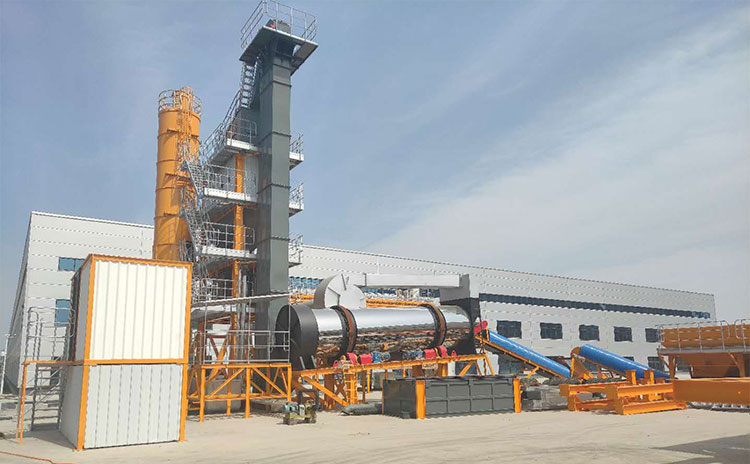
The entire asphalt mixture production process forms a closed-loop system from start to finish. The basic process logic is consistent between batch-type and drum-type plants, with differences existing only in the screening, metering and mixing stages. The entire process is equipped with dust extraction, temperature control and intelligent central control systems to ensure synchronised management of each stage. These stages directly impact the quality of the mixture and the service life of the road surface.
A loader stacks sand and gravel of different specifications into separate silos. After the design gradation has been entered, the central control system automatically adjusts the variable-frequency feeders in each silo to convey the aggregates to the conveyor belt in the correct proportions, thereby completing the preliminary grading.
A grating screen at the front end of the conveyor belt intercepts oversized stones to ensure the purity of the incoming material. The hoppers must be kept at an adequate material level; empty hoppers or interruptions in the feed will disrupt the mix proportions. In wet weather, aggregates are prone to clumping, so the discharge outlets must be cleared in advance. Rotary dryers place higher demands on the uniformity of feed supply, whilst intermittent dryers can rely on hot hoppers to buffer fluctuations in the mix ratio caused by brief interruptions in feed.
The proportioned wet aggregate is fed into a rotary drying drum. Lifting plates raise the aggregate, forming a curtain of material. High-temperature flue gas from the burner undergoes thorough heat exchange with the aggregate, heating it to between 150 and 180 degrees Celsius. The moisture content of the aggregate is strictly controlled to within 0.5 per cent. Dust generated during the drying process is drawn into the dust collection system via negative pressure for centralised treatment. The higher the moisture content of the aggregates, the greater the fuel consumption. Incomplete drying can cause blue smoke to be emitted from the asphalt, resulting in environmental compliance breaches. The drying principles for both types of equipment are identical; the only difference lies in the fact that drum-type drying is integrated with mixing, whilst in batch-type systems, drying and mixing are separate processes.
The hot, dried aggregates are conveyed by an elevator to the top-level screening platform. This structure is unique to batch-type mixing plants and is the key factor behind their superior mixing accuracy compared to drum-type equipment. The platform is fitted with multiple layers of vibrating screens with different mesh sizes; as the high-temperature aggregates fall, they are automatically graded according to particle size. Coarse aggregate, medium aggregate, crushed stone fines and fine sand are each directed into separate, insulated hot material silos for storage. To ensure effective screening, the screens must be kept clear and in good condition. If the screen meshes become clogged with dust or the screens are damaged, this will result in the mixing of aggregates, leading to segregation in the finished mix. The insulated hoppers maintain the aggregate temperature, ensuring the raw materials remain in a stable condition for subsequent weighing processes. In contrast, drum-type plants, lacking screening and heated hopper structures, mix the aggregates immediately after drying; as a result, gradation can only be controlled through cold-material proportioning at the front end. This can lead to deviations in specifications during long-term mass production and is therefore only suitable for ordinary road surfaces with lower standard requirements.
The screened aggregates are temporarily stored in separate silos; each heated silo is equipped with a level monitoring device that provides real-time feedback on material levels to the central control system, thereby preventing mix imbalances caused by the depletion of any single type of aggregate. Furthermore, the silo bases are fitted with controllable discharge gates, which enable the precise discharge of the correct weight of aggregate according to each production batch’s formula. This facilitates precise quantitative control, laying a solid foundation for the subsequent accurate weighing of raw materials and a stable mix gradation.
Measurement is central to controlling the bitumen-to-aggregate ratio and gradation. There is a marked difference between the measurement modes of the two types of equipment: batch-type plants use independent weighing hoppers for static weighing, measuring aggregates, mineral powder, bitumen and recycled materials separately. The error per batch does not exceed ±0.3%; should the values exceed the limit, the equipment will automatically trigger an alarm and shut down. Tumbler-type plants, on the other hand, employ belt scales and bitumen flow meters for dynamic, continuous metering, with an error margin of approximately ±1.5 per cent. However, when changing formulations, there is a lag in flow rate adjustment, which can easily result in material that fails to meet standards. All metering data is uploaded in real time to the PLC central control system, and production records are automatically saved to facilitate quality traceability.
The mixing quality directly determines the uniformity of asphalt coating, which in turn directly affects the pavement’s waterproofing and rutting resistance. There are significant differences between batch and drum-type mixing configurations. The batch mixer is equipped with an independent twin-horizontal-shaft forced-action mixing drum. After weighing, the aggregates and mineral powder undergo approximately 30 seconds of dry mixing to break up lumps and blend coarse and fine materials. Subsequently, high-temperature bitumen is sprayed in, followed by 30 to 60 seconds of wet mixing. The mixing blades toss and shear the material at high speed, ensuring that every aggregate particle is completely coated with the bituminous binder and preventing the occurrence of uncoated aggregate or asphalt lumps. The mixing time must be adjusted according to actual conditions. If a significant proportion of RAP (Recycled Asphalt Pavement) or acidic aggregate mix is incorporated, the wet mixing time should be extended appropriately to prevent the pavement from becoming loose due to insufficient coating.
Trommel mixers do not have a separate mixing drum; aggregates are dried and heated in the front section of the drum, whilst bitumen, mineral powder and additives are introduced in the middle and rear sections, with continuous mixing achieved through the rotation of the drum. The mixing time is limited by the length of the drum and the flow rate of the material; uniformity is inferior to that of forced-action mixers, and localised insufficient coating of aggregates is prone to occur during large-scale production. When processing modified or warm-mix special mixtures, both mixing methods require the addition of appropriate additives. The batch mixing method allows for precise control of the additive dosage per batch and is suitable for the construction of high-grade pavements such as motorways and airport runways; whereas the drum mixing method employs continuous feeding, making fine-tuning of mixing proportions more difficult, and is therefore better suited to the long-term mass production of a single standard mixture.
The temperature of the finished mix upon leaving the plant must not be lower than 135°C; otherwise, compaction difficulties may arise during paving. Output from batch mixers can be loaded directly onto vehicles or stored in insulated silos for temporary buffering, thereby spacing out vehicle departures and reducing frequent start-stop cycles of the equipment; in contrast, drum mixers discharge continuously, with silos serving only as short-term buffers. Transport vehicles must be fully covered with insulated tarpaulins; for long-distance transport, an additional insulation layer should be fitted to the vehicle body. The use of mix arriving at the site with a temperature below the specified standard is prohibited. The drop height during loading should be reduced to minimise aggregate segregation.
Dust generated during the drying, screening and mixing processes should be channelled into a bag filter; the recovered mineral powder can be recycled to meet environmental emission standards. Should the filter bags become blocked or damaged, the central control system will automatically trigger an alarm. The central control system collects real-time data on temperature, measurement and production capacity, and archives this information for traceability. The laboratory takes samples at regular intervals to test gradation, bitumen-to-aggregate ratio and Marshall index. If test results do not meet standards, operators can swiftly adjust parameters such as feed rate, temperature and bitumen flow rate to prevent quality issues such as potholes, cracking and rutting in the road surface at source.
|
Formulation Flexibility |
Extremely high; can switch between multiple mix ratios at any time |
Limited; frequent recipe changes can lead to quality fluctuations |
|
Mix Quality |
High uniformity; suitable for high-grade pavements, modified asphalt, and mixtures with high recycled content |
Stable quality; suitable for conventional mixes used in standard low- to medium-grade pavements |
|
Equipment Investment |
Higher costs for purchasing the complete machine and civil engineering foundations |
Lower total equipment cost and smaller footprint |
|
Operational and Maintenance Complexity |
More components and more points requiring regular maintenance |
Simpler structure, requiring less daily maintenance |
|
Energy Consumption Performance |
Energy consumption is relatively high under frequent start-stop conditions; it is moderate during stable, continuous production |
Higher fuel utilization during long-term, uninterrupted production |
|
Typical Applications |
Airports, highway surface courses, major urban thoroughfares, and projects involving multiple mix specifications |
Long-distance general highways, large-scale base course construction, and mobile field projects |
The moisture content of aggregates is the primary factor affecting energy consumption. Drying damp aggregates significantly increases fuel consumption, whilst excessive clay content in aggregates can cause asphalt delamination. The moisture content and proportion of aged asphalt in Recycled Asphalt Pavement (RAP) directly affect mixing temperature and mix proportions, whilst fluctuations in asphalt viscosity and temperature can lead to uneven asphalt coating.
Batch-type equipment prioritises precision, whilst drum-type equipment prioritises production capacity. If the equipment’s rated capacity does not match the actual output (such as prolonged operation at low or excessive loads), thermal efficiency will be significantly reduced. Counter-flow drying drums offer superior heat exchange efficiency compared to co-flow drying drums, resulting in significant energy savings.
Aggregate heating temperature, bitumen spray temperature, mixing duration, cold aggregate feed rate and the proportion of recycled material are all critical parameters. Frequent start-stop cycles or an unstable feed rate can lead to persistent fluctuations in temperature and mix proportions, thereby increasing energy consumption and waste generation.
Wear on the drying drum’s material-lifting plates, blockages in the bag filter, wear on the mixing blades, calibration errors in the load cells, and carbon deposits in the burner can all directly lead to reduced output, mix ratio deviations, excessive dust emissions and soaring fuel consumption. Therefore, regular calibration of the weighing system and replacement of wear parts are essential for stable production.
Low temperatures in winter, as well as overcast, rainy and high-humidity weather, can cause the natural moisture content of aggregates to rise, thereby significantly increasing the heat required for drying. Furthermore, low oxygen levels at high altitudes can reduce burner combustion efficiency, leading to increased fuel consumption for the same production capacity.
Outdated, rudimentary manual control equipment is highly prone to mix ratio errors. In contrast, modern control systems equipped with intelligent PLCs, online temperature and flow monitoring, and automatic fault correction functions can ensure stable mix ratios, minimise manual intervention and reduce waste output.
The use of diesel or natural gas of insufficient purity as fuel can lead to incomplete combustion, thereby reducing the efficiency of the drying and heating process, increasing emissions of dust and blue smoke in the flue gas, and accelerating carbon build-up and wear on the burner.
Project requirements often necessitate frequent changes to the mix design, which reduces overall production efficiency. Local environmental emission control standards may limit the plant’s maximum production capacity, whilst the addition of supporting dust removal and flue gas treatment equipment increases operating costs. Furthermore, disruptions to the supply of sand, gravel and bitumen raw materials can cause frequent plant downtime.
Drawing on practical experience from frontline mixing plant operations and maintenance, we have compiled seven categories of the most common production issues, their root causes and standardised solutions to rapidly resolve problems such as downtime, substandard quality, excessive energy consumption and non-compliance with environmental standards.
Cause: Aggregates are stored in the open, resulting in excessively high moisture content.
Solution: Erect a rain shelter over the aggregate yard to reduce the moisture content of incoming materials; carry out regular maintenance and replace worn material-lifting plates; clean carbon deposits from the burner and calibrate the air-to-fuel ratio.
Causes: Weighing sensors not calibrated regularly; slippage on the cold aggregate feeder belt; fluctuations in bitumen temperature caused by a faulty circulation pump in the bitumen storage tank; arbitrary alterations to central control parameters; and distorted temperature feedback due to a faulty temperature probe on the drying drum.
Solutions: Calibrate the entire weighing and metering system weekly; inspect and maintain the conveyor belts and variable-frequency feeders to ensure a uniform feed rate; keep the asphalt tank’s circulation heating system running 24 hours a day to stabilise the asphalt temperature; strictly control access rights for formula modifications and assign a dedicated operator to manage the central control system; and replace faulty temperature sensors to monitor the drum’s temperature curve in real time.
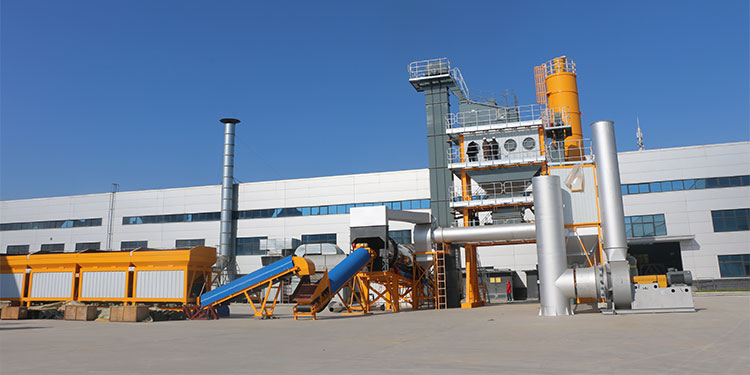
Causes of the fault: Aggregates are not fully dried; moisture reacts with high-temperature bitumen to produce fumes; excessive heating temperatures of aggregates and bitumen lead to bitumen ageing and volatilisation; filter bags in the baghouse dust collector are blocked or damaged; recycled material is fed too early in the process and has not been sufficiently dried.
Solution: Extend the aggregate drying time and strictly control the moisture content of the output material.
Failure to implement a regular preventive maintenance programme; wear-prone components such as mixing blades, drum liners and belts have been in service beyond their recommended lifespan; and the equipment has been operating at excessive capacity for prolonged periods.
Solutions: Draw up maintenance checklists covering daily, weekly and quarterly overhauls; stock up in advance on wear-prone spare parts such as material-lifting plates, mixing blades, filter bags and bearings; organise production strictly in accordance with the equipment’s rated capacity; prohibit prolonged overloading; and utilise a vibration monitoring system to predict bearing and drum failures in advance.
Causes of failure include damaged vibrating screen mesh or blocked screen apertures; excessive discharge drop height from the hot aggregate bin leading to separation of coarse and fine aggregates; feed interruptions or uneven feeding from the cold aggregate bin; and insufficient mixing time resulting in incomplete coating of aggregates with bitumen.
Solutions: Inspect and clean the vibrating screens daily, replacing damaged screens immediately; optimise the discharge chutes to reduce the drop height; ensure adequate material levels in all cold bins to prevent empty bins and feed interruptions; for batch-type equipment, appropriately extend the wet mixing time; for drum-type equipment, adjust the drum rotation speed to improve mixing uniformity.
Asphalt materials may also suffer from issues such as foaming, aggregate delamination and poor coating.
Causes of faults: Water ingress into the asphalt storage tank; insufficient insulation temperature; failure to add anti-stripping agents to acidic aggregates; excessive soil and impurities on the aggregate surface; and unstable flow rates from the asphalt metering pump.
Solutions: Seal the bitumen storage tank to prevent rainwater ingress; add anti-stripping agents when producing acidic aggregates such as granite; pre-wash incoming aggregates to remove mud; service the bitumen metering pump and pipework to ensure a stable bitumen spray flow rate.
Cause of fault: Excessive pressure differential in the dust collection system and insufficient air flow, resulting in restricted material feed.
Solution: Clear blocked dust collection filter bags to restore air flow; overhaul the conveyor belt and scrapers to prevent material adhesion and blockages; optimise the central control programme to balance the cycle times of the cold aggregate, drying and mixing processes; overhaul and upgrade the burner to increase heat output.
The above provides a comprehensive explanation of the core supporting equipment for various road construction projects at asphalt mixing plants. The content covers equipment principles, raw materials, structure, production processes, model comparisons, factors affecting performance and common faults, forming a knowledge system that combines both theory and practical on-site application.
Asphalt mixing plants rely on the coordinated operation of multiple systems. Through the appropriate proportioning of aggregates, bitumen, mineral powder and additives, as well as the entire process encompassing feeding, drying, screening, metering, mixing, discharge, dust removal and quality control, they produce compliant hot-mix asphalt, making them an indispensable preliminary stage in road construction. intenance, with the aim of reducing costs and improving efficiency.