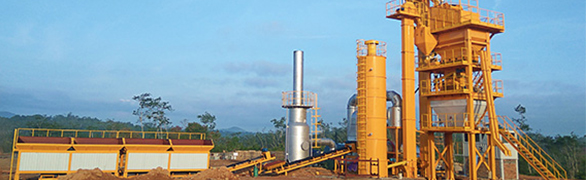
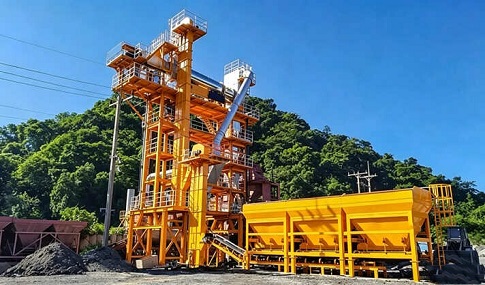
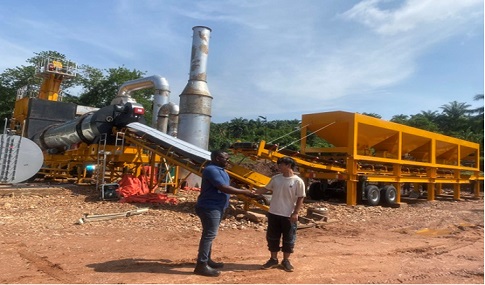
Asphalt recycling system, also known as asphalt recycling equipment and recycling mixing station, is a professional complete set of equipment and process system integrating waste asphalt pavement material (RAP) recovery, crushing and screening, heating modification and mixing regeneration. The core is to process the waste old asphalt material produced by road milling into brand-new asphalt mixture with compliant performance and reuse it for pavement paving construction, which subverts the extensive mode of traditional road maintenance old material landfill and completely relying on new material. Asphalt is a building material with high recovery rate in infrastructure field. Hundreds of millions of tons of waste asphalt can be recycled efficiently every year in North America. Under the industrial background of aging domestic road network, tightening sand control and fluctuation of asphalt price, this equipment has become the core equipment required by maintenance enterprises, which can effectively reduce the consumption of primary resources, solid waste landfill and carbon emission from production, and highly conforms to the circular economy and double-carbon development policy of transportation industry.
According to the standards of International Asphalt Recycling and Restoration Association, the mainstream recycling technology is divided into five types: cold milling, hot recycling in plant, hot recycling in place, cold recycling and full deep recycling. Each type of technology adapts to different construction scenarios, road grades and RAP blending ratio, which is the core reference basis for equipment selection. Standardized asphalt recycling system has standardized and unified operation flow, realizing efficient recycling of waste asphalt resources through old material recovery, impurity removal and classification, temperature control activation, precise mixing, paving and compaction, etc. Modern intelligent recycling system conventional RAP content can reach 20%~50%, high-end equipment equipped with counter-current heating technology can achieve 70%~90% high proportion blending, greatly improving the resource utilization rate of waste asphalt, giving consideration to construction quality and economic benefits.
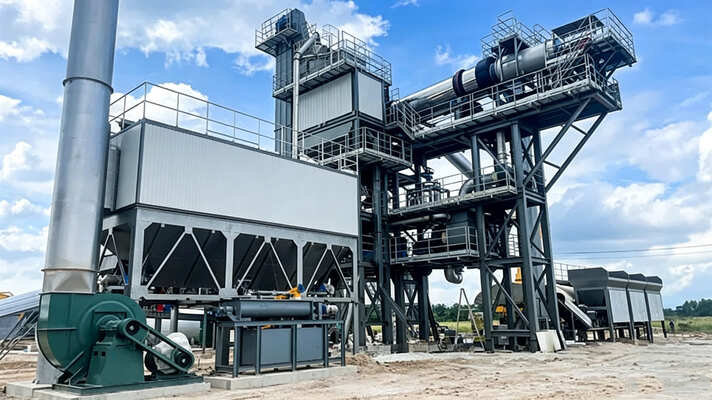
At present, municipal and high-speed maintenance projects across the country generally increase the procurement investment of asphalt recycling system, which is not purely policy-oriented, but jointly promoted by four factors: economic cost, environmental protection constraints, infrastructure status quo and technical iteration, which is also the irreversible trend of long-term development of the industry.
Asphalt binder is the most expensive raw material for road construction. The cost of primary gravel mining and long-distance transportation increases year by year, while the asphalt recycling system can directly digest the local milling old materials and realize large savings from the raw material end. According to the industry data of North America in 2024, RAP can replace about 96 million tons of primary aggregate and 5.1 million tons of asphalt in the whole year, and the total material saving of the whole industry reaches USD 4.7 billion, and the infrastructure related expenditure of each household is indirectly reduced by USD 35 on average; Converted to each ton of recycled mixture, compared with all-new material, the material cost can be saved by nearly 100 yuan, and the cost reduction of high-blending recycling scheme can reach 15%~35%.
For mixing station and maintenance construction enterprises, the investment return period of supporting asphalt recycling system is very short, and most upgrading projects can recover equipment procurement and transformation investment within 1~2 years. At the same time, it saves additional expenses such as old material transportation and landfill, waste residue treatment and long-distance new stone transportation. Under the market environment of continuous tightening of maintenance budget and low-price competition of projects, enterprises with recycling equipment have obvious bidding advantages, which makes it easier to undertake municipal and high-speed long-term maintenance projects.
The limited exploitation of sandstone mines, shortage of solid waste landfill sites and strict control of carbon emissions are practical problems that cannot be circumvented by the road industry. The asphalt recycling system just provides a complete solution. Ten million tons of RAP materials will no longer enter landfills every year, and 72.5 million cubic yards of landfill space will be reduced in North America by 2024 alone; energy consumption in production links will be reduced by 10%- 20% compared with fresh material mixing; carbon dioxide emissions will be reduced by 28%- 39% by high-blending warm mixing technology, and tens of millions of tons of carbon dioxide equivalent will be reduced accumulatively over the years, which is equivalent to reducing carbon emissions from hundreds of thousands of passenger cars on the road all year round.
At the same time, asphalt belongs to petroleum derivative products, and the adjustment of global refining industry leads to long-term tightening risk of primary asphalt supply. A large number of recycled RAP materials can reduce the dependence of the industry on crude oil asphalt and avoid the cost impact caused by crude oil price fluctuation. The whole recycling system realizes closed-loop circulation of asphalt materials, and the old materials can be recycled repeatedly. It fully conforms to the policy assessment standards such as green infrastructure, zero-carbon road network and environmental product declaration (EPD). It is necessary for undertaking green bid sections and LEED certification projects.
It has been more than 20 years since the peak period of expressway, national and provincial trunk lines and urban municipal roads construction in China. A large number of pavements have entered the stage of centralized overhaul and periodic maintenance, and a large number of waste RAP materials are produced every year. The traditional treatment mode either discards the contaminated land on site or transports it to landfill at a long distance, which wastes resources and increases the construction period. The asphalt recycling system digests the old materials on site, and supplies the whole line maintenance after centralized treatment by the plant mixing equipment. The in-situ recycling unit directly completes the recycling and paving on the pavement site, greatly shortens the construction road closure time, reduces the traffic congestion and the impact of mass travel, and is especially suitable for the maintenance of urban trunk roads and high-speed pavements with large traffic flow and long-term closure.
In the early years, the industry generally worried that the high-proportion RAP mixture was easy to crack and the rutting resistance was insufficient, which limited the promotion of the recycling system; now, the crushing and screening refinement, the counter-current heating roller, the special recycling agent and the intelligent proportioning control system are fully iterated, and the pain points of brittle and uneven mixing of aged asphalt are completely solved. The recycling agent can repair the internal oil balance of aged asphalt and restore the flexibility of binder; high-precision temperature control equipment can avoid secondary burning of asphalt; the road performance of high-blending recycled mixture can be equal to or even better than that of brand-new asphalt mixture; the traffic departments at all levels gradually relax the RAP blending upper limit and further release the market demand of asphalt recycling system. Industry organizations predict that the global use of recycled asphalt will keep rising steadily by 2035, and the market scale of recycled mixing stations and in-situ recycling units will continue to expand.
The complete asphalt recycling system is divided into two categories:plant-mixed recycling complete sets of equipment (fixed/mobile) andin-situ recycling units, among which the plant-mixed hot recycling equipment is most widely used in the market, the parts system is the most perfect, and the core eight modules work together. Each component directly determines the quality of recycled materials, the maximum mixing ratio of RAP and the environmental protection ability.
The RAP material recovered by milling contains large lumps, soil, steel bars and other metal impurities, which cannot be directly mixed. The crushing and screening system is the first checkpoint to ensure the stability of recycled material grading. The equipment is equipped with jaw crusher and special RAP crusher, which can break up the agglomerates formed by aging asphalt bonding; it is equipped with multi-layer vibrating screen and roller screening machine to complete the classification of coarse and fine materials, realize the storage of coarse and fine RAP, and avoid the disorder of grading; the magnetic separation device automatically removes the steel bars and iron nails mixed with milling, and prevents the wear of the rear end conveying and drying equipment.
Many small and medium-sized mixing stations are only equipped with simple single-layer screening, which cannot realize the separation of coarse and fine materials, resulting in large fluctuation of RAP material performance, which can only maintain low blending within 20%; high-end recycling system adopts fine dissociation screening process to strip aged asphalt mortar on aggregate surface, and the uniformity of recycled materials is greatly improved, which is the basic premise for realizing more than 50% high blending. The pretreatment unit can be made into a mobile crushing and screening station alone to complete the preliminary processing at the road milling site and reduce the transportation cost of bulk waste.
Including RAP special storage bin, anti-bridge vibration feeder, belt conveyor, continuous weighing belt scale, bucket elevator complete set of conveying metering structure. Different from ordinary aggregate cold storage bin, RAP storage bin is equipped with vibration arch breaking device to avoid wet caked old material blocking the feeding port; each conveyor belt is equipped with independent high-precision weighing module, real-time feedback RAP feed flow, and new aggregate, asphalt, recycling agent system linkage matching, to ensure that each batch of mixture RAP mixing ratio error is controlled within the allowable range of industry standards. Raw aggregate is equipped with independent cold material supply bin, which is separated from RAP conveying channel and does not interfere with each other.
The heating link directly determines the performance of recycled mixture, and is also the core gap between ordinary mixing station and professional asphalt recycling system. The traditional parallel flow drying drum directly bakes RAP at high temperature, which is easy to cause carbonization and aging of surface asphalt and generate a large amount of blue smoke exhaust gas; the professional regeneration system adopts two mainstream schemes of counter-current drying drum and independent RAP heating furnace, which uses ultra-high temperature primary aggregate to conduct heat to soften RAP and avoid direct contact with open fire and high temperature.
The system is equipped with multi-fuel burner, supporting multi-energy switching of fuel oil and gas, built-in automatic temperature sensor, real-time control of drying temperature, stable control of mixture discharge temperature in the range of 140-160℃, not only can dry RAP internalmoisture content of 5%\ 8%, but also will not damage the aging asphalt structure. Independent RAP preheating bin will be added to the high-blending regeneration equipment to reduce temperature difference impact by stages, simultaneously reduce VOC exhaust gas and flue gas generation, and reduce the processing pressure of back-end environmental protection equipment.
The batch recycling equipment is equipped with a double-horizontal-shaft forced mixing pot (batch mixer), and the continuous production line adopts an integrated drum mixing main machine. The warmed RAP, new aggregate, liquid asphalt and regenerant all enter the mixing unit, prolong the special regeneration mixing time, disperse RAP aggregate particles, and allow the regenerant to fully penetrate the aged asphalt film, realize uniform fusion of old and new binders, and alleviate the problem of insufficient mixing of common "black stones" in the industry. The main mixing machine adopts wear-resistant lining plate design to adapt to the high strength wear caused by RAP stone and prolong the service life of equipment.
It consists of two subsystems: thermal insulation asphalt storage tank, high-precision asphalt metering pump, special storage tank for regenerant and micro-frequency injection nozzle. Aging asphalt long-term oxidation hardening, lack of flexibility, only adding new asphalt can not balance the anti-cracking and anti-rutting performance of the mixture, must accurately add regenerant to reduce asphalt components. The whole filling system adopts closed-loop automatic control, which automatically adjusts the filling amount of regenerant and new asphalt according to the real-time RAP feed amount and aging asphalt detection data, so as to eliminate manual mixing error; the tank body is kept warm and heat traced in the whole process, so as to ensure the stable fluidity of auxiliary agent under low temperature environment. At the same time, it can expand the filling interface of mineral powder, warm mixing additive, fiber and other auxiliary materials to meet the requirements of diversified pavement formulations.
High-proportion RAP heating will release dust, asphalt smoke, volatile organic compounds, environmental protection dust removal system is a necessary module for equipment compliance and commissioning. The main configuration bag pulse dust collector as a primary dust collection device, with multi-stage flue gas purification, deodorization device, capture the fine aggregate dust and blue smoke in the whole process of production, up to standard emissions to meet local air pollution control standards. The module not only avoids environmental penalties, but also recovers fine ore fines and re-mixes them, further improving the utilization rate of raw materials, improving the working environment of the plant and protecting the health of operators.
The mixed recycled hot mixture is transported to the thermal insulation finished product bin for temporary storage, and the bin body is thermally insulated to avoid the mixture cooling and caking in advance; it is equipped with a full-automatic weighing hopper to accurately measure the discharge of each vehicle, which is convenient for construction account statistics and raw material consumption accounting. Mobile recycling equipment finished warehouse capacity to meet short-distance construction needs, fixed large-scale recycling station configuration of large capacity multi-bin insulation storage, to meet the continuous supply throughout the day.
The entire recycling system is equipped with a PLC-integrated intelligent central control console and a visual touch screen to monitor full-dimensional data such as feed flow, drying temperature, material ratio, exhaust emissions, and equipment operating load in real time, and supports remote parameter adjustment and formula storage with one click. The system has a built-in data recording module, which automatically saves daily RAP consumption, regenerant consumption and output accounts, which is convenient for project acceptance, environmental protection verification and cost accounting. In case of material blocking, over-temperature, imbalance and other faults, it will automatically alarm and shut down, reducing the risk of equipment damage and unqualified material output.
In addition, the complete asphalt recycling supporting system also includes pre-pavement milling machine and closed RAP material storage yard (controlling moisture content and reducing impurity mixing); the on-site hot recycling unit cancels large drying and mixing station, integrates pavement preheating, milling, on-site mixing and paving equipment into an integrated mobile train, without a large amount of old material transfer. The cold regeneration system simplifies the heating and drying module, relies on emulsified asphalt and foamed asphalt to mix at room temperature, and the equipment structure is lighter and the energy consumption is lower.
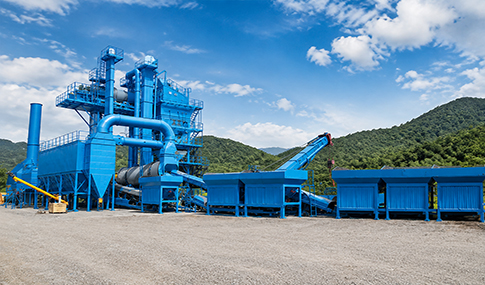
Taking the most widely usedplant-mixed hot recycling system as an example, from old pavement milling to recycled mixture paving and molding, the whole standardized process is divided into six steps, each step relying on special equipment for recycling system to complete fine control.
The first step: road milling recycling RAP raw materials use professional cold milling machine to carry out controlled depth milling on old and damaged roads, recycle old materials layer by layer according to road structure, distinguish between surface layer and base RAP, and stack them separately to avoid different aging degree old materials mixed to affect performance. After milling, the block RAP is transferred to the special material yard of recycling mixing station by dump truck, stacked in layers and covered with rain protection, so as to reduce the fluctuation of moisture content of the material pile and lay a foundation for subsequent processing.
The second step: RAP pretreatment crushing, screening, homogenization storage transported large RAP sent to the front crushing and screening system, crusher to break up the lumps, multi-layer vibrating screen classification of coarse and fine aggregates, magnetic separation to remove metal impurities, classification of coarse and fine RAP stored in independent bins. Before production, the laboratory samples RAP asphalt content, aggregate grading, moisture content and aging asphalt hardness, formulates exclusive recycling mix ratio according to the test data, controls the stability of raw materials from the source, and solves the pain point of large difference in old material performance of different sections.
The third step: automatic precise batching conveying central control system to obtain preset mixing ratio parameters, vibration feeder according to the set flow rate to convey RAP and raw aggregate, belt scale real-time measurement of material weight, through the bucket elevator into the drying heating unit, the whole process of automatic continuous feeding, no manual frequent feeding adjustment.
step four: temperature control dry heat exchange, mild activation aging asphalt primary aggregate first enter a drying cylinder to be heated at an ultra-high temperature, and then mixed with RAP to raise temperature by heat conduction, a counter-current drying structure slowly takes away moisture in RAP, and a full-process temperature control system locks a discharging temperature range to prevent aging asphalt from cracking at a high temperature. The mixed aggregate with moisture content up to standard and fully softened shall be sent to the mixing main engine to wait for asphalt and recycling agent to be added.
step 5, adde auxiliary agent for forced mix, completing asphalt regeneration modification, synchronously spraying new asphalt and quantitative regenerant into a mixing pot, prolonging mix time to allow that regenerant to fully penetrate aged asphalt particles, dispersing agglomerated "black stones", and fully fusing new and old binders to form homogeneous recycled mixture. Laboratory real-time sampling test mixture voidage, stability, flow value, to ensure that finished products meet the construction specifications of high-speed, municipal roads.
The sixth step: finished product storage, transportation, paving and compaction qualified recycled mixture is stored in the thermal insulation finished product warehouse, loaded and transported to the construction site, and the conventional asphalt paver and roller are used to complete the paving and compaction. The construction technology and equipment operation are completely common with the brand-new asphalt mixture, and the durability, flatness and water loss resistance of the formed pavement meet the standards.
If the in-situ hot recycling process is adopted, the whole process is completed on the road site: the equipment train heats the road surface by sections, the on-site milling and loosening, the in-situ spraying of recycling agent mixing, the instant paving and rolling, and the RAP material is 100% utilized in situ, thus eliminating the long-distance transportation and greatly reducing the traffic interruption time; the cold recycling process cancels the high temperature drying link in the whole process and relies on emulsified asphalt to mix at room temperature, which is mostly used for road base and low-grade highway maintenance.
Raw material saving is the most intuitive benefit. RAP replaces high-priced asphalt and scarce sandstone, reducing the cost of each ton of mixture materials by 80- 120 yuan, and the accumulated savings of annual large-scale maintenance projects can reach tens of millions of yuan; at the same time, it reduces the additional expenses of old material transportation, landfill disposal and long-distance transportation of new aggregates. The equipment investment return period is short, and most enterprises can recover the transformation cost by relying on the material price difference after transforming the existing mixing station to add regeneration supporting modules; the high blending regeneration scheme further amplifies the cost advantage, forms core competitiveness in the low-price bidding project, and broadens the business undertaking scope of the enterprise.
Ten million tons of waste asphalt will not be buried every year, saving a large amount of landfill land resources; reducing mining sand and gravel, protecting the ecological environment of mountains; reducing the consumption of asphalt petroleum raw materials, and reducing the carbon emission pressure of the oil refining industry. The energy consumption and greenhouse gas emission of production links have been significantly reduced. The supporting dust removal and purification equipment has achieved the emission of flue gas dust up to standard. It helps enterprises to obtain policy subsidies and green project bidding points through various green construction and low-carbon project reviews. Asphalt can be recycled indefinitely, building a closed-loop recycling system for road building materials, which is in line with the domestic circular economy development policy guidance.
The road performance of the recycled mixture modified by recycling agents and accurately temperature-controlled mixing fully meets the requirements of road specifications at all levels. RAP inner aging asphalt has higher hardness, rutting resistance and heavy load wear resistance of molded pavement are better than those of ordinary brand-new mixture, which is suitable for national highway and highway sections with large truck flow; after asphalt flexibility is blended by recycling agent, the low temperature cracking resistance and fatigue durability of mixture are greatly improved, and long-term field monitoring shows that the service life of high-admixture recycled pavement can approach that of brand-new pavement. At the same time, the aging asphalt film improves the adhesive force of the aggregate, and the water stability of the mixture is better. It is not easy to appear pits and loose diseases in rainy southern areas. The recycled mixture is suitable for the construction of surface layer, adhesive layer and base layer, and the application scenario is not limited.
On-site recycling equipment can quickly complete road surface repair, construction road closure time is short, and there is little interference to urban traffic and residents 'travel; the production capacity of plant-mixed recycling system is stable, and it can supply maintenance projects in batches. Mobile recycling equipment can be flexibly transferred to adapt to scattered township roads and sporadic repair projects in parks. The paving and compaction of recycled mixture use common equipment in the industry, without additional procurement of special construction machinery, reducing supporting investment; the complete intelligent central control system simplifies manual operation, reduces labor input of laboratory and production team, and improves the automation management level of mixing station. Long-term use can also accumulate green construction performance, improve enterprise industry qualification and market reputation.
.jpg)
Many enterprises have early cracking, rutting and loose diseases on recycled pavement after supporting asphalt recycling system, which is essentially the lack of control of many key parameters in the whole production process. The following seven factors directly determine the durability of mixture produced by recycling system, and are also the core control points of equipment selection and daily production control.
The aging degree difference of RAP is the primary variable. The longer the service life of pavement, the more serious the asphalt oxidation, the stronger the rigidity of binder and the easier to crack. The content range of conventional RAP asphalt is 3%~7%, and the fluctuation of material source content in different sections will cause the imbalance of mixture formula. At the same time, RAP aggregate grading, agglomeration degree, impurity content and moisture content in storage yard will interfere with the quality of finished products. Therefore, professional recycling system must be equipped with complete crushing and screening facilities, storage facilities, and normal laboratory testing mechanism to master raw material indicators in real time.
20%~30% low blending range mixture performance is the easiest to control, almost no need to adjust the formula greatly; blending ratio increased to more than 40%, the total amount of aging asphalt increased significantly, the overall rigidity of the mixture increased, low temperature crack risk synchronously increased, must be replaced with softer grade new asphalt, increase the regenerant filling balance performance. If the equipment heating and mixing system is poorly configured, blindly increasing RAP content will directly lead to early damage of pavement. Therefore, high mixing demand must purchase counter-current drying and long-term forced mixing high-end regeneration system.
There is a common problem of "black stone" in the industry, that is, the aging asphalt in RAP particles cannot fuse with new asphalt and recycling agent, the fusion activation rate is only 45%~60%, and the old material particles that are not completely activated are equivalent to inert aggregates, reducing the bond strength of the mixture. The equipment heating mode, mixing time and regenerant diffusion efficiency directly affect the fusion effect. The high-end regeneration system greatly improves the fusion degree of old and new asphalt by means of staged preheating, prolonged mixing time and refined crushing and dissociation.
The regenerant is the core additive to balance the anti-cracking and anti-rutting performance of the mixture. The model and dosage need to match the RAP aging degree: insufficient regenerant can not restore the asphalt flexibility, and the pavement is easy to crack; excessive regenerant will make the mixture soft and rut quickly appear on heavy duty sections. Mix ratio design can not only rely on volume index, must simultaneously carry out rutting, low temperature bending, freeze-thaw cracking performance test, take into account the dual needs of high temperature stability and low temperature cracking resistance, intelligent regeneration control system supports multiple sets of formula storage, adapt to different material sources RAP.
Heating RAP directly with open flame will carbonize surface asphalt rapidly, produce a lot of harmful flue gas, and destroy asphalt components at the same time. Mild heating schemes such as countercurrent heat exchange and independent preheating bin can retain the activity of aged asphalt to the maximum extent. Too high temperature and insufficient drying will cause quality defects: moisture content is not completely dried will cause excessive internal voids in the mixture, late water damage; temperature exceeds the standard to accelerate the secondary aging of asphalt and aggravate the brittle crack of pavement. The high-precision real-time temperature control module is standard for high-quality regeneration systems.
Crushing and screening can break up RAP agglomerated particles, conveying metering ratio error, mixing and stirring time, dust recovery and utilization rate of dust removal system, all belong to the production process control category. The simple modified regeneration equipment has insufficient screening accuracy, large measurement error, raw material fluctuation cannot be compensated in real time, and the quality stability of the regenerated mixture is poor; the integrated brand-new regeneration equipment has automatic linkage adjustment of the whole process to offset the parameter fluctuation brought by raw materials and environment.
The paving temperature, compaction degree and paving thickness of recycled mixture affect the compactness of formed pavement; the service conditions such as low temperature in the north, rainy in the south and long-term heavy truck traffic will enlarge the original performance shortcomings of mixture. Even if the recycling system produces qualified mixture, the construction temperature control and compaction are not in place, which will still shorten the service life of the road. The construction specification for supporting paving and rolling shall be strictly followed for high-mix recycled pavement.
Many road practitioners confuse ordinary asphalt mixing station with professional asphalt recycling system. There are essential differences between the two in raw material treatment, equipment structure, production cost, environmental protection emission and finished product performance control. Enterprises shall clearly distinguish when purchasing and upgrading. The following table decomposes the core differences:
In short, the traditional mixing station can only complete the production of basic asphalt mixture, and the asphalt recycling system is a set of composite complete equipment that takes into account the recycling of used materials, low carbon production and intelligent quality control; the existing ordinary mixing station can be transformed into a simple recycling system by adding RAP bin, screening and regeneration heating module, which is suitable for low blending production; it is recommended to purchase integrated brand-new professional asphalt recycling equipment for long-term high blending and large-scale maintenance projects.
Asphalt recycling equipment on the market can be divided into four categories: fixed plant mixing hot recycling, mobile plant mixing recycling, in-situ hot recycling unit and cold recycling equipment. Different production capacity, construction scenario and RAP blending target correspond to different equipment schemes. Enterprises can complete the selection according to the seven-step standard to avoid procurement errors such as insufficient equipment production capacity, low blending upper limit and substandard environmental protection.
First determine the target RAP blending ratio: daily blending 15%~30% low ratio, the existing mixing station can be modified to support simple regeneration module; plan long-term 40%~90% high blending production, must choose counter-current drying, independent RAP preheating professional integrated regeneration station. Re-matching construction technology: fixed-plant hot recycling is selected for long-term fixed area mass maintenance; mobile recycling station is selected for multi-site frequent transfer and scattered township projects; on-site hot recycling unit is selected for rapid surface repair of high-speed and urban trunk roads to reduce road closure time; cold recycling system is selected for road base reconstruction, budget limitation and ultra-low energy consumption. At the same time, confirm the maximum RAP blending upper limit allowed by the project according to local traffic regulations, so as to avoid failing to meet the bidding formula requirements after equipment procurement.
Calculate the hourly capacity of equipment according to the annual maintenance engineering quantity and the peak value of single-day mixture supply. Reserve 10%~20% surplus capacity for equipment selection to prevent insufficient supply during peak periods. Avoid blindly purchasing ultra-large capacity equipment and raising the cost of equipment procurement, operation and maintenance and energy consumption. Fixed recycling station is suitable for long-term mixing base in urban suburbs, with large production capacity, high mixing capacity and high production stability; crawler mobile crushing and screening, mobile recycling mixing station is convenient to disassemble and transfer, without fixed plant infrastructure investment, suitable for small and medium-sized maintenance enterprises and scattered county road engineering.
Investigate whether the stock and material source of local milling old materials are single: if RAP sources are disordered, aging degree is different greatly, and impurities are many, priority shall be given to selecting regeneration system with strong crushing and dissociation effect, multi-layer fine screening and multi-bin storage, and supporting normal sampling detection interface; if the material pile is stacked in the open air and the moisture content fluctuates greatly, the heating power of equipment drying system shall be strengthened, and the supporting scheme of closed rainproof RAP material yard shall be planned.
The core technology is the core of equipment value, focusing on the five modules of drying and heating form, metering accuracy, mixing system wear-resistant configuration, tail gas environmental protection treatment and intelligent control system: preferential selection of counter-current drying drum, independent RAP preheating structure, high precision frequency conversion batching scale, lengthened forced mixing host, pulse bag dust removal + flue gas purification, and full-process PLC intelligent central control equipment; Parallel flow simple drying, single bin, no automatic proportion compensation of low-cost equipment is only suitable for extremely low mixing temporary use, long-term high-load production is prone to quality, environmental protection failure.
Renovation of the existing traditional mixing station: only RAP bin, screening, conveying and filling modules are added, which has less investment in the early stage and is suitable for small and medium-sized enterprises with limited budget and low mixing demand, but the upper limit of high mixing is limited, and the energy consumption and maintenance cost in the later stage are high; The brand-new integrated recycling station is ex-factory adapted to high-proportion RAP production, coordinated optimization of temperature control, mixing and environmental protection systems, lower long-term operation and maintenance costs, stable production capacity, and adaptation to future policies to improve mixing ratio. It is suitable for large-scale maintenance groups and large-scale mixing bases. If only RAP pretreatment is required, a mobile crushing and screening station can be purchased separately and used in conjunction with the existing mixing station.
It is not only necessary to compare the equipment purchase quotation, but also calculate the whole life cycle cost completely: including equipment energy consumption fuel oil, wear parts replacement, annual maintenance, environmental protection operation and maintenance, raw material saving income, calculate the equipment investment return period; at the same time, check the local air pollution emission standard, confirm that the equipment dust removal and flue gas treatment configuration can pass the environmental impact assessment acceptance, so as to avoid rectification shutdown after putting into operation. Synchronous inspection of equipment manufacturers local after-sales outlets, spare parts inventory, operator technical training services, recycling equipment wear parts loss is higher than ordinary mixing station, perfect after-sales can greatly reduce downtime losses.
When purchasing equipment, reserve warm mixing additive, RAS collaborative regeneration and remote data monitoring upgrade interface; with the continuous improvement of recycled material blending requirements by local policies, equipment with upgrading space does not need to be replaced as a whole, and only adding supporting modules can improve production capacity and blending upper limit, prolong equipment service life and avoid short-term equipment elimination risk.
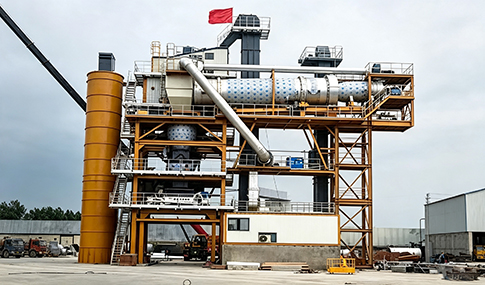
Driven by sand resource control, oil price fluctuation, double-carbon policy and road network overhaul demand, asphalt recycling system has become the core equipment of road construction and maintenance enterprises. Through mature technologies such as crushing and screening, precise temperature control mixing and regeneration modification, the system realizes recycling utilization of waste asphalt materials, which can not only save natural resources, reduce project construction costs, reduce carbon emissions and solid waste pollution, but also effectively shorten construction cycle and reduce traffic impact. At present, plant-mixed hot regeneration, in-situ hot regeneration and cold regeneration equipment form a complete product matrix, which can fully adapt to various maintenance scenarios such as high speed, municipal roads and grass-roots reconstruction. Only by standardizing equipment configuration, raw material control and proportion design, it can give full play to its economic and environmental protection value.
With the continuous upgrading of technologies such as research and development of recycling agent, intelligent numerical control and low temperature cold mixing, the RAP blending ratio and production stability of asphalt recycling equipment are continuously improved, and low-carbon recycled mixture is gradually becoming the mainstream material for road construction. For construction enterprises, the layout of professional asphalt recycling system can not only meet the rigid requirements of current environmental protection compliance and project bidding, effectively improve the economic benefits of the project, but also create differentiated competitiveness of green construction. It is the core layout conforming to the trend of low-carbon, circular and sustainable development of transportation infrastructure.