Under the industrial background of double-carbon strategy, circular economy and large-scale development of highway maintenance, the recycling of waste asphalt pavement recycled material (RAP) has become the standard process of asphalt mixing station. In the past, most of the waste asphalt produced by road milling was directly buried, which not only occupied land, polluted water and soil, but also continuously consumed natural sand and petroleum asphalt resources; now, through the standardized mixing station recycling process, RAP can be stably blended with 10%~50% or even higher proportion, producing recycled hot mix asphalt mixture with standard performance and lower cost. This paper systematically decomposes RAP basic definition, core value of mixing station regeneration, complete production process, supporting core equipment, regeneration difference between intermittent and drum mixing stations, technical problem solutions and standardized high-quality production practice specifications, providing complete industry reference for asphalt mixing stations, road construction enterprises and maintenance units, covering high-frequency search keywords in the industry, giving consideration to professional depth and practical landing.
RAP is the full name of recycled asphalt pavement material, commonly known as old asphalt milling material. It is produced by road milling operation. After crushing, screening, impurity removal and rainproof storage, it forms standardized recycled raw materials, mainly including natural aggregate and aged asphalt binder. The application covers the whole structural layer of the road, and can be made into hot-mixed, warm-mixed and factory-mixed cold-recycled asphalt mixtures according to different processes for pavement surface layer and base layer, and the severely aged waste can also be used as subgrade filler; hundreds of millions of tons of RAP are recycled every year in Europe and America. Under the requirements of green traffic policy in China, the recycling rate standard of road materials continues to improve, and the application demand of RAP continues to expand.
High quality RAP aggregate after long-term compaction, good skeleton stability, mixed with regenerant, high temperature rutting resistance of recycled mixture is better than pure new material. However, long-term service of pavement will cause oxidation and hardening of asphalt binder, and it is easy to cause low temperature cracking, mixing construction and insufficient workability when high admixture is used, which is also the core technical problem that needs to be solved in RAP recycling production of asphalt mixing station.
The active upgrading of RAP recycling supporting system by major asphalt mixing stations is not a simple response to environmental protection policies, but a consideration of cost-benefit, low-carbon compliance and triple benefits of engineering quality, which has become the core means to enhance market competitiveness.
In the production cost of asphalt mixture, the proportion of primary basalt, limestone aggregate and petroleum-based asphalt exceeds 70%, the fluctuation of crude oil price and the restriction of sand mine continue to push the procurement cost of new asphalt mixture, while RAP can replace aggregate and asphalt simultaneously, forming stable cost buffer.
From the raw material procurement level, each ton of recycled mixture can save 9~10 yuan of new asphalt and new sandstone procurement cost, and the annual raw material cost of single station can reach ten million yuan after large-scale production; meanwhile, the waste asphalt landfill, transportation and disposal expenses can be completely saved, and the extra expenses such as waste removal and landfill site lease can be saved.
From the perspective of market competition, mixing stations equipped with mature high-content RAP recycling systems can lower the price of finished mixtures and gain obvious price advantages in municipal and high-speed maintenance bidding; in addition, RAP is mostly derived from local road milling projects, and is collected on-site Recycling and storage greatly reduces fuel and transportation losses caused by transporting new aggregates over long distances, and the transportation costs of projects in remote areas can be reduced by more than 30%.
RAP regeneration is the core path for road industry to realize carbon reduction and solid waste recycling, and environmental benefits cover three dimensions: resources, energy consumption and emission.
In terms of resource conservation, every ten thousand tons of RAP recycling can reduce 12,000 tons of natural sand and gravel mining, reduce the damage of mine mining to mountain vegetation and water and soil, save non-renewable petroleum resources and reduce the demand for asphalt refining; At the level of energy conservation and emission reduction, compared with 100% new material production, every 10% increase in RAP content significantly reduces energy consumption in mixture production stage, reduces carbon emission per unit volume by 3.85kg/m³, warm mixing + high RAP mixing combination process can further reduce greenhouse gas emission by 25%~40%, and greatly reduces heating fuel consumption; In terms of solid waste treatment, more than 300 million tons of waste asphalt are produced every year in road maintenance nationwide. If all of them are buried, a large area of land will be occupied, and asphalt is difficult to degrade naturally. Centralized regeneration of mixing stations can realize closed-loop circulation of waste pavement materials, completely eliminating soil and groundwater pollution caused by solid waste landfill, which fully meets the requirements of circular economy industry development.
In addition, FHWA (Federal Highway Administration of the United States), NAPA (National Asphalt Pavement Association) and domestic transportation industry specifications encourage the application of recycled materials. The use of RAP mixtures with high content can help projects obtain green building materials scores, low carbon engineering points, and meet the environmental protection standards of various types of project bidding.
After crushing and screening, RAP aggregate skeleton density is high. After reasonable proportion of regenerant, the high temperature stability and long-term durability of recycled mixture are not weaker than that of brand-new mixture. Long-term monitoring of a large number of physical projects proves that the service life of recycled pavement produced by standard production is equal to that of pure new pavement.
At the supply chain level, the mixing station can store local milling RAP for a long time to form a stable raw material inventory, get rid of the fluctuation of sand and asphalt raw material supply and the risk of supply interruption, and ensure continuous production; meanwhile, modern batch and drum mixing stations can be reconstructed by installing RAP special feeding and heating system, with strong equipment adaptability, no need to replace the main engine as a whole, and short investment return period for transformation.
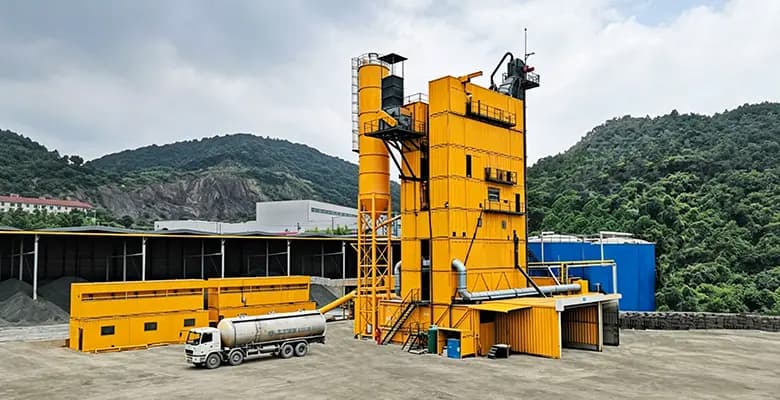
RAP is converted from raw materials in storage yard to qualified recycled asphalt mixture, which is divided into five consecutive links: off-site pretreatment, in-station feeding, heating and temperature control, uniform mixing, finished product storage and quality inspection. There is only difference in heating and feeding nodes between intermittent and drum mixing stations, and the overall logic remains unified.
The milled RAP raw material cannot be directly fed into the main mixing machine, and must be standardized in the pretreatment yard, which is the first pass to control the fluctuation of recycled mixture performance.
After the milling waste material is discharged by the dump truck, it is firstly crushed by the jaw crusher to break up the large asphalt caking; then sent to the horizontal impact crusher for secondary shaping to produce cubic particle aggregates and reduce needle and sheet inferior aggregates; the multi-layer vibrating screen divides the materials into coarse and fine specifications, and the magnetic separation equipment synchronously separates metal impurities; RAP after grading shall be stacked in different areas, stored in canopy and sealed bin, and the moisture content shall be strictly controlled to be lower than 3%~5%, so as to avoid a large amount of blue smoke and steam generated during mixing due to rainwater infiltration, which will affect mixing temperature and asphalt coating effect. RAPs with different sections and service life are stored separately, which is convenient for precise regulation of subsequent mix ratio design.
The RAP after pretreatment is transferred to the exclusive cold bin of the mixing station, which is different from the original aggregate bin. The RAP bin is equipped with an independent variable frequency metering belt, which is automatically and accurately transported according to the mixing ratio of the mixture design. The metering error is strictly controlled within ±0.5%. The system can adjust the RAP delivery flow in real time according to the production mix ratio of the day, realizing stepless adjustment of 10%~50% of the mixing amount, and the automatic control system records the feed weight of each batch of RAP synchronously, which is convenient for later quality traceability.
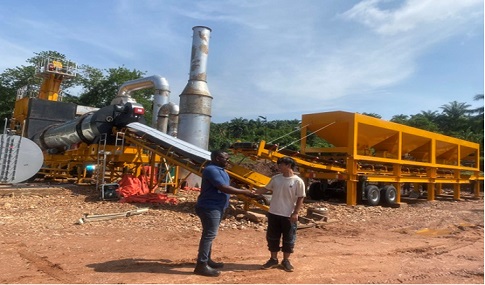
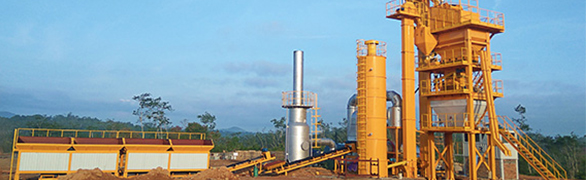
Aging asphalt binder will volatilize and carbonize rapidly in direct contact with open fire at high temperature, resulting in pungent blue smoke and harmful waste gas. Therefore, two mainstream mixing stations adopt differential feeding heating scheme to avoid this problem: intermittent mixing station: raw aggregate enters drying drum separately and is fully heated, RAP is not dried by open fire, after hot aggregate enters mixing tank, normal temperature RAP is put into mixing pot for mixing, aged asphalt is activated by heat carried by hot aggregate, and RAP is directly burned at high temperature from the root; continuous drum mixing station: raw aggregate enters from the front end of drum and is heated directly by flame, RAP is sent from the middle part of drum through special regeneration ring and RAP sleeve. At this time, the front aggregate has been heated up, and there is no open fire direct exposure to RAP materials, which greatly reduces the volatilization of asphalt smoke, which is also the core reason why drum station is easier to realize RAP with high content of more than 50%.
The whole heating system is equipped with multi-point temperature sensors to monitor the discharge temperature of the drum and mixing cylinder in real time. The standard discharge temperature of the recycled mixture can be maintained at 130~160℃, and the warm mixing process can be adjusted to 110~ 130℃.
Hot aggregate, RAP, new asphalt, recycling agent and mineral powder enter the mixing unit synchronously, and are fully stirred to ensure that each aggregate is evenly coated with asphalt adhesive film. High content RAP (more than 30%) must be quantitatively added with regenerant, which is accurately transported by special metering pump and penetrates into the aged asphalt to supplement the missing light oil, repair the colloidal structure of asphalt, restore the cohesiveness and low temperature ductility; if RAP aging degree is light, it can also be matched with low grade soft primary asphalt to adjust the hardness of the overall binder. Stirring time should be extended according to RAP content to eliminate agglomeration and uneven coating of materials.
The mixed recycled mixture is stored in the thermal insulation finished product bin, and the temperature is kept stable through the thermal insulation layer to prevent the rapid temperature drop during transportation from affecting the paving and compaction effect. For each production of fixed-tonnage mixture, the laboratory samples synchronously to detect grading, oil-stone ratio, moisture content, Marshall stability, freeze-thaw cracking strength and other indicators. Once the detection data deviates from the design standard, the system automatically adjusts the mixing ratio of RAP, asphalt and recycling agent to ensure that the mixture completely meets the road construction technical specifications.
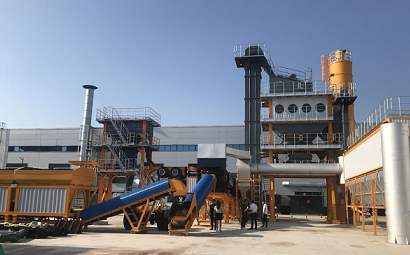
From pavement milling to mixing and molding in the station, RAP recycling industry chain supporting equipment is divided into four categories: pavement milling equipment, crushing and screening pretreatment equipment, special recycling supporting equipment for mixing station and environmental protection auxiliary equipment. All equipment cooperate to ensure stable production of recycled materials.
Cold milling machine is the only source of RAP raw materials equipment, equipped with rotary milling drum, can accurately control the milling depth, cut waste asphalt materials through its own conveyor belt directly loaded, the output material particle size is uniform, reduce the later crushing pressure, suitable for high-speed, municipal roads all kinds of surface milling operations.
Bag dust removal system is the core environmental protection equipment, capturing dust generated during crushing, screening and mixing, collecting asphalt flue gas generated by heating RAP at the same time, and eliminating blue smoke and peculiar smell with exhaust gas treatment device; mobile integrated crushing and screening station can be directly stationed at overhaul site to process milling RAP on site, reducing long-distance transportation cost of materials.
RAP recycling can be realized by the two mainstream mixing stations, but there are obvious differences in mixing upper limit, production mode, quality control and applicable engineering scenarios. The mixing station can choose the adaptation scheme according to its own production capacity and project type.
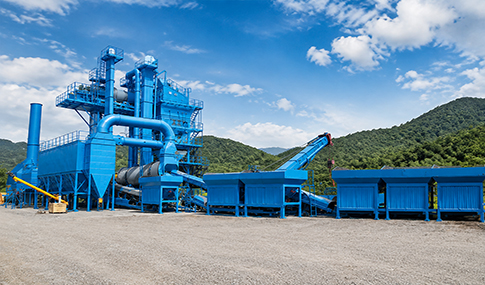
Batch mixing production mode is adopted in batch station. Each pot of mixture is independently measured and mixed. RAP feeding is set in mixing tank without open fire heating by drying drum. The biggest advantage is flexible adjustment of mixing ratio. RAP dosage and regenerant dosage can be modified in each batch. The quality control accuracy is extremely high.
Under normal conditions, RAP stable blending interval is 15%~40%. With high-performance regenerant and warm mixing technology, the blending amount can be slightly increased. The production mode is intermittent, and the single-hour production capacity is lower than that of drum station. It is more suitable for urban sporadic maintenance, multi-specification mixture switching, high-standard trunk roads, park roads and other projects, suitable for small and medium-sized mixing stations with multi-formulation requirements.
The shortcomings lie in the limited production efficiency of high content, insufficient production capacity in large-scale high-speed reconstruction and expansion continuous construction scenarios, complex overall equipment structure, and more daily maintenance points.
The drum station produces continuously throughout the whole process, relying on the middle regeneration ring to send RAP, avoiding the high temperature flame zone at the front end, and has higher heat exchange efficiency. It is the mainstream equipment to realize RAP with more than 50% ultra-high content. Large capacity per hour, strong continuous production stability, lower comprehensive operating cost per ton of mixture, suitable for highway overhaul, large-area road overlay and other large-batch unified mixture projects.
The short board is that the flexibility of formula switching is insufficient, there is a long transition section when replacing RAP content and mixture specification, quality control is highly dependent on RAP raw material stability, if the incoming grading and moisture content fluctuate greatly, the performance of finished mixture is easy to deviate.
In pursuit of flexible formulation, high-standard and refined construction, and complex project types, priority is given to the use of RAP recycling systems for intermittent mixing stations; long-term undertaking of large-scale high-speed maintenance and large-batch orders for single mixtures, with the goal of achieving cost reduction and efficiency enhancement of RAP with high content, priority is given to the transformation of recycling supporting structures for drum mixing stations; at present, the mainstream trend in the industry is to match drum stations with warm mixing and recycling agent systems to maximize RAP blending ratio and balance production capacity and production cost.
In actual production, aging asphalt, moisture content of raw materials, material fluctuation, flue gas emission and other problems will directly affect the road performance of recycled mixture. After years of engineering practice, the industry has formed mature and standardized response schemes.
RAP asphalt binder in long-term service becomes hard due to oxidation, low temperature crack resistance and fatigue resistance of mixture decrease greatly under high content, and paving and rolling difficulty increase.
Solutions: First, accurately add adaptive regenerant, determine the dosage according to the aging degree detected by asphalt extraction test, supplement asphalt light components, and restore the flexibility of binder; Second, mix with low-grade soft primary asphalt to balance the hardness of overall binder; Third, adopt Superpave performance mix ratio design, verify the durability of recycled mixture through Hamburg wheel rutting test and freeze-thaw splitting test, and avoid cracking risk from formula level.
RAP piled in the open air easily absorbs rainwater. During the heating process, water quickly vaporizes to form steam, which will dilute the asphalt film. At the same time, the aging asphalt volatilizes at high temperature to produce blue pungent smoke, polluting the factory environment.
Solution: Build a fully enclosed canopy at the storage yard to control the moisture content of raw materials below 5%; optimize the hot air heat exchange structure at the drum station, and extend the preheating time of hot aggregates at the intermittent station; match the bag dust removal + exhaust gas adsorption device to collect flue gas; promote the warm mixing regeneration technology, reduce the overall mixing temperature, and reduce the generation of asphalt volatiles from the source.
RAP produced by different road sections and different milling depths has significant difference in aggregate thickness ratio and asphalt content, and direct uniform blending will cause excessive fluctuation of voidage and stability of finished mixture.
Solution: Implement the warehouse storage system, different sites, different batches of RAP stacked separately; Pretreatment stage multi-stage screening fine classification, coarse and fine RAP separate metering feed; Mixing station automation system with online infrared detection equipment, real-time monitoring incoming asphalt content, dynamic adjustment of new asphalt and regenerant addition; Mix RAP raw materials in multiple yards in advance before production to balance the overall material performance.
Hardened asphalt reduces the lubricity of the mixture, and the workability is far worse than that of the new mixture at the same temperature. The construction site is prone to insufficient compaction, segregation and other diseases.
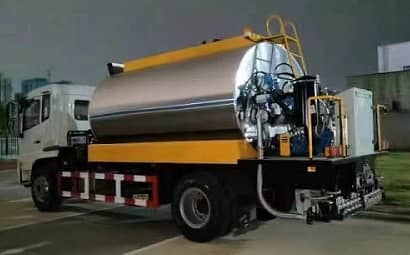
Solution: Large-scale production uses warm mixing additives simultaneously to reduce the mixing discharge temperature and improve the fluidity of the mixture; optimize the mix ratio, properly adjust the proportion of coarse and fine aggregates to improve the workability of the construction; strictly control the factory temperature to avoid excessive temperature drop during transportation, and provide on-site insulation transportation tankers.
Aging asphalt has viscosity at normal temperature, and it is easy to bond the inner wall of equipment during crushing and screening, which reduces the treatment efficiency and intensifies the wear of equipment.
Solution: horizontal impact crusher is selected to adapt to viscous asphalt materials, and the inner wall of the equipment is sprayed with anti-sticking and wear-resistant coating; the caked materials of the screening machine and belt conveyor are cleaned regularly; the moisture content of RAP storage yard is controlled to reduce the phenomenon of asphalt sticking and caking when it meets water.
The traditional mixing station without modification directly mixes high proportion RAP, and a large amount of asphalt volatiles overflow at high temperature, and the dust emission is difficult to meet the standard.
Solution: The drum station is equipped with a special RAP heat insulation regeneration ring to avoid the material facing the high temperature flame; the large-capacity bag dust removal system is upgraded to cover the crushing, screening and mixing line; the VOC waste gas treatment equipment is equipped to collect and decompose asphalt flue gas to meet the environmental protection and ultra-low emission control standards.
In order to stably realize the production of high-content and high-performance recycled mixture, it is necessary to carry out standardization specifications throughout the whole chain of raw material control, mix ratio design, in-station production and quality inspection, refer to NAPA and FHWA industry guidelines and domestic highway recycling technical specifications, and sort out practical operation points.
Road milling adopts uniform milling process to ensure uniform particle size of incoming materials and avoid mixing of large and ultra-fine materials; impact crusher is preferred for crushing, and excessive crushing is prohibited; screening must be divided into coarse and fine at least two grades to thoroughly remove impurities such as soil, vegetation and construction waste; the ground of storage yard shall be hardened, and the moisture content of each material pile shall be fully covered for rainproof storage, and the materials with excessive moisture content shall be dried in advance; Different batches of RAP are premixed in advance to reduce the difference in material performance.
Each batch of RAP must be sampled and tested to complete three core tests of asphalt extraction, aggregate screening and aging performance of recovered asphalt; high content RAP (more than 25%) is forced to add regenerant, and the addition ratio is accurately calculated according to the hardness of recovered asphalt; performance-based mixture ratio design is adopted, which not only meets the volume index, but also simultaneously detects road performance indexes such as high temperature rutting, low temperature bending and water stability; Before formal mass production, trial mixing and trial paving test section shall be carried out, and the formula shall be fine-tuned according to field compaction and disease conditions.
RAP uses independent metering bins and regularly calibrates metering belts to ensure accurate proportioning; the roller station strictly controls RAP feeding from the middle regeneration ring and prohibits direct feeding at the front end; the intermittent station insists on heating hot aggregates first and adding RAP mixing at the later stage; the discharge temperature is monitored in the whole process, and the temperature of warm mixing and hot mixing mixture is strictly controlled; the regenerant pumping system is checked before daily commencement to avoid auxiliary supply interruption and metering deviation; The equipment is shut down every shift to clean up RAP caking and ensure smooth transportation and mixing.
Establish three-level detection mechanism for raw material mobilization, production process and finished product delivery, and detect grading, moisture content and asphalt content of raw material mobilization; sample every 200 tons of mixture during production process to detect oil stone ratio and Marshall index; keep inspection report for finished product delivery to realize traceability of mixture for each vehicle; introduce automatic online monitoring equipment to upload temperature, proportion and flue gas data in real time for supervision and verification; Organize regular special training for operators to master RAP regeneration exclusive production and equipment operation and maintenance knowledge.
It is not recommended to put the newly-built recycling production line into production with 50% high content directly. Trial operation with low content of 10%~20% shall be carried out first, practical operation experience of material control, temperature regulation and regenerant addition shall be accumulated, long-term use status of pavement physical engineering shall be monitored synchronously and continuously, and the blending ratio shall be gradually increased after stable performance is confirmed to avoid large-scale production quality accidents.
RAP plant mixing and recycling is the mainstream process for asphalt mixing station to reduce cost and increase efficiency and implement low-carbon environmental protection policy. It can be put into operation by adapting batch and drum mixing equipment, supporting crushing and screening equipment and special recycling transformation equipment. In the production, there are often problems such as asphalt aging, uneven raw material performance and excessive flue gas. Through fine material yard management, regenerant modification, warm mixing process, staged temperature control and whole process detection, various defects can be effectively solved and recycled asphalt mixture with road performance up to standard can be produced.
The scale of highway maintenance in China is expanding continuously, the standard of recycled materials is becoming stricter and stricter, and the blending ratio and application scope of RAP will continue to expand. The mixing station is equipped with recycling equipment and standardized production control, which can not only reduce raw material expenditure, meet environmental protection requirements, but also improve the quality of finished pavement and enhance market competitiveness. The large-scale promotion of this process will also promote the transformation of the road industry and build a resource recycling and low-carbon sustainable industry development model.

.jpg)