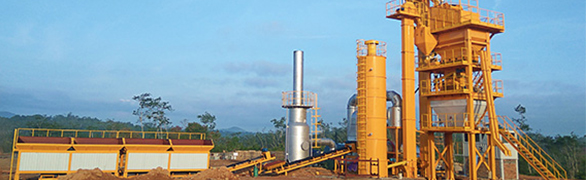
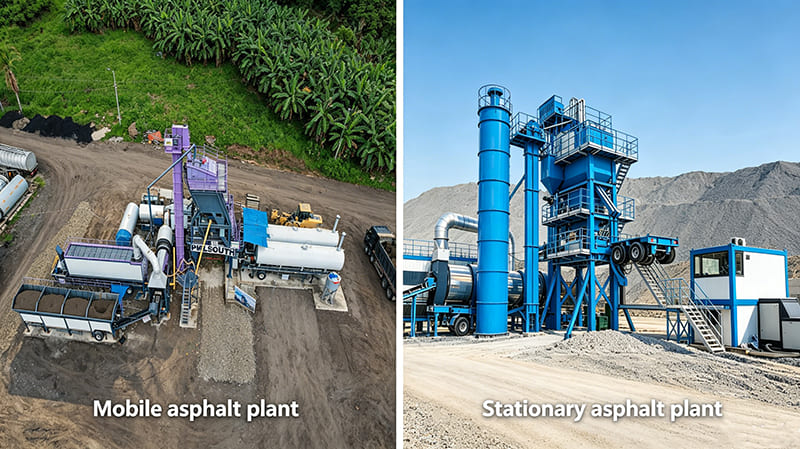
Batch asphalt mixing plant, also known as batch asphalt mixing plant, is the core equipment for preparing hot mix asphalt mixture in road engineering, and drum continuous mixing plant is the two mainstream equipment in the industry. It abandons continuous discharge mode and adopts batch closed-loop production process. The output of single batch is 2 to 6 tons. The equipment covers 100 tons/hour mobile small models to 400 tons/hour large fixed equipment. It can adapt to various pavement projects such as municipal roads, expressways, airport runways and bridge pavement. The biggest advantage of this equipment is the graded storage of raw materials, independent and accurate measurement, independent fine-tuning of each batch of production parameters, effective avoidance of ratio drift and gradation imbalance problems in continuous production, stable finished product quality and flexible formula switching. It is the key R & D model of mainstream brands such as Ammer and Binning Hove, and is also the preferred equipment for various high-grade and high-standard pavement projects.
.jpg)
The whole batch asphalt mixing plant is of tower modular structure, layered layout from top to bottom, 13 core systems operate automatically in coordination, each system directly affects the finished asphalt mixture quality and equipment production efficiency, and each component has clear division of labor and interlocking:
As the raw material inlet of the whole production line, the cold aggregate system consists of 4-6 groups of independent cold bins, vibrating feeders and aggregate belt conveyors. The construction unit stores crushed stone, river sand and machine-made sand with different particle sizes into corresponding silos respectively through loaders, and the frequency conversion vibration feeder automatically adjusts the discharge speed according to the construction mix ratio to accurately convey the corresponding proportion of aggregate to the main conveyor belt. Multi-bin independent design can complete the initial distribution of coarse and fine aggregates in advance, avoid the mixing of stones of different specifications, reduce the later screening and measurement errors from the source, and is the first checkpoint to ensure the stability of grading.
It includes conveying belt from cold material to drying drum and auxiliary conveying belt. The whole machine adopts wear-resistant and flame-retardant conveying belt, equipped with automatic deviation correction and anti-deviation device, which can continuously and stably convey wet cold aggregate. The closed structure reduces dust leakage and ensures uniform aggregate conveying flow at the same time, avoiding drying temperature fluctuation caused by broken material and surging material.
This is the core unit of aggregate dehydration and temperature rise, which consists of rotary drying drum, multi-fuel burner and high temperature exhaust pipe. Burner can adapt to diesel oil, natural gas, pulverized coal a variety of fuels, the drum is equipped with lifting blades, aggregates in the drum continuously tumbling, and high temperature hot air sufficient heat exchange, the aggregate will be heated to 150-175℃, while completely evaporating the free moisture in the aggregate, the moisture content will be controlled within 0.5%. If the aggregate is not fully dried, the residual moisture will destroy the adhesion between asphalt and aggregate, and the road surface will easily appear loose, pit and water damage in the later period. Therefore, the temperature control and drying efficiency of the drying system directly determine the service life of the road surface.
The chain bucket vertical lifting structure is adopted to accept the high temperature aggregate at the discharge port of the drying drum and vertically convey the hot aggregate above 150℃ to the screening unit at the top of the mixing tower. The shell of the whole machine is thickened and insulated. The bucket body is made of wear-resistant alloy material, which is resistant to high temperature and is not easy to wear. It prevents heat loss and raw material waste caused by hot aggregate falling halfway.
Usually equipped with 4-6 layers of screen, intermittent mixing station is different from the drum equipment key components. High temperature aggregate passes through multi-layer classification screen, automatically separates out coarse gravel, medium aggregate, fine sand, stone powder and other materials, aggregates with different particle sizes fall into corresponding hot bins, realizing fine classification of aggregates. Screening efficiency directly determines the grading accuracy of mixture, blocking and damage of screen will cause aggregate mixture, which will directly lead to imbalance of asphalt aggregate ratio and substandard pavement compaction.
Multi-compartment independent thermal insulation storage bin, each compartment corresponds to a kind of screened hot aggregate, the outside of the bin is fully covered with thermal insulation rock wool, and the material level monitoring sensor is matched to monitor the material inventory in the bin in real time. The hot bin can reserve enough graded hot aggregate in advance without waiting for drying process, and the metering link can directly take materials, greatly shortening the production cycle of single batch; at the same time, it supports multi-formula switching. When producing AC-13, SMA modified asphalt, color asphalt and other different mixtures, there is no need to empty the whole production line, just adjust the weight of each bin.
Known as the "heart" of intermittent mixing station in the industry, it consists of three independent weighing units of aggregate weighing hopper, asphalt weighing hopper and mineral powder weighing hopper, equipped with high-precision pressure weighing sensors (load sensors). Each raw material is weighed separately, the measurement error of aggregate is controlled within ±0.5%, and the measurement error of liquid asphalt is as low as ±0.25%, which fully meets the strict requirements of highway engineering construction specifications for asphalt aggregate ratio and aggregate grading. The system automatically records the weighing data of each batch by computer in the whole process, and can keep the production account to facilitate the traceability of engineering quality inspection.
The mixing core of the whole set of equipment, double blade synchronous reverse stirring structure. All the weighed aggregates and mineral powder are put into the mixing tank for dry mixing for 5-15 seconds to make the mineral powder evenly adhere to the aggregate surface; then high temperature liquid asphalt is sprayed, wet mixing is carried out for 30-60 seconds, and the complete mixing cycle is 45-90 seconds until the surface of each aggregate is evenly coated with asphalt, without white material, caking and segregation. The mixing paddle is made of wear-resistant high manganese steel, which is not easy to wear and deform when mixing at high temperature for a long time, so as to ensure the stability of mixing uniformity of hundreds of thousands of tons of mixture.
It consists of large asphalt storage tank, heat transfer oil heating pipeline, asphalt conveying pump and filtering pipeline. The asphalt is solid and viscous at normal temperature, and the system is continuously heated to about 160℃ at constant temperature to ensure the fluidity of the asphalt, and the asphalt is transported to the weighing hopper for accurate measurement; the tank body is fully enclosed and insulated to reduce heat loss, prevent the asphalt from solidifying and blocking the pipeline at low temperature, and adapt to the storage and transportation of various binders such as modified asphalt, color asphalt, matrix asphalt, etc.
Supporting vertical mineral powder bin, screw conveyor feeder, independent weighing unit, storage of limestone mineral powder, hydrated lime and other fillers. Mineral powder can fill the aggregate gap, improve the overall stability and waterproof performance of asphalt mixture, recycled asphalt can also be mixed with recycled dust to replace part of mineral powder, reducing raw material costs.
Including cyclone pre-separator, bag pulse dust collector, induced draft fan set of environmental protection devices, covering drying drum, screening, stirring all dust generation points. The high temperature flue gas generated by drying is first separated by cyclone to recover coarse dust, fine dust is captured by bag filter bag, collected dust can be recovered as mineral powder for secondary utilization, flue gas emission standards meet local environmental protection dust, exhaust gas emission standards, equipment can be all-weather stable production, not subject to environmental inspection restrictions.
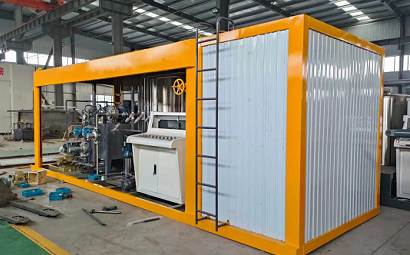
It is equipped with independent operation control room, equipped with industrial PLC automatic control system, built-in dozens of sets of asphalt mixture standard formula, and the operator can call AC, SMA, OGFC and other pavement mixture ratios with one key. The system monitors aggregate temperature, asphalt temperature, material weight of each bin, burner fire power, dust removal air pressure, equipment operating current in real time, automatic sound and light alarm in case of temperature exceeding standard, weighing deviation and equipment failure, supports remote data viewing and production report export, greatly reduces manual operation difficulty and reduces human error.
After the mixing cylinder is discharged, the finished hot mix asphalt can be directly loaded or stored in the thermal insulation finished product warehouse for temporary storage. The thermal insulation layer of the warehouse body maintains the temperature of the mixture, avoids the mixture cooling, hardening and segregation caused by waiting for the transportation vehicle for a long time, effectively optimizes the loading rhythm, and improves the overall hourly capacity of the equipment.
.jpg)
The whole production process follows thecold material feeding → drying heating → hot material lifting and screening → hot material storage → precise metering → forced stirring → finished product unloading and transportation complete closed loop, the whole process automation continuous cycle, single batch complete cycle 45-90 seconds, the following step by step disassembly of each process operation points and process functions:
Before commencement, operators shall complete inspection of equipment, calibration of central control system, asphalt preheating and pre-startup of dust removal system. The loader puts sand and gravel aggregates of different specifications into the cold storage bin respectively, the central control system obtains the preset construction mixture ratio, sets the discharge flow of each cold storage bin, the frequency conversion vibration feeder discharges materials at a constant speed, and the aggregate belt uniformly collects, mixes and conveys. The pre-small screening device simultaneously removes super-large particle size waste, avoids blocking the drying drum and screen with large stones, and stabilizes the raw material specifications from the source.
After mixing, the cold aggregate is sent into the rotary drying drum, the burner continuously outputs high temperature hot air, the aggregate continuously rolls in the drum, fully contacts with the hot air flow, the internal moisture is completely evaporated, and the aggregate is heated to 150-180℃. The dust-containing flue gas generated in the drying process is continuously discharged into the bag dust removal system, dust is captured and recovered, clean flue gas is discharged up to standard, and the three processes of drying, temperature rise and environmental protection dust removal are simultaneously completed in the whole process, which is the link with the highest energy consumption of the whole production line. The moisture content of aggregates directly affects the fuel consumption of burners.
The dried high temperature aggregate is discharged from the tail of the drum, falls into the bucket type thermal elevator, and is vertically conveyed to the screening platform at the top layer of the mixing tower. The closed lifting structure locks the heat of the aggregate, so that there will be no rapid cooling, and the subsequent mixing temperature meets the specification requirements.
High temperature aggregate falls into multi-layer vibrating screen, automatic classification depends on the difference of screen aperture, coarse aggregate, medium aggregate, fine sand and stone powder fall from screen layer by layer respectively, and flow into corresponding thermal insulation hot bin below for temporary storage. The hot bin keeps warm, and the material level sensor feeds back the material balance in the bin in real time. When the raw material is insufficient, the system automatically increases the cold material supply speed at the front end to realize uninterrupted continuous production. This step is also the biggest technological advantage of batch equipment compared with drum equipment. After graded storage, aggregate dosage of various specifications can be freely adjusted to adapt to any customized mixture formula.
After the central control gives the mixing instruction, the silo doors of each hot silo are opened in turn, and the aggregate is released to the aggregate weighing hopper according to the formula weight; the screw conveying of mineral powder and asphalt conveying pump are started synchronously, and the mineral powder and liquid asphalt enter the exclusive weighing hopper respectively. The three groups of weighing systems measure synchronously. After all raw materials reach the set weight, the silo doors and conveying pumps are automatically closed, and the weighing data are uploaded to the central control system for filing in real time. The whole weighing process takes only 5-10 seconds, and the batch cycle is greatly compressed by multi-material synchronous measurement.
All the weighed aggregates and mineral powder are discharged into the double-shaft mixing tank synchronously, and dry mixing is carried out for 5-15 seconds first, so that the mineral powder evenly covers the aggregate surface and fills the aggregate gap; then high temperature liquid asphalt is evenly sprayed into the mixing tank through the high pressure nozzle, and the wet mixing stage lasts for 30-60 seconds. The double-blade blade is continuously rotated and sheared strongly to ensure that each aggregate is completely wrapped by asphalt film. The finished mixture has uniform color, no white, no dry material and no asphalt caking. The mixing time shall be adjusted according to the type of mixture, and the mixing time of modified asphalt and recycled materials with high content shall be extended appropriately to ensure the mixing uniformity.
After mixing is completed, the discharge gate at the bottom of the mixing cylinder will be automatically opened, and the whole batch of hot mixed asphalt mixture will be discharged at one time, which is divided into two discharge paths: one is to directly unload into the waiting self-unloading transportation vehicle to complete the loading quickly; the other is to transport to the insulation finished product bin for temporary storage, and the buffer vehicle will queue up to avoid frequent start and stop of the equipment to reduce the production capacity. The transportation vehicles after loading shall be fully covered with thermal insulation tarpaulin to reduce heat loss during transportation, ensure that the temperature of mixture arriving at the construction site meets the standard, and pave and roll in time.
Dust is continuously collected from all dust producing points of drying drum, vibrating screen and stirring tank. Fine powder is captured by bag dust collector, and the collected dust is automatically transported to powder supply system to replace part of brand-new powder into production, realizing waste recycling, which not only reduces raw material cost, but also reduces dust solid waste stacking, meeting green construction environmental protection requirements.
|
Compare Dimensions |
batch asphalt mixing plant |
drum type continuous mixing station |
|
hybrid process structure |
Independent drying drum + independent stirring tank, drying, stirring completed in units |
Drying and mixing are carried out synchronously with the drum, and the integrated structure is simpler. |
|
production models |
Batch intermittent discharge, single batch closed loop production |
Uninterrupted continuous discharge, no batch segmentation |
|
formulation flexibility |
Single batches can be independently blended to quickly switch between multiple types of mixtures |
The replacement formula needs to empty the drum, and the switching cost is high. It is suitable for mass production of single material. |
|
Quality Control Accuracy |
Graded hot bin + independent weighing, small mixing error, convenient quality inspection |
Flow estimation ratio, susceptible to raw material/transport fluctuations, weak stability |
|
Applicable engineering scenarios |
High-standard, multi-formula projects such as highways, airports, municipal trunk roads, etc. |
Cost priority small and medium-sized projects such as village roads and base mixtures |
|
Capacity and cost |
Low hourly production capacity, high initial purchase investment, low long-term maintenance cost |
Higher hourly production capacity, lower procurement and operation costs, and high long-term maintenance costs |
It is recognized in the industry that batch mixing station mixture stability is stronger, the core root lies in the whole process from raw materials to finished products layered control, multiple guarantee ratio accuracy, mainly divided into six core logic:
Equipment production capacity and mixture quality will be affected by multiple variables such as raw materials, equipment, environment, and operation. Targeted control is required during construction operation and maintenance, which are mainly divided into five major categories of influencing factors:
Aggregate moisture content is the most influential index, wet sand and gravel will greatly extend the drying time, increase fuel consumption, and slow down the circulation speed of the whole production line; aggregate grading fluctuation, bin materials mixed, will cause screening efficiency to decline, grading deviation; asphalt temperature is too low, viscosity increases, will lead to asphalt weighing, spraying uneven, aggregate coating effect becomes worse; the higher the mixing ratio of recycled materials, the longer the required mixing time, directly reduce the hourly capacity.
Frequent switching of different mixture formulas requires adjustment of material withdrawal parameters of each bin of the equipment. Waste materials will be generated in the transition stage and the batch cycle will be lengthened. If the mixing time is set too short, uneven mixing will occur, and if it is too long, the production time will be wasted. If the batch tonnage does not reach the rated capacity of the equipment, the overall hourly output will be directly reduced. The mixture discharge temperature control is unbalanced. If the temperature is too high, the asphalt aging will be accelerated, and the mixture will be easily caked if the temperature is too low.
Carbon deposition and material lifting blade wear of drying drum burner reduce drying and heating efficiency; vibration screen is blocked and damaged, aggregate classification is invalid, grading is out of control; weighing sensor is not calibrated regularly, hopper is stuck, resulting in measurement error; bag dust collector is blocked and exhaust is not smooth, hot air circulation inside drum is blocked, drying capacity is reduced; stirring cylinder blades are worn, stirring shear force is insufficient, and mixture mixing is uneven.
In winter, low temperature and rainy weather, the natural moisture content of aggregates increases, the burner needs more heat drying, the energy consumption increases, and the production speed slows down; the oxygen content in high altitude areas is insufficient, the combustion efficiency of the burner decreases, and the aggregate heating speed slows down; the power supply voltage is unstable, the central control, conveying motor and weighing system operate abnormally, and metering deviation and equipment start-stop failure occur.
The operator is not professional enough, unable to adjust the drying temperature and stirring time according to the change of raw materials in time; lack of standardized regular maintenance plan, extended service of vulnerable parts, frequent downtime failures; unreasonable production scheduling, overstock or power failure of transportation vehicles, failure to discharge the finished products of stirring cylinders in time, forced intermittent shutdown of equipment, greatly reducing effective production capacity.
In view of the common pain points in industries such as low output, high fuel consumption, high mixture rejection rate and high operation and maintenance cost, optimization measures have been implemented from four dimensions: raw material management, process parameters, equipment maintenance and on-site operation, taking into account the triple benefits of capacity improvement, quality stability and energy consumption reduction:
Fine control of raw materials is the basis for improving the production quality of mixing station and reducing energy consumption. Rainproof awning shall be built for aggregate storage yard and site drainage shall be improved during construction, so as to reduce aggregate moisture content from source, effectively reduce drying fuel consumption and improve drying treatment efficiency. At the same time, different specifications of sand and gravel shall be stacked in different zones, the loading process of loader shall be standardized, the mixing of materials shall be eliminated, and the discharge state of cold bin shall be checked before daily commencement, and the operation frequency of vibration feeder shall be adjusted in time to ensure uniform and stable loading. In addition, it is necessary to keep constant temperature and heat preservation of asphalt storage tank, stabilize asphalt discharge temperature and fluidity, avoid low temperature viscosity affecting metering and spraying effect, complete crushing and screening treatment in advance for recycled asphalt raw materials, strictly control moisture content, and reduce adverse interference of recycled materials on overall mixing process and finished product quality.
Accurate adjustment of production process parameters is the key means to improve production capacity and save energy consumption. The minimum effective mixing time of different mixtures can be determined through trial mixing test during construction, and the production cycle of single batch can be shortened on the premise of ensuring uniform mixing quality. At the same time, the production plan shall be reasonably arranged, the batch production of the same type of mixture shall be concentrated, the waste and waiting loss generated by frequent formula switching shall be reduced, and the discharge temperature of finished products shall be appropriately adjusted within the allowable range of construction specifications, so as to reduce the high temperature oxidation problem of asphalt and reduce the fuel consumption of drying drum.
Equipment maintenance and upgrading is the key to ensure efficient and stable operation of mixing station. It is necessary to establish perfect daily inspection, weekly inspection and monthly inspection maintenance system, calibrate the zero point of weighing system every day, clean the sieve and dust removal bag every week, check the vulnerable parts such as stirring paddle and drying lifting blade every month and replace and repair them in time; meanwhile, regularly overhaul burners, clean oil nozzles, optimize air-fuel ratio, improve drying thermal efficiency, and regularly repair the thermal insulation layer of hot silo and asphalt pipeline to reduce heat loss. For old equipment, intelligent PLC control system can be upgraded, and automatic moisture compensation and formula adjustment modules can be installed to realize real-time intelligent correction of production parameters and effectively reduce manual operation errors.
On-site operation management optimization can effectively improve the overall production stability and economy of mixing station. Enterprises shall regularly carry out special training for operators to master the linkage adjustment logic of raw materials, temperature and mixing parameters, and quickly check equipment abnormalities in screening, weighing, drying and other processes; At the same time, relying on the finished product insulation bin to buffer the transportation pressure, specially-assigned personnel shall coordinate the transportation rhythm of the fleet as a whole, avoid the problem of vehicle congestion waiting or material interruption shutdown, and ensure the continuous and efficient operation of equipment. In daily production, perfect data accounts shall be established to record key indicators such as fuel consumption, batch cycle and reject rate in real time, and production process shall be continuously optimized iteratively based on data to form standardized operation flow. In addition, dust removal dust can be fully recycled to replace primary mineral powder, so as to realize waste recycling and effectively reduce overall production cost.
After implementing the complete optimization scheme, the hourly capacity of the equipment can be increased by 10%-30%, the drying fuel consumption can be reduced by 5%-15%, the unqualified rejection rate of the mixture can be greatly reduced, the unplanned downtime of the equipment can be significantly reduced, and the comprehensive operating cost can be effectively reduced.
Intermittent asphalt mixing station is the core equipment of high-grade road and special asphalt engineering relying on the core advantages of batch independent production, accurate grading measurement and flexible adjustment of formula. The equipment relies on multi-system collaborative operation, with clear division of production procedures, which can stably produce high-quality hot-mix asphalt mixture, accurately adapt to multi-formula production and recycled material utilization scenarios, and have outstanding advantages in pavement quality control. Compared with roller mixing station, it has short board with low production capacity and higher equipment investment and operation and maintenance cost, but it is still the preferred equipment for construction enterprises and mixing plants that pay attention to long-term pavement quality. In actual production, through refined raw material control, process parameter adjustment, standardized equipment maintenance and intelligent upgrading and other optimization means, it can effectively make up for the short capacity, reduce energy consumption and operation and maintenance costs, give full play to the core value of high precision and high flexibility of equipment, continuously produce compliant high-quality mixture, and ensure the construction quality and service life of road pavement.