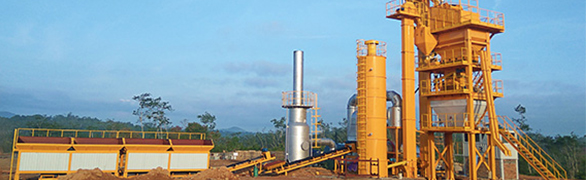
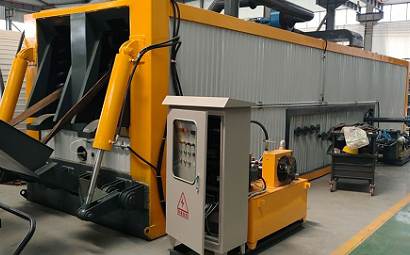
Asphalt mixing plant, also known as asphalt mixing plant, hot mix asphalt mixing plant, common name also asphalt mixing plant, asphalt mixing plant, asphalt plant, asphalt concrete mixing plant, etc., is one of the main equipment in the construction of black asphalt pavement, and is also the core of industrial equipment for the construction of highways, municipal roads, airport runways, parking lots and other infrastructure. Asphalt mixing plant through the sand and gravel aggregate, asphalt binding material, mineral powder and recycled materials for heating, drying, accurate proportioning and uniform mixing, to produce high strength, good stability of qualified asphalt mixture, for all kinds of pavement paving projects to provide core material support.
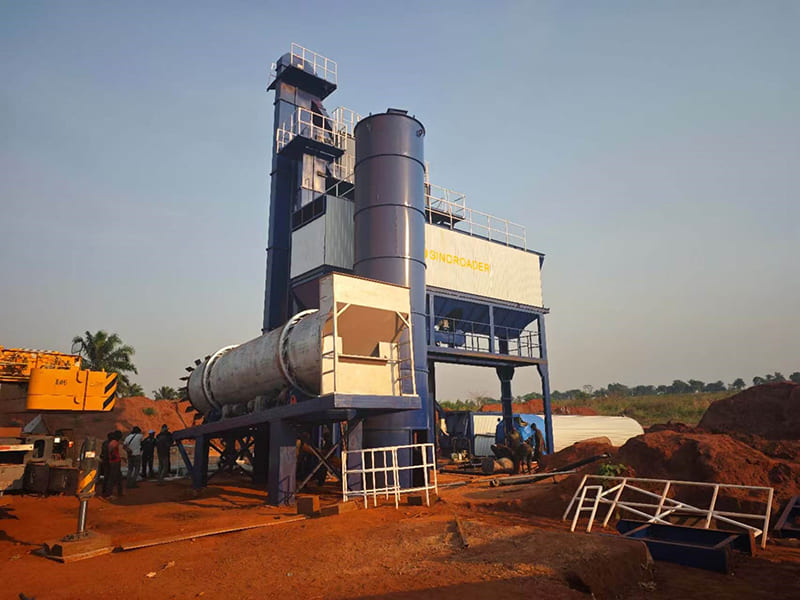
on the market, which can be divided into several categories according to mixing process, production capacity, moving mode and functional characteristics, and the precision, efficiency, cost and applicable scenarios of different equipments vary greatly. Many constructors and engineering purchasers easily confuse the types of equipment when selecting models, resulting in increased construction costs and substandard pavement quality. In this paper, we will systematically sort out the types of all mainstream asphalt mixing plants, compare their core differences, and share professional selection methods and industry trends in the future.
The core production logic of all asphalt mixing plants is the same, standardized process: cold aggregate feeding → drying and heating → accurate batching and weighing → homogeneous mixing → finished product storage and discharge. The temperature of the whole production process is strictly controlled at 120-180℃ to ensure the uniformity, adhesion and durability of the asphalt mixture.
The core difference between the various types of equipment is mainly focused on the mixing process and production mode, mainly divided into two mainstream forms of intermittent batch mixing and continuous drum mixing.
Intermittent asphalt mixing plant adopts cyclic production mode. Aggregate first enters the drying drum to be heated and dried, and then through the hot material screening equipment to be classified and stored in the hot material silo, after accurate batch weighing, the aggregate, asphalt, mineral powder will be transported to the forced mixing cylinder to complete the mixing. The cycle time of a single batch is about 45 seconds, and the batch is discharged independently with a clear division of labor, which is the mainstream process for high-precision asphalt production.
Core advantages: excellent mix quality, flexible formula adjustment, strong adaptability of recycled asphalt material (RAP), high production stability, fully meet the stringent engineering acceptance standards.
Main disadvantages: complex equipment structure, high construction costs, high procurement and maintenance costs, continuous discharge efficiency is slightly lower than the drum equipment.
Applicable scenarios: highway, airport runway, bridge deck pavement, multi-formula municipal high-quality projects and other projects with high quality requirements.
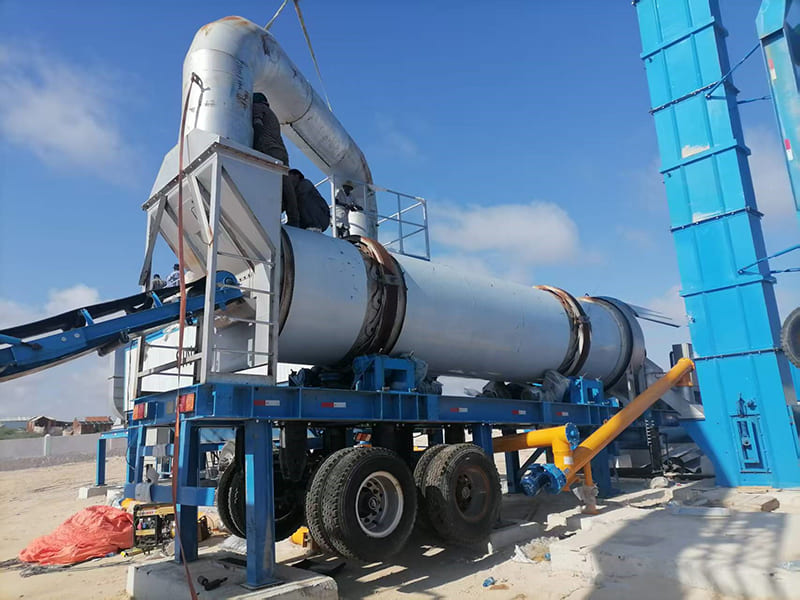
Drum type asphalt mixing plant realizes the whole process of continuous production. Raw materials are continuously fed into the rotating drum, drying, heating and mixing processes are synchronized, asphalt is precisely sprayed from the middle drum, and the finished mixture is discharged without interruption. This process eliminates intermittent waiting time, has a simple process and stable material discharge, and focuses on high-capacity and high-efficiency mass production.
Core advantages: low cost of construction and operation, simple maintenance, high efficiency of continuous production, compact body occupies a small area, convenient transfer.
Main disadvantages: general metering accuracy, frequent replacement of the mix formula is easy to produce waste, the proportion of recycled material mixing is limited (maximum ≤ 20%).
Applicable scenarios: urban and rural low-grade highways, long-distance standardized pavement paving, daily road maintenance, large quantities of single-formula construction projects.
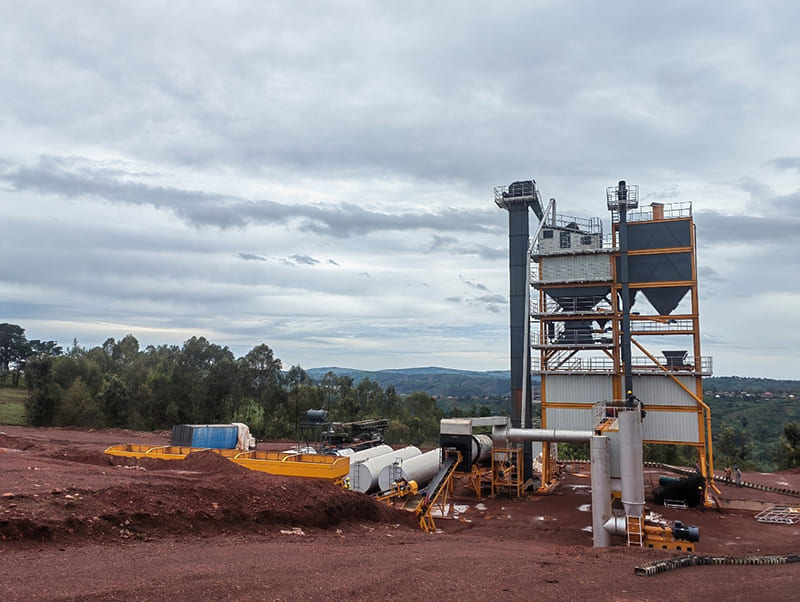
Different models and types of asphalt mixing plant structure is slightly different, but the core configuration is unified to ensure production standardization and stabilization of operation, the core components are as follows:
Cold material bin: classify and store aggregates of different particle sizes, quantitatively and uniformly feed the materials to avoid mixing materials affecting the proportioning accuracy.
Conveying system: automatically conveying the cold aggregate to the drying equipment, realizing the whole process of automatic feeding and saving the labor cost.
Drying drum and burner: core heating and drying equipment, intermittent equipment adopts independent structure, continuous equipment adopts integrated design, which can efficiently remove the moisture in aggregate.
Hot material elevator: vibrating screen and hot material bin: dedicated to intermittent equipment, secondary screening and grading storage of hot aggregate, which is the key configuration for realizing high-precision proportioning.
Precise weighing system: independent measurement of aggregate, asphalt, mineral powder and additives to ensure that the mix ratio meets the engineering standards.
Mixing system: intermittent equipment is equipped with paddle-type forced mixing cylinder, and continuous equipment relies on drum integrated mixing to adapt to different production modes.
Asphalt tank and transfer pump: constant temperature storage of asphalt, stable delivery of binder, to ensure asphalt fluidity and mixing effect.
Mineral powder silo: used to store mineral powder filler, improve the density, stability and water loss resistance of asphalt mixture.
Dust removal and environmental protection system: mainly bag dust removal equipment, efficiently handling production dust and waste gas to meet the environmental emission standards.
Intelligent control system: Equipped with PLC+IoT automatic control system, supporting real-time monitoring, parameter fine-tuning, data traceability and intelligent operation and maintenance.
Finished product storage silo: store qualified hot-mix asphalt mixture to ensure uninterrupted paving construction.
Combined with the engineering procurement and construction scenarios, the industry mainstream from the mixing process, mobile mode, production capacity, finished asphalt type of four dimensions of the division of equipment types, covering the full range of construction needs.
This is the core classification, which directly determines the production accuracy, flexibility and applicable engineering grade.
The industry's high-precision benchmark equipment, aggregate metering error control in ± 0.5%, asphalt metering error is as low as ± 0.25%, the proportioning accuracy of the industry's leading. It supports rapid switching of multiple formulas and flexible adjustment of mix proportion according to project requirements, with stable quality and good uniformity of finished products.
Core advantages: high precision, flexible formula, excellent quality of finished products, suitable for high-standard projects; disadvantages are limited continuous production capacity, high cost of equipment, slightly higher complexity of operation and maintenance. It is mainly used for high-specification infrastructure projects such as highways, airport runways and key municipal roads.
Simple structure, simple operation, low operation and maintenance costs, can realize 24-hour continuous mass production, small footprint, lower investment in equipment. The mainstream models are categorized into two types: downflow type and counter-flow type, of which the counter-flow type has higher thermal efficiency, lower exhaust emission and more prominent energy saving effect.
Core advantages: large capacity, cost-effective, stable operation; the disadvantage is that the formula is inconvenient to switch, which is not suitable for the fine engineering that requires frequent adjustment of the ratio. It is mostly used for municipal ordinary roads, township road network, and large-volume standardized paving projects.
According to the characteristics of equipment installation and transportation, it is suitable for different construction periods, sites and construction scenarios.
Adopting fixed installation structure, the machine has strong stability, high capacity limit, excellent continuous operation performance, and lower production cost per ton. The equipment covers a large area, suitable for long-term, large-scale, centralized infrastructure projects, such as national highway renovation, urban road network upgrading, large-scale construction of transportation hubs, is the first choice of large engineering enterprises and professional mixing plant equipment.
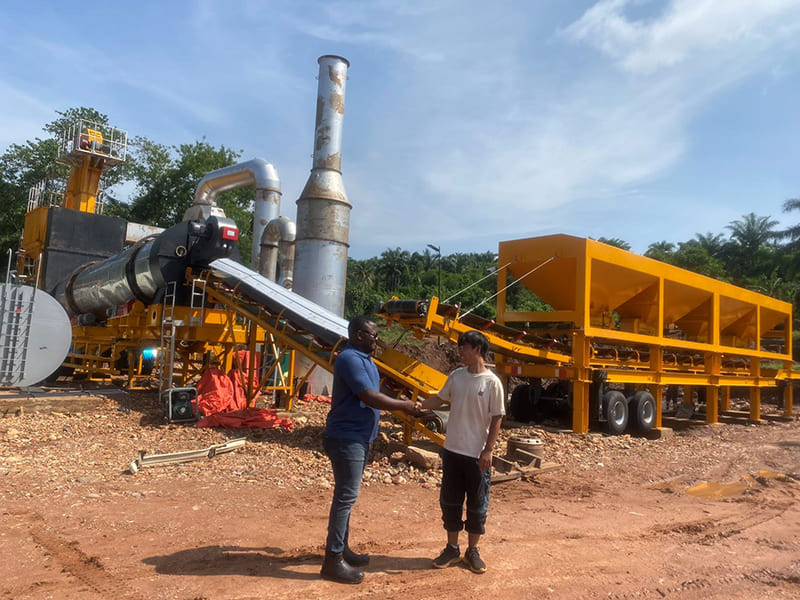
Trailer, skid-mounted integrated design, can be quickly disassembled, transfer, on-site installation, mobility is very strong. Mostly small and medium-sized drum or intermittent models, suitable for decentralized construction sites, short-term maintenance and road construction in remote mountainous areas. At the same time, there are semi-mobile models on the market, taking into account the flexibility of transit and production stability.
The hourly output is the criterion, covering the whole scenario from road maintenance to large-scale infrastructure needs:
Note: The actual capacity of the equipment is affected by the moisture content of the aggregate, the type of mixture, equipment operation and maintenance efficiency, need to be combined with the working conditions of the calculation.
Different temperature-controlled process is suitable for different construction environments and engineering standards, and its energy efficiency and pavement performance varies significantly:
In order to meet the environmental policy, recycling construction, site constraints, overseas projects and other differentiated needs, the industry has iteratively launched a number of special special mixing plant on the basis of the basic model, covering the construction of niche scenarios.
The whole machine adopts the modularized design of trailer and skid, and integrates a full set of systems for feeding, drying, mixing and dust removal, without the need for fixed infrastructure, and can be disassembled and transferred to the site and put into operation in a short period of time. Featuring flexible operation, it is perfectly suited for linear advancement of highway reconstruction, short-term piecemeal construction and multi-point maintenance projects.
It needs to pour special concrete foundation for fixed installation, with strong stability, large production capacity, high metering precision and long-term continuous operation. As a city road and bridge enterprises, large infrastructure companies fixed production base, suitable for many years of continuous supply, the production of a variety of specifications of the mixture of paving projects on a regular basis.
Optimized for the construction of old pavement regeneration, it can stably mix 30%-50% and above of waste asphalt pavement materials, realizing the recycling and reuse of old materials. It can significantly reduce the procurement cost of gravel and asphalt raw materials, as well as reduce construction waste and carbon emissions, and is the core equipment of green road maintenance project.
Equipped with special warm mix additive delivery system, it can produce qualified asphalt mixture at a temperature 20-40℃ lower than the traditional hot mix. It effectively reduces the energy consumption of the equipment, asphalt fumes and harmful gas emissions, noise reduction and environmental protection, and is suitable for construction scenarios in urban areas with strict environmental control.
The core components are pre-assembled in the factory and integrated in the standard container, which is easy to install, convenient to transport and occupies a very small area. Perfectly suited for overseas export, mountainous areas, islands and special construction scenarios with site restrictions, it is the preferred equipment for cross-border infrastructure construction and niche site projects.
Including modified asphalt mixing plant, asphalt emulsification mixing plant, ultra-low emission environmental protection mixing plant and other sub-models, equipped with high-precision dust removal, smoke removal, desulfurization equipment, to meet the urban core area and environmental protection strict control of the construction of emission standards.
Quality and Flexibility: Intermittent measurement is accurate, formula switching is free, suitable for high-end multi-specification projects; continuous type is only suitable for mass production of a single formula, and frequent change of materials is easy to produce waste, weak flexibility.
Cost and Efficiency: Continuous equipment procurement, operation and maintenance costs are lower, and the efficiency of continuous discharge is higher; intermittent type has a larger investment in the early stage, but the quality of finished products is excellent, and the comprehensive income of long-term use in high-end projects is higher.
Site and transfer: continuous and mobile models have compact body and convenient transfer; standard intermittent equipment is bulky, complex infrastructure and difficult to move.
Environmental performance: The new counter-current continuous equipment and upgraded intermittent equipment can realize ultra-low emission, and the recycled material system can realize low-carbon green construction.
The advantages of fixed equipment are strong stability, large capacity, high precision, suitable for long-term fixed production and supply; mobile equipment is characterized by rapid deployment, flexible transfer, designed for short-term, multi-point, mobile construction scenarios.
Selection needs to take into account the engineering standards, construction scale, site conditions, budget costs and environmental policies, accurate matching equipment to take into account the quality and benefits.
Project quality and scale: highway, airport and other high-end projects give priority to the use of intermittent mixing plant; rural roads, daily maintenance and other conventional projects use more cost-effective continuous mixing plant. Equipment capacity should be matched according to the construction speed to avoid overcapacity or oversupply.
Site and transfer needs: long-term fixed production, urban centralized supply of fixed equipment; linear highway construction, frequent transfers, site constraints and other scenarios, prefer mobile, container modular mixing plant.
Budget and return on investment: for short-term single-production projects, low-cost continuous equipment is preferred to reduce upfront investment; for long-term multi-specification high-end projects, intermittent equipment is invested to enhance project revenue and reputation based on high-quality finished materials.
Environmental compliance requirements: In urban areas and areas under strict environmental control, environmentally friendly mixing plants with fully enclosed dust removal, low-temperature emission, and RAP regeneration support must be used to meet local standards for exhaust gas, noise and carbon emission control.
Equipment after-sales and intelligence: Give priority to equipment equipped with IoT intelligent monitoring, automatic operation and maintenance, AI quality inspection functions, with a perfect manufacturer's after-sales system, to reduce equipment failure downtime, reduce operation and maintenance costs.
The classification of asphalt mixing plant is clear, according to the mixing process is divided into batch and continuous, according to the capacity is divided into large, medium and small three specifications, according to the function is divided into fixed, mobile, regenerative, warm mixing, modular and other special models. There are significant differences in the quality precision, production efficiency, cost and application scenarios of different types of equipment: intermittent equipment is characterized by high quality and flexibility, and is suitable for high-end infrastructure construction; continuous equipment is characterized by high cost-effectiveness and high efficiency, and is suitable for regular mass production construction; special models can accurately satisfy the needs of environmental protection, recycling, site constraints and other segmented needs.
Construction companies only need to combine their own engineering standards, construction cycle, site conditions, budget and environmental requirements for accurate selection, you can maximize construction efficiency and control project costs. In the future, the intelligent, low-carbon, resourceful new asphalt mixing plant will continue to lead the road infrastructure industry to achieve green, efficient and sustainable development.