Traffic infrastructure is the core lifeline of national economic development. High-speed, urban roads, airports, ports and rural roads jointly construct a traffic system with global interconnection. As the core equipment of pavement construction, hot asphalt mixing plant is the key core guarantee of infrastructure construction, which is called the "raw material heart" of traffic infrastructure. More than 90% of the world's paved roads use hot-mix asphalt mixture. The production accuracy, temperature control technology and operation stability of mixing stations directly determine the pavement quality, driving safety, service life and maintenance cost. Under the promotion of new urbanization, three-dimensional traffic construction, rural revitalization and double-carbon policy, the infrastructure industry continuously upgrades the intelligent, green and refined requirements of asphalt mixing equipment. This paper systematically analyzes the equipment principle, application selection, cutting-edge technology and development trend in multiple dimensions, providing professional landing reference for industry construction, equipment procurement and project operation and maintenance.
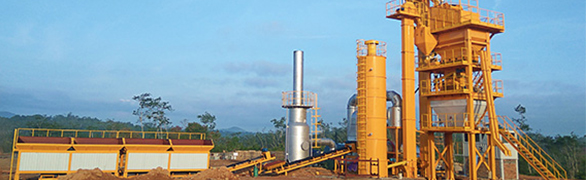
Hot mix asphalt mixing plant, referred to as asphalt mixing plant in the industry, is a set of industrial production equipment integrating aggregate transportation, high temperature drying, accurate screening, metering, asphalt melting and mixing, dust removal and environmental protection, finished material storage and loading. The core output is hot mix asphalt mixture, which is a special high performance material for road pavement.
Different from cold mixing equipment for normal temperature mixing and warm mixing equipment for low temperature production, hot mixing process needs to heat mineral aggregates such as crushed stone, sand and mineral powder to 140℃-180℃, thoroughly dry all moisture inside the aggregate, and avoid moisture damaging asphalt bonding performance; Then the asphalt binder heated to liquid state, recycled asphalt (RAP) and various modified additives are accurately mixed according to the engineering formula to form a uniform, dense and high-temperature finished mixture, which must be transported, paved and compacted under constant temperature conditions to form a stable and durable pavement structure.
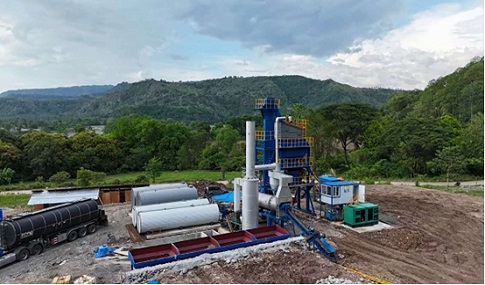
The whole set of mixing station is operated by more than ten independent systems, all of which are indispensable. Cold material feed bin and belt conveyor are responsible for separate storage and quantitative transportation of sand and gravel aggregates of different specifications; rotary drying drum is equipped with high-power burner to complete aggregate heating and dehumidification; bag dust removal system synchronously collects production dust to meet environmental protection emission specifications; hot aggregate elevator, vibrating screen and hot storage bin complete graded storage of high temperature aggregate to ensure proportioning accuracy; asphalt storage tank, heat transfer oil heating system and asphalt metering pump continuously maintain asphalt molten flow state; Mineral powder and additive feeding system add filler, rubber modifier, fiber and warm mixing auxiliary agent as required; core mixing machine is divided into intermittent double-horizontal shaft mixing cylinder and continuous drum integrated mixing structure; supporting automatic intelligent control system for real-time monitoring of temperature, weight, flow and flue gas index; finished product insulation storage bin is used for temporary storage of hot mixing materials to avoid long-term transportation cooling failure.
The complete standardized production process is divided into five links: multi-specification aggregate bin quantitative transportation → drum high temperature drying to remove water → hot aggregate screening weighing measurement → asphalt, mineral powder, recycled materials synchronous forced mixing → finished hot materials sent to the insulation bin or directly loaded to the construction site. The whole process is automatically controlled by computer, and the manual is only responsible for equipment inspection and formula switching, completely getting rid of the quality fluctuation caused by traditional extensive manual ingredients.
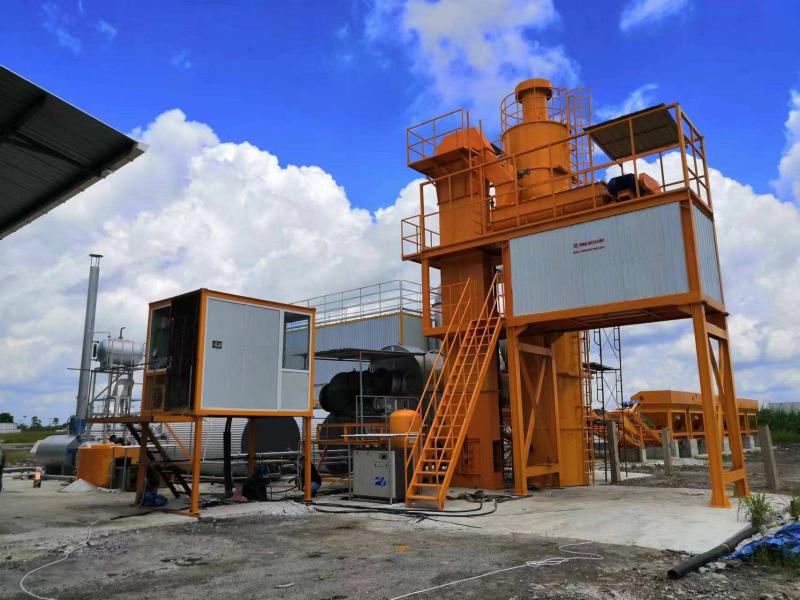
Modern traffic infrastructure puts forward five rigid requirements for pavement materials:high strength, long life, low cost, high safety and low carbon sustainability , and hot mix asphalt mixture is the only pavement material that can fully adapt to all scene pavement projects, which also makes asphalt mixing station an indispensable supporting facility for infrastructure projects.
Qualified hot-mix asphalt produced by mixing station with accurate proportion wraps aggregate by adhesive force of asphalt binder to form flexible and dense whole, which can effectively resist rutting caused by repeated rolling of heavy vehicles, temperature shrinkage cracks caused by temperature difference of four seasons, loose pits caused by rainwater infiltration and pavement damage caused by long-term fatigue load. High-quality asphalt pavement can adopt "permanent pavement" design, the service life of the underlying structure can reach 35-50 years, only need to be regularly milled surface re-paving, do not need to break the whole reconstruction. On the other hand, the poor mixture with unbalanced proportion and substandard temperature will suffer from large-scale diseases in 3-5 years after opening to traffic. Repeated excavation and maintenance will not only raise financial expenditure, but also block traffic for a long time. The industry calculation data shows that if 1 yuan is invested in the production of high-quality asphalt materials in the early stage, 7 yuan of road reconstruction cost can be saved in the later stage, and the long-term economic benefit is remarkable.
After the paving of hot-mix asphalt is completed, the traffic can be opened when the temperature drops. Most urban roads can be paved and opened to traffic on the same day. Vehicles can be released several hours after paving of high-speed sections. Compared with the 7-14 day maintenance cycle of cement concrete pavement, the project duration is greatly shortened. For municipal reconstruction, urban road overhaul and emergency repair projects, the asphalt mixing plant with efficient discharge can continuously and stably supply mixture, support night off-peak construction, and minimize the interference of road construction on residents 'travel and logistics transportation.
The friction coefficient of black asphalt pavement is stable, snow melting in rainy and snowy weather, faster drainage speed, high contrast of pavement markings, and improved night driving identification; The dense asphalt pavement has low driving noise, which can reduce several decibels of road noise pollution and reduce long-distance fatigue of drivers; The smooth and uniform paving layer reduces vehicle bumping, tire wear and fuel consumption, indirectly reduces the logistics transportation cost of the whole society, opens up the circulation link of urban and rural materials, and assists the regional economic development.
Asphalt is the engineering building material with the highest recycling rate in the world. The recycled asphalt pavement (RAP) produced by old road milling can be mixed into the new mixture according to a certain proportion through modern mixing plant to replace the original sand and asphalt raw materials, reduce mining, petroleum asphalt consumption and reduce construction waste landfill. At the same time, with warm mixing production technology, the mixing station can reduce the mixing temperature of 30-50℃, reduce fuel consumption and carbon dioxide and flue gas emission, and meet the green construction and carbon neutralization assessment requirements of infrastructure construction in various places.
From the macro level, stable and reliable asphalt supply supports the formation of the whole region road network, opens up the traffic network from village to town, factory area to port, airport to expressway, reduces the cost of goods transportation, activates industry, agriculture and cultural tourism economy, which is the basic carrier of regional economic development. All high-quality asphalt mixtures rely on standardized hot-mix asphalt mixing station for large-scale output.
Asphalt mixing plant is not only a simple material production equipment, but also a comprehensive industrial hub that controls project quality, ensures construction progress, controls project cost, implements environmental protection policies, realizes resource circulation and drives regional employment. It runs through the whole cycle of infrastructure projects from new construction, transformation to daily maintenance.
All core performance indicators of the pavement-compactness, stability, flow value, skid resistance, and low temperature crack resistance-are determined by the metering, temperature control, and mixing uniformity of the mixing station. The automatic control system records the weight and discharge temperature of each batch of aggregate, asphalt and mineral powder in real time, and the error is controlled in a very small range, which can strictly match the different design formulas of expressways, airport runways and municipal roads. Intermittent mixing plant can quickly switch more than ten kinds of mixture formula, adapt special permeable asphalt, noise reduction asphalt, high wear resistance heavy duty asphalt and other customized materials, meet the high standard engineering acceptance specifications, and eliminate early road diseases from the source.
Mainstream mixing plant capacity covers 40t/h to 400t/h, large-scale fixed equipment can produce thousands of tons of hot mix materials in a single day, and multiple transport vehicles continuously supply materials, meeting large-scale continuous paving operations such as high-speed long-term, airport reconstruction and expansion, and large-scale port storage yards. The equipment can be divided into fixed and mobile types. The fixed mixing station can serve the road network construction of the whole area for a long time, and the mobile mixing station can quickly transfer to remote villages and sectional construction sections, shorten the transportation distance of hot mixed materials, avoid mixture failure caused by long-distance transportation and cooling, and ensure the smooth progress of infrastructure projects in remote areas.
Relying on the flexible formula adjustment capacity of the mixing station, special asphalt mixtures suitable for different engineering scenarios can be produced in a targeted manner: high-modulus anti-rutting mixtures are used for heavy duty pavement of expressways; high-density graded and aviation fuel corrosion resistant special asphalt is used for airport runways; noise reduction and low heat absorption modified asphalt is used for urban trunk roads and community roads; low-grade roads in rural areas are matched with economical mixtures with high content of recycled materials; bridges and interchanges adopt high-bonding anti-pushing asphalt; Parking lot, industrial park yard production of heavy duty wear-resistant asphalt. At the same time, it takes into account the maintenance engineering materials such as road milling and resurfacing, pothole repair and thin overlay, so as to realize the integrated supply of materials for new construction and maintenance.
The new generation of mixing stations are equipped with dedicated RAP recycled material feeding and drying systems, which can stably incorporate 30%-90% old asphalt recycled materials without adding a large amount of additional raw aggregates and asphalt. On the one hand, it reduces the ecological damage caused by sand mining, on the other hand, it digests the construction waste generated by road maintenance and reduces the procurement cost of raw materials. It is equipped with waste heat recovery, low nitrogen combustion, closed dust removal and VOC waste gas treatment system, which greatly reduces energy consumption and pollutant emission in production stage and meets the requirements of environmental impact assessment, dust control and environmental protection supervision in various places. It is standard equipment for green infrastructure projects.
Self-built supporting mixing plant can save high transportation cost and middleman price difference of purchased asphalt mixture, and reduce comprehensive production cost of materials by 15%-30%; accurate metering system reduces aggregate and asphalt waste; recycled materials are mixed to further reduce raw material expenditure; stable discharge ensures uninterrupted construction and avoids shutdown and delay loss; high-quality mixture prolongs road service life and greatly reduces financial investment in subsequent maintenance and renovation. For contractors and municipal building materials enterprises undertaking road projects for a long time, mixing stations are the core fixed assets for long-term cost reduction and efficiency improvement.
The modern mixing plant has a closed design for the whole process, bag dust removal equipment captures fine dust, supporting sound insulation structure reduces noise in the plant area, asphalt storage tank area is equipped with anti-seepage fire dike, rain and sewage diversion three-stage sedimentation tank treats production wastewater, and all emission data are uploaded to the environmental protection monitoring platform in real time. The equipment is equipped with overload protection, high temperature warning and automatic fault shutdown system, and is equipped with digital remote monitoring to reduce manual high-risk operation on site. Meanwhile, stable employment is created for local mixing station operation, maintenance and transportation positions, which drives the development of supporting industries in the territory.
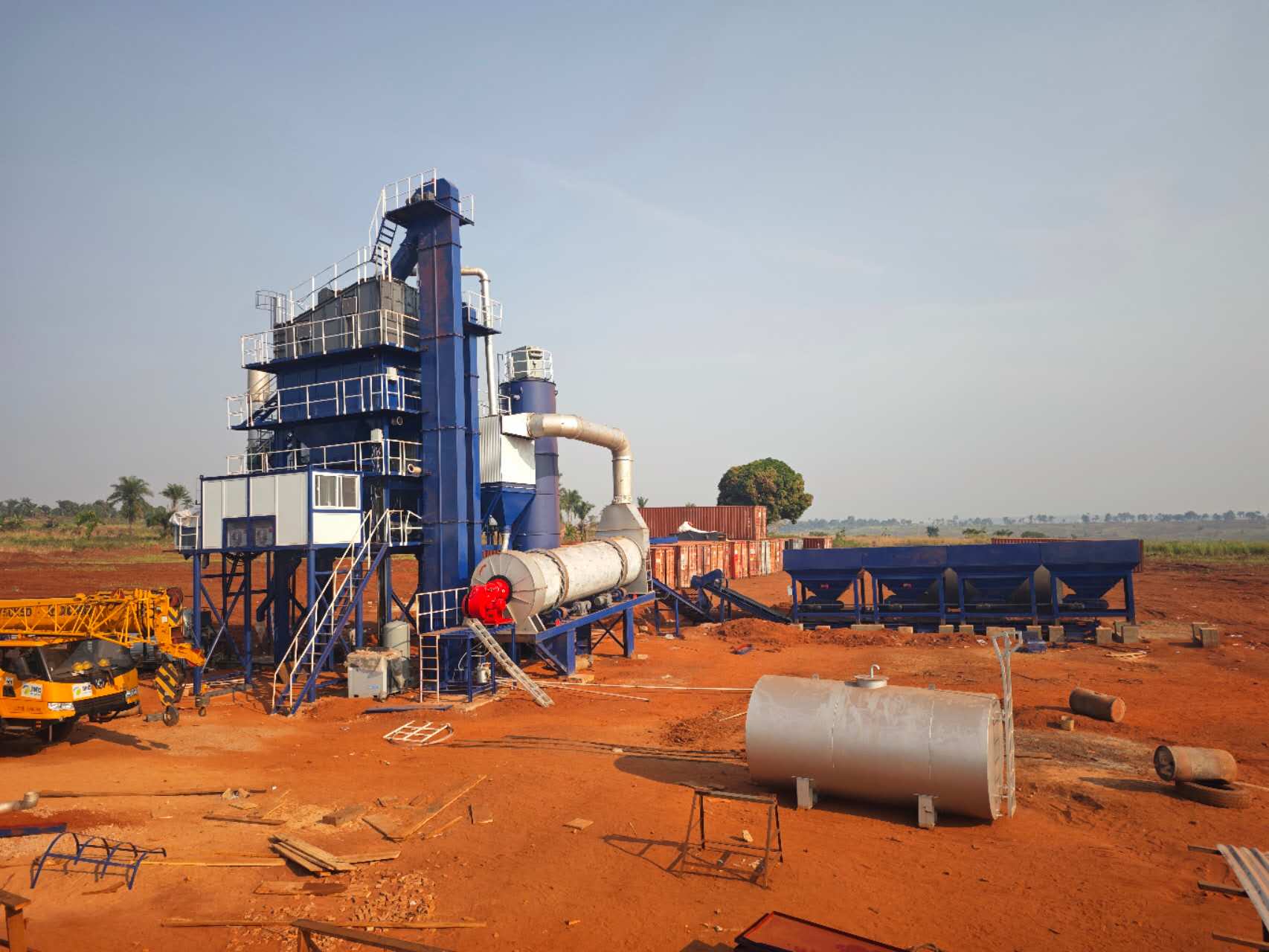
High-speed, first-class highway traffic volume is large, heavy trucks are dense, and the requirements for mixture strength and high temperature stability are extremely high. Large-scale intermittent or continuous fixed mixing stations above 160t/h are generally selected for the project, and the areas along the line are stationed for a long time to continuously supply layered pavement materials for the upper layer, middle layer and lower layer. When the ultra-long line is constructed in sections, it is equipped with mobile mixing stations to cover remote bid sections, reduce 100-kilometer long-distance material transportation, ensure that the paving temperature of the mixture reaches the standard, realize synchronous promotion of the whole line, and shorten the high-speed traffic cycle.
The urban construction site is narrow, the traffic control is strict, the construction windows are mostly concentrated at night, the advantages of small mobile and modular mixing station are prominent, the installation and commissioning can be completed in only a few days for transfer, the plant area is compact, and the airtight dust removal and noise reduction design is suitable for environmental protection control in Urban area. It can flexibly produce noise-reducing asphalt, permeable asphalt, and color modified asphalt, adapt to urban landscape roads, slow-moving greenways, underpass tunnels, and viaduct pavement, quickly complete road reconstruction and road restoration after pipe network repair, and maximize Reduce interference with citizens 'travel.
The aircraft pavement load concentration, corrosion resistance, anti-skid performance standards are strict, intermittent mixing plant must be used to produce high-precision special asphalt mixture, metering error, discharge temperature, mixing time can be fine control. More than 80% of the world's commercial airport pavement layer uses hot mix asphalt. The high-density mixture produced by the mixing station can resist the impact of aircraft landing gear and aviation fuel corrosion, ensuring the long-term safe operation of the airport. Airport reconstruction and expansion projects are usually equipped with dedicated fixed mixing stations to meet the continuous large-volume paving demand.
Container terminal, freight yard, factory heavy load passage long-term withstand heavy forklift, semi-trailer, engineering vehicles rolling, mixing station can be prepared with high aggregate content, polymer modified wear-resistant asphalt mixture, improve the impact resistance, wear resistance of the road, extend the service life of industrial sites. Medium and large-scale continuous mixing plants are mostly selected for the project, and continuous batch supply is suitable for one-time paving construction of large-area storage yard.
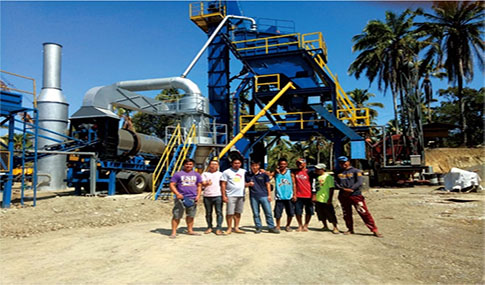
Rural road projects are scattered, single-section engineering quantity is small, project point distance is far away, transportation cost of large-scale fixed mixing station is too high, 40- 120t/h mobile mixing station becomes the best choice, which can follow the construction team five village-by-village transfer, local materials are matched with high-proportion recycled asphalt material, rural road construction cost is greatly reduced, rural transportation network of the whole region is improved, agricultural products transportation channel is opened up, and rural revitalization infrastructure is assisted.
Every year, a large number of roads throughout the country carry out milling and resurfacing, thin coating and pothole repair and maintenance operations. The mixing station can flexibly adjust the mixing ratio of recycled materials to produce economical asphalt mixture for maintenance. In case of sudden traffic danger such as rainstorm and road collapse, the mobile mixing station can quickly arrive at the scene, produce repair materials in a short time, quickly restore road traffic, and reduce economic losses caused by traffic interruption.
|
Compare Dimensions |
stationary asphalt mixing plant |
Mobile (vehicle-mounted/towed) asphalt mixing plant |
|
Infrastructure requirements |
Reinforced concrete foundation to be hardened, civil construction cycle up to several weeks |
Modular splicing design, no need for complex civil engineering foundation, a few hours to 3 days to complete the disassembly transition |
|
mainstream capacity range |
160-400t/h |
40-240t/h |
|
Core Application Scenarios |
Long-term, centralized and continuous large-scale infrastructure projects for many years, such as urban ring road, multiple high-speed synchronous construction, regional long-term asphalt supply base |
Scattered multi-point, short-term construction, remote rural construction, urban night repair projects |
|
core advantages |
1. Continuous production of integrated tons of material costs are lower; br>2. It can be equipped with large-capacity hot storage bin, high-proportion regeneration system and full set of deep environmental protection equipment; br>3. Higher upper limit of measurement and temperature control accuracy, stable and reliable long-term continuous operation; br>4. Suitable for airport, high speed and other high standard special mixture production, equipment maintenance cycle is long, loss is lower |
1. Flexible deployment, can follow the construction section movement, shorten the mixture transportation distance, avoid long-distance cooling loss; br>2. The investment in early procurement is lower, and the approval difficulty of temporary land use is small; br>3. Compact area, Urban area, mountain narrow site can be landed |
|
Core short board |
1. High investment in civil engineering and equipment procurement in the early stage; br>2. High cost and long cycle of disassembly and assembly; br>3. Not suitable for scattered, short-term small projects |
1. There is an upper limit to the maximum production capacity, which cannot meet the demand of super-large-scale continuous production; br>2. Long-term high-frequency transition will increase equipment wear; br>3. Large-capacity regeneration, deep environmental protection supporting function configuration is limited; br>4. Energy consumption per unit of production and cost per ton of material are slightly higher than fixed equipment under the same output |
|
Core project characteristics and requirements |
Suitable equipment selection scheme |
|
Long-term regional building materials supply, high-speed/airport large-scale projects |
Fixed asphalt mixing plant is preferred |
|
Rural road network reconstruction, segmented long-term construction, urban short-term overhaul, emergency repair projects |
Mobile asphalt mixing plant is preferred |
|
Multi-project parallel, both large-scale main line projects and remote branch line supporting facilities |
Adopt "fixed master station + mobile substation" combination mode, giving consideration to both productivity and flexibility |
|
Medium and long-term 3-year, cross-regional multi-bid project |
Choose modular removable mixing plants to balance transition costs and productivity |
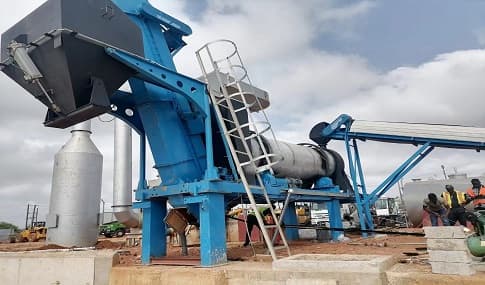
In recent years, digital, low-carbon and automatic technologies have been fully implemented in asphalt mixing equipment, from raw material ratio, production control, environmental protection and emission reduction to pavement life cycle management, and all-round upgrading of infrastructure construction level, which is also the mainstream technical direction of the industry in 2026.
Modern mixing station is equipped with PLC intelligent central control, 5G remote transmission and digital twin virtual modeling system to collect thousands of data such as aggregate moisture content, combustion temperature, asphalt flow rate, dust emission and equipment load in real time. AI algorithm automatically optimizes raw material ratio and combustion power to reduce fuel consumption; Support remote online debugging, fault prediction and automatic early warning. Managers can monitor the whole production process through mobile phones and computers, reducing on-site manpower. At the same time, the production data is automatically archived, matching the project completion data, simplifying the project acceptance process.
The warm-mixing additive and foam asphalt process will reduce the mixing temperature by 30-50℃, reduce fuel consumption by 15%-35% under the same output, greatly reduce carbon dioxide and asphalt smoke emission, reduce the risk of high temperature aging of mixture, strengthen the production compatibility of recycled materials with high content, prolong the paving construction season, and carry out road construction normally in low temperature autumn and winter seasons, and prolong the effective construction period of infrastructure projects.
The special equipment for double-drum recycling can realize stable blending of 50%-90% old asphalt, built-in anti-bonding drying blades and flue gas recovery sealing structure, solve the problems of agglomeration and flue gas leakage of recycled materials in traditional equipment, greatly reduce the purchase amount of primary sand and new asphalt, conform to the circular economy infrastructure policy, and significantly reduce material costs.
Upgrade pulse bag dust removal, activated carbon VOC adsorption, low nitrogen premix burner, closed sound insulation of the whole body, waste heat recovery device, dust, smoke and noise indicators far exceed national environmental protection standards, there is no obvious dust and pungent smoke in the plant area, which can meet the environmental impact assessment requirements of projects around urban suburbs and ecological protection areas, and avoid shutdown and rectification risks.
The production data of mixing station can be directly connected with UAV surveying and mapping, intelligent paver and compaction detection equipment, realizing the full chain data exchange of "design formula-mixing production-transportation pavering-compaction monitoring", and real-time feedback of road density and temperature with intelligent compaction system to form closed-loop quality control, greatly reduce rework rate and improve the digitalization level of overall infrastructure construction.
The procurement of mixing plants suitable for their own infrastructure projects cannot only focus on the unit price of equipment. It needs to be comprehensively evaluated in combination with project scale, construction scenario, long-term operation and environmental protection policies. Eight core consideration dimensions cover the whole life cycle cost:
First calculate the annual and peak daily mixture demand, reserve 20%-30% capacity buffer to cope with the construction peak period; select 40- 80t/h equipment for small-scale rural maintenance projects, 80- 160t/h for medium-sized municipal projects, and more than 160t/h for large-scale high-speed and airport projects, so as to avoid insufficient capacity to delay the construction period or excess capacity idle to raise the operation cost.
The intermittent mixing station independently weighs and mixes each batch, with flexible formula switching and extremely high measurement accuracy. It is suitable for high-standard and multi-formula projects such as airports and high-speed projects; continuous drum-type drying and mixing is integrated, with continuous and stable discharge and energy consumption per ton of materials. Lower, suitable for single-mixture, ultra-large-batch and long-term construction, and the project mixture types and technical specification requirements should be clarified before procurement.
Predict the frequency of equipment transfer every year, select mobile type for perennial multi-site construction; select fixed type for long-term deep ploughing in single area; consider long-term and branch projects, and select modular removable model.
Priority shall be given to equipment with small weighing error, stable temperature control and full automatic intelligent central control. It shall be confirmed that it supports warm mixing and high proportion recycled material production. It shall have complete data storage and remote monitoring functions to meet the requirements of engineering quality inspection and environmental protection online monitoring.
According to the dust, exhaust gas and noise control requirements of the project location, match the corresponding dust removal, VOC treatment and noise reduction systems, verify the environmental protection qualification of the equipment, and avoid additional investment in later transformation.
In addition to the equipment purchase price, civil engineering, fuel oil, electricity, replacement of wearing parts, labor, transfer and disassembly costs are calculated simultaneously; fixed type has high initial investment but lower long-term ton material cost, mobile type has low initial investment, and frequent transfer operation and maintenance costs are higher. The overall investment return is calculated according to the project cycle.
Field survey site area, power capacity, sand and asphalt transportation channel, sewage discharge conditions; compact modular equipment shall be selected for narrow sites in Urban area, and those with energy-saving combustion system and suitable for low voltage working conditions shall be given priority in remote sites.
Priority shall be given to mature brands in the road construction machinery industry, and the timeliness of local service outlets, spare parts storage and on-site commissioning and maintenance shall be confirmed; at the same time, the compatibility of equipment expansion in the later stage, installation of regeneration system and environmental protection upgrading shall be considered to meet the upgrading requirements of future infrastructure projects.
.jpg)
With the continuous improvement of domestic comprehensive transportation network, the implementation of double-carbon strategy and the promotion of circular economy policy, the hot mix asphalt mixing plant industry will iterate around five directions:high regeneration, low temperature energy saving, full intelligence, modularization and zero emission, deeply supporting the construction of new infrastructure in the future.
First, the proportion of recycled materials continues to increase, and the full regeneration integration equipment has become the mainstream. The industry gradually popularizes 70%-90% high-content RAP production technology, supporting special pretreatment and drying equipment, promoting 100% resource utilization of old road materials, reducing mineral and oil resource consumption, and realizing closed-loop circulation of infrastructure materials.
Second, warm mixed, low-carbon fuels are fully popularized, significantly reducing the carbon footprint of production. Natural gas, biomass fuel and hydrogen mixed burner gradually replace traditional diesel combustion system, with waste heat recovery device, combined with warm mixing process, realize significant reduction of carbon emission in production link, and adapt to green low-carbon highway and zero-carbon park infrastructure project standards.
Third, the whole process is unmanned and digital twins are deeply popularized. 5G, Internet of Things and AI deeply integrate mixing equipment to realize automatic feeding, intelligent proportioning, unattended production, remote fault diagnosis, open up digital chain of design, mixing, construction and operation and maintenance, construct digital management system for the whole life cycle of road assets, and alleviate labor shortage problem in infrastructure industry.
Fourth, the performance of modular and lightweight mobile devices is fully upgraded. The new generation of mobile mixing plants breaks through the capacity limit, 240t/h high-capacity trailer equipment is gradually popularized, and at the same time, complete regeneration and deep environmental protection system are integrated, giving consideration to the flexibility of transition and high-end mixture production capacity, so as to meet the needs of decentralized rural infrastructure and emergency maintenance nationwide.
Fifth, ultra-low emissions and near-zero pollution have become standard equipment. Fully enclosed fuselage, efficient exhaust gas purification, dust recycling, noise full blocking technology standardization, mixing station is no longer a traditional recognition of high pollution industrial facilities, can land in suburbs, towns around, adapt to urban renewal, ecological cultural and tourism road supporting projects.
Sixth, the equipment is deeply adapted to the new pavement material. For self-healing asphalt, fiber modified asphalt, conductive intelligent pavement, permeable noise reduction special asphalt, mixing station is equipped with exclusive delivery and mixing modules to support large-scale landing of new high-performance pavement materials, improve road climate adaptability, and cope with extreme high temperature, freeze-thaw, rainstorm and other climate challenges.
In the long run, asphalt mixing stations are no longer just simple material production equipment, but infrastructure core hubs integrating digital control, low-carbon production, resource circulation and intelligent coordination, continuously providing stable, high-quality and low-cost pavement material support for various infrastructure construction such as national highway network, urban renewal, rural revitalization and aviation port.
The core goal of infrastructure construction is to build a modern transportation network that is all-round, safe, durable, green and sustainable. The hot-mix asphalt mixing station is the core carrier of large-scale production of asphalt mixture, which runs through the whole life cycle of road construction, reconstruction and maintenance, fundamentally determining the pavement construction quality, construction efficiency, engineering cost and environmental protection level. For large-scale key projects such as high-speed and airport projects, as well as different scenarios such as urban municipal reconstruction and rural road construction, fixed and mobile mixing plants can flexibly adapt to various construction needs, and are equipped with cutting-edge technologies such as intelligence, low-carbon regeneration and ultra-low emission, effectively solving the pain points of traditional infrastructure construction such as unstable quality, high energy consumption, waste of resources and difficulty in environmental protection control.
For engineering enterprises and building materials investors, the layout of asphalt mixing plant capacity shall comprehensively consider the project capacity demand, equipment type, mobile attribute, environmental protection configuration and full life cycle operation cost, and select the optimal type in combination with their own business planning. With the deep transformation of the industry to green, digital and circular, the high-performance intelligent asphalt mixing equipment will continue to be iteratively upgraded to empower the high-quality development of infrastructure and help build a safer, more efficient, low-carbon and long-term national comprehensive traffic network system.