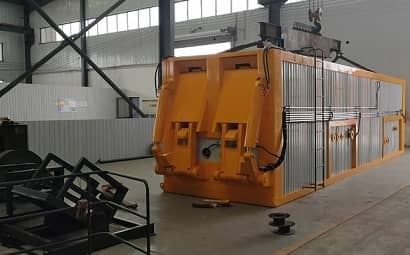
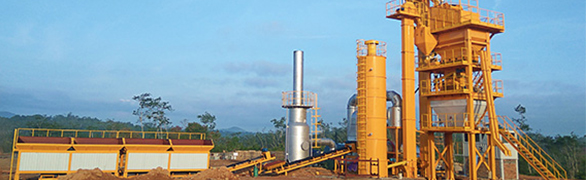
Hot-mix asphalt mixing station, also known as asphalt mixing station and asphalt batching station, is a complete set of industrial production equipment specially used for road infrastructure, highway maintenance, airport runway, municipal engineering and other projects. Its core function is standardized and large-scale production of high-quality hot-mix asphalt mixture.The equipment integrates raw material screening, drying and heating, accurate metering, forced mixing, finished product storage and other full-process functions, realizes automatic and intensive production of asphalt mixture, and completely abandons the disadvantages of low efficiency, unstable proportion and uneven quality of traditional on-site mixing.
Under standard construction conditions, the mixing station can heat the stone aggregate to 150 ℃-180 ℃ and the asphalt binder to 130 ℃-160 ℃. Through high temperature mixing process, the asphalt evenly wraps the aggregate surface, so that the finished mixture has excellent adhesion, compactness, durability and road performance, and meets the construction requirements of various high standard pavements.At present, the mainstream equipment in the market is divided into two types: batch mixing station adopts batch mixing mode, with high mixing accuracy, suitable for high-standard road engineering and flexible construction scenarios; continuous mixing station can realize uninterrupted feeding mixing, with significant production capacity advantages, suitable for large-scale and long-term infrastructure projects.All production processes of the complete set of equipment follow industry construction specifications, which can stably produce compliant asphalt mixtures to meet the stringent quality requirements of modern pavement engineering.
A complete hot mix asphalt mixing plant consists of eight core systems and supporting auxiliary equipment. Each system operates independently and collaboratively to jointly ensure stable, efficient and high-quality production of the equipment. Any structural failure or abnormal working condition will directly affect the mixture quality and production efficiency. The specific structure and functions of each system are as follows:
The system consists of cold bin, conveyor belt, vibrating feeder and primary screening device. It is the core unit of raw material supply, mainly responsible for storing and quantitatively conveying coarse aggregate, fine aggregate, mechanical sand and other different specifications of stone. The equipment is equipped with multiple groups of independently controlled cold bins, which can realize classified storage of raw materials with different particle sizes and effectively avoid the problem of grading imbalance caused by aggregate mixing. The vibration feeder adopts frequency conversion speed control technology, which can accurately adjust the feeding speed according to the production demand, ensure the uniform and continuous material transportation, and lay the foundation for subsequent accurate proportioning and stable mixing.
Drying heating system is the key equipment to remove moisture and control material temperature, mainly including drying drum, burner, hot air pipeline and temperature detection sensor. The normal temperature aggregate is conveyed into a rotary drying drum arranged obliquely through conveying equipment, and the burner generates high temperature flame to form countercurrent heat exchange with the materials in the drum. With the continuous rotation of the drum, the aggregate is constantly tumbling and turning, fully contacted with hot air, completely evaporating the internal moisture, and rapidly heating to the construction standard temperature. The high-precision temperature sensor equipped with the equipment can monitor the discharge temperature of the drum in real time, adjust the firepower of the burner in linkage, and realize the dynamic and stable control of the material heating temperature.
After drying and heating, the aggregate is conveyed to the high-frequency vibrating screen by the hot material elevator, and the classification and screening treatment is completed through multiple layers of screens with different apertures, so that the high-temperature aggregate is screened into various particle size specifications, accurately matching the engineering grading design requirements. All kinds of aggregates qualified by screening fall into corresponding hot storage bins for storage respectively, and large-particle materials that fail to meet the standards are isolated and removed, so as to prevent unqualified raw materials from entering the mixing process, so as to ensure the rationality of asphalt mixture gradation and the stability of finished product quality from the source.
The metering system is the core unit to ensure the mixture proportioning accuracy, including aggregate weighing hopper, asphalt metering device, mineral powder metering mechanism and high-precision weighing sensor. In strict accordance with the design parameters of engineering mix ratio, the system independently and accurately weighs aggregates, mineral powder and liquid asphalt with different particle sizes: all kinds of aggregates are graded and weighed cumulatively, mineral powder is quantitatively filled into aggregate voids, asphalt is accurately controlled, and the accuracy of raw material ratio directly determines the stability, cohesiveness and final road performance of the finished mixture, which is the core link of quality control.
Two-shaft forced mixer is the core equipment of the system. All raw materials are metered and then fed into the mixer in turn. High-speed rotating mixing blades drive the materials to mix in three-dimensional circulation, so as to realize the all-round uniform fusion of aggregate, mineral powder and asphalt binder. The standard mixing time of the equipment can ensure that the surface of each aggregate is completely wrapped by asphalt, effectively eliminate quality defects such as mixture segregation, caking, dry material and lack of oil, and produce hot mix asphalt mixture with up to standard uniformity and stable performance.
Dust removal system is an essential device for environmental protection standard operation of mixing station, which adopts combined structure of primary gravity dust removal and secondary bag dust removal. Aggregate drying, screening, feeding process will produce a large number of dust, large particles of dust through gravity settlement to complete the initial purification, fine dust through high-efficiency bag filter depth filtration. The purified flue gas can be discharged up to standard, and the collected dust can be recycled as auxiliary filler, which not only reduces the loss of raw materials, but also effectively controls the dust pollution during construction, meeting the environmental protection construction standard.
The system consists of finished product bin, insulation device, discharge gate and anti-segregation mechanism, and is mainly used for temporary storage of hot mix asphalt mixture after mixing. The silo is equipped with a special insulation layer, which can effectively lock the heat of the material, prevent the mixture from cooling and condensation, and reduce the performance; the closed structure can avoid heat loss and dust overflow; the controllable discharge gate can ensure stable and uniform loading and unloading; and the anti-segregation structure can minimize the grading separation problem during the loading process.
PLC automatic intelligent control system is the core control center of mixing station, which consists of industrial computer, operation display screen, frequency converter, high-precision sensor and programmable controller. The system supports automatic functions such as one-key start and stop of equipment, automatic proportioning and weighing, real-time temperature monitoring, feeding speed adjustment, automatic fault alarm and production data recording. Operators can view the operating parameters of each system in real time through the control panel, manually adjust the parameters in combination with the field conditions, realize flexible switching between automation and manual control, and ensure standardized and stable operation of the equipment.
Adequate preparation before startup is the key premise to avoid equipment failure, eliminate quality problems and prevent safety accidents, which directly determines the stability of the production process and the quality of the finished mixture. Before operation, five core tasks shall be completed: raw material verification, equipment inspection, site arrangement, parameter debugging and personnel pre-job preparation. All processes must be implemented in strict accordance with specifications.
All production raw materials must be comprehensively accepted and verified before operation to prevent unqualified raw materials from entering the production site. In terms of aggregates, the grain size grading, cleanliness, moisture content and hardness of coarse and fine aggregates and machine-made sand shall be mainly checked, and the materials with excessive mud content, doped impurities, weathering damage and unqualified grain size shall be strictly eliminated. The qualified aggregates shall be classified and stacked in corresponding cold storage bins to prevent the mixture from affecting the grading accuracy. The asphalt binder shall be checked for core indicators such as model, penetration, ductility and softening point to confirm compliance with engineering design requirements. The asphalt storage tank shall be preheated in advance to ensure uniform temperature and stable liquid state of asphalt medium. The fineness and moisture-proof performance of mineral powder shall be checked to prevent caking and dampened materials and ensure that the filling performance meets the standard. At the same time, reserve sufficient raw materials according to the production plan of the day to avoid shutdown caused by shortage of raw materials during production.
No load comprehensive inspection and simple maintenance shall be carried out for the electromechanical equipment of the whole station before startup. Check the belt, idler, bearing and other transmission parts of each conveying equipment one by one to confirm that there is no deviation, damage, wear and stagnation, and timely adjust the tightness of the belt to ensure smooth conveying. Check that the drying drum is free from deformation, the lining refractory layer is intact, and the connection parts are fastened; verify that the oil and gas pipeline of the burner is unobstructed without blockage, and the ignition function is normal. Check whether the vibrating screen is damaged, blocked or loose to ensure the screening accuracy. Special calibration shall be carried out for the metering system, impurities in weighing hopper shall be cleaned up, sensor errors shall be eliminated, and the weighing proportion shall be accurate. Carefully check the wear and fastening of mixer blades, lining plates and discharge doors, and tighten or replace worn accessories in time. Simultaneously check the bag integrity of dust removal system, air duct smoothness, fan operation status, as well as the whole vehicle circuit, control cabinet, cable and safety protection device, eliminate the hidden dangers of line aging, leakage and short circuit, and confirm the sensitivity and effectiveness of fault alarm and emergency shutdown device.
The operation site shall be comprehensively arranged to ensure that the equipment foundation is stable, the operation channel is unobstructed, and there is no debris accumulation around the equipment. Check that the drainage system of the site is unobstructed, and prevent equipment and raw materials from soaking in accumulated water. Check the working conditions of oil supply, lubrication and cooling system of equipment, fill qualified lubricating oil for each lubricating point, and confirm that the fuel oil reserve is sufficient to meet the continuous production demand. Arrange special personnel to thoroughly clean the residual materials in the mixer, finished product bin and conveying equipment, so as to prevent the mixture segregation and quality defects caused by the mixing of old materials with new materials. Fire-fighting equipment, temperature measuring tools, maintenance tools and emergency materials shall be equipped to improve the site safety emergency guarantee conditions.
According to the project pavement design standard and asphalt mixture test report, input accurate production parameters in the control system. Accurately input the mix ratio parameters of various aggregates, mineral powder and asphalt to ensure accurate batching of automatic weighing system; set core parameters such as drying temperature, mixing temperature, mixing time and feeding speed in strict accordance with construction specifications, and fine-tune parameters in combination with on-site ambient temperature and moisture content of raw materials to determine optimal operating conditions. After parameter setting is completed, carry out no-load test run of the whole station for 5-10 minutes, check whether the linkage operation of each system is stable, whether there is abnormal noise, vibration and parameter deviation, optimize and adjust parameters according to the test run effect, and ensure that the equipment meets the formal production conditions.
All operators must complete pre-job safety training and technical disclosure, and be proficient in equipment structure and performance, standardized operating procedures, risk points and emergency response methods for common faults. Wear high temperature resistant work clothes, safety helmet, anti-skid shoes, dust mask, protective gloves and other labor protection articles according to the specifications before work. Clarify the post responsibilities of operators, inspectors and maintenance personnel, implement the system of fixed posts and responsibilities, and strictly prohibit taking up posts without certificates, operating in shifts and operating in violation of regulations.
The formal operation of mixing station shall follow the standardized process of gradual and step-by-step control. From startup preheating, loading mixing to shutdown cleaning, all links shall strictly implement operation specifications, and the production quality and equipment safety shall be controlled in the whole process. The complete operation process is divided into six stages.
After confirming that all preliminary preparations are completed, start the equipment strictly according to the reverse sequence of materials. Give priority to starting dust removal fan and induced draft fan to ensure that dust removal system is put into operation in advance and dust treatment in the whole production process is up to standard. Start the finished product bin conveyor, mixer, hot material elevator, drying drum and cold material conveyor in turn, and start the burner to carry out preheating operation after all mechanical equipment runs smoothly without load and without abnormal conditions. Gradually increase the flame power to heat the drying drum, and keep the drum rotating at a low speed during preheating to avoid local high temperature burning damage to the refractory lining. The preheating time is controlled at 15-20 minutes. After the internal temperature of the drum stabilizes to the initial production temperature, it can enter the formal feeding production stage.
Start the automatic feeding system after the preheating of the equipment reaches the standard and the temperature parameters are stable. Each cold bin feeds materials quantitatively according to the set proportion, and aggregates with different particle sizes are smoothly fed into the drying drum through the conveyor. During the operation, the operator monitors the uniformity of feeding in real time, and dynamically adjusts the frequency of vibrating feeder according to the moisture content of aggregate and production capacity, so as to avoid incomplete drying of aggregate due to excessive feeding, or reduce production efficiency due to too little feeding. The aggregates are fully dried and heated in the drying drum, and the temperature sensor at the discharge port collects data in real time. If there is a temperature deviation, adjust the burner power and feeding speed in time to ensure that the aggregate temperature is always within the qualified range.
The high-temperature aggregate is conveyed to the vibrating screen by the hot material elevator, and multi-stage classification and screening are completed. The standard aggregate falls into the corresponding hot bin for storage according to particle size classification. After the material level of the bin reaches the standard height, the system starts the automatic batching weighing program. In strict accordance with the design mix ratio, the equipment will quantitatively discharge all kinds of aggregates into the weighing hopper for cumulative weighing, and simultaneously complete the accurate measurement of mineral powder and liquid asphalt. The operator monitors the weighing data in the whole process, strictly controls the weighing error of various raw materials within the allowable range of specifications, and immediately calibrates the system parameters once the mixing deviation is found, so as to prevent unqualified materials from entering the mixing process.
After all raw materials are measured, the system automatically opens the weighing hopper gate, and first sends the aggregate and mineral powder into the mixer for dry mixing. The dry mixing time is controlled within 3 - 5 seconds to fully mix solid materials and eliminate the problem of raw material segregation. Then, a certain amount of liquid asphalt is sprayed to carry out wet mixing operation. The wet mixing time is maintained for 25 - 35 seconds. The blades are stirred in all directions to ensure that the asphalt evenly coats each aggregate and eliminate quality defects such as agglomeration, dry material, and more oil and less oil. After mixing, open the discharge door of the mixer and discharge the finished hot-mixed mixture into the finished insulation bin. During unloading, observe the material state in real time, and immediately stop unloading and adjust mixing parameters if problems such as uneven mixing, abnormal temperature and material segregation are found.
After the finished mixture enters the insulation bin, the insulation system continues to operate to stabilize the temperature of the material and prevent the mixture from cooling and condensing and performance attenuation. After the transport vehicle stops at the designated loading position, slowly open the bin discharge gate and load at a constant speed. During loading, the unloading speed shall be accurately controlled, and the vehicle displacement shall be coordinated to avoid concentrated accumulation of materials and grade segregation. After loading is completed, close the discharge gate in time to reduce equipment heat loss and dust spillover.
When the production task is completed on the same day or temporary shutdown is required, strictly implement the standardized shutdown process. First, close the cold material feeding system, cut off the supply of raw materials, keep the drying drum and mixer running continuously, and completely consume the residual materials inside the equipment. When there is no residual material in the drum, conveyor and mixer, turn off the burner and stop heating operation. Keep the dust removal fan and drying drum running for 10 - 15 minutes to achieve slow cooling of the equipment and avoid damage to high temperature parts and lining structures caused by sudden shutdown. After the temperature of the equipment drops to normal temperature, shut down the mixer, elevator, conveyor, vibrating screen and dust removal system in turn, and finally cut off the total power supply of the whole station.
Hot asphalt mixing station belongs to high temperature, high noise and mechanical linkage industrial equipment. There are safety hazards such as high temperature scald, mechanical extrusion, dust pollution and leakage fire during operation. Strict implementation of safety operation standards by all employees is the core requirement to ensure personal safety, complete equipment and orderly production. The following specifications shall be implemented in the whole process.
Strictly implement post safety control. All operators must have certificates, no training, no qualification personnel are prohibited to operate equipment independently. During the operation, all labor protection appliances must be worn. It is strictly prohibited to touch high temperature equipment and materials with bare hands. It is strictly prohibited to wear casual clothes for work. It is strictly prohibited to leave the post without authorization during the operation of the equipment, and special personnel shall be arranged to monitor the equipment working condition in real time and deal with various abnormal problems in time.
The second is to standardize the safety of high temperature operation. The operating temperature of drying drum, mixer and finished product bin can reach 150℃-180℃. It is forbidden to approach the surface of high temperature equipment at will. It is forbidden to open the access door and observation port during equipment operation to prevent high temperature materials and hot air spray burns. After shutdown, the maintenance operation shall be carried out only after the equipment is completely cooled down, and warning signs shall be set at the same time to prevent personnel from touching by mistake. The oil supply and gas supply system of burner is a high-risk part. Check the pipeline leakage regularly. It is forbidden to stack inflammable and explosive materials in the high temperature operation area to prevent fire accidents.
Prevent mechanical injury risks. Equipment belts, rollers, mixing blades, hoists and other rotating transmission parts are equipped with protective devices. It is strictly prohibited to disassemble and remove safety protection facilities during equipment operation. It is forbidden to put hands and tools into the operating equipment for cleaning and maintenance. In case of material jamming or material blocking fault of equipment, it must be checked and handled after shutdown and power failure. It is strictly prohibited to conduct illegal maintenance with electricity or load, and prevent mechanical extrusion and collision injury.
Strengthen electrical safety management. The electrical control cabinet, cables and electrical components shall be kept dry and intact. Wet hand operation of electrical equipment is strictly prohibited. Regularly detect the insulation performance of the circuit and grounding devices to ensure reliable grounding and prevent leakage and electric shock accidents. The main power supply must be cut off during electrical maintenance, and maintenance warning signs must be hung to prevent mis-transmission and mis-operation. It is strictly prohibited to modify circuit and equipment parameters without permission to avoid electrical failure and equipment damage.
Standardize the environmental safety of the site. The dust removal system shall be kept in normal operation during the whole production process to ensure that the dust is discharged up to the standard and protect the health of the operators and the site environment. Keep the operation site clean and tidy. It is strictly prohibited to pile up sundries, tools and raw materials at will to prevent tripping and collision accidents. Set eye-catching safety warning signs in high-risk areas such as equipment operation area and high temperature area to remind all employees to avoid risks.
Improve the emergency response mechanism. The fire fighting equipment on site shall be complete and effective, placed at fixed points and easy to access. All operators shall master the use method of fire fighting equipment and the emergency treatment process of fire, electric shock, scald and equipment failure. In case of equipment failure, fire, personal injury and other emergencies, immediately press the emergency stop button, cut off the power supply and fuel supply, quickly carry out emergency disposal and report to the management personnel.
During the long-term continuous operation of mixing station, various production faults and quality problems are easy to occur due to the influence of raw material quality, parameter setting, equipment wear and environmental factors. Accurate identification of fault causes and rapid and standardized disposal can effectively ensure stable production and strictly control the quality of finished products. Common problems and solutions are as follows.
Material temperature too high or too low is the most common production problems. The low temperature is mainly caused by insufficient burner firepower, high moisture content of raw materials, too fast feeding speed and poor thermal insulation performance of rollers, which will cause insufficient asphalt fluidity and incomplete aggregate package, and finally reduce the compactness and durability of pavement. The disposal plan is to properly increase the burner power, reduce the feeding speed, pre-dry the high moisture content aggregate in advance, repair and replace the damaged drum refractory lining. Too high temperature is mostly caused by too much firepower, too slow feeding and temperature sensor failure, which will cause asphalt aging, reduce road skid resistance and crack resistance. It is necessary to timely reduce flame power, optimize feeding speed, calibrate or replace faulty sensors.
This problem is manifested as uneven distribution of aggregate, local lack of oil or asphalt enrichment, which seriously affects the quality of pavement construction. The core causes include unreasonable mixing time, unstable feeding speed, wear of mixing blades, deviation of mixing accuracy and substandard aggregate grading. Insufficient mixing time will lead to insufficient mixing of materials, and blade wear will directly reduce the mixing effect. The disposal method is to adjust the dry mixing and wet mixing time to the standard interval, regularly check and replace the worn blades and lining plates, calibrate the weighing system to ensure accurate proportion, screen and eliminate unqualified aggregates, and stabilize the grading index of raw materials.
Material blocking fault occurs frequently in cold storage bin, conveyor, drying drum feed port, mainly due to high moisture content of aggregate, adulteration of large debris, instantaneous feeding amount is too large, material adhesion accumulation caused. Material blocking will cause material interruption, productivity decline, serious overload will cause equipment damage. When material jam or material accumulation is found during operation, immediately stop feeding, thoroughly clean up blocked sundries and adhered materials, reduce instantaneous feeding frequency, pre-treat wet aggregates in advance, reduce material adhesion, and avoid blocking problems from the source.
Excessive dust overflow in the production process mainly results from damaged and blocked dust removal bags, induced draft fan failures, blocked air ducts and excessive dust content in aggregates. It not only pollutes the construction environment, but also causes waste of mineral powder raw materials. Daily inspection of bag integrity, timely replacement of damaged parts, cleaning of dust accumulation in air duct and equipment, maintenance and commissioning of induced draft fan operating power, strict control of dust content in raw materials, to ensure efficient operation of dust removal system, exhaust gas emission standards.
Long-term operation of equipment is prone to sensor aging, dust accumulation in weighing bucket, loose connecting parts, system zero drift and other problems, resulting in excessive weighing error of aggregate, asphalt and mineral powder, imbalance of mixture ratio and substandard quality. Calibrate the weighing system before production every day, clean the dust residue on the surface area of weighing hopper and sensor, tighten loose connecting parts, replace aging fault sensor in time, and continuously ensure the weighing accuracy of proportioning.
Abnormal noise and violent vibration of equipment operation are mostly caused by loose fixing bolts, bearing wear, unbalanced operation of vibrating screen, stuck transmission parts and insufficient lubrication. Long-term abnormal vibration will accelerate equipment wear and shorten equipment service life. After the fault occurs, it is necessary to immediately stop the inspection, tighten the loose bolts, replace the worn bearings and accessories, fill the lubricating oil for each lubricating point, thoroughly remove the material stagnation fault, and restore the stable operation state of the equipment.
Scientific and standardized maintenance after shutdown is the core measure to reduce equipment failure rate, prolong equipment service life and ensure long-term stable operation of equipment. After each shutdown, comprehensive cleaning, maintenance, lubrication and hidden danger investigation shall be carried out for the equipment of the whole station to ensure that the equipment is in good standby state.
After the equipment is cooled down completely, thoroughly clean the residual asphalt mixture, dust and sundries inside and outside the equipment. Focus on cleaning the residual materials in the mixer, weighing hopper, hot bin and drying drum to prevent asphalt caking from affecting the next operation. Clean up the dust on the surface of vibrating screen, dust removal bag and conveying equipment to ensure smooth operation of screening and dust removal system. Wipe and clean the oil stain and dust on the surface of electrical equipment and control panel, keep the electrical system dry and clean. All cleaning operations must be carried out after power failure to prevent safety accidents.
Carry out full coverage lubrication maintenance for all rotating, transmission and friction parts of the equipment. Fill or replace lubricating oil and grease for bearings, reducers, gears and conveying rollers according to the equipment maintenance manual to ensure sufficient and clean lubricating medium and reduce mechanical friction and wear. Check the tightness of transmission chain and belt, adjust and correct it in time, apply rust preventive lubricant to bare metal parts to avoid long-term exposure to moisture and oxidation corrosion.
Check the mixing blades, lining plates, screens, weighing sensors, burner nozzles, dust removal bags and other vulnerable parts one by one, check for wear, deformation, damage and blockage, register aging damaged parts, and replace and maintain them in time. Comprehensively check equipment connecting bolts, welding parts and supporting structures, tighten loose accessories, and eliminate hidden dangers of vibration and deviation during equipment operation. Check the tightness of asphalt pipeline and fuel pipeline, check leakage hidden danger, and ensure the safety and stability of pipeline system.
Clean dust accumulation inside the control cabinet, check the tightness of terminals and cable integrity, and replace aging and damaged circuits. Test the sensitivity of emergency shutdown, fault alarm and sensing detection devices to ensure that the electrical control functions are intact and effective. Close all control switches and main power supply after completion of operation, and take good protection against power failure to avoid damage to electrical components by lightning, humidity and voltage fluctuation.
Organize the operation site, store maintenance tools and spare parts by category, clean up the waste materials and sundries on site, and keep the site clean and standard. Fill in equipment operation and maintenance accounts in detail, truthfully record the production capacity, equipment operation status, fault problems and disposal measures of the day, establish complete equipment operation and maintenance files, and provide data support for subsequent maintenance and production optimization. At the same time, according to the weather conditions, the equipment shall be protected against corrosion, moisture and frost, and the outdoor exposed equipment parts shall be protected with emphasis.
In combination with safety criteria and practical operation scenarios, the safety control requirements of the whole process are refined from three stages: before startup, during operation and after shutdown, so as to form closed-loop safety operation specifications, avoid safety risks in an all-round way and ensure the safety of personnel and equipment.
Before starting operation, all safety protection devices must be fully checked to ensure that the protective cover, baffle, warning mark and emergency stop device are complete and effective. It is strictly prohibited to start operation without protective facilities. Carry out pre-job safety risk disclosure, clarify high-risk operation points and avoidance measures, and prohibit personnel without training, qualification and poor condition from working on duty. Pay close attention to weather conditions. In severe weather such as strong wind, rainstorm, thunderstorm and extreme high temperature, immediately stop outdoor production operations to prevent safety accidents caused by natural disasters.
During the operation of the equipment, strictly abide by the three principles of "no overload, no violation and no off-duty", and it is strictly prohibited to tamper with the core operating parameters such as temperature, ratio and speed without permission. In case of abnormal condition of equipment, it is forbidden to operate with fault. It must be stopped immediately for troubleshooting. Production can be resumed only after the fault is completely eliminated. Maintenance, cleaning and welding operations are prohibited during equipment operation. Safety belts must be fastened and fall prevention measures must be implemented during aerial operation. Keep a safe distance from high temperature and rotating equipment throughout the process, and eliminate illegal touch and operation behavior.
In terms of fire prevention and explosion prevention, the storage management of flammable and explosive materials such as diesel oil, asphalt and lubricating oil shall be strictly regulated, stored at designated points by category, and kept away from high temperature heat source and open fire operation area. Smoking and illegal hot work are strictly prohibited on the operation site. The effectiveness of fire fighting equipment shall be checked regularly. All personnel shall master fire fighting emergency skills skillfully. Once oil and gas leakage is found, shut down immediately for ventilation, and resume work after completely eliminating hidden dangers.
In terms of environmental protection and occupational health, the synchronous operation of dust removal system shall be ensured during the whole production process, and no dust removal operation shall be prohibited. The operators shall wear dustproof and high temperature resistant labor protection appliances according to the specifications to reduce dust inhalation and high temperature radiation damage. Regularly detect noise and dust emission indicators on site, implement noise reduction and dust reduction measures, and meet environmental protection and occupational health standards. Implement shift operation of personnel to avoid fatigue accidents caused by long-term high-intensity operation.
After the completion of operation and maintenance, confirm that the equipment is completely shut down, the main power supply and fuel supply are cut off, and the equipment insulation, corrosion prevention and anti-freezing protection are well done according to seasonal changes. Arrange site safety facilities, restore site standardization status, and hand over operation and maintenance accounts truthfully. Regularly carry out safety training and emergency drills, summarize potential safety hazards of operation, continuously optimize operation specifications, and comprehensively improve the safety standardization operation level of mixing station.

.jpg)
.jpg)
.jpg)