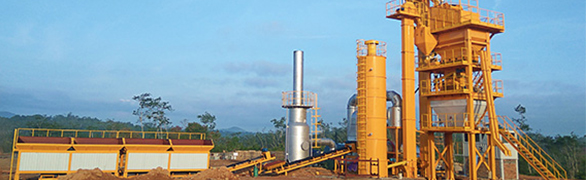
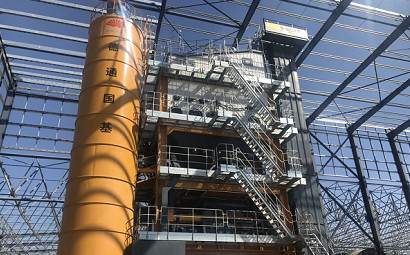
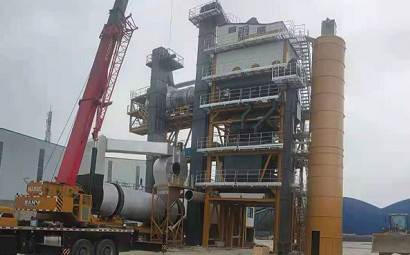
Asphalt recycling equipment, also known as RAP recycling mixing station, is a complete set of engineering machinery for processing and recycling asphalt pavement materials (RAP). RAP is derived from road milling and demolition operations and contains aged asphalt binder and sand aggregate, which has high reuse value and is not a construction waste. Different from the traditional mixing station that only uses brand-new raw materials, the equipment will crush, screen and control the temperature of the old asphalt materials, and then match the new aggregate, asphalt and recycling agent according to the ratio to produce recycled asphalt mixture that meets the construction standards, which is applied to the surface layer and base layer of high-speed, national and provincial roads, municipal roads and other projects. Asphalt is a highly recycled building material, and the recovery rate of foreign waste asphalt pavement materials can reach 99%. In view of the waste problem of domestic old material stacking and landfill, the use of this equipment can realize the recycling of waste, reduce the consumption of sand and asphalt, alleviate the pressure of solid waste treatment, and meet the requirements of circular economy and double carbon development.
.jpg)
The overall logic of asphalt recycling equipment can be summarized: RAP raw material pretreatment → batching metering → heating and stirring → finished product discharge and storage there is a huge difference between hot regeneration and cold regeneration in the heating link.
After the road passes through the milling machine, the old asphalt mixture is collected by the forklift and transported to the recycling plant area. 1) Crushing: Large lumps of old materials are broken by jaw breaking and impact crusher to eliminate large-size lumps; The impact crusher is more suitable for RAP and can reduce the problem of excessive crushing and pulverization of primary aggregates. 2) Screening and classification: The multi-layer vibrating screen divides the old materials into coarse and fine materials of different specifications, screens out soil, sundries and impurities, controls the particle gradation, and prevents large materials from blocking the subsequent silo. 3) Storage homogenization: The processed RAP needs to be stored in a rain-proof and covered shed. RAP moisture content is the biggest factor affecting yield open-air rain will greatly increase fuel consumption and reduce equipment capacity, so priority is given to closed silos for stacking, and regular sampling and testing of asphalt content, gradation, moisture content and aging asphalt performance of old materials will provide basis for mixture formulation design.
The performance of hot-mixed recycled asphalt mixture produced by hot recycling is the closest to that of new hot-mixed asphalt, which is mostly used in the upper and middle pavement layers. 1) batching metering: raw stone materials are stored in storage, RAP is equipped with a separate recycled material hopper, and the mixing ratio of the two materials is accurately measured by frequency conversion belt scale; RAP doping under conventional working conditions is 10-50%, and a special regenerative drying drum model can be configured to realize the production of up to 100 of all old materials. 2) Drying and heating: The traditional simple thermal regeneration scheme does not directly heat RAP, heats the primary aggregate to a higher temperature, and heats the cold old material by means of high-temperature new material contact conduction heat; The high-profile model is equipped with an independent indirect heating regeneration drum to gently heat RAP, so as to avoid direct contact with flame of old asphalt and prevent blue smoke and aging aggravation of asphalt coke. 3) Forced mixing: Intermittent equipment uses a double-shaft mixing pot, and continuous drum equipment completes mixing inside the drum; New asphalt and regenerant are sprayed synchronously, and the mixing period is 30-60 seconds, so that the aged asphalt and regenerant are fully integrated. 4) Finished product discharging: the finished heat-recycled mixture is sent to the thermal insulation finished product silo for temporary storage, or directly loaded to the construction site; The dust generated from production is collected by the bag dust removal system, and the dust can be recycled and put into the mixture again for use.
Cold regeneration full normal temperature production, do not need high temperature drying process. After the pretreated RAP is measured, emulsified asphalt/foamed asphalt and water are added inside the double-shaft mixing cylinder, and active fillers such as cement and lime can be added as required, and the cold recycling mixture is obtained by stirring at normal temperature. The finished product can be directly loaded and paved, and can also be stockpiled for short-term storage. It is mostly used for road base and lower layer, and cannot be directly used as high-grade road surface wear layer. After the construction is completed and the mixture is solidified and formed, a hot-mixed asphalt overlay layer needs to be paved on the top.
Two dimensions of asphalt recycling equipment: processing (hot regeneration/cold regeneration), equipment mobility (fixed/mobile) intermittent and continuous drum are subdivided types of thermal regeneration equipment.
|
Device Type |
Core Process |
Common RAP dosage |
Core advantages |
Applicable Project Scenarios |
|
heat regeneration equipment |
Heat treatment of RAP and mixing with hot mix raw materials to produce hot mix recycled materials |
Regular 10 ‑ 50%; special-purpose up to 100% |
Finished road with excellent performance, anti-rutting, anti-cracking, can be used for pavement surface |
Highways, national and provincial trunk roads, municipal trunk roads, projects with high pavement performance indicators |
|
cold regeneration equipment |
Mixing at room temperature, using emulsified asphalt and foamed asphalt as binder |
Up to 100% RAP |
Low energy consumption, less flue gas, lower equipment cost |
Reconstruction and expansion of road base, subbase and low-traffic rural road |
Warm mix regeneration is a derivative technology. On the basis of hot regeneration, warm mix additives are added to reduce production temperature, further save fuel, reduce flue gas emissions, and take into account performance and environmental protection.
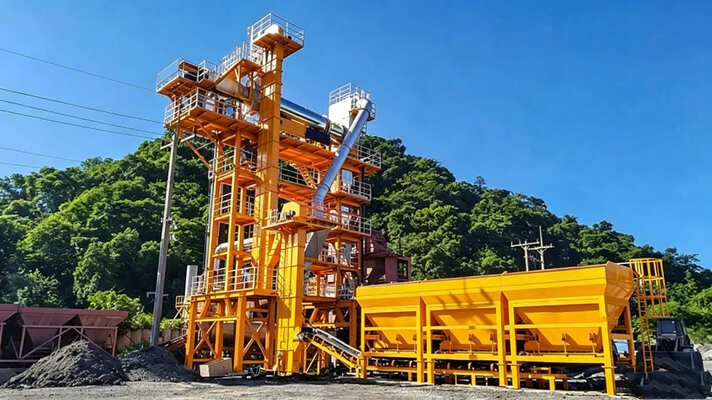
1) Fixed asphalt recycling mixing stationFixed installation in the plant, the production capacity is generally 80-400 tons per hour, high degree of automation, suitable for long-term stable mass production, suitable for municipal maintenance units, large mixing enterprises. The disadvantage is that the equipment cannot be moved, and the old milling materials need to be transported to the factory for processing.
2) Mobile (portable) asphalt recycling equipmentThe whole set of equipment modules are all integrated with trailer chassis, which has fast disassembly and transfer speed and can be arranged near the construction site, thus greatly shortening the transportation distance of RAP waste and recycled finished products. Suitable for scattered projects, short duration, remote sites in the field.
The complete set of equipment is divided into 5 large systems. The cold regeneration equipment does not have a high-temperature drying system, and the rest of the basic silo, batching, mixing, and dust removal control systems are common.
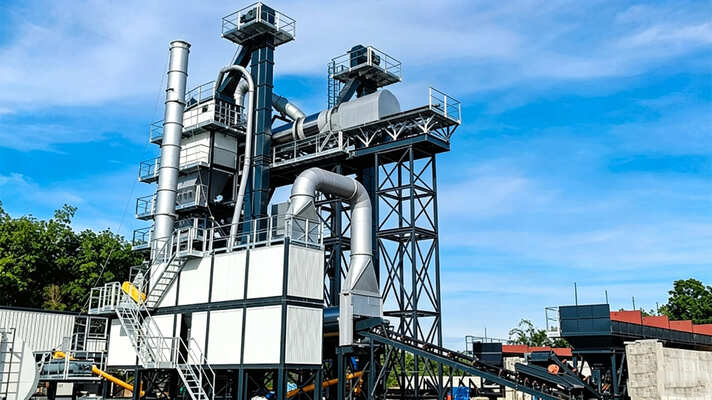
Many customers wonder: is it a real asphalt recycling equipment to directly add a set of recycling hopper to the old mixing station? The difference between the two is not only more than one hopper, but also different from material handling, heating logic and control logic.
|
Contrast dimension |
Traditional common asphalt mixing station |
Professional asphalt recycling equipment |
|
Raw material composition |
100% new gravel aggregate + new asphalt |
RAP 10-100%+ primary aggregate + asphalt/regenerant |
|
Core Configuration |
Cold silo, drying drum, stirring pot, dust removal |
Add RAP crushing and screening, regeneration hopper, regenerant filling system, and high-blending machine equipped with independent regeneration drying drum. |
|
Heating logic |
Only heating new stone |
Either the superheated raw aggregate conducts heat to the cold RAP, or the independent roller is configured to indirectly heat the old material. |
|
RAP blending capacity |
Almost 0; Simple transformation can achieve up to 15-20% at the expense of environmental protection |
Regular 10-50%, special models can achieve 60-100% |
|
cost of production |
All procurement of raw materials, high cost |
On-site digestion of RAP waste, saving considerable material cost per ton of mixture |
|
Production of short board |
Design without treatment of moisture content and caking of old materials |
The fluctuation of RAP moisture content and gradation must be controlled, and the formula design is more complex. |
|
Equipment input |
Low procurement cost of basic equipment |
Upfront procurement/retrofit costs are higher, but raw material costs are significantly lower during the operational phase, with a return on investment cycle of 1-4 years. |
|
Quality of finished products |
Stable performance, simple formula |
As long as RAP pretreatment is in place and regeneration agent is reasonably added, the road performance of the recycled mixture can be comparable to that of the new mixture. |
1) Raw material saving: RAP has its own aggregate and aging asphalt, which can replace a large number of new stone and new asphalt. According to industry statistics, for every 10% increase in RAP doping, the cost per ton of mixture can be reduced by more than ten-twenty yuan. With an annual output of 100000 tons of mixing station and a stable use of 30-40% RAP, the annual material saving can reach millions of yuan. 2) Reduce solid waste disposal costs: milling old materials do not need to spend money to find landfills, eliminating waste removal, dumping and disposal costs. 3) smooth raw material price fluctuations: sand, petroleum asphalt price fluctuations, fully digest the local RAP resources, reduce the risk of commodity price increases. 4) Return on investment: The initial investment in complete sets of renewable equipment is higher, and under the premise of sufficient equipment utilization and stable supply of old materials, most projects will recover the additional equipment investment in 1-4 years.
1) Protection of natural resources: reduce mountain quarrying and reduce the consumption of petroleum products such as asphalt. 2) Solid waste reduction: a large number of waste asphalt no longer enter the landfill, saving landfill capacity. 3) Reduce carbon emissions: lower comprehensive energy consumption per ton of recycled mixture, reduce greenhouse gas emissions, many regional bidding projects explicitly encourage the use of recycled asphalt, to meet the green site, circular economy assessment indicators.
After scientific matching ratio design, reasonable addition of regenerative agent, regenerative mixture anti-rutting performance is often excellent, but high RAP doping to focus on the control of low temperature anti-cracking ability, through the regenerative agent, asphalt label adjustment to achieve performance balance, domestic and foreign highways have decades of large-scale high RAP pavement practical application cases.
The price range of equipment is huge, from small mobile RAP crushing and screening units to 400 tons per hour fixed high-volume heat regeneration equipment, the difference is huge, the following is the market general reference (USD/RMB market range):
Small portable RAP pretreatment unit (only for crushing and screening): RMB 50000-300000, suitable for existing mixing stations, only old material pretreatment is required;2. Mobile cold regeneration complete equipment (40-120 tons/hour): RMB 1.2 million -10 million;3.80-160 tons per hour of medium-sized fixed hot regeneration mixing station: 3 million -14 million tons of regeneration system;4. Large-scale high-blending heat regeneration equipment 160-400 tons per hour with independent RAP drying drum: 7 million -45 million or more.
Key factors affecting quotation: capacity size, hot regeneration/cold regeneration, whether to support high proportion of RAP, bag dust removal, regenerant system, domestic/imported brands, intermittent equipment with the same capacity is generally higher than continuous drum type.
Purchase can not simply look at the equipment quotation, to combine their own project situation, calculate the full life cycle cost, rather than just look at the theoretical nameplate output.
1) Determine the actual hourly output required: do not select the type according to the peak maximum output, refer to the average actual output in busy months.. The actual production capacity of the equipment will decrease after adding RAP. The nameplate output is the output of the original material working condition, and the production capacity margin should be reserved. 2) Determine the target RAP blending ratio: if the long-term plan is 30-50% or even higher RAP, do not only choose the simple external regeneration hopper scheme, but give priority to the model with independent RAP heating system; If only a small amount of old materials are digested, simple transformation can be transitional. 3) Project type: high-speed, municipal upper layer, priority heat regeneration; The main production of grass-roots materials, cold recycling equipment cost-effective. 4) Site conditions: project points, site dispersion, priority mobile; long-term fixed plant mass production, choose fixed. Intermittent type is suitable for frequent switching of formula; continuous drum is suitable for long-term single formula batch discharge.
1) How many tons of RAP can be stably obtained locally every year? Whether the source of old materials is messy, it is better to stack the old materials from different sources separately. 2) Is there any condition to make a closed rainproof shed for local rainwater? The high water content of RAP will directly hit the output, and the equipment under the condition of open-air stacking shall reserve the processing margin.
1)RAP feeding crushing and screening system: whether it can deal with sticky and wet caking old materials, and whether the design of arch breaking and paste prevention screen is in place;2) The heating mode of the thermal regeneration model is mainly confirmed: whether indirect heating RAP is supported to prevent asphalt from overheating and smoking;3) Environmental protection system: bag dust removal and exhaust gas treatment configuration to ensure that the local EIA emission standards are met;4) Automatic control system: support real-time compensation formula according to RAP moisture content, with storage of multiple sets of mixture formula;5) Accessories and after-sales service: inspect the local service response of the manufacturer, the supply of wearing parts, the loss of screen and lining board of regeneration equipment is greater than that of ordinary mixing stations, and the after-sales capability is very important.
Purchasing new machines or transforming old stations? The investment in the transformation of the old station is small, but the upper limit is limited. Calculate how much RAP can be digested each year, how much cost can be saved per ton, and estimate the return cycle. At the same time, the cost of civil engineering, material shed, electricity fuel, and annual maintenance accessories are all included in the calculation.
Even if the equipment selection is in place, the on-site production will still encounter many practical pain points, which is also the main reason why the regeneration system of many mixing stations cannot play an effective role.
Reason: Different road milling materials are mixed and stacked, and the source of old materials is complex. Solution: RAP from different sources is stacked separately; RAP is screened and graded; mixing homogenization is carried out during stacking; normal sampling is adhered to to detect asphalt content and gradation index, and the control system dynamically adjusts the formula according to the test results.
Industry experience: For every 1% increase in RAP moisture content, the actual production capacity of the equipment decreases by about 10-12%. The moisture content of the open-air stockpile will rise sharply after rain. Solution: Build a closed rain-proof material shed, and drain the material pile site; Give priority to the drying part at the height of the material pile; During production, the output shall be adjusted in real time according to the moisture content, and an independent RAP drying drum shall be selected if conditions permit.
Aged asphalt becomes soft and sticky when heated, and is easy to adhere to silo and screen. Solution: The silo is equipped with air cannon and vibrator; Select high-frequency self-cleaning screen; Regularly clean the sticky materials inside the equipment; Strictly control the RAP heating temperature, and do not over-heat up to aggravate asphalt stickiness.
The root cause is that the aged asphalt inside RAP is exposed to open flame and cracked by scorching. Solution: give priority to the process of indirect heating RAP to avoid direct contact with flame of old materials; Optimize the roller lifting blade and control the material curtain; Increase the secondary combustion of exhaust gas and exhaust gas treatment device; Strictly control the upper limit temperature of RAP heating.
Under the condition of high RAP blending, the old asphalt has been oxidized and hardened, and only the new asphalt is mixed with new stone, and the low-temperature crack resistance of the mixture is reduced. Solution: The new asphalt with softer grade is selected in the mix ratio design, and the regenerant is added according to the dose determined by the test. If necessary, control the maximum doping amount of RAP on the upper layer, and give priority to the high mixed recycled material for the grass-roots layer. Complete the full set of performance tests such as Marshall and low temperature bending before putting into large-scale production.
Many customers bought the equipment and found that the output did not reach the promotional value. Inducements: high RAP moisture content, insufficient drying and heating capacity, insufficient dust removal air volume, and blocking of screen paste. Solution: Select and reserve capacity margin; RAP pretreatment and rainproof storage; Regular maintenance of dust removal and screening system; Special regenerative drying drum is preferred for high RAP proportion working conditions.
Many regional norms set the upper limit of RAP mixing, dare not let go of the high proportion of regeneration. Countermeasures: adopt the performance-oriented thinking, take the full set of road performance test reports of the mixture as the support, communicate with the owner and the testing unit, use the actual test data to strive for more relaxed blending indicators, and give priority to gradually accumulate project practical experience from the medium blending ratio.
The scale of the domestic highway maintenance market continues to expand, a large number of waste asphalt RAP resources urgently need to be used as resources, asphalt recycling equipment is no longer an "option", more and more mixing stations will be recycled capacity as standard. Selection of core logic: don't blindly pursue the highest RAP blending ratio, but match your own raw material conditions, project positioning, budget.